Mountain Gorilla Behaviour in Uganda

Mountain Gorilla Behaviour: Understanding What You’re Watching in the Forest
Mountain Gorilla Behaviour in Uganda
Tracking mountain gorillas in Bwindi Impenetrable National Park or Mgahinga Gorilla National Park is often described as a life-changing wildlife encounter, but what most visitors don’t realize is that the real magic lies not just in seeing the gorillas, but in understanding their behaviour. Observing a gorilla family without context is impressive; understanding what each movement, sound, and interaction means transforms the experience into something far more profound.
Mountain gorilla behaviour in Uganda reflects a complex social system, deep emotional intelligence, and subtle communication patterns that are easy to miss if you’re not trained to recognize them. Unlike the quick, dramatic predator-prey moments seen on safari in savannah ecosystems, gorilla encounters unfold slowly. The forest becomes a stage of quiet signals, relationships, and routines that reveal themselves only to those paying close attention.
This guide adds the depth that typical experience pages cannot provide. Instead of just telling you that you will “spend one hour with gorillas,” it equips you to interpret what you are actually witnessing during that hour.
The Structure of a Gorilla Family
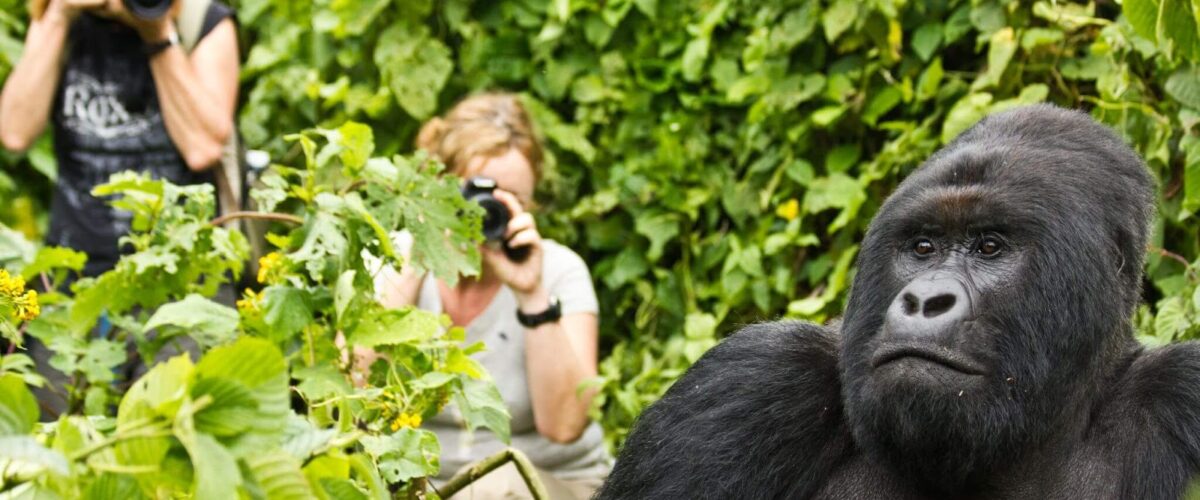
At the center of mountain gorilla behaviour is the family unit, also known as a troop or group. Each group is led by a dominant male called a silverback, named for the distinctive silver hair that develops across his back as he matures.
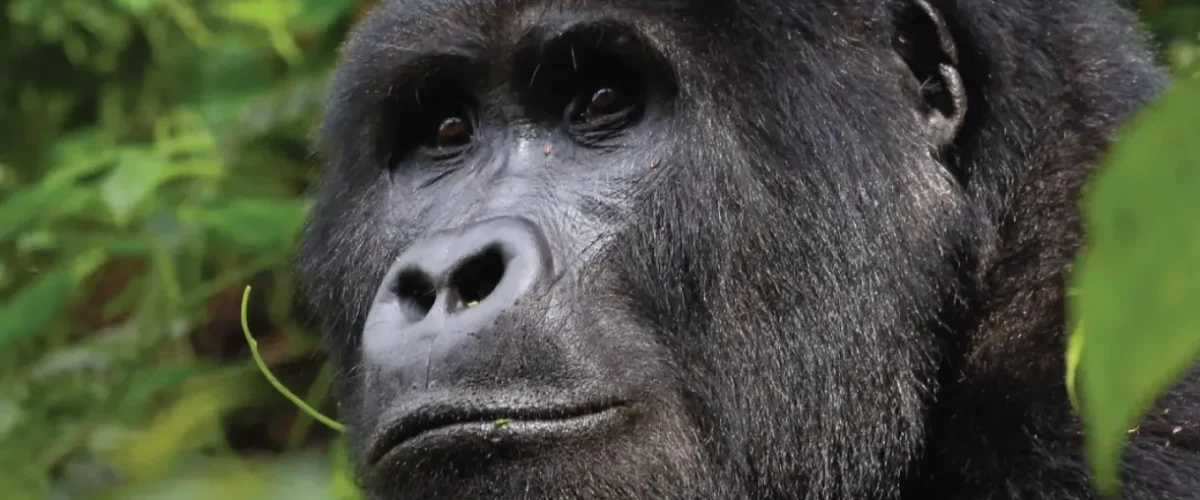
The silverback is more than just a leader. He is the decision-maker, protector, and emotional anchor of the group. Every movement of the family, from where they feed to where they nest for the night, is influenced by him. When you observe a gorilla group in Uganda, you are watching a structured society, not a random collection of animals.
Within the group, you will typically see several females, their infants, and juveniles. Younger males, known as blackbacks, may also be present. Each individual has a role, and their interactions follow a social hierarchy that is surprisingly stable.
Understanding this structure helps you interpret what might otherwise seem like casual behaviour. For example, when a female stays close to the silverback, it often reflects trust and social bonding. When juveniles move freely between adults, it signals a sense of safety within the group.
Communication: The Language of Gorillas
Mountain gorillas communicate through a mix of vocalizations, body language, and facial expressions. Much of this communication is subtle, which is why first-time visitors often miss it entirely.
Soft grunts are among the most common sounds you will hear. These are reassurance calls, used to maintain group cohesion. When gorillas are feeding close together and you hear low, rhythmic grunts, it indicates contentment and calm.
More intense vocalizations, such as barks or roars, are rare but significant. These usually signal alarm or a display of dominance. However, one of the most misunderstood behaviours is chest beating. While it may look aggressive, chest beating is often a form of communication used to assert presence rather than initiate conflict.
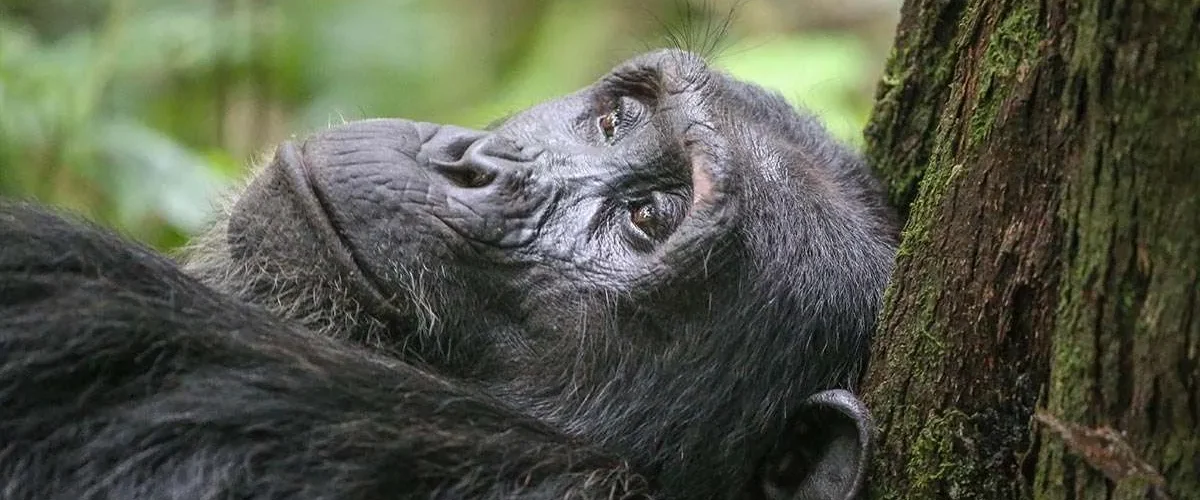
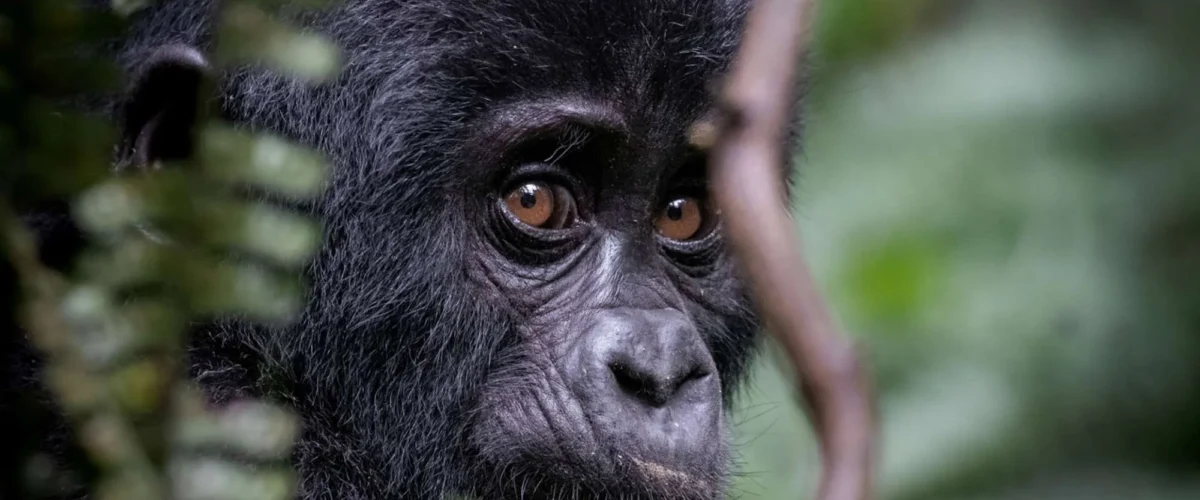
Eye contact is another critical element. Direct staring can be interpreted as a challenge in gorilla society. This is why guides often instruct visitors to avoid prolonged eye contact. In the context of mountain gorilla behaviour in Uganda, this simple action can influence how gorillas perceive your presence.
Feeding Behaviour and Daily Routine
A large portion of a gorilla’s day is dedicated to feeding. Mountain gorillas are primarily herbivorous, consuming leaves, stems, shoots, and occasionally fruit. In the dense forests of Bwindi Impenetrable National Park, food is abundant, allowing gorillas to maintain relatively stable home ranges.
Feeding is not just about nutrition; it is also a social activity. Gorillas often feed in close proximity, and this is when you will observe some of their most relaxed interactions. Mothers feed while keeping a watchful eye on their infants, juveniles snack while playing, and the silverback feeds with a calm authority that reflects his status.
The daily routine typically follows a predictable pattern. Gorillas begin their day feeding, take a rest period around midday, and then resume feeding before constructing nests in the evening. Each gorilla builds its own nest, usually on the ground, using vegetation. Observing nest-building behaviour, if you are lucky enough to see it, offers insight into their intelligence and adaptability.
Social Bonds and Grooming
Grooming is a key component of mountain gorilla behaviour. While it may not be as frequent as in some primate species, it plays an important role in reinforcing social bonds.
When you see one gorilla carefully picking through the fur of another, it is not just about hygiene. It is a sign of trust and cooperation. Grooming often occurs between closely bonded individuals, such as mothers and offspring or long-associated group members.
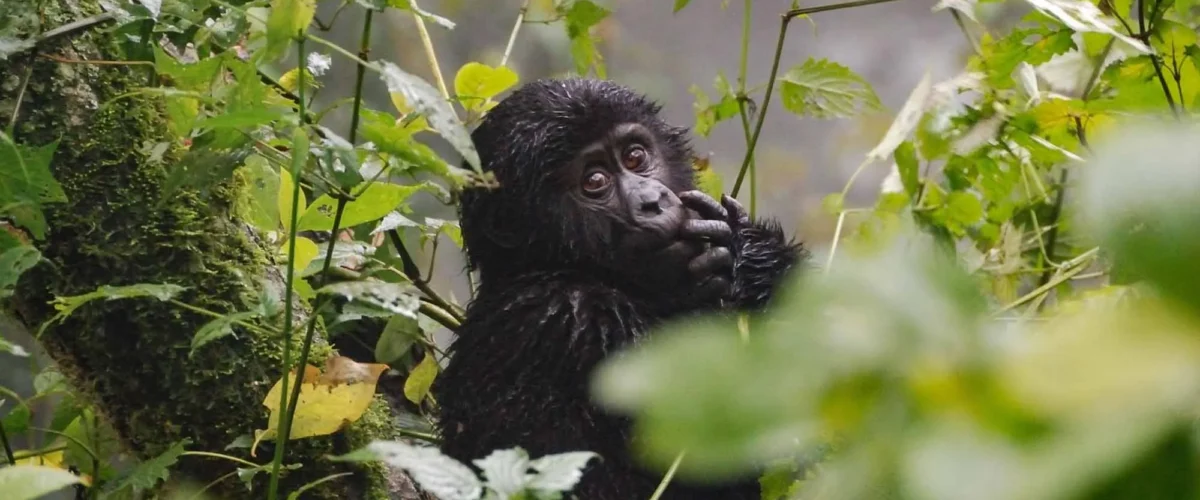
Infants are central to the social life of the group. They attract attention from multiple members, not just their mothers. Watching how different gorillas interact with infants can reveal the emotional depth of the group. Some adults are more tolerant and playful, while others maintain a more reserved demeanor.
Play Behaviour: The Energy of Youth
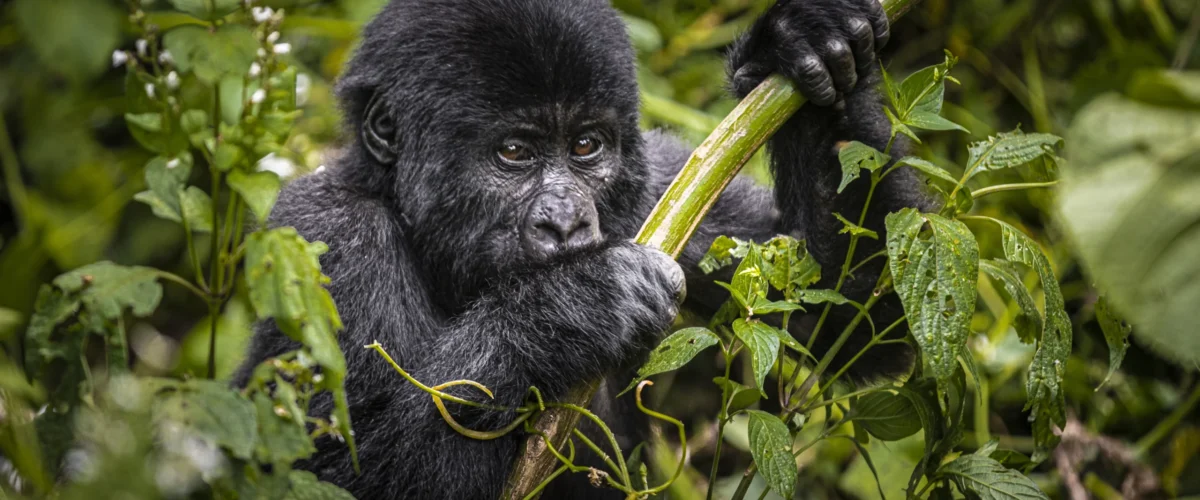
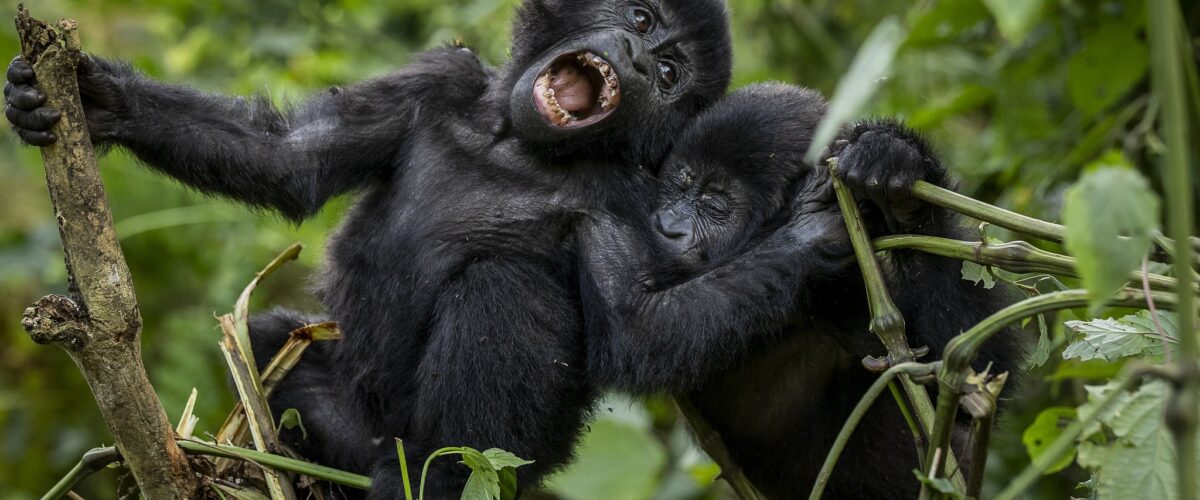
Juvenile gorillas bring energy and unpredictability to the group. Their play behaviour is one of the most engaging aspects of any gorilla trekking experience in Uganda.
Young gorillas wrestle, chase each other, climb vegetation, and test their strength in harmless mock battles. While this may appear chaotic, it serves an important developmental purpose. Through play, juveniles learn social boundaries, build physical strength, and practice behaviours they will need as adults.
Even the silverback occasionally tolerates or lightly engages with playful juveniles, demonstrating a softer side of his otherwise dominant role. Observing these interactions adds nuance to your understanding of mountain gorilla behaviour in Uganda, showing that these animals are not only powerful but also deeply social and emotionally complex.
Dominance, Protection, and the Role of the Silverback
The silverback’s behaviour is one of the most closely watched aspects during a gorilla trek. His reactions often set the tone for the entire encounter.
When relaxed, a silverback may sit quietly, feed, or observe his group with minimal movement. However, if he perceives a threat, his behaviour can change rapidly. Displays such as chest beating, ground slapping, or short charges are designed to intimidate rather than harm.
In Uganda’s gorilla trekking environments, these displays are rare but possible. It is important to understand that they are part of natural behaviour, not an indication that something has gone wrong. Guides are trained to interpret these signals and manage the situation accordingly.
Protection extends beyond external threats. The silverback also maintains internal order within the group, intervening in conflicts and ensuring stability. His presence is the foundation of the group’s cohesion.
Maternal Behaviour and Infant Care
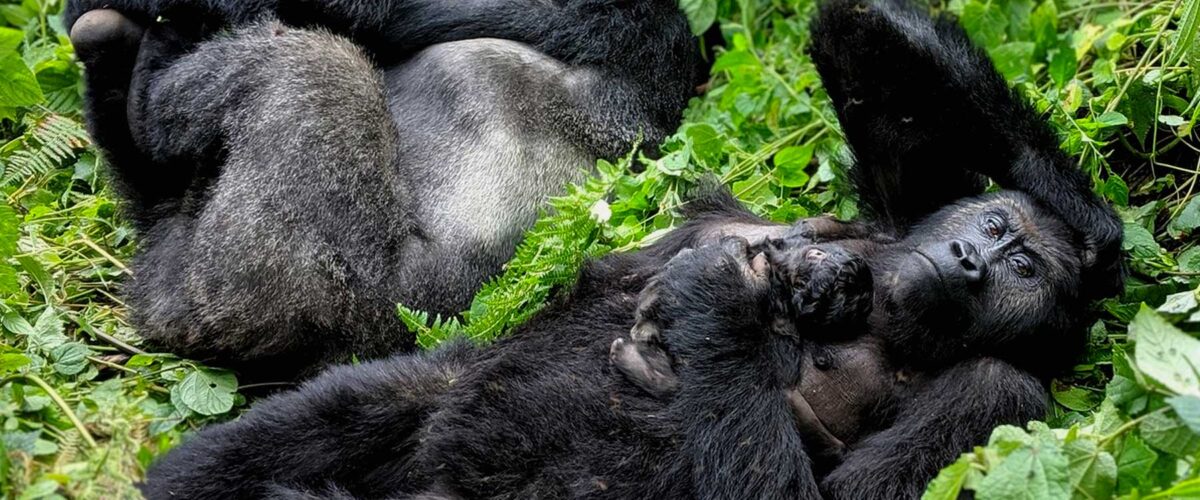
Mother-infant relationships are at the heart of gorilla society. Female gorillas are highly attentive mothers, carrying their infants, nursing them, and protecting them during the early stages of life.
Infants are completely dependent on their mothers for the first few months. As they grow, they begin to explore their surroundings but remain within close reach. Watching an infant take its first tentative steps or attempt to climb is a powerful reminder of the parallels between gorillas and humans.
Other members of the group often show interest in infants, but the mother maintains primary control. Her behaviour reflects a balance between allowing social interaction and ensuring safety.
How Habitat Shapes Behaviour
Mountain gorilla behaviour in Uganda is closely linked to the forest environment. The dense vegetation of Bwindi Impenetrable National Park and the volcanic slopes of Mgahinga Gorilla National Park influence how gorillas move, feed, and interact.
In thicker forest areas, visibility is limited, which makes vocal communication more important. Gorillas rely on sound to maintain contact, especially when spread out during feeding. The terrain also affects movement patterns, with gorillas navigating steep slopes and dense undergrowth with remarkable ease.
Seasonal changes can influence food availability, which in turn affects ranging behaviour. However, compared to many other wildlife species, mountain gorillas have relatively stable habitats, allowing for consistent observation patterns.
What Tourists Often Miss
Most visitors focus on the obvious: the size of the silverback, the cuteness of the infants, or the rarity of the experience. While these are valid impressions, they only scratch the surface.
What is often missed are the small interactions. A brief glance between two gorillas, a subtle shift in posture, or a quiet vocal exchange can carry significant meaning. These moments are easy to overlook but are essential to understanding mountain gorilla behaviour in Uganda.
Another commonly missed aspect is the rhythm of the group. Gorillas move and act with a certain flow, transitioning between feeding, resting, and interacting in a way that reflects a balanced social system. Observing this rhythm requires patience and attention.
Enhancing Your Gorilla Trekking Experience
Understanding behaviour changes how you experience gorilla trekking. Instead of simply taking photos, you begin to anticipate actions, recognize relationships, and interpret signals.
Listening becomes as important as watching. Positioning yourself to observe different individuals within the group adds depth to your perspective. Following the guide’s cues allows you to stay aligned with the group’s movements and behaviour.
In Uganda, where gorilla trekking is carefully managed to minimize impact, this level of awareness also supports responsible tourism. Respecting the gorillas’ space and behaviour ensures that these encounters remain sustainable.
Seeing Beyond the Surface
Mountain gorilla behaviour in Uganda offers a window into a world that is both familiar and profoundly different. These animals share traits that resonate with human experiences—family bonds, communication, emotion—yet they exist within a natural system that operates on its own terms.
By understanding what you are watching in the forest, you move beyond being a spectator. You become an informed observer, capable of appreciating the complexity of each moment. This is what transforms a gorilla trek from a checklist experience into a meaningful encounter.
In the end, the forest is not just a place where gorillas live. It is a place where their behaviour tells a story—one that reveals itself fully only to those who know how to read it.