What Actually Happens on a Gorilla Trek: A Minute-by-Minute Breakdown
A gorilla trek in Bwindi Impenetrable National Park is often described as a single magical hour with mountain gorillas. What is less understood is everything that happens before and after that hour. The experience is not a simple walk into the forest. It is a structured, ranger-led operation that begins early in the morning and unfolds step by step through briefing, tracking, navigation, and controlled interaction.
This breakdown walks through a typical trekking day in real time, explaining what actually happens on the ground, how decisions are made, and what you should expect at each stage.
06:00–07:00: Wake-Up and Preparation
Your day starts early. Most lodges near Bwindi are located within reasonable distance of the park headquarters, but travel time still needs to be factored in.
You wake before sunrise, prepare your trekking gear, and have a quick breakfast. At this stage, preparation is critical. You dress for a full day in the forest, not just the one hour with gorillas. This includes long sleeves, waterproof layers, hiking boots, gloves, and essentials like water and snacks.
By around 07:00, you begin transferring to the park headquarters for the briefing.
07:30–08:00: Arrival and Registration
At the park headquarters, you check in with your permit. This is where all trekkers gather, often in small groups based on sector and assigned gorilla families.
Your presence is confirmed, and you are grouped with other visitors who will trek to the same gorilla family. Each group is limited to a maximum of eight people.
At this point, guides and rangers begin organizing logistics for the day.
08:00–08:30: Pre-Trek Briefing
The briefing is one of the most important parts of the day. Rangers explain the rules of gorilla trekking, safety protocols, and expected behavior in the forest.
You are instructed on:
Maintaining a safe distance from gorillas
Avoiding direct eye contact
Staying quiet and controlled in movement
What to do in case of a charge
Rangers also assess group fitness levels. Based on this, they may assign groups to gorilla families located at varying distances from the starting point. Easier treks are often given to older or less physically fit participants.
This is also the moment where you can hire porters. Porters carry bags, assist on difficult terrain, and significantly reduce physical strain during the trek.
08:30–09:00: Drive to Trailhead
After the briefing, you are transported closer to the trailhead. Depending on the location of the assigned gorilla family, this drive can take anywhere from a few minutes to over an hour.
During this time, trackers who went ahead earlier in the morning are already locating the gorilla group. They communicate with rangers via radio to guide your trekking route.
09:00–??: The Trek Begins
There is no fixed duration for this phase. It is the most unpredictable part of the entire experience.
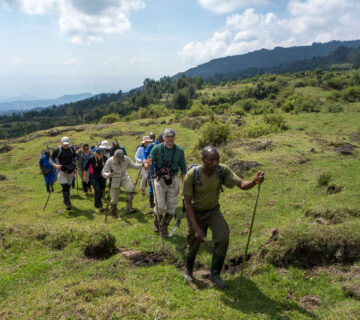
You begin trekking through farmland at the edge of the forest before entering the dense vegetation of Bwindi. The terrain varies immediately. You may encounter steep slopes, muddy paths, thick undergrowth, and uneven ground.
Rangers lead the way, often using machetes to clear paths where necessary. The pace is steady but adapted to the group’s ability.
As you move deeper into the forest, trackers provide updates on the gorilla group’s location. This determines your direction and pace.
The trek can take anywhere from 1 hour to 6 hours depending on how far the gorillas have moved.
Mid-Trek: Tracking and Adjustment
As you get closer to the gorillas, the pace often slows. Rangers listen for vocalizations, observe broken vegetation, and follow fresh signs such as dung or footprints.
Communication between trackers and guides becomes more frequent. You may stop several times while the team confirms the exact position of the gorilla group.
This phase requires patience. It is not a direct walk but a process of tracking a moving target in dense forest.
The Last 10–15 Minutes
When the gorillas are located, you are asked to leave certain items behind, such as walking sticks or large bags. Only essential gear is carried forward.
At this point, your group is briefed again on behavior. Silence becomes critical. Movements must be slow and controlled.
The final approach is done carefully, often crouched or moving through tight vegetation. This is the moment where anticipation builds, as you transition from tracking to direct observation.
The One Hour: Gorilla Encounter (00:00–60:00)
Once you reach the gorillas, the official one-hour countdown begins.
This hour is strictly timed and monitored by rangers. It is not extended under any circumstances.
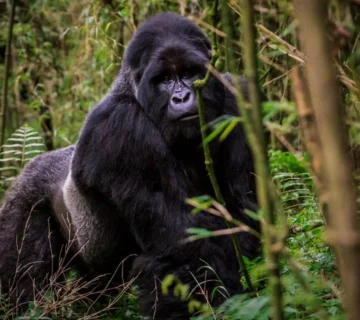
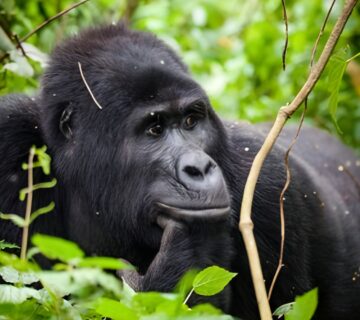
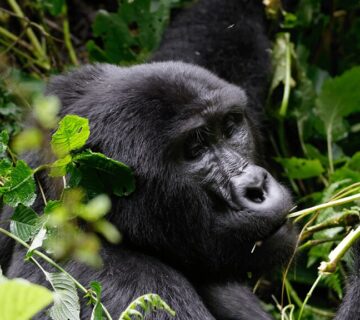
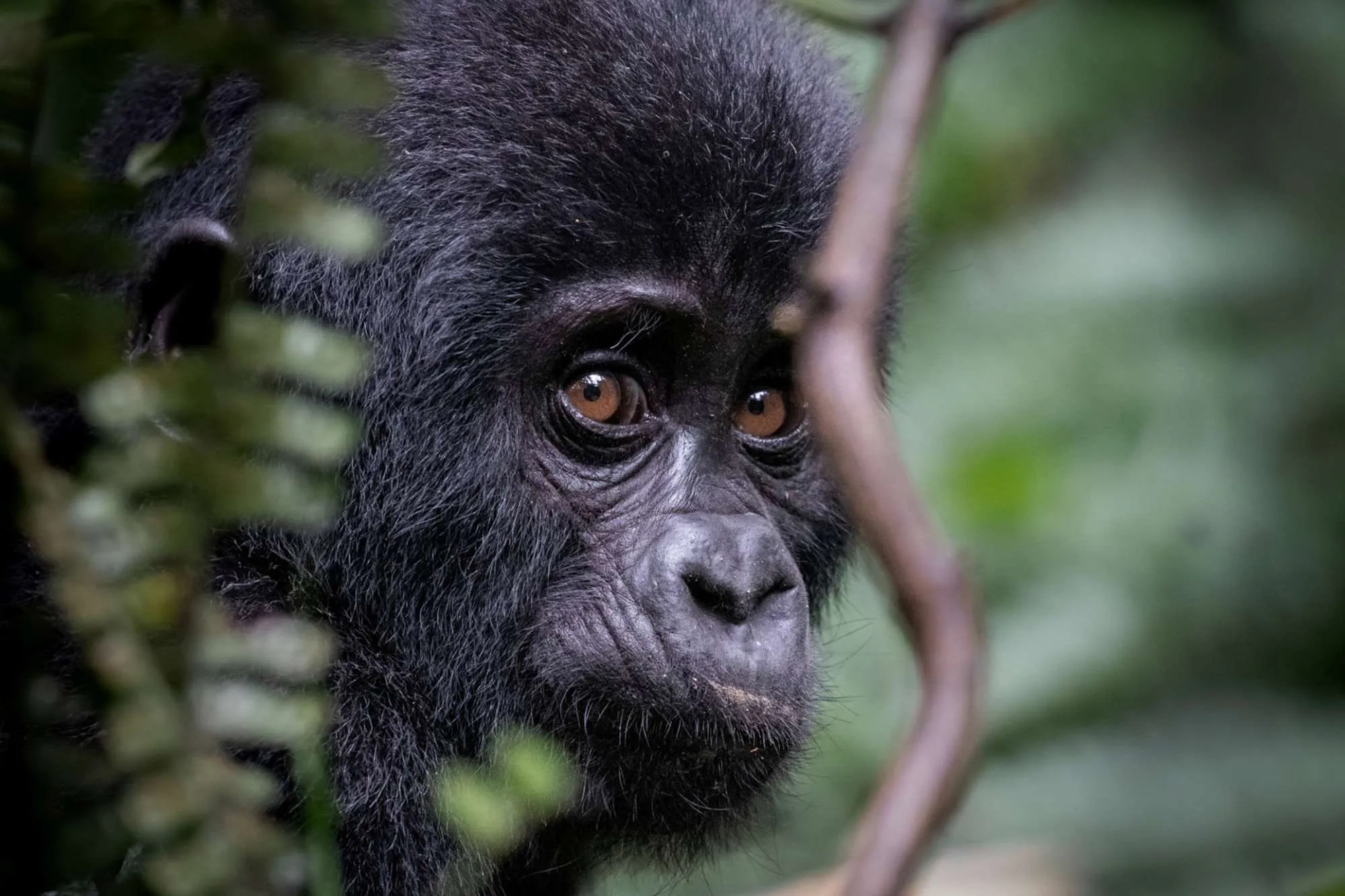
During this time, you observe the gorilla family as they go about their daily activities. You may see feeding, grooming, resting, playing, or movement through the forest.
The experience is dynamic. Gorillas may move, requiring you to adjust your position. Rangers guide you to maintain safe distance while ensuring visibility.
The silverback often remains aware of your presence, occasionally watching the group or repositioning himself.
Juveniles may play nearby, while mothers care for infants. Each moment is different, and no two encounters are identical.
Photography is allowed, but flash is prohibited. Rangers help position visitors for clear viewing while maintaining safety protocols.
Behavioral Monitoring During the Encounter
Throughout the hour, rangers continuously monitor gorilla behavior. If signs of stress or agitation appear, the group may be repositioned or, in rare cases, asked to withdraw slightly.
This ensures that the interaction remains non-intrusive and safe for both gorillas and visitors.
60:00: End of Encounter
At exactly one hour, rangers signal the end of the visit. Even if the interaction feels brief, the timing is strictly enforced.
You begin a controlled withdrawal from the gorilla group, moving slowly and quietly to avoid disturbance.
Post-Encounter Trek: Return Journey
After leaving the gorillas, you begin the trek back. This can take anywhere from one to several hours depending on your location.
The return journey often feels easier psychologically, but physically it can still be demanding, especially if terrain is steep or conditions are muddy.
Porters play a key role here, assisting with balance and carrying gear.
Early to Mid-Afternoon: Exit and Debrief
Once you exit the forest, you return to the starting point or park headquarters. Here, you receive a trekking certificate as a record of your experience.
Guides may provide additional insights about the gorilla family you visited, including names, history, and group dynamics.
Late Afternoon: Return to Lodge
You return to your lodge, usually in the late afternoon. This is a time for rest, reflection, and recovery after a physically demanding but highly rewarding day.
What the Timeline Really Means
A gorilla trek in Bwindi Impenetrable National Park is not defined by the one hour with gorillas alone. It is a full-day expedition that combines physical effort, tracking skill, and controlled wildlife interaction.
The “minute-by-minute” structure is not rigid but adaptive. Rangers respond to terrain, gorilla movement, and group ability in real time.
Understanding this timeline helps set realistic expectations. The experience is not staged or predictable. It is dynamic, immersive, and shaped by the natural behavior of wild mountain gorillas.
That unpredictability is exactly what makes it one of the most authentic wildlife encounters in the world.
Start Planning Your Next Trip To Africa
If you can picture yourself in one—or several—of these exceptional retreats, the next move is simple. We design fully tailored African safaris that bring these experiences together seamlessly, from private gorilla encounters to luxury lodges in the heart of the wild.
Every detail is carefully planned, so your journey feels effortless from start to finish. Reach out in whichever way suits you best, and let’s begin crafting your safari.
Start Planning