Mountain Gorilla Behaviour: Understanding What You’re Watching in the Forest
A gorilla trek in Bwindi Impenetrable National Park is often described as a visual experience—standing a few meters away from one of the world’s most powerful primates. But what separates a casual encounter from a truly meaningful one is not what you see, but what you understand.
Mountain gorillas are highly social, intelligent, and behaviorally complex. Every movement, vocalization, and interaction you observe in the forest has context. What may look like random activity is actually part of a structured social system governed by hierarchy, communication, and survival strategy.
This guide breaks down the core behaviors you are likely to witness during a trek and explains what they actually mean in real time.
The Social Structure: A Family Built Around a Leader
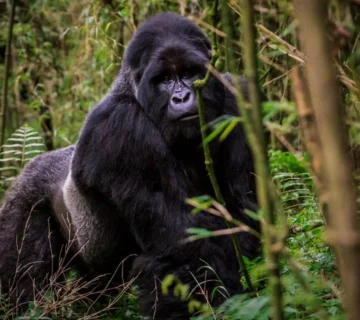
Mountain gorillas live in cohesive family groups typically led by a dominant adult male known as a silverback. This individual is the central decision-maker and protector of the group.
Around him are adult females, juveniles, and infants. In some cases, there may be subordinate males, but the dominant silverback maintains authority over movement, feeding locations, and conflict resolution.
When you observe a gorilla group, you are not looking at individuals acting independently. You are watching a coordinated social unit where each member has a role and position.
Feeding Behaviour: Constant Movement with Purpose
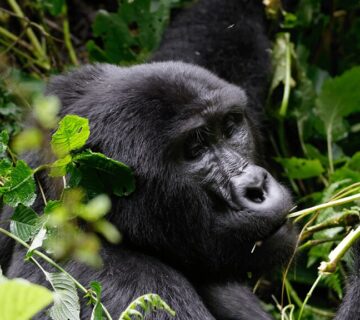
One of the most common activities you will see is feeding. Mountain gorillas spend a large portion of their day eating leaves, stems, shoots, bark, and occasionally fruit.
This feeding is not random grazing. It is selective and efficient. Gorillas move steadily through the forest, choosing specific plants and discarding others. This movement pattern often defines the direction of the group.
If you notice the group slowly advancing while feeding, you are witnessing a coordinated foraging strategy. The silverback typically determines when the group moves to a new feeding area.
Grooming: Social Bonds in Action
Grooming is a key social behavior, particularly among females and younger gorillas. It serves both hygienic and social functions.
When you see one gorilla picking through the fur of another, it is not just cleaning. It is reinforcing relationships, reducing tension, and strengthening group cohesion.
Grooming interactions are often calm and prolonged, providing insight into alliances within the group.
Play Behaviour: Learning Through Interaction
Juvenile gorillas are highly playful, and this is one of the most engaging aspects of a trek.
You may see young gorillas chasing each other, climbing trees, rolling on the ground, or mock fighting. These activities are not random bursts of energy. They are essential for physical development, coordination, and social learning.
Through play, juveniles practice skills they will need as adults, including strength, balance, and social interaction.
Maternal Behaviour: Protection and Teaching
Female gorillas are highly attentive mothers. Infants are almost always in close contact with their mothers, either being carried or staying within immediate reach.
You may observe nursing, grooming, or gentle correction when an infant strays too far. These interactions are critical for survival, as young gorillas rely entirely on their mothers for protection and learning.
Maternal behavior is calm but vigilant, ensuring that infants remain safe within the group structure.
The Role of the Silverback: More Than Just Strength
The silverback is often the most visually striking member of the group, but his role extends far beyond physical dominance.
He monitors the group constantly, even when appearing relaxed. His position is usually strategic, allowing him to observe both the group and the surrounding environment.
When the group feeds, rests, or moves, the silverback is the stabilizing force. He intervenes in conflicts, directs movement, and responds to threats.
Understanding his behavior is key to interpreting the overall dynamics of the group.
Communication: Subtle but Constant
Mountain gorillas communicate through a combination of vocalizations, body language, and facial expressions.
You may hear low grunts during feeding. These are contact calls that maintain group cohesion. Soft vocalizations indicate calm and reassurance.
Louder sounds, such as barks or roars, signal alertness or agitation. These are less common but important indicators of changing conditions.
Body language is equally significant. Posture, movement, and eye direction all convey information. A relaxed gorilla moves slowly and maintains loose posture, while a tense gorilla becomes more rigid and focused.
Displays of Dominance: Controlled, Not Chaotic
One of the most dramatic behaviors you may witness is a dominance display, often performed by the silverback.
This can include chest beating, charging movements, and loud vocalizations. While it appears aggressive, it is usually a controlled display intended to assert authority or deter perceived threats.
In most cases, these displays do not lead to physical conflict. They are communication tools designed to maintain order without unnecessary risk.
Understanding this helps reduce fear and allows you to interpret the behavior correctly.
Movement Patterns: Why Gorillas Don’t Stay Still
Gorillas are not stationary animals. Even during your one-hour encounter, the group may move several times.
This movement is typically driven by feeding needs. As they consume vegetation in one area, they gradually shift to another.
Rangers guide visitors to reposition safely as the group moves. This is a normal part of the experience and reflects the natural rhythm of gorilla life.
Signs of Relaxation vs Tension
Recognizing the difference between relaxed and tense behavior is important.
Relaxed gorillas feed, groom, and move slowly. Their posture is loose, and their vocalizations are soft.
Tension is indicated by sudden stillness, focused attention, louder vocalizations, or abrupt movement. These signals suggest that the gorillas are assessing a potential threat.
Rangers monitor these signs closely and adjust visitor positioning if necessary.
Human Presence: How Gorillas Perceive You
Habituated gorillas are accustomed to human presence, but this does not mean they ignore you completely.
They are aware of your presence at all times. The difference is that they have learned to tolerate humans as non-threatening.
Your behavior plays a role in maintaining this tolerance. Calm, quiet, and predictable actions help keep the interaction stable.
Sudden movement or loud noise can disrupt this balance and trigger defensive responses.
Infants and Curiosity
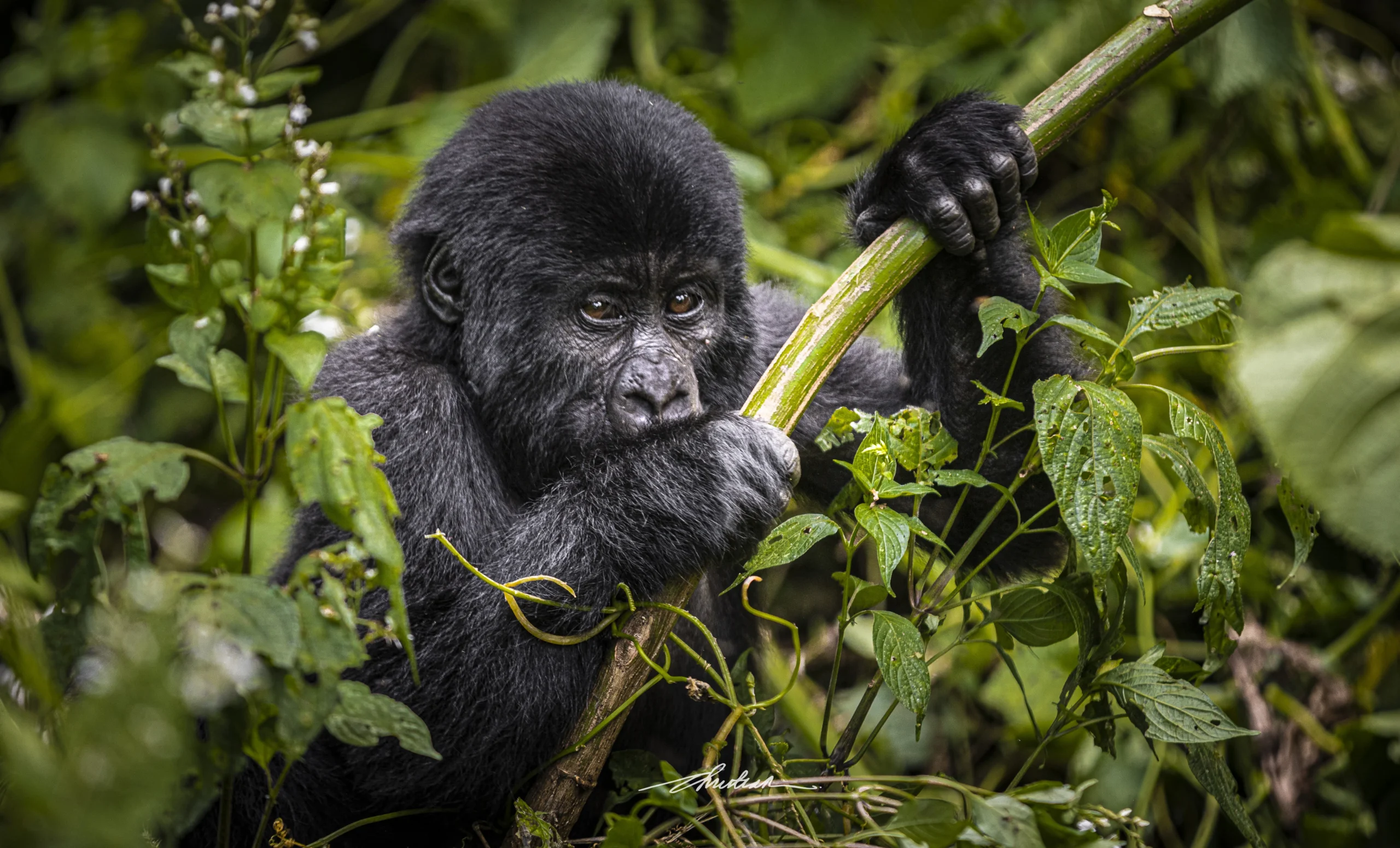
Young gorillas are often the most curious members of the group. They may approach closer than adults, sometimes within a few meters.
While this can feel like a unique moment, it is important not to react or attempt interaction. Rangers will guide you on how to remain still and non-threatening.
These interactions highlight the intelligence and curiosity of gorillas, but they must be managed carefully.
The One-Hour Window: A Snapshot of a Larger Life
The one hour you spend with gorillas is only a small segment of their daily routine. What you observe is a snapshot, influenced by time of day, weather, and group dynamics.
Some visits may be highly active, with movement and play. Others may be quieter, with resting and feeding.
Both are equally authentic and valuable. Understanding behavior allows you to appreciate the experience regardless of activity level.
Reading the Forest
Watching mountain gorillas in Bwindi Impenetrable National Park is not just about proximity. It is about interpretation.
Every action you see—feeding, grooming, playing, displaying—is part of a structured system shaped by evolution and social complexity.
When you understand what you are watching, the experience shifts from observation to insight. You begin to see patterns, relationships, and meaning in every movement.
This deeper awareness transforms a gorilla trek from a visual encounter into an intellectual and emotional connection with one of the most remarkable species on Earth.
Start Planning Your Next Trip To Africa
If you can picture yourself in one—or several—of these exceptional retreats, the next move is simple. We design fully tailored African safaris that bring these experiences together seamlessly, from private gorilla encounters to luxury lodges in the heart of the wild.
Every detail is carefully planned, so your journey feels effortless from start to finish. Reach out in whichever way suits you best, and let’s begin crafting your safari.
Start Planning