
Walking Safaris in Lake Mburo National Park – Uganda’s Best On-Foot Wildlife Experience
There is a quality of attention that walking in wild Africa demands and delivers that no game drive vehicle can replicate. When the engine is off and you are on foot, the landscape stops being something you move through and becomes something you are inside. The grass is at your knees. The sound of your own footfall on the dry earth is audible. A zebra fifty metres ahead hears you before it sees you and stands absolutely still, ears rotating toward the sound. A buffalo in the thicket ahead is holding its ground, and your ranger guide reads the situation in an instant, placing a gentle hand on your arm to slow the group without a word spoken. The world at walking pace is a different world from the world at vehicle speed. And in Lake Mburo National Park, it is one of the finest worlds Uganda has to offer.
Walking Safaris in Lake Mburo National Park
Why Lake Mburo is Uganda’s Safest and Best Walking Safari Destination | Walking Trails | Wildlife | Costs | Combining Walking Safaris with Game Drives & Boat Safaris
Lake Mburo is not simply a park where walking safaris are permitted. It is the park where walking safaris reach their fullest expression in Uganda, the destination that experienced guides identify as the country’s finest and most complete on-foot safari experience, and the place where the particular combination of landscape, wildlife, and safety conditions comes together in a way that no other Ugandan national park can match. In Uganda’s larger, more predator-dense parks, the walking safari is a peripheral option available under strict conditions. In Lake Mburo, it is the activity that the park was made for.
Why Lake Mburo is Uganda’s Safest and Best Walking Safari Destination
The conditions that make a walking safari both safe and extraordinary are specific and relatively rare. They require a landscape open enough to see threats at a distance, wildlife dense enough to produce encounters of genuine quality, and a predator profile that allows guests to move through the environment without requiring the kind of constant, restricting vigilance that elephant and lion presence demands.
Lake Mburo has all three.
The absence of elephants in the park is the single most significant safety factor. Elephants are the animal that most constrains walking safari operations across East Africa. Their intelligence, their speed, their unpredictability when surprised or protective of young, and their capacity to move silently through dense vegetation makes them the primary reason why walking safaris in parks like Queen Elizabeth and Murchison Falls are conducted only in limited areas under very specific conditions. In Lake Mburo, there are no elephants. The park’s entire trail network is available for guided walking without the elephant constraint that limits operations elsewhere.
Lions were absent from Lake Mburo for many years, and while a reintroduction programme is now under way, the lion density remains very low relative to the parks where walking is more restricted. This means that the alert level required of guides and rangers on foot in Lake Mburo, while always professional and appropriate, is significantly lower than it would be in the Kasenyi Plains of Queen Elizabeth or on the northern bank of Murchison Falls.
What remains is a wildlife community of extraordinary richness: thousands of zebra, impala, eland, buffalo, topi, waterbuck, bushbuck, warthog, and the resident leopard population that makes the park one of Uganda’s finest destinations for this most elusive of cats. These animals, when encountered on foot rather than from a vehicle, produce sightings of a quality and intimacy that the game drive, however excellent, does not replicate. A zebra herd encountered at fifty metres while walking, every individual alert and focused on your group, the dust rising from their hooves as they shift position, is a fundamentally different encounter from the same herd seen from a vehicle. The animal’s awareness of you, and your awareness of them, is mutual in a way that transforms the sighting into something closer to genuine wildlife contact.
The trail network covers the entire park, with specific named routes that range from short, flat walks suitable for guests of all fitness levels to longer, more demanding circuits that reward physical investment with outstanding scenery and varied wildlife. Every walk is accompanied by an armed Uganda Wildlife Authority ranger guide whose knowledge of the park’s animals, plants, and terrain is the foundation of the walking safari experience. The ranger leads, reads the landscape ahead, manages the safety of the group, and provides the context that transforms observation into understanding.
The Top Walking Safari Trails in Lake Mburo
The Salt Lick Trail at Rwonyo – Where Wildlife Converges
The Salt Lick Trail is the most popular and most consistently rewarding walking safari experience in Lake Mburo, and it is the walk that most guides recommend as the first activity for guests arriving in the park. Starting from the Rwonyo visitor centre, the trail covers approximately 1.5 kilometres of gently undulating terrain through open acacia woodland and grassland to reach the salt lick area, a natural deposit of mineral-rich soil and water at which the park’s wildlife gathers in remarkable concentration.
The salt lick itself is the defining feature of the trail. Animals actively seek out these mineral-rich sites to supplement their diet with sodium and other trace minerals that the surrounding vegetation cannot provide in sufficient quantities. At Lake Mburo’s salt lick, this means that zebra, impala, topi, waterbuck, buffalo, and warthog converge at the same location at predictable times, creating a concentrated wildlife viewing opportunity that requires nothing more than patience and quiet to deliver outstanding results.
Uganda Wildlife Authority has constructed a hidden wooden observation platform overlooking the salt lick at approximately two kilometres from the Rwonyo camp. From this platform, elevated above the surrounding vegetation and screened from the animals below, guests sit in complete silence and watch the wildlife go about its business with no awareness of their presence. A zebra herd approaching the lick from the grassland. Impalas pressing close to the mineral deposit, their heads down, tails flicking. A solitary buffalo bull standing at the edge of the group, watching the approaches with the focused wariness of an animal that knows what it is doing. And occasionally, if the morning is early and the light is still low, a hyena returning from the night’s hunting that pauses at the edge of the lick area before moving on.
The walk to the salt lick is best done in the early morning, departing from Rwonyo at around 7:00 AM when wildlife is most active and the light through the acacia woodland is at its most beautiful. The cooler morning air keeps the animals at the lick longer, and the absence of midday heat makes the walk itself more comfortable. The trail is flat, well-maintained, and manageable for guests of all fitness levels, making it the most accessible of all Lake Mburo’s walking safari options.
The platform observation session, once the group is in position, typically lasts between thirty minutes and one hour depending on the wildlife activity at the lick. The combination of the forest walk and the platform observation produces one of the most relaxed, intimate, and genuinely thrilling wildlife experiences available in the park.
Kigambira Hill Loop – Views, Woodland and Wildlife
The Kigambira Hill Loop is Lake Mburo’s most varied and most visually rewarding walking trail, combining moderate physical challenge with outstanding panoramic scenery and excellent wildlife habitat across two distinct landscape types: open wooded grassland on the approach, and dense thicket woodland on the hill itself.
The trail begins near the Kigambira area in the southern part of the park and follows a loop route that rises through scattered acacia and mixed woodland before reaching the ridge of the hill, where the vegetation opens and the views begin. From the Kigambira ridge, the landscape of Lake Mburo unfolds in a way that no game drive track quite replicates: the lake itself visible below, its surface reflecting the sky, the Katengyeto wetland system stretching to the south, and the rolling hills of Kiruhura District receding toward the Tanzanian border on the distant horizon.
The woodland on the Kigambira slope is particularly productive for bushbuck, which move through the denser thicket vegetation in small family groups and are more regularly encountered on foot than in a vehicle. Bush duiker, the small, shy antelope that inhabits the denser sections of woodland throughout the park, is also most reliably seen on the Kigambira trail where the tree cover gives them confidence to move more openly. Warthogs are abundant on the open sections and typically allow close approach when encountered on foot, their raised tails and energetic trot making them one of the most reliably entertaining wildlife sightings on any Lake Mburo walk.
The birdwatching on the Kigambira trail is excellent throughout the loop, particularly in the woodland sections where the diversity of tree species supports a corresponding diversity of bird life. The African grey hornbill, the bare-faced go-away bird, the black-bellied bustard, and various sunbird and weaver species are all regularly encountered along the trail. The open ridge at the hill’s summit is productive for raptors, with augur buzzards and long-crested eagles commonly seen soaring on the thermals above the valley below.
The loop takes approximately two to three hours at a moderate walking pace and is suited to guests with a reasonable level of fitness. The ascent to the ridge is gradual rather than steep, and the descent on the loop’s return leg is comfortable. Walking boots are recommended on this trail, as the hill section involves some uneven ground that benefits from ankle support.
Lakefront Track – Walking Past Nine of Lake Mburo’s Sixteen Lakes
The Mburo ecosystem extends well beyond the national park’s boundaries, encompassing a system of sixteen lakes spread across the surrounding landscape. Nine of these lakes are accessible on the Lakefront Track, a longer walking route that follows the lake shore and connects sections of open grassland, papyrus swamp, and woodland along the water’s edge in a sequence of landscape changes that makes it one of the most visually diverse walks in the park.
The Lakefront Track moves through the most productive wetland-edge habitat in Lake Mburo, and the wildlife encounters on this trail have a different character from the open grassland walks of the salt lick and Kigambira routes. Hippos are encountered at the water’s edge, sometimes at very close range, in situations where the ranger’s guidance is particularly important. Sitatunga, the semi-aquatic antelope that inhabits the papyrus margins of the lakes, is most reliably found on this trail, picking through the reed beds in the early morning hours before retreating into denser cover as the day warms. Crocodiles bask on exposed sections of bank between the papyrus beds.
The birdwatching along the Lakefront Track is exceptional and is the primary reason that dedicated birders prioritise this route over the other trails in the park. The lake margins and papyrus beds support the African finfoot, one of Uganda’s most sought-after and most elusive waterbirds, which is reliably present on the quieter sections of the lake shore where boat traffic is minimal. The shoebill stork, another high-priority target for visiting birders, has been recorded along the swampier sections of the Lakefront Track. Malachite and pied kingfishers fish along the shoreline constantly. Fish eagles call from the tall trees above the lake. And the papyrus beds support papyrus-specialist species including the papyrus gonolek and the white-winged warbler.
The Lakefront Track is the longest of the park’s walking safari routes and requires the most time, typically three to four hours for the full route. It is suitable for guests with good fitness and a genuine interest in the lake ecosystems and birdwatching that the shoreline offers. Waterproof footwear is strongly recommended, as sections of the trail pass through or very close to wet ground at the lake margins. The walk is best started early, at first light, when both the wildlife and the birdlife are at their most active along the water’s edge.
Rubanga Forest Trail – Birding in the Western Forest Block
The Rubanga Forest, located on the western shore of Lake Mburo along the Rwizi Track, is a narrow block of moist forest that stands in striking contrast to the acacia woodland and open grassland that dominate the rest of the park. Access to Rubanga is by special arrangement with the park warden and requires an armed ranger escort, which is arranged through Uganda Wildlife Authority or your lodge.
The forest walk through Rubanga is primarily a birding experience. The dense canopy and understorey support species that are rarely encountered in the open areas of the park: the Narina trogon, one of Africa’s most beautiful forest birds, inhabits the mid-canopy. The African green pigeon feeds in the fruiting trees of the forest edge. The red-headed lovebird, the black-and-white casqued hornbill, and various forest sunbird and flycatcher species complete a bird list that differs substantially from the open country species recorded on the other trails.
For guests with a serious interest in birding, the Rubanga Forest walk adds a forest dimension to the Lake Mburo birding experience that the open trail network cannot provide, and it is well worth the additional arrangement if your guide and lodge can facilitate access.
Kazuma Hill Trail – Panoramic Views Across the Park
The Kazuma Hill Trail follows the Kazuma track through open wooded grassland to the base of Kazuma Hill, where a walk to the summit rewards the physical effort with one of the finest panoramic views in Lake Mburo. From the top of Kazuma Hill, the five lakes within the park boundaries become clearly visible in the landscape below, and the rolling hills of the wider Mburo ecosystem, the Katengyeto wetlands, and the distant Tanzanian border create a vista that contextualises the park’s geography in a way that no trail-level walk can provide.
The grassland sections of the Kazuma approach are excellent territory for the black-bellied bustard, a large and strikingly marked ground bird that patrols the open wooded grassland with a measured, deliberate gait. Oribi are regularly encountered here, the small antelope that is one of Lake Mburo’s less frequently observed species, bouncing away through the grass with their distinctive stiff-legged pronking gait when startled. The hilltop itself is productive for raptors, with augur buzzards and martial eagles commonly seen.
What Wildlife to Expect on a Lake Mburo Walking Safari
Walking safaris in Lake Mburo consistently produce wildlife encounters of quality and intimacy that surprise guests who have arrived with modest expectations. The encounters are different from game drive sightings in a specific and important way: they are mutual. The animal is aware of you. You are aware of the animal. And the space between you carries a different quality of attention from both sides.
Zebra are the most commonly and most dramatically encountered large mammal on all of the park’s walking trails. The park’s population of approximately 5,000 Burchell’s zebra means that herds are present across virtually every section of the trail network, and encountering them on foot, particularly at the salt lick where they are focused and stationary, produces outstanding photography and a genuinely close approach to animals that are nonetheless wild and attentive. Their response to human presence on foot, a combination of curiosity and alert readiness that results in them standing absolutely still with ears forward before deciding whether to move, is one of the most engaging wildlife interactions available on any Lake Mburo walk.
Impala are ubiquitous on every trail and provide the most consistent close-range wildlife encounters of any species in the park on foot. Their habituated tolerance of human presence, developed through years of regular walking safari activity in the park, means that impala herds often allow approach to within twenty or thirty metres before the dominant female gives the alarm bark that sends the group into the extraordinary floating leap that makes this species one of the most beautiful animals in Africa in motion.
Buffalo are present on all the major trails and are the species that most commands the ranger’s attention on a walking safari. African buffalo are unpredictable and formidable animals, and while most encounters in Lake Mburo involve animals that move away when they become aware of the walking group, solitary old bulls, excluded from the herd and consequently more defensive, are the encounters that require the most careful and experienced handling. Your ranger guide manages these encounters with complete professional authority, and understanding his signals and following his instructions without hesitation is the fundamental rule of the walking safari.
Warthog are a constant and entertaining presence on every trail. Encountered on foot, warthogs typically trot away at a bouncing run with their tails raised vertically, a sight that has never been less than enjoyable on any walking safari in the park.
Leopard is an outside possibility on any walking safari trail, most likely as a brief sighting of an animal crossing the trail ahead or moving through the thicket on the Kigambira Hill trail. Lake Mburo’s exceptional leopard density makes it the finest park in Uganda for leopard sightings, and while the cat’s instinctive concealment behaviour makes daytime encounters rare on foot, the possibility of crossing paths with one is genuine on every walk and adds an edge of possibility to the experience that keeps attention sharp throughout.
Hyena and Jackal are regularly encountered on early morning walks, particularly on the western lake shore and the approaches to the salt lick, where both species can be found returning from overnight hunting and scavenging activity as the dawn light builds.
Birdwatching on foot in Lake Mburo is exceptional across all the trails, and the walking pace, the absence of engine noise, and the ability to stop silently and observe bird behaviour without the disruption of vehicle movement all contribute to an experience that is significantly more rewarding for birdwatchers than a game drive circuit of the same areas. The red-faced barbet, papyrus gonolek, African finfoot, shoebill, southern ground hornbill, black-bellied bustard, and Rüppell’s starling are all on the target list for a two-day walking safari itinerary in the park.
Walking Safari Costs and How to Book
Current Price starts from:
USD $35 per person for foreign non-residents in addition to USD $40 for park entrance fees.
The nature walk permit covers the services of the armed Uganda Wildlife Authority ranger guide for the duration of the walk. It does not include park entrance fees, which are charged separately at USD $40 per person per day for foreign non-residents. Both the nature walk permit and park entrance fees are typically arranged through your tour operator or lodge as part of a full Lake Mburo itinerary.
The walking safari is one of the most exceptional value-for-money wildlife experiences available anywhere in Uganda, and the extra USD $35 permit is striking given the quality of the encounters it facilitates. This is not a peripheral add-on activity. It is one of the park’s defining experiences, and the permit price reflects the fact that it is managed primarily as a conservation and community benefit programme rather than as a premium revenue activity.
How to Book
Through your tour operator: The recommended approach for guests visiting Lake Mburo as part of a broader Uganda safari. Your operator books the nature walk as part of the daily activity schedule, ensuring it is timed correctly alongside game drives, the boat cruise, and other activities and that the right trail is selected for your interests and fitness level.
Through your lodge: Mihingo Lodge, Kigambira Safari Lodge, Lake Mburo Safari Lodge, and Rwakobo Rock Lodge all facilitate nature walk bookings directly for their guests, often as the first activity suggestion on the morning of the second day. Talk to your lodge guide on arrival about your walking safari preferences and they will arrange the permit, the ranger, and the trail selection.
Timing
Nature walks operate from early morning, with the first departure at 7:00 AM from Rwonyo. This is the most recommended start time for the Salt Lick Trail and the Lakefront Track, when wildlife activity is at its peak and the temperature is most comfortable for walking. The Kigambira Hill Loop can be walked in either the morning or the late afternoon, with the late afternoon offering the finest light on the ridge views. All walks should be completed before 10:00 AM or started after 4:00 PM to avoid the heat of the midday hours, particularly during the dry season months when temperatures can reach 28°C by late morning.
Combining a Walking Safari with Game Drives and Boat Cruise
The walking safari, the game drive, and the Lake Mburo boat cruise are three fundamentally different ways of experiencing the same park, each revealing aspects of the ecosystem that the others cannot access. A well-structured two-night Lake Mburo itinerary uses all three in sequence to build a complete and deeply satisfying portrait of the park.
The Recommended Two-Night Structure
Afternoon of arrival: Evening game drive along the Kigambira Loop or Kazuma Track, covering the open woodland and grassland areas in the finest light of the day. This is the best introduction to the park’s landscape and gives an overview of the wildlife territories that the walking safari will explore more intimately the following morning.
Morning of day two: Salt Lick walking safari, departing from Rwonyo at 7:00 AM. The early morning walk through the acacia woodland to the observation platform, followed by thirty to sixty minutes at the salt lick in silence, is the most intimate and most affecting wildlife experience the park offers and is best placed at the start of the day when it can be done with full energy and maximum wildlife activity.
Afternoon of day two: Lake Mburo boat cruise, departing from the Rwonyo jetty at 3:00 PM or later in the afternoon. After a morning on foot in the woodland, the shift to the water perspective delivers an entirely different dimension of the ecosystem: hippos, crocodiles, fish eagles, and the lake shore wildlife viewed from the water at the same level as the animals on the bank.
Morning of day three (if three nights): Kigambira Hill Loop walking safari, covering the woodland, the ridge views, and the lake panorama before departure. For guests who want a second walking experience that differs from the salt lick, the Kigambira Loop provides excellent contrast in both terrain and wildlife encounters.
Adding the Night Game Drive
The night game drive, available through all major lodges in Lake Mburo, slots naturally into the second evening of a two-night stay and provides the nocturnal perspective that completes the activity range. After a morning walking safari, an afternoon boat cruise, and a night game drive, guests have experienced the park on foot, on water, in a vehicle, and after dark. Each has revealed a different cast of characters in a different quality of light. The combination is as comprehensive a two-day wildlife experience as any destination in Uganda offers, and Lake Mburo delivers it in a setting of genuine beauty, at a pace that is relaxed and unhurried.
Single-Night Stays
For guests using Lake Mburo as an overnight stop on the Kampala to Bwindi or Kampala to Queen Elizabeth road journey, one night is enough to experience either the walking safari or the boat cruise, but not easily both in a single overnight. In this situation, the walking safari is the recommended priority, as it is the experience most unique to Lake Mburo and least available elsewhere on the Uganda circuit. The Salt Lick Trail, completed in the early morning before the drive west, takes three hours from departure to return and can be done before 10:00 AM, leaving the rest of the day for road travel. Alternatively, arriving in the afternoon allows for an evening game drive and an early morning walk the following day before departure.
Practical Information – What to Wear and Bring
Preparation for a walking safari in Lake Mburo is straightforward but makes a meaningful difference to the comfort and quality of the experience.
Footwear: Sturdy walking shoes or light hiking boots are ideal for the Salt Lick and Kigambira trails. The Lakefront Track benefits from waterproof footwear due to the wet sections near the lake shore. Sandals and flip-flops are not suitable for any of the trails.
Clothing: Long trousers and a long-sleeved shirt protect against the acacia thorns, insects, and the sun on open sections of trail. Neutral colours that blend with the environment are preferable to bright colours that may alert wildlife to your presence at distance.
Sun protection: A wide-brimmed hat and sunscreen are essential for the open sections of all trails, particularly during the dry season when the Ugandan morning sun builds quickly after 8:00 AM.
Binoculars: Essential for the birdwatching dimension of every trail. The distance at which many bird species are first spotted, and the detail required for confident identification, makes a good pair of binoculars one of the most used pieces of equipment on any Lake Mburo walking safari.
Water: Carry a minimum of one litre per person for shorter walks and two litres for the Kigambira Loop and Lakefront Track. The temperature and physical effort of walking in the African bush demands consistent hydration, and running short of water in the middle of a trail is avoidable with simple preparation.
Camera: A camera with a zoom range of at least 200mm is recommended for wildlife photography on the walking trails. The distances at which you photograph wildlife on foot are often somewhat greater than the very close vehicle approaches of the game drive, and telephoto reach is valuable particularly for the bird species along the Lakefront Track.
Insect repellent: Apply before the walk and carry a small bottle for reapplication during longer trails. Tsetse flies are present in some sections of the park, particularly in the woodland areas, and repellent significantly reduces their attention.
Where To Stay During This Experience
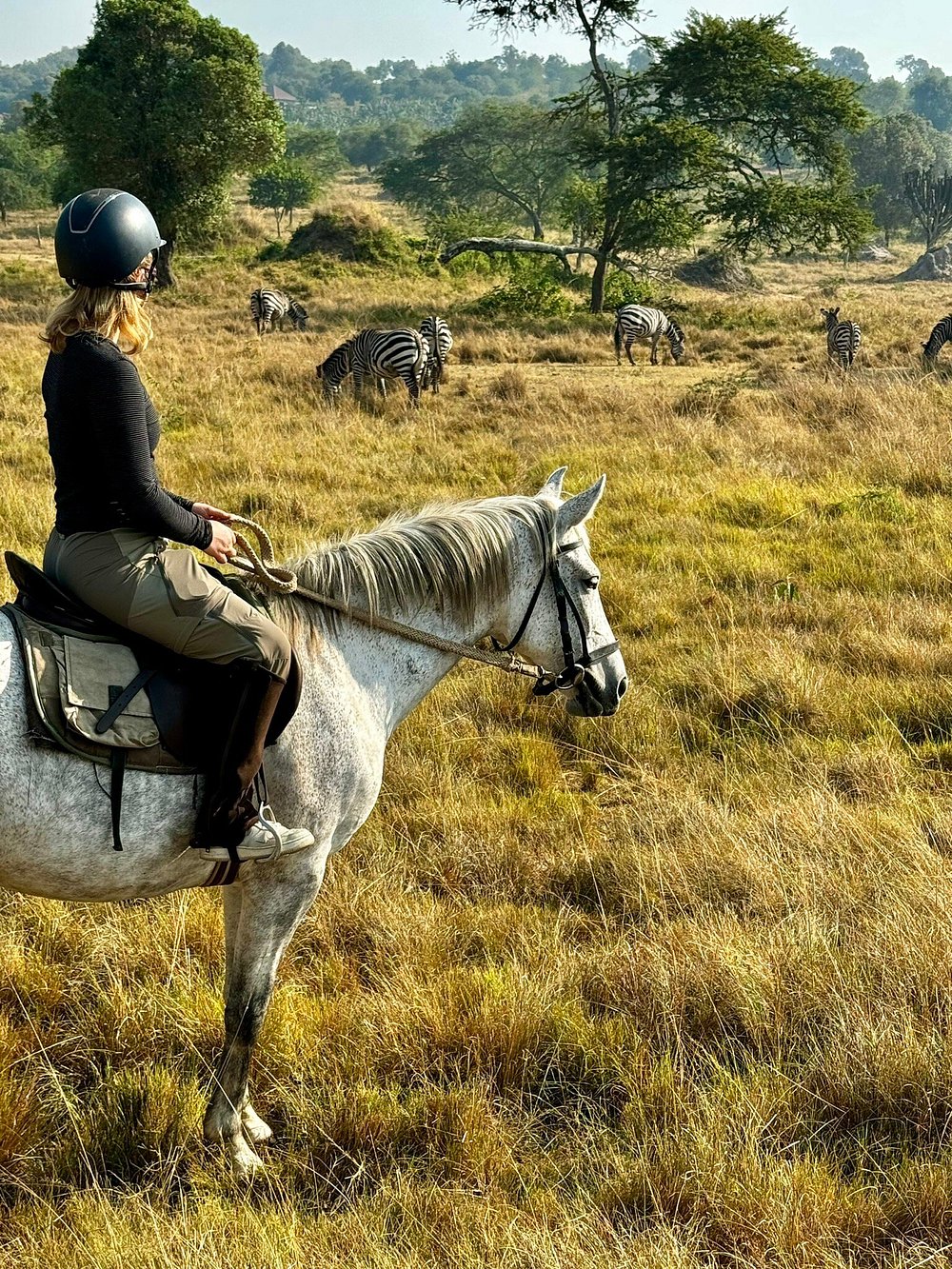
Where To Do A Walking Safari
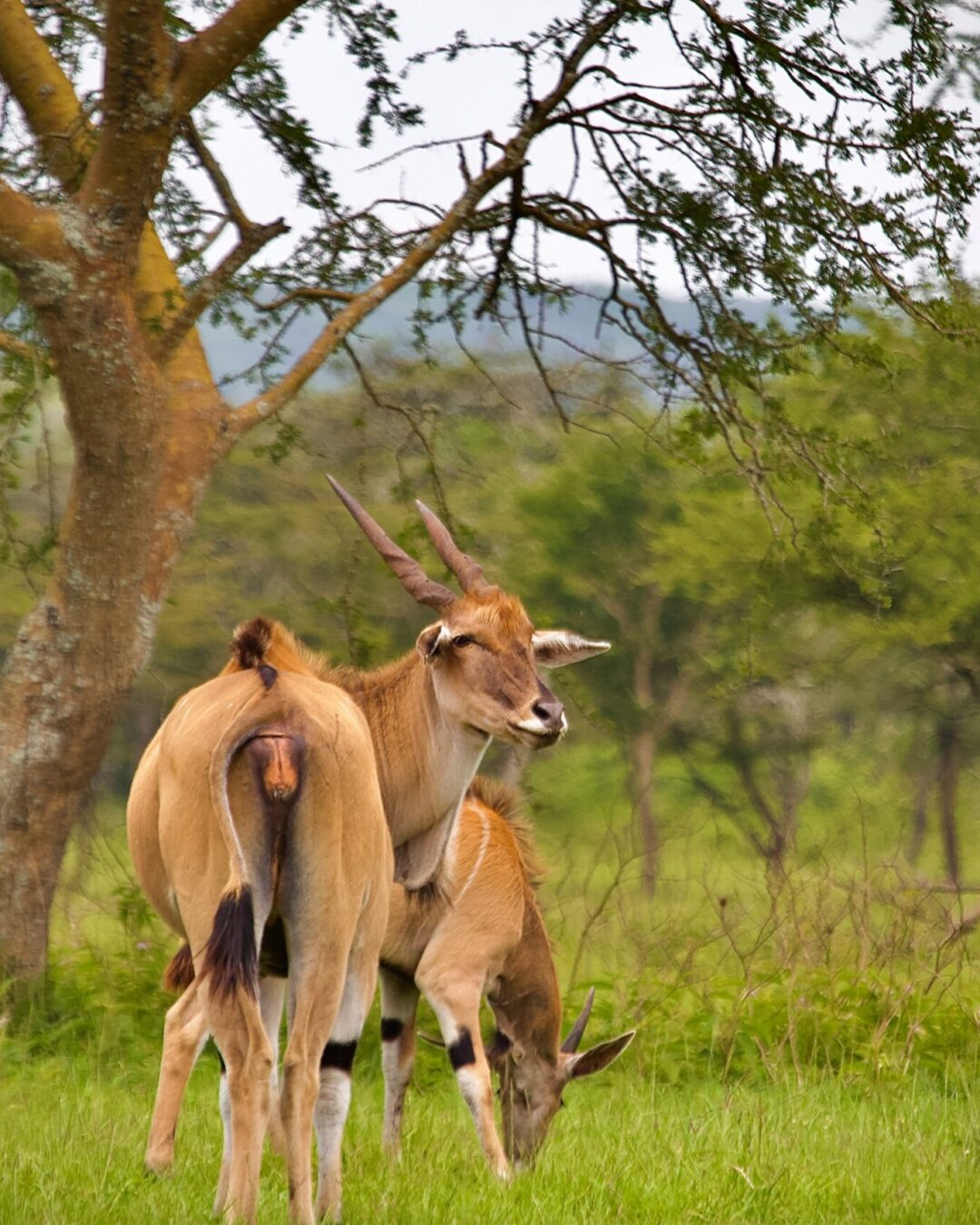
Uganda Travel Advice
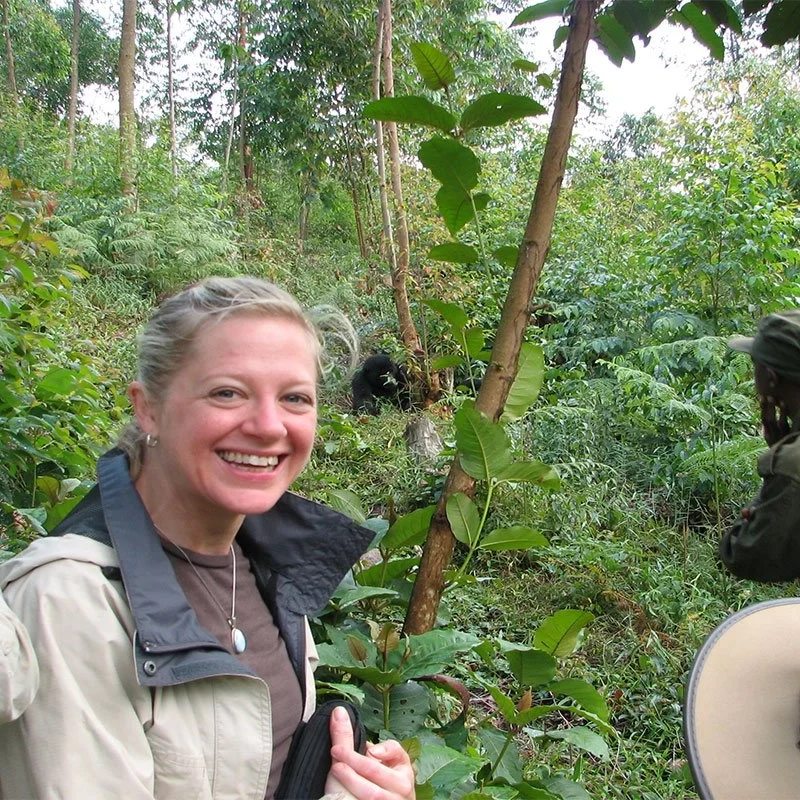
Is Uganda Safe for International Tourists in 2026?
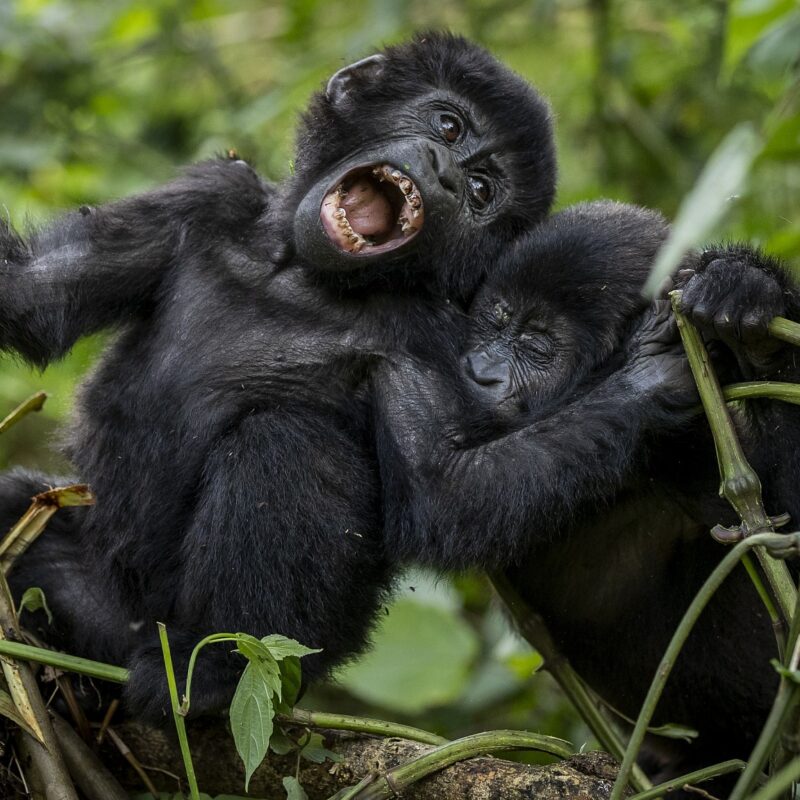
Mountain Gorilla Behaviour in Uganda
How Far in Advance Should You Book a Uganda Gorilla Permit?
The Porter Question
Tented Camp vs Fixed Lodge in Uganda