Uganda’s Big Five: Does Uganda Have Them and What Wildlife Can You Expect?
The concept of the “Big Five” remains one of the most recognized frameworks in African safari planning, originally referring to the five animals considered the most difficult to hunt on foot: lion, leopard, elephant, buffalo, and rhinoceros. For modern travelers, the term has evolved into a checklist of iconic wildlife sightings.
Uganda does have the Big Five, but the way you see them—and where you see them—differs from classic safari destinations like Kenya or Tanzania. Uganda’s strength lies not in dense savannah game concentrations alone, but in the diversity of ecosystems that combine primates, large mammals, and birdlife into a more varied safari experience.
Understanding how the Big Five fit into Uganda’s wildlife structure is essential for setting realistic expectations and planning an effective itinerary.
Does Uganda Have the Big Five?
Yes, Uganda has all five members of the Big Five, but they are not all found within a single national park.
The distribution is as follows:
Lion, leopard, elephant, and buffalo are found in savannah parks such as Queen Elizabeth National Park and Murchison Falls National Park.
Rhinoceros are not found in the wild within Uganda’s national parks but can be seen at Ziwa Rhino Sanctuary, a protected conservation area where rhinos have been reintroduced.
This means that achieving a full Big Five experience in Uganda requires visiting multiple locations rather than relying on a single park.
Where to See Each of the Big Five in Uganda
Lions: Savannah Specialists With Unique Behavior
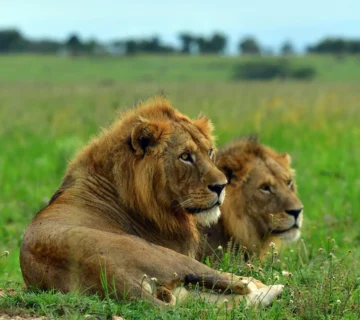
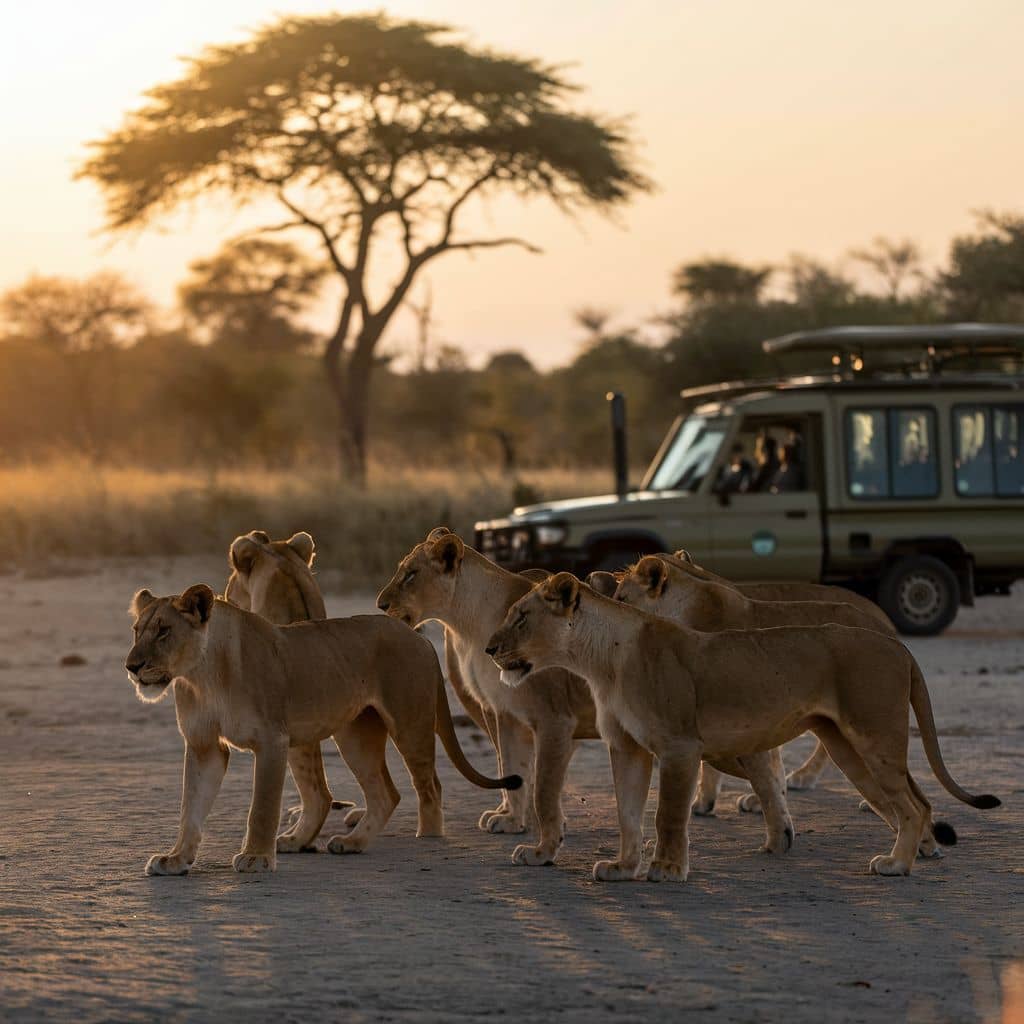
Lions in Uganda are most commonly seen in Queen Elizabeth National Park and Murchison Falls National Park.
One of the most distinctive lion populations is found in the Ishasha sector of Queen Elizabeth, where lions are known for their tree-climbing behavior. This is not guaranteed but adds a unique dimension to lion sightings in Uganda.
In other areas, lions behave more typically, resting during the day and becoming active in cooler hours.
Leopards: Elusive but Present
Leopards are present in Uganda’s savannah parks but are significantly more difficult to spot due to their solitary and nocturnal nature.
Murchison Falls National Park offers some of the better chances for leopard sightings, particularly during early morning or evening game drives.
Sightings require patience, experienced guiding, and a degree of luck.
Elephants: Widely Distributed and Frequently Seen
Elephants are one of the most reliably seen large mammals in Uganda.
They are commonly found in Queen Elizabeth National Park, Murchison Falls National Park, and along waterways such as the Kazinga Channel.
Boat safaris often provide some of the closest and most consistent elephant encounters, especially when herds gather at the water’s edge.
Buffalo: Abundant Across Savannah Ecosystems
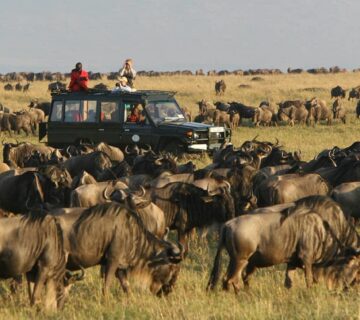
Buffalo are widespread and often seen in large herds across Uganda’s savannah parks.
They are among the easiest members of the Big Five to observe, frequently appearing during game drives and near water sources.
Their presence also plays a role in predator activity, as lions often target buffalo in coordinated hunts.
Rhinoceros: Conservation-Based Viewing at Ziwa
Rhinoceros can be seen at Ziwa Rhino Sanctuary, which is located along the route between Entebbe and Murchison Falls National Park.
Tracking rhinos here is done on foot under ranger supervision, offering a controlled and close-range viewing experience.
While this is not a traditional wild setting, it is currently the only place in Uganda where rhinos can be observed.
Why Uganda’s Big Five Experience Is Different
Unlike destinations where the Big Five are concentrated in large open ecosystems, Uganda’s wildlife is distributed across multiple habitats.
This means the safari experience is more varied but also more complex to plan.
Instead of focusing solely on large mammals, Uganda integrates:
Forest ecosystems with primates
Savannah landscapes with classic game
Wetlands and waterways with aquatic wildlife
This diversity is one of Uganda’s strongest advantages, even though it requires a broader itinerary to fully experience.
What Wildlife You Can Expect Beyond the Big Five
Mountain Gorillas: Uganda’s Flagship Species
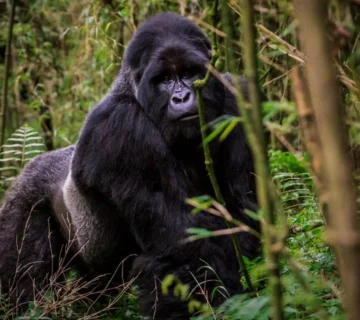
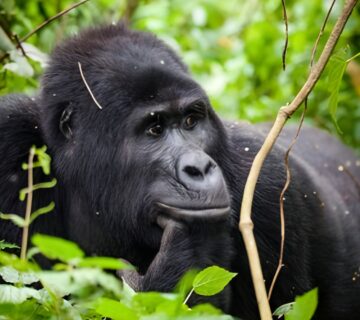
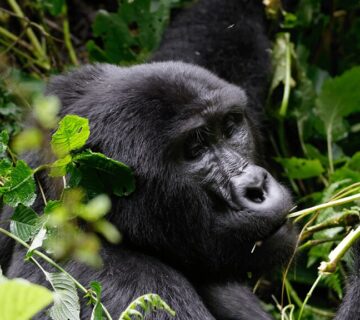
Uganda is globally known for its mountain gorillas, which are found in Bwindi Impenetrable National Park.
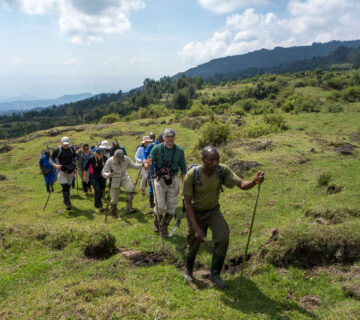
Gorilla trekking is the country’s most iconic wildlife experience and often takes priority over traditional Big Five safaris.
This adds a unique dimension not available in most other safari destinations.
Chimpanzees and Other Primates
Chimpanzees are another major highlight, particularly in Kibale National Park.
Uganda also hosts a wide range of monkey species and other primates, making it one of the best destinations in Africa for primate diversity.
Hippos and Crocodiles
Water-based wildlife is abundant in Uganda, particularly along the Kazinga Channel and the Nile River.
Hippos are commonly seen in large numbers, while Nile crocodiles are frequently observed along riverbanks and water systems.
Antelope and Grazing Species
Various antelope species, including Uganda kob, waterbuck, and others, are widely distributed across savannah parks.
These species form the foundation of the predator-prey ecosystem and are frequently seen during game drives.
Birdlife Diversity
Uganda is one of Africa’s top birding destinations, with over 1,000 recorded species.
Birdlife can be observed across all habitats, from wetlands and savannah to dense forest ecosystems.
Structuring a Safari to See the Big Five in Uganda
To realistically see all members of the Big Five, a well-planned itinerary typically includes:
Ziwa Rhino Sanctuary for rhinos
Murchison Falls National Park for lions, elephants, buffalo, and potential leopard sightings
Queen Elizabeth National Park for additional lion, elephant, and buffalo encounters
This structure allows for a balanced safari that covers both Big Five species and Uganda’s broader wildlife highlights.
The Role of Time and Expectation
Unlike high-density wildlife destinations, Uganda requires more time to achieve a full Big Five checklist.
A short safari may deliver several of the Big Five, but seeing all five usually requires a multi-destination itinerary over several days.
Expectations should be adjusted to reflect the nature of the ecosystems and the distribution of wildlife.
Wildlife Viewing in Uganda
In practical terms, Uganda is not a Big Five-first destination. It is a biodiversity-first destination.
The Big Five are present, but they are part of a larger ecological experience that includes primates, birdlife, and varied landscapes.
This means the value of a Uganda safari is not measured solely by completing a checklist, but by the range of ecosystems and species encountered across the journey.
The combination of gorilla trekking in Bwindi Impenetrable National Park, chimpanzee tracking in Kibale National Park, and wildlife viewing in Queen Elizabeth and Murchison Falls creates a layered safari experience that extends beyond the traditional Big Five framework.
Start Planning Your Next Trip To Africa
If you can picture yourself in one—or several—of these exceptional retreats, the next move is simple. We design fully tailored African safaris that bring these experiences together seamlessly, from private gorilla encounters to luxury lodges in the heart of the wild.
Every detail is carefully planned, so your journey feels effortless from start to finish. Reach out in whichever way suits you best, and let’s begin crafting your safari.
Start Planning