Golden Monkey Trekking in Rwanda

Golden Monkey Trekking in Rwanda

Golden Monkey Trekking in Rwanda: The Complete Guide to Volcanoes NP’s Other Primates

Golden monkey trekking is often overshadowed by gorilla trekking, but it is one of the most engaging and underrated wildlife experiences in Rwanda. Inside Volcanoes National Park, these fast-moving, highly social primates offer a completely different kind of encounter—more dynamic, more playful, and often more visually active than gorillas.

If gorilla trekking is about stillness and intensity, golden monkey trekking is about movement and energy.

What Are Golden Monkeys?

Golden monkeys are a subspecies of the blue monkey, scientifically known as Cercopithecus kandti. They are endemic to the Virunga volcanic range, meaning they are only found in this specific region spanning Rwanda, Uganda, and the Democratic Republic of Congo.

They are easily recognisable by:
bright golden-orange fur across the back and flanks
dark faces with expressive eyes
long tails used for balance in bamboo forests

Unlike gorillas, which spend much of their time on the ground, golden monkeys are highly arboreal and constantly in motion.

Where the Trek Takes Place

Golden monkey trekking happens within the bamboo zones of Volcanoes National Park, typically at lower altitudes compared to gorilla trekking routes.

This is important because:
the terrain is generally less steep
the vegetation is more open in bamboo areas
trekking distances are often shorter

However, “easier” does not mean effortless. You are still walking through forest terrain with uneven ground and changing conditions.

How the Experience Differs from Gorilla Trekking

The structure of the day is similar to gorilla trekking:
early morning briefing
group assignment
guided trek into the forest
one-hour observation window

But the experience itself feels completely different.

With golden monkeys:
there is constant movement
groups are larger and more active
interactions are less predictable and more energetic
photography requires faster reaction

Instead of quietly observing a resting group, you are tracking a lively troop moving through bamboo stands and forest edges.

The Trek: What to Expect

Treks to golden monkeys are usually shorter than gorilla treks, often taking between one and three hours to locate the troop.

Because they stay in more accessible zones, trekking is generally:
less steep
less physically demanding
more consistent in duration

Once located, the one-hour viewing rule applies, just like with gorillas.

The One-Hour Encounter

The hour with golden monkeys feels very different from a gorilla encounter.

You will likely see:
juveniles jumping between branches
individuals feeding on bamboo shoots
rapid movement across the forest floor and canopy
constant social interaction within the troop

Unlike gorillas, which often stay in one place, golden monkeys rarely remain still.

This creates a more dynamic but also more chaotic viewing experience.

Photography: Fast and Challenging

Golden monkeys are excellent for photography, but they are not easy subjects.

Challenges include:
fast movement
changing light conditions in forest environments
obstruction from vegetation
constant repositioning required

However, the reward is unique—bright coloration, expressive faces, and action-filled scenes.

Fast shutter speeds and readiness are essential.

Permits and Cost

Golden monkey permits are significantly more affordable than gorilla permits.

This makes them:
a strong alternative for travellers on a tighter budget
a complementary activity alongside gorilla trekking
an accessible entry point into primate trekking experiences

Despite the lower cost, the experience is still fully guided and professionally managed.

Who Golden Monkey Trekking Is Best For

This experience works particularly well for:
travellers who want a lighter trekking option
families or those with moderate fitness levels
photographers interested in active wildlife
visitors who already plan to see gorillas and want variety

It is also ideal as a second trekking day after gorillas, offering contrast rather than repetition.

Fitness Requirements

Golden monkey trekking is generally easier than gorilla trekking, but it still requires basic fitness.

You should be comfortable with:
walking for a few hours
uneven terrain
light elevation changes

For most travellers, it is manageable without extensive preparation.

Why It Is Often Overlooked

Golden monkey trekking receives less attention because gorillas dominate Rwanda’s tourism identity.

However, this creates an advantage:
fewer visitors
less pressure on the experience
more relaxed trekking pace

Those who include it often find it to be one of the most enjoyable and surprising parts of their trip.

Conservation Importance

Golden monkeys are also a conservation priority.

Like gorillas, they depend on protected habitat within the Virunga region. Controlled tourism helps fund:
habitat protection
monitoring and research
anti-poaching efforts

Their presence reinforces the ecological importance of Volcanoes National Park beyond gorilla conservation alone.

Combining with Gorilla Trekking

Many travellers combine both experiences in a single itinerary.

This works well because:
logistics are shared
park access is the same
trekking styles are different enough to feel distinct

Doing both provides a broader understanding of the park’s primate diversity.

Insight

Golden monkey trekking in Volcanoes National Park is not a secondary experience—it is a different one.

Where gorilla trekking is slow, intense, and grounded, golden monkey trekking is fast, energetic, and constantly moving.

It requires less physical effort but more visual attention. It offers less stillness but more action.

For travellers willing to look beyond the headline attraction, it delivers one of the most engaging primate encounters in East Africa.
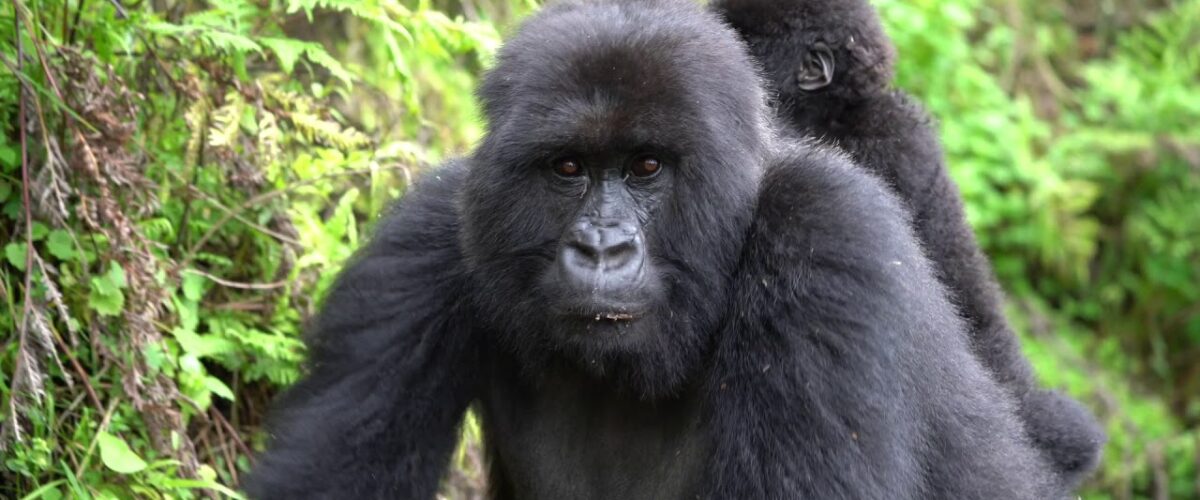
Rwanda’s Gorilla Conservation Story

Rwanda’s Gorilla Conservation Story

Rwanda’s Gorilla Conservation Story: From Near Extinction to 1,000+

The recovery of mountain gorillas in Rwanda is one of the most important conservation success stories in modern wildlife management. What was once a species on the edge of extinction has, through sustained effort, grown to a population of over 1,000 individuals across the Virunga and Bwindi ecosystems.

This recovery did not happen by chance. It is the result of decades of protection, scientific research, strict tourism control, and community involvement centered around places like Volcanoes National Park.

Understanding this story requires going back to the period when mountain gorillas were in serious decline.

The Crisis: Poaching, Habitat Loss and Instability

In the late 20th century, mountain gorillas faced multiple threats at once.

Poaching was widespread, not always targeting gorillas directly but affecting them through snares set for other animals. Habitat loss from agriculture and human expansion reduced available forest space. Political instability in the region made conservation enforcement inconsistent and dangerous.

By the 1980s, the global mountain gorilla population had dropped to critically low numbers—fewer than 300 individuals in some estimates within the Virunga region.

At that point, extinction was considered a real possibility.

The Turning Point: Long-Term Research and Protection

One of the earliest and most influential conservation efforts came through long-term research and protection programs in Rwanda.

Led by primatologists such as Dian Fossey, early work focused on understanding gorilla behaviour, social structures, and threats. This research created the foundation for effective protection strategies.

More importantly, it established a constant human presence in gorilla habitats—not for tourism, but for monitoring and anti-poaching.

This marked the beginning of continuous, structured conservation.

Anti-Poaching Enforcement and Ranger Systems

As conservation efforts strengthened, Rwanda invested heavily in ranger-based protection.

Inside Volcanoes National Park, ranger teams began:
regular patrols to remove snares
monitoring gorilla groups daily
responding to illegal activity
protecting critical habitat zones

This constant ground presence became one of the most effective deterrents against poaching.

Unlike earlier periods, enforcement became systematic rather than reactive.

Habituation: A Controlled Conservation Tool

One of the most important developments was the controlled habituation of gorilla families.

Habituation allows gorillas to tolerate human presence under strict conditions. This made it possible to introduce carefully managed tourism while still protecting the animals.

Habituation serves two key purposes:
it enables monitoring of gorilla health and behaviour
it creates economic value through tourism

Without habituation, modern gorilla conservation at this scale would not be possible.

Tourism as a Conservation Engine

Rwanda’s decision to link conservation with high-value tourism changed the financial model completely.

By limiting visitor numbers and charging premium permit fees, Rwanda created a system where each tourist contributes significantly to conservation funding.

Revenue supports:
ranger salaries and equipment
anti-poaching operations
veterinary care for gorillas
park infrastructure and management

This model transformed gorillas from a vulnerable species into a protected economic asset.

Veterinary Care and Gorilla Health Monitoring

Another critical factor in population recovery is direct medical intervention.

Specialised veterinary teams monitor gorilla health and intervene when necessary, particularly in cases of:
injuries from snares
disease risks
human-related health threats

This level of direct care is unusual in wildlife conservation but has been essential for stabilising and growing the population.

Community Involvement: The Long-Term Key

Conservation cannot succeed without local support.

Rwanda implemented revenue-sharing programs that allocate a portion of tourism income to communities living near the park.

This funding supports:
schools and education projects
healthcare facilities
local infrastructure development

As a result, communities have a direct incentive to support gorilla conservation rather than exploit forest resources.

This shift from conflict to cooperation is one of the most important elements of long-term success.

Strict Visitor Management

Tourism in Volcanoes National Park is tightly controlled.

Rules include:
limited permits per day
restricted group sizes
one-hour viewing limit
minimum distance requirements
health protocols for visitors

These measures ensure that tourism does not negatively impact gorilla behaviour or health.

The system prioritises sustainability over volume.

Population Growth: A Rare Conservation Outcome

Because of these combined efforts, mountain gorilla numbers have steadily increased over time.

Today, the population across Rwanda, Uganda, and the Democratic Republic of Congo exceeds 1,000 individuals.

This makes mountain gorillas one of the few critically endangered species to show consistent population recovery in the wild.

It is not a complete success—gorillas remain vulnerable—but it is a significant reversal from past decline.

Ongoing Challenges

Despite progress, conservation is not finished.

Key challenges remain:
limited habitat space
risk of disease transmission from humans
pressure from growing human populations
need for continuous funding and enforcement

The system works, but only as long as it is actively maintained.

Why Rwanda’s Model Matters Globally

Rwanda’s approach has become a reference point for conservation strategies worldwide.

It demonstrates that:
wildlife protection can be financially sustainable
low-volume, high-value tourism can reduce environmental pressure
community involvement is essential for long-term success

This model has influenced conservation thinking beyond gorillas.

Insight

Rwanda’s gorilla conservation story is not just about increasing numbers. It is about building a system where protection, tourism, and community benefit reinforce each other.

Inside Volcanoes National Park, this system operates daily through ranger patrols, controlled tourism, veterinary care, and local engagement.

The result is a rare outcome in conservation: a species once close to extinction now showing measurable recovery.

The success is real, but it is also fragile. It depends on continued discipline, funding, and cooperation to ensure that mountain gorillas remain protected for the future.

Placeholder

Rwanda’s Gorilla Conservation Story

Rwanda’s Gorilla Conservation Story: From Near Extinction to 1,000+

The recovery of mountain gorillas in Rwanda is one of the most important conservation success stories in modern wildlife management. What was once a species on the edge of extinction has, through sustained effort, grown to a population of over 1,000 individuals across the Virunga and Bwindi ecosystems.

This recovery did not happen by chance. It is the result of decades of protection, scientific research, strict tourism control, and community involvement centered around places like Volcanoes National Park.

Understanding this story requires going back to the period when mountain gorillas were in serious decline.

The Crisis: Poaching, Habitat Loss and Instability

In the late 20th century, mountain gorillas faced multiple threats at once.

Poaching was widespread, not always targeting gorillas directly but affecting them through snares set for other animals. Habitat loss from agriculture and human expansion reduced available forest space. Political instability in the region made conservation enforcement inconsistent and dangerous.

By the 1980s, the global mountain gorilla population had dropped to critically low numbers—fewer than 300 individuals in some estimates within the Virunga region.

At that point, extinction was considered a real possibility.

The Turning Point: Long-Term Research and Protection

One of the earliest and most influential conservation efforts came through long-term research and protection programs in Rwanda.

Led by primatologists such as Dian Fossey, early work focused on understanding gorilla behaviour, social structures, and threats. This research created the foundation for effective protection strategies.

More importantly, it established a constant human presence in gorilla habitats—not for tourism, but for monitoring and anti-poaching.

This marked the beginning of continuous, structured conservation.

Anti-Poaching Enforcement and Ranger Systems

As conservation efforts strengthened, Rwanda invested heavily in ranger-based protection.

Inside Volcanoes National Park, ranger teams began:
regular patrols to remove snares
monitoring gorilla groups daily
responding to illegal activity
protecting critical habitat zones

This constant ground presence became one of the most effective deterrents against poaching.

Unlike earlier periods, enforcement became systematic rather than reactive.

Habituation: A Controlled Conservation Tool

One of the most important developments was the controlled habituation of gorilla families.

Habituation allows gorillas to tolerate human presence under strict conditions. This made it possible to introduce carefully managed tourism while still protecting the animals.

Habituation serves two key purposes:
it enables monitoring of gorilla health and behaviour
it creates economic value through tourism

Without habituation, modern gorilla conservation at this scale would not be possible.

Tourism as a Conservation Engine

Rwanda’s decision to link conservation with high-value tourism changed the financial model completely.

By limiting visitor numbers and charging premium permit fees, Rwanda created a system where each tourist contributes significantly to conservation funding.

Revenue supports:
ranger salaries and equipment
anti-poaching operations
veterinary care for gorillas
park infrastructure and management

This model transformed gorillas from a vulnerable species into a protected economic asset.

Veterinary Care and Gorilla Health Monitoring

Another critical factor in population recovery is direct medical intervention.

Specialised veterinary teams monitor gorilla health and intervene when necessary, particularly in cases of:
injuries from snares
disease risks
human-related health threats

This level of direct care is unusual in wildlife conservation but has been essential for stabilising and growing the population.

Community Involvement: The Long-Term Key

Conservation cannot succeed without local support.

Rwanda implemented revenue-sharing programs that allocate a portion of tourism income to communities living near the park.

This funding supports:
schools and education projects
healthcare facilities
local infrastructure development

As a result, communities have a direct incentive to support gorilla conservation rather than exploit forest resources.

This shift from conflict to cooperation is one of the most important elements of long-term success.

Strict Visitor Management

Tourism in Volcanoes National Park is tightly controlled.

Rules include:
limited permits per day
restricted group sizes
one-hour viewing limit
minimum distance requirements
health protocols for visitors

These measures ensure that tourism does not negatively impact gorilla behaviour or health.

The system prioritises sustainability over volume.

Population Growth: A Rare Conservation Outcome

Because of these combined efforts, mountain gorilla numbers have steadily increased over time.

Today, the population across Rwanda, Uganda, and the Democratic Republic of Congo exceeds 1,000 individuals.

This makes mountain gorillas one of the few critically endangered species to show consistent population recovery in the wild.

It is not a complete success—gorillas remain vulnerable—but it is a significant reversal from past decline.

Ongoing Challenges

Despite progress, conservation is not finished.

Key challenges remain:
limited habitat space
risk of disease transmission from humans
pressure from growing human populations
need for continuous funding and enforcement

The system works, but only as long as it is actively maintained.

Why Rwanda’s Model Matters Globally

Rwanda’s approach has become a reference point for conservation strategies worldwide.

It demonstrates that:
wildlife protection can be financially sustainable
low-volume, high-value tourism can reduce environmental pressure
community involvement is essential for long-term success

This model has influenced conservation thinking beyond gorillas.

Insight

Rwanda’s gorilla conservation story is not just about increasing numbers. It is about building a system where protection, tourism, and community benefit reinforce each other.

Inside Volcanoes National Park, this system operates daily through ranger patrols, controlled tourism, veterinary care, and local engagement.

The result is a rare outcome in conservation: a species once close to extinction now showing measurable recovery.

The success is real, but it is also fragile. It depends on continued discipline, funding, and cooperation to ensure that mountain gorillas remain protected for the future.

Gorilla Trekking Fitness

Gorilla Trekking Fitness

Gorilla Trekking Fitness: Are You Fit Enough for Rwanda’s Volcanoes?

Gorilla trekking in Rwanda is often marketed as a once-in-a-lifetime wildlife experience—and it is—but it is also a physical activity that takes place in steep, high-altitude terrain. The question of fitness is not about athletic performance. It is about whether you can comfortably handle several hours of walking in unpredictable conditions inside Volcanoes National Park.

The honest answer is that most reasonably healthy travellers can do it, but very few should underestimate it.

The Core Reality: It Is a Hike, Not a Walk

A gorilla trek is not a flat nature stroll.

The terrain includes:
steep slopes on volcanic foothills
dense forest with no fixed trails
mud, loose soil, and thick vegetation
altitude ranging roughly between 2,500 and 3,000 metres

This combination means you are working against both gravity and reduced oxygen levels.

Even shorter treks can feel harder than expected.

How Long Do You Actually Trek?

This is the most unpredictable part.

Trekking time depends entirely on where the gorillas are located on that day.

You could:
reach them in under an hour
trek for 3–5 hours before finding them
spend additional time hiking back afterward

There is no guaranteed duration.

This variability is why baseline fitness matters more than peak fitness.

What “Fit Enough” Really Means

You do not need to be an athlete, but you should be comfortable with sustained walking on uneven terrain.

A realistic benchmark:
you can walk for 2–4 hours with breaks
you can handle hills or stairs without severe fatigue
you are comfortable on uneven or slippery ground

If that describes you, you are likely fit enough.

If not, the trek becomes significantly more challenging and less enjoyable.

The Altitude Factor

One of the most underestimated challenges is altitude.

Inside Volcanoes National Park, the air is thinner than at sea level.

This can cause:
faster fatigue
shortness of breath
slower recovery during breaks

You do not need full acclimatisation like on a mountain climb, but you will feel the difference if you are not used to elevation.

Terrain Difficulty: Not Technically Hard, But Physically Demanding

There is no climbing in the technical sense—no ropes or specialist skills required.

However, the terrain demands:
balance on uneven ground
steady pacing on steep inclines
confidence walking through dense vegetation

In wet conditions, trails can become muddy and slippery, which increases effort.

The Role of Guides and Porters

This is not a solo hike.

Guides manage pace and route, and they adjust based on group ability.

Porters are strongly recommended and often underestimated.

They:
carry your backpack
assist on steep sections
provide physical support if needed

Hiring a porter is not about luxury—it is about conserving energy for the trek itself.

How Group Assignment Helps Manage Fitness

On the morning of your trek, park staff assign groups based on fitness levels.

If you:
communicate that you prefer an easier trek
are older or less experienced with hiking

you are more likely to be assigned to a gorilla family located closer to the park edge.

This system helps balance the experience across different ability levels.

When Fitness Becomes a Problem

The trek becomes difficult if:
you struggle with continuous walking
you have limited mobility or joint issues
you are not comfortable with uneven terrain
you are significantly affected by altitude

In these cases, the experience can shift from enjoyable to exhausting.

This does not mean you cannot go—but you need to plan carefully and be realistic.

Preparation Before the Trek

You do not need months of training, but some preparation helps.

In the weeks before travel:
walk regularly on varied terrain
include hills or stair climbing
build comfort with 2–3 hour walks

This is enough to make a noticeable difference.

Mental Fitness Matters Too

Physical ability is only part of it.

Patience and mindset matter just as much.

You need to be comfortable with:
uncertain trekking duration
changing conditions
slow, steady pacing

Those who approach the trek as a flexible experience tend to enjoy it more.

The Reward vs Effort Equation

The effort required is real, but it is not extreme.

And the reward—standing a few metres from a wild mountain gorilla—is one of the most powerful wildlife encounters possible.

For most travellers, the physical effort enhances the experience rather than detracts from it.

Insight

You are fit enough for a Rwanda gorilla trek if you can handle sustained walking in uneven, hilly terrain without significant strain.

Inside Volcanoes National Park, the challenge comes from a combination of altitude, terrain, and unpredictability—not technical difficulty.

With honest self-assessment, basic preparation, and the support of guides and porters, the vast majority of travellers can complete the trek successfully.

The key is not peak fitness. It is realistic expectations and steady endurance.

What Actually Happens on a Rwanda Gorilla Trek

What Actually Happens on a Rwanda Gorilla Trek

What Actually Happens on a Rwanda Gorilla Trek: Hour by Hour

A Rwanda gorilla trek is often described as a single highlight moment—standing a few metres from a mountain gorilla in the wild. But the reality is a structured, time-controlled experience that unfolds step by step across an entire day inside Volcanoes National Park.

Understanding the actual flow helps set realistic expectations. This is not just an hour with gorillas. It is a full-day process built around tracking, terrain, and controlled interaction.

05:00 – 06:00: Early Wake-Up and Preparation

The day starts early.

Most lodges near the park organise wake-up calls before sunrise. You have breakfast, pack essentials, and prepare for a physically active morning.

Typical preparation includes:
layered clothing for changing temperatures
water and light snacks
rain protection depending on season
camera equipment

This is not a slow morning. Timing matters because trekking assignments begin shortly after arrival at the park headquarters.

06:30 – 07:00: Transfer to Park Headquarters

You are driven to the central briefing point near the park entrance.

Even if your lodge is close, this transfer is necessary because all trekking groups are organised from a central location.

By this stage, multiple trekking groups are gathering, and the structure of the day becomes more formal.

07:00 – 08:00: Registration, Briefing, and Group Assignment

This is one of the most important parts of the day.

At the park headquarters, you:
register your permit
attend a mandatory briefing
get assigned to a gorilla family and guide

The briefing covers:
safety rules
distance guidelines (usually 7 metres minimum)
behaviour around gorillas
health protocols to protect the animals

You are then placed into a small group—usually up to 8 visitors—assigned to one specific gorilla family.

At this point, your trekking experience is defined.

08:00 – 09:00: Drive to the Trek Starting Point

After assignment, you transfer by vehicle to the trailhead closest to your allocated gorilla group.

This drive can be short or longer depending on where your group is located within Volcanoes National Park.

The terrain shifts quickly from open farmland at the park boundary to dense forest at the base of the mountains.

09:00 – 12:00+: The Trek Begins

This is the most variable phase of the day.

The trek starts through farmland edges and quickly moves into forest terrain. From here, the experience depends entirely on where the gorillas were last tracked.

Key realities:
there are no fixed paths deep in the forest
guides follow signs such as broken vegetation and fresh tracks
trekking time can range from under an hour to several hours

Porters are available and often recommended. They assist with bags and provide support on steep or slippery terrain.

This part of the experience is physically active, often involving:
muddy trails
dense vegetation
steep inclines
variable weather conditions

Meanwhile, trackers who left earlier in the morning are already locating the gorilla group and communicating its position to your guide.

The Final Approach: Controlled and Quiet

Once the gorillas are located, everything changes.

You are asked to:
leave bags with porters or at a designated point
move slowly and quietly
follow strict instructions from the guide

The final approach is careful and controlled to avoid disturbing the animals.

This is where anticipation builds. You begin to hear movement, branches breaking, or low vocalisations before you see anything.

The One Hour: Gorilla Encounter

Once contact is made, your one-hour viewing window begins.

This is strictly timed.

Inside that hour, you observe the gorilla family in their natural environment. What happens depends entirely on their behaviour that day.

You may see:
a silverback resting and observing the group
juveniles playing and climbing
mothers feeding or grooming infants
subtle social interactions within the group

There is no performance. This is not staged.

Sometimes the gorillas remain still and calm. Other times they move around you, occasionally passing very close.

Guides manage positioning to maintain safe distance while allowing clear observation.

Photography is allowed, but without flash.

This hour often feels shorter than expected because of the intensity of the experience.

After the Hour: Immediate Exit

At the end of the hour, you must leave.

This rule is non-negotiable and exists to:
limit human impact
reduce stress on the gorillas
minimise disease transmission risk

Even if the encounter feels incomplete, the time limit is enforced consistently across all groups.

12:00 – 15:00+: Trek Back

The return trek begins immediately after leaving the gorillas.

Depending on how far you travelled to reach them, the hike back can take another one to several hours.

Fatigue is more noticeable on the return, especially after steep climbs or wet conditions.

At the park boundary, vehicles are waiting to transfer you back to the main area.

Late Afternoon: Return to Lodge

You return to your lodge in the afternoon.

This part of the day is typically relaxed:
late lunch or early dinner
time to rest and reflect
informal sharing of experiences with other travellers

The physical effort is done, but the emotional impact of the encounter often continues long after.

The Most Important Reality

The “hour with gorillas” is only a small part of the overall experience.

The full day includes:
early start logistics
group organisation
variable trekking time
controlled wildlife interaction
return hike through challenging terrain

This is why the experience feels immersive rather than brief.

Insight

A Rwanda gorilla trek inside Volcanoes National Park is not just a wildlife sighting. It is a structured, conservation-driven process that combines physical effort, strict management, and a short but powerful moment of close observation.

The hour with the gorillas is the highlight, but the journey to reach them is what makes the experience meaningful.

Understanding the full day—from early morning preparation to afternoon return—allows you to approach the trek with realistic expectations and appreciate it as a complete, carefully managed encounter rather than a single event.

Rwanda vs Uganda for Gorilla Trekking

Rwanda vs Uganda for Gorilla Trekking

Rwanda vs Uganda for Gorilla Trekking: An Honest 2026 Comparison

Gorilla trekking in East Africa is one of the most powerful wildlife experiences available anywhere in the world. The decision between Rwanda and Uganda is not about which country has “better gorillas.” The mountain gorillas are the same species, living across a shared ecosystem. The real difference lies in how the experience is structured, priced, and delivered.

Rwanda offers trekking inside Volcanoes National Park, while Uganda’s main trekking takes place in Bwindi Impenetrable National Park and Mgahinga Gorilla National Park.

The right choice depends on travel style, budget, time, and expectations.

The Core Difference: Premium vs Value Positioning

Rwanda has built its gorilla tourism model around a high-cost, low-volume strategy. Uganda has taken a more accessible, value-driven approach.

This single difference shapes everything else.

Rwanda is designed for:
short, efficient itineraries
luxury lodge experiences
highly controlled visitor flow

Uganda is designed for:
longer, more immersive journeys
lower permit costs
greater geographic spread of trekking areas

Neither is better universally. They serve different types of travellers.

Permit Cost: The Most Visible Difference

The price gap is significant.

Rwanda gorilla permits are around $1,500 per person.
Uganda gorilla permits are significantly lower (typically around $700).

This difference alone often determines the decision.

However, the permit cost is not just about access—it reflects the entire tourism model behind it.

Rwanda charges more to limit numbers and maintain a premium experience. Uganda allows more volume at a lower price point.

Accessibility and Travel Time

Accessibility is where Rwanda has a clear advantage.

From Kigali, it takes only a few hours by road to reach Volcanoes National Park. This makes it possible to do gorilla trekking in a short trip, even 2–3 days.

Uganda requires more travel time.

Reaching Bwindi Impenetrable National Park often involves:
long overland drives (8–10 hours)
or domestic flights plus road transfers

This makes Uganda better suited to longer itineraries rather than quick extensions.

Trekking Experience: Terrain and Difficulty

Both countries offer authentic trekking experiences, but the terrain differs.

Rwanda:
more open bamboo forests in some areas
generally shorter trekking times on average
better-defined hiking routes

Uganda:
denser, thicker rainforest
more varied and sometimes steeper terrain
longer and less predictable trekking durations

Uganda often feels more rugged and physically demanding. Rwanda tends to be more structured and manageable, though still challenging.

Lodge Standards and Overall Comfort

Rwanda positions itself strongly in the luxury segment.

Near Volcanoes National Park, you will find:
high-end lodges
short transfer times
polished service infrastructure

Uganda offers a broader range:
luxury lodges are available
but also many mid-range and budget options
lodges are more spread out due to park geography

If your priority is seamless, high-end travel, Rwanda has the edge. If you want flexibility in pricing and style, Uganda offers more variety.

Visitor Density and Experience Feel

Both countries control trekking numbers per gorilla group, so the actual encounter is similar in terms of group size.

However, the broader tourism environment feels different.

Rwanda:
more curated
more predictable
less variation in experience

Uganda:
more varied
less standardised
more “expedition-like” in certain areas

This affects how the overall journey feels, not the gorilla encounter itself.

Combining Gorilla Trekking with Other Safaris

This is where Uganda can be more versatile.

Uganda allows you to combine gorilla trekking with:
chimpanzee tracking
savannah safaris in parks like Queen Elizabeth National Park
boat safaris and diverse ecosystems

Rwanda’s strength is efficiency, but its wildlife circuit beyond gorillas is more limited.

Many travellers pair Rwanda with a Tanzania safari, while Uganda can function as a standalone multi-activity destination.

Time Efficiency vs Depth of Experience

Rwanda is ideal if:
you have limited time
you want a focused gorilla experience
you prefer minimal travel logistics

Uganda is ideal if:
you have more time to explore
you want a broader nature experience
you are comfortable with longer travel days

This is one of the most important distinctions when planning.

The Conservation Model

Both countries invest heavily in conservation, but through slightly different approaches.

Rwanda:
fewer visitors, higher revenue per person
strong emphasis on controlled access

Uganda:
more permits at lower cost
broader tourism participation

Both models support gorilla protection effectively, but through different economic strategies.

Which One Should You Choose?

Choose Rwanda if:
you want a short, high-end, efficient experience
you are combining gorillas with a luxury safari elsewhere
you prefer predictable logistics and premium infrastructure

Choose Uganda if:
you want better value for money
you are planning a longer, more immersive trip
you are comfortable with more complex travel logistics

Insight

Rwanda and Uganda offer the same core wildlife encounter—mountain gorillas in their natural habitat—but through two distinct travel philosophies.

Rwanda, through Volcanoes National Park, delivers a premium, efficient, and tightly managed experience.

Uganda, through Bwindi Impenetrable National Park and Mgahinga Gorilla National Park, delivers a broader, more flexible, and often more adventurous journey.

The right choice is not about which is “better.” It is about which structure aligns with how you want to travel.

How Far in Advance Must You Book a Rwanda Gorilla Permit?

How Far in Advance Must You Book a Rwanda Gorilla Permit?

How Far in Advance Must You Book a Rwanda Gorilla Permit?

Booking a Rwanda gorilla permit is not something you leave to the last minute. The timing directly affects whether you secure a spot at all, especially because trekking access inside Volcanoes National Park is strictly limited.

The honest answer is this: you should book as early as possible, and in many cases, several months ahead is not just recommended—it is necessary.

The Core Constraint: Limited Daily Permits

Rwanda operates a tightly controlled gorilla tourism system.

Each habituated gorilla family can only be visited by a small number of people per day. When you multiply that across all available groups, the total daily permits are still very limited.

This means availability is not flexible. Once permits are sold for a specific date, that date is effectively closed.

There is no overflow system.

High Season: Book 6–12 Months in Advance

If you are travelling during peak safari and trekking months, advance booking becomes critical.

High-demand periods include:
June to September
December to February

During these months, Rwanda attracts both safari travellers and dedicated gorilla trekkers. Permits can sell out many months in advance, particularly for preferred dates.

For these periods, a 6–12 month booking window is the safest approach.

Anything shorter starts to carry real risk of limited availability.

Shoulder Season: 3–6 Months Is Usually Enough

Outside peak travel months, demand is still strong but more flexible.

For shoulder periods such as:
March
late October to early December

Booking 3–6 months in advance is generally sufficient.

However, even in these periods, popular dates—especially those tied to holiday travel—can still fill up early.

Low Season: Possible Last-Minute, But Not Reliable

During the rainy seasons (typically April, May, and parts of November), demand drops.

In these months, it is sometimes possible to secure permits with shorter notice.

However, this is not guaranteed.

The key mistake travellers make is assuming low season equals unlimited availability. It does not. The number of permits remains fixed regardless of demand.

Why Last-Minute Booking Is Risky

Even if you find availability close to your travel date, you lose flexibility.

Last-minute bookings often mean:
limited choice of trekking dates
less control over your overall itinerary
higher pressure on accommodation availability
less time to coordinate flights and logistics

For a structured experience like gorilla trekking, this creates unnecessary constraints.

Gorilla Permits Are Date-Specific

Unlike general park entry, a gorilla permit is tied to a specific date.

You cannot:
change it easily
transfer it freely
adjust it without penalties or restrictions

This is why early planning is important. Your entire itinerary often builds around the permit date.

The Safari Combination Factor

Many travellers combine Rwanda gorilla trekking with safaris in Tanzania or Kenya.

This increases the need for early booking because:
multiple destinations must align
flight schedules must match permit dates
lodges and camps must be secured across countries

In these cases, gorilla permits often become the anchor around which the entire trip is structured.

Luxury Travel Demand Increases Pressure

Rwanda’s positioning as a high-end destination means that many travellers booking gorilla permits are also booking premium lodges near the park.

These properties have limited capacity, which creates an additional layer of demand around the same travel dates.

As a result, even if permits are available, accommodation may not be.

This is another reason to book early.

What Safari Operators Actually Recommend

Most experienced safari planners follow a simple rule:

Secure the gorilla permit first.

Once that is confirmed, they build the rest of the itinerary around it.

This avoids the risk of designing a trip and then discovering that trekking permits are unavailable for your dates.

What Happens If You Book Too Late

If you delay too long, you may face:
complete unavailability for your preferred dates
forced changes to travel timing
compromised itinerary flow
higher costs due to limited options

In some cases, travellers are forced to shift countries entirely if Rwanda permits are sold out.

Insight

For gorilla trekking in Volcanoes National Park, timing is everything.

The realistic booking window depends on season, but a safe rule is:
6–12 months in advance for peak periods
3–6 months for moderate demand
shorter notice only in low season, with risk

This is not a flexible activity. It is a controlled conservation experience with fixed daily capacity.

The earlier you book, the more control you have over your itinerary. The later you wait, the more your options shrink.

Rwanda’s 12 Gorilla Families

Rwanda’s 12 Gorilla Families

Rwanda’s 12 Gorilla Families: Which Group Should You Request and How?

Gorilla trekking in Rwanda is often described as a single experience, but in reality it varies significantly depending on which gorilla family you are assigned. Inside Volcanoes National Park, there are multiple habituated gorilla groups, each with its own territory, behaviour patterns, and trekking difficulty.

The idea of “choosing the best group” is slightly misleading. You are not selecting a product—you are being matched to a wildlife encounter shaped by terrain, distance, and gorilla movement on that specific day.

What you can do, however, is influence your assignment.

What Gorilla “Families” Actually Mean

A gorilla family, or habituated group, is a community of mountain gorillas that has been gradually accustomed to human presence under controlled conditions.

Each group typically includes:
a dominant silverback
multiple females
juveniles and infants
sometimes subordinate males

Habituation allows visitors to observe them at close range for a strictly limited period—usually one hour.

Each group occupies a specific territory within the park, but movement is not fixed. Gorillas shift daily depending on food availability and internal dynamics.

Why Group Assignment Matters

Your assigned group determines:
how long you trek before reaching the gorillas
the terrain difficulty (steep forest vs lower slopes)
the type of interaction (playful juveniles vs calm adult groups)
photographic conditions (dense vegetation vs open bamboo zones)

This is why two visitors on the same day can have completely different trekking experiences.

The 12 Gorilla Families: General Categories

Rather than focusing on individual names, it is more useful to understand the categories of groups in Rwanda.

Easier, Shorter Treks

Some gorilla families tend to stay closer to park entry points or in lower-altitude zones.

These are often recommended for:
older travellers
families
those with limited hiking experience
travellers prioritising comfort over challenge

Treks to these groups can still take time, but they are generally less physically demanding.

Mid-Range Treks

Many groups fall into a middle category where trekking time ranges from moderate to challenging depending on daily movement.

These are the most common assignments and offer balanced experiences:
reasonable trekking effort
strong wildlife interaction
varied terrain

For most travellers, this is the standard experience.

Challenging, High-Altitude Treks

Some gorilla families live higher up the slopes of the Virunga Mountains, requiring longer and steeper hikes.

These are best suited for:
physically fit travellers
adventure-focused visitors
photographers looking for unique terrain and lighting

Treks can take several hours each way and involve steep, forested slopes.

However, these groups often provide some of the most rewarding and less crowded encounters.

You Cannot Fully “Choose” Your Group

This is where expectations need to be clear.

Gorilla group assignments are managed by park authorities based on:
group size limits (maximum visitors per group)
daily gorilla movement patterns
visitor fitness and age
guide and ranger logistics

You cannot directly book a specific gorilla family in advance.

However, you can make a request—and that request matters.

How to Request the Right Gorilla Group

The assignment process happens on the morning of your trek.

Before allocation, guides typically ask about:
age
fitness level
hiking preference

This is your opportunity to influence the outcome.

Be Honest About Fitness

If you request an “easy group,” you are more likely to be assigned to one of the closer families.

If you express interest in a longer trek, guides may assign you to a more remote group.

Overstating or understating your fitness can lead to a mismatch, which affects your entire experience.

Communicate Your Priorities

You can also mention specific preferences such as:
shorter trek
photography opportunities
interest in observing playful groups
desire for a more adventurous hike

While not guaranteed, guides often consider these factors when making assignments.

Arrive Early and Be Engaged

Being present and engaged during the briefing increases the likelihood that your preferences are heard and considered.

Late arrivals have fewer options because group assignments may already be underway.

What Actually Matters More Than the Group Name

Many travellers focus too much on specific gorilla family names, but in practice, the quality of the experience is driven by:
how the gorillas behave that day
your guide’s ability to position you well
weather and lighting conditions
your comfort level during the trek

All habituated groups offer close, controlled, and meaningful encounters.

There is no “bad” group.

The One-Hour Rule: Equal for All Groups

Regardless of which family you visit, the viewing time is the same.

You spend one hour with the gorillas once they are located.

This is strictly enforced to:
minimise stress on the animals
reduce disease transmission risk
maintain consistent conservation standards

This means the trekking experience differs, but the core interaction duration does not.

Why Rwanda Limits Group Access

Inside Volcanoes National Park, each gorilla family is visited by a limited number of people per day.

This ensures:
low human impact
controlled exposure for gorillas
high-quality visitor experience

This system is one of the reasons Rwanda maintains a premium, low-volume tourism model.

Insight

You cannot fully choose your gorilla family in Rwanda, but you can influence your assignment by communicating clearly about your fitness and expectations.

Inside Volcanoes National Park, all habituated groups offer exceptional encounters. The real difference lies in the journey to reach them, not the value of the experience once you arrive.

The best approach is not to chase a specific group name, but to align your trekking difficulty with your ability and interests. That is what ultimately defines the quality of your gorilla trekking experience.

Rwanda Gorilla Permit

Rwanda Gorilla Permit

Rwanda Gorilla Permit: What the $1,500 Fee Covers and Why Rwanda Charges More Than Uganda

Rwanda’s gorilla trekking permit—priced at around $1,500 per person—is one of the most debated fees in African tourism. On the surface, it looks expensive compared to neighbouring countries, particularly Uganda. But the price is not arbitrary. It reflects a deliberate conservation and tourism strategy built around limited access, high protection standards, and premium positioning.

To understand the difference, you need to look at what the fee actually funds and how Rwanda has structured its entire gorilla tourism model.

What the Gorilla Permit Actually Covers

The permit is not just an entry ticket. It is a bundled conservation and management fee that supports multiple systems operating inside Volcanoes National Park, where mountain gorilla trekking takes place.

The cost contributes to:
park management and infrastructure
ranger salaries and daily tracking operations
anti-poaching patrols and surveillance
veterinary care for gorilla groups
habituation and monitoring of gorilla families
controlled visitor management systems

Gorilla trekking is tightly regulated. Only a limited number of visitors are allowed per day, and each gorilla group is visited under strict time and distance rules.

This level of control is expensive to maintain, and the permit fee is what funds it.

The Conservation Model: Low Volume, High Value

Rwanda has chosen a low-volume, high-value tourism model.

Instead of allowing large numbers of visitors at lower prices, Rwanda limits daily permits and charges more per person. The goal is to:
reduce pressure on gorilla habitats
maintain a premium, controlled visitor experience
generate sufficient revenue without mass tourism

This approach directly influences pricing. Fewer permits mean each one must carry more financial weight to sustain conservation operations.

Why Rwanda Charges More Than Uganda

Uganda offers gorilla permits at a lower price point, which raises the obvious question: why the difference?

The answer comes down to positioning, infrastructure, and strategy.

Rwanda has deliberately positioned itself as a premium destination. This includes:
high-end lodge development near the park
shorter travel times from Kigali to trekking areas
more streamlined tourism logistics
a stronger emphasis on luxury and exclusivity

Uganda, by comparison, offers a more access-focused model with:
lower permit costs
longer travel distances to trekking zones
a broader range of mid-range and budget options

Neither model is inherently better. They serve different types of travellers.

Accessibility: A Major Pricing Factor

One of Rwanda’s strongest advantages is accessibility.

From Kigali, it takes only a few hours to reach Volcanoes National Park by road. This makes it possible to do gorilla trekking in a shorter itinerary, even as a 2–3 day extension.

In Uganda, reaching parks like Bwindi Impenetrable Forest typically requires longer drives or additional domestic flights.

This convenience factor contributes to Rwanda’s premium pricing structure.

Experience Structure: What You Are Paying For

The trekking experience itself is similar in both countries in terms of gorilla interaction rules.

However, Rwanda focuses heavily on:
tight visitor control
high ranger-to-visitor coordination
well-managed trekking logistics
consistent guiding standards

The overall experience is designed to feel more curated and predictable, which aligns with its premium positioning.

Conservation Funding and Revenue Distribution

A significant portion of Rwanda’s permit revenue is reinvested into conservation and community programs.

This includes:
anti-poaching operations
habitat protection
community revenue-sharing initiatives
development projects in surrounding villages

By linking tourism revenue to community benefit, Rwanda strengthens local support for gorilla conservation.

This is a critical factor because long-term wildlife protection depends on local engagement, not just enforcement.

The Psychology of Pricing

There is also a strategic element to the pricing itself.

Higher pricing:
filters visitor volume
attracts travellers willing to invest in the experience
reduces overcrowding
positions the destination as exclusive

This is not just about revenue. It is about controlling demand and maintaining long-term sustainability.

Is the Higher Cost Justified?

Whether Rwanda’s pricing is “worth it” depends on what you value.

It makes sense if you prioritise:
short travel time
high-end lodge experiences
controlled, premium tourism environments
efficiency in itinerary design

It may not be necessary if you prioritise:
lower overall trip cost
longer, more rugged travel experiences
budget flexibility across a broader safari itinerary

Both Rwanda and Uganda offer exceptional gorilla encounters. The difference lies in how the experience is packaged and delivered.

Insight

Rwanda’s $1,500 gorilla permit is not just a tourism fee. It is the financial core of a conservation model built on exclusivity, control, and long-term sustainability.

Inside Volcanoes National Park, that fee supports ranger operations, wildlife protection, habitat management, and community engagement systems that keep gorilla populations stable.

The higher cost compared to Uganda reflects a different strategic choice: fewer visitors, higher revenue per traveller, and a tightly managed experience.

In simple terms, Rwanda is not charging more for the same product. It is offering the same wildlife encounter within a more controlled, premium tourism framework.

Should Kilimanjaro Be on Your Tanzania Safari Itinerary?

Should Kilimanjaro Be on Your Tanzania Safari Itinerary?

Should Kilimanjaro Be on Your Tanzania Safari Itinerary? An Honest Assessment for Luxury Travellers

Mount Kilimanjaro is one of the most recognisable mountains on Earth, and for many travellers it represents the ultimate African achievement. At the same time, a Tanzania safari in places like the Serengeti National Park represents one of the most rewarding wildlife experiences anywhere in the world.

The question is not whether both are impressive. They are. The real question is whether they belong in the same luxury itinerary, or whether combining them creates unnecessary compromise.

For luxury travellers, the answer is more nuanced than marketing brochures suggest.

The Core Reality: These Are Two Completely Different Luxury Experiences

A safari and a Kilimanjaro climb are both premium experiences in Tanzania, but they operate in fundamentally different ways.

A luxury safari is defined by:
comfort in remote wilderness
high-end lodges and tented camps
private guiding and flexible game drives
slow, observational travel across ecosystems

A Kilimanjaro climb, even at the highest logistical standard, is defined by:
physical endurance
multi-day trekking in basic mountain conditions
limited comfort compared to safari lodges
structured route progression rather than flexibility

This is the first key distinction: one is comfort-driven exploration, the other is achievement-driven endurance.

What Kilimanjaro Actually Feels Like in Practice

Even on well-supported luxury trekking routes, Mount Kilimanjaro is not a comfort experience in the traditional sense.

You are sleeping in mountain tents, moving through altitude zones, and adapting daily to thinning air.

There are no lodges in the safari sense, no game drives, and no downtime luxury rhythm. The experience is focused, structured, and physically demanding.

This matters because luxury travellers often expect continuity of comfort. Kilimanjaro interrupts that pattern completely.

What a Luxury Safari Actually Delivers

In contrast, a safari in the Serengeti ecosystem is built around immersion and comfort working together.

Inside the Serengeti National Park, luxury lodges and camps offer:
large private suites or tented rooms
personalised guiding and flexible schedules
high-quality dining in remote locations
game drives tailored to your pace

The experience is not physically demanding. It is observational, curated, and designed for relaxation between wildlife encounters.

The Main Conflict: Energy vs Experience Quality

The biggest issue with combining Kilimanjaro and safari in one itinerary is not logistics. It is energy distribution.

Kilimanjaro requires peak physical energy and mental focus for nearly a week or more. A safari requires relaxed attention, patience, and long observational days.

If you do Kilimanjaro first, you may arrive on safari physically drained. If you do safari first, you risk entering the climb without optimal physical conditioning or rhythm.

This creates a subtle but important compromise in both experiences.

Time Reality for Luxury Itineraries

Luxury travel is not just about comfort—it is also about pacing.

A well-designed luxury safari in northern Tanzania typically needs:
at least 5 to 7 days for meaningful wildlife immersion

A proper Kilimanjaro climb requires:
6 to 9 days depending on route and acclimatisation profile

Once you combine them, you are realistically looking at 12 to 16 days minimum, excluding international travel.

This is where many itineraries become compressed, which is exactly what luxury travel is meant to avoid.

The Psychological Shift Between Experiences

There is also a less discussed issue: psychological transition.

On safari, your mindset is:
relaxed observation
slow movement
focus on wildlife behaviour

On Kilimanjaro, your mindset becomes:
goal-oriented progression
physical endurance
daily altitude adaptation

Switching between these mindsets within the same trip can be mentally demanding, especially without buffer days.

When Combining Both Actually Works

There are scenarios where combining both works well, but they are specific.

It works best when:
you have 14+ days available
you are physically fit and experienced in trekking
you are comfortable with rapid environmental change
you prioritise “once-in-a-lifetime” experiences over relaxation

In these cases, Kilimanjaro becomes the achievement component, and the safari becomes the recovery and reward phase.

When You Should NOT Combine Them

For many luxury travellers, combining both is not the best design choice.

It is not ideal if:
you prefer slow travel with downtime
you value uninterrupted luxury lodge stays
you are sensitive to altitude or physical strain
you want deep photographic or wildlife focus in the Serengeti

In these cases, combining both reduces the quality of each experience rather than enhancing the trip.

A Strong Alternative: Choosing Depth Over Quantity

Instead of combining Kilimanjaro and safari, many luxury travellers get more value by choosing one and doing it properly.

Option 1: Safari Focus
Spend 7–10 days in northern Tanzania, focusing on the Serengeti, Ngorongoro Crater, and possibly Tarangire. This allows deeper wildlife immersion and lodge-based luxury.

Option 2: Kilimanjaro + Short Safari Add-On
Focus on the climb, then add a short 2–3 day safari for relaxation and wildlife contrast rather than full immersion.

Both approaches avoid compromise and preserve the integrity of each experience.

Why Serengeti Still Defines the Safari Experience

For most luxury travellers, the core value of Tanzania remains the safari system itself.

The ecosystem of the Serengeti National Park offers something Kilimanjaro cannot: continuous wildlife narrative.

Instead of a single summit goal, you experience:
predator-prey dynamics
migration movement patterns
ecosystem scale and variation
long-form wildlife observation

This is why many travellers ultimately prioritise safari time over mountain time.

Assessment

Should Kilimanjaro be on your Tanzania luxury safari itinerary?

The honest answer is: only if you have enough time, physical readiness, and a clear reason for doing both.

If your goal is maximum comfort, wildlife immersion, and curated luxury, then a dedicated safari in the Serengeti ecosystem will deliver a more consistent and refined experience.

If your goal includes personal challenge and achievement alongside wildlife, then combining Kilimanjaro with a safari can work—but only when the itinerary is long enough to prevent rushing either experience.

In luxury travel, the key principle is not how much you include. It is how well each experience is allowed to fully exist.