Rwanda’s Plastic Bag Ban and Clean Country Policy

Rwanda’s Plastic Bag Ban and Clean Country Policy

Rwanda’s Plastic Bag Ban and Clean Country Policy: What Travellers Need to Know

Why Rwanda feels so different on arrival

Most travellers notice it immediately after landing in Kigali. The streets look unusually clean. There is very little roadside litter. Public spaces feel orderly and well maintained. This is not accidental. It is the result of one of the strictest environmental policies in Africa: Rwanda’s national plastic bag ban and broader clean country policy.

For safari travellers, this policy is more than a background detail. It directly affects what you can bring into the country, how you pack, and how smoothly your arrival process goes.

Understanding it properly prevents inconvenience at the airport and helps you move through Rwanda without unnecessary delays.

The plastic bag ban explained simply

Rwanda has banned the importation, use, and distribution of non-biodegradable plastic bags. This policy has been in place for years and is strictly enforced.

When you arrive in Rwanda, airport security may inspect your luggage. Any plastic carrier bags are typically removed. In some cases, travellers are asked to unpack items or transfer them into reusable alternatives.

This applies to most standard plastic shopping bags and packaging materials that are not considered environmentally safe.

The goal is simple. Rwanda wants to eliminate plastic waste from its environment entirely.

Why Rwanda introduced the ban

Rwanda introduced the plastic bag ban as part of a wider environmental protection strategy.

Plastic waste had become a serious problem in many urban and rural areas. It affected drainage systems, landscapes, and wildlife habitats.

The government responded with a national policy that eliminated plastic bags and promoted alternative packaging materials.

This decision is closely linked to Rwanda’s identity as a clean and environmentally conscious destination.

It also supports tourism, especially safari tourism, where natural landscapes and wildlife are central to the experience.

How strict enforcement works in practice

The plastic bag ban is not just a guideline. It is enforced at multiple points of entry.

At Kigali International Airport, luggage may be checked for restricted plastic materials. Items can be confiscated or repackaged into permitted alternatives.

Inside the country, shops do not provide plastic bags. Instead, reusable paper or fabric alternatives are used.

This system is consistent across cities, towns, and rural areas. It is not limited to tourist zones.

Travellers quickly notice that the absence of plastic is part of everyday life in Rwanda.

What travellers should pack differently

Because of the plastic bag ban, travellers need to adjust how they pack before arriving in Rwanda.

Instead of using disposable plastic bags for toiletries, shoes, or laundry separation, it is better to use fabric pouches, packing cubes, or reusable waterproof bags.

These alternatives are widely accepted and avoid issues during airport checks.

It is also useful to avoid bringing unnecessary packaging inside checked luggage. Removing excess plastic before travel makes arrival smoother.

Small adjustments in packing style prevent delays and avoid the need to re-pack items on arrival.

The clean country policy and public behaviour

Rwanda’s environmental approach goes beyond plastic bags. The country also operates a broader clean country policy that promotes public cleanliness and environmental responsibility.

This policy encourages clean streets, organized waste management, and community participation in environmental maintenance.

One of the most visible examples is Umuganda, a national community service day held regularly. On this day, citizens participate in cleaning public spaces, repairing infrastructure, and supporting local development projects.

This system reinforces the idea that environmental cleanliness is a shared responsibility, not just a government function.

How this affects safari destinations

Rwanda’s clean environment policy extends into its national parks and safari areas.

Volcanoes National Park, Nyungwe Forest, and Akagera National Park are all maintained under strict environmental standards.

Litter is minimal in these areas. Visitor behaviour is closely regulated. Park authorities enforce rules that protect wildlife habitats from pollution and disturbance.

This creates a different safari experience compared to destinations where environmental control is less strict.

The result is cleaner landscapes and more controlled tourism environments.

Why Kigali is often described as one of Africa’s cleanest cities

Kigali is widely recognized as one of the cleanest cities in Africa. This reputation comes directly from the enforcement of environmental policies.

Waste management systems are organized. Public spaces are maintained regularly. Illegal dumping and littering are strictly discouraged.

For travellers, this creates a strong first impression of Rwanda’s governance and planning systems.

It also sets expectations for the rest of the country, especially when moving into national parks and rural areas.

Common mistake travellers make before arrival

One common mistake is assuming that plastic bags will not be an issue during travel.

Many travellers pack toiletries, clothing, or accessories in multiple plastic bags for convenience. On arrival, these may be removed or replaced.

This can cause confusion or delays at the airport.

Another mistake is expecting flexibility with packaging rules. Rwanda’s enforcement is consistent, so it is better to prepare in advance rather than adjust on arrival.

How the policy supports conservation goals

The plastic bag ban is directly linked to conservation outcomes.

Plastic waste can harm wildlife, especially in protected ecosystems. By removing plastic from circulation, Rwanda reduces environmental risks in national parks and rural habitats.

This supports species protection efforts, including mountain gorillas in Volcanoes National Park and wildlife in Akagera National Park.

Cleaner environments also improve the quality of safari experiences for visitors.

The role of tourism in reinforcing the policy

Tourism plays an important role in supporting Rwanda’s environmental policies.

Visitors are expected to follow the same cleanliness standards as residents. This includes avoiding plastic bags, respecting waste rules, and maintaining clean public spaces.

Tour operators and safari lodges also support this system by using sustainable packaging and reducing single-use materials.

This alignment between tourism and national policy strengthens overall environmental outcomes.

How luxury safari operators adapt

Luxury safari operators in Rwanda fully integrate environmental rules into their operations.

Lodges often use reusable materials, eco-friendly packaging, and controlled waste systems. Airport transfers and guiding services also inform travellers about plastic restrictions before arrival.

This ensures that guests are prepared and avoid issues during their trip.

In many cases, sustainability becomes part of the luxury experience itself.

What this means for your safari experience

For travellers, Rwanda’s plastic bag ban and clean country policy create a more structured and organized environment.

You experience cleaner cities, well-maintained parks, and clear environmental expectations.

At the same time, you need to adapt your packing and travel habits slightly before arrival.

Once you adjust, the system becomes simple and easy to follow.

The result is a safari environment that feels controlled, safe, and environmentally conscious.

Rwanda’s plastic bag ban and clean country policy are not minor regulations. They are central to how the country manages its environment and tourism industry.

These policies reduce pollution, protect wildlife habitats, and maintain some of the cleanest public spaces in Africa.

For travellers, the key requirement is simple preparation. Avoid plastic bags, use reusable packing solutions, and respect environmental rules throughout your trip.

In return, you experience a destination where conservation is visible in everyday life, from city streets in Kigali to the forests of Volcanoes National Park.

This system is one of the reasons Rwanda stands out as a leading conservation and safari destination in Africa.
How Rwanda Became Africa’s Conservation Model

How Rwanda Became Africa’s Conservation Model

How Rwanda Became Africa’s Conservation Model: The Story Behind the Numbers

A different kind of conservation success story

Rwanda is often described as Africa’s conservation success story, but that label can sound abstract until you understand what actually changed on the ground. This is not a country that simply “protected wildlife better.” It rebuilt an entire conservation system from the ground up and tied it directly to national development.

Today, Rwanda is known for mountain gorilla trekking, well-managed national parks, and clean, structured tourism. What sits behind that image is a carefully designed framework where conservation is treated as a national priority, not a side project.

To understand how Rwanda became a model, you have to look at what it started with, what it changed, and how those changes still shape safari experiences today.

Rebuilding after collapse and redefining conservation

Modern conservation in Rwanda was rebuilt after 1994, when the country faced a major national crisis. During that period, protected areas were damaged, wildlife protection weakened, and institutional systems disrupted.

In the years that followed, Rwanda focused on rebuilding governance and stability. Conservation was not treated separately from this process. Instead, it became part of national recovery planning.

This is a key difference. Many countries treat conservation as an environmental issue. Rwanda treated it as part of rebuilding the state itself.

Protected areas were reorganized, park management was strengthened, and enforcement systems were restored under a more centralized and coordinated structure.

Volcanoes National Park and the mountain gorilla turnaround

The clearest example of Rwanda’s conservation progress is Volcanoes National Park.

This park protects mountain gorillas in the Virunga Mountains. At one point, gorilla populations were under serious pressure from poaching, habitat loss, and instability in the region.

Over time, protection efforts became more structured. Ranger presence increased. Monitoring improved. Research played a stronger role in guiding decisions.

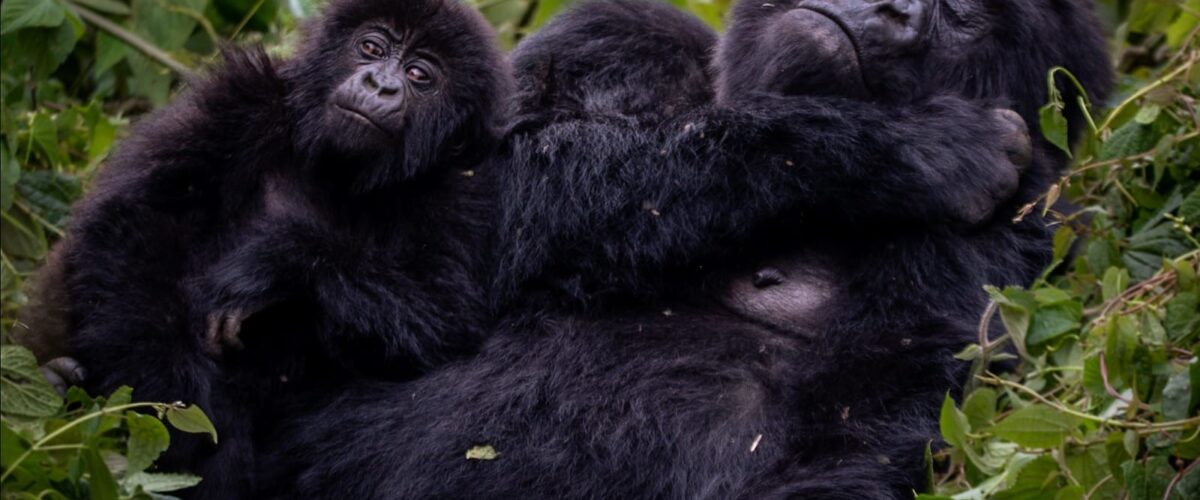
Gradually, gorilla populations stabilized and began to grow. Today, mountain gorillas are one of the few great ape species showing a positive population trend.

This shift did not happen quickly. It required consistent protection over decades.

From protection to tourism-based conservation

A major turning point came when Rwanda introduced regulated gorilla tourism.

Instead of keeping gorillas completely closed off, the country created a controlled system where small groups of visitors can track habituated gorilla families.

This system is highly structured. Visitor numbers are limited. Time with gorillas is restricted. Access is carefully managed.

The important change is what this system finances. Gorilla trekking permits generate direct revenue that supports conservation work, ranger salaries, and community programs.

This means wildlife protection is no longer dependent only on external funding. It is partially self-financed through tourism.

Communities became part of the conservation system

Rwanda did not build conservation only around parks. It also integrated surrounding communities into the system.

A portion of tourism revenue is shared with local communities near protected areas. This money supports schools, health centres, and infrastructure projects.

This approach changed how people relate to national parks. Instead of seeing conservation areas as restricted land, many communities now see them as sources of benefit.

Local residents also participate directly in tourism. They work as guides, porters, trackers, and artisans.

This creates a direct economic link between conservation success and community wellbeing.

Akagera National Park and ecosystem restoration

Akagera National Park shows how Rwanda applied the same conservation logic outside gorilla habitats.

This park is a savannah ecosystem in eastern Rwanda. Years ago, it suffered from severe poaching and habitat decline. Large predators disappeared from the area.

Through long-term management and partnerships, the park was restored. Lions were reintroduced, followed by rhinos under strict protection systems.

Today, Akagera supports a full Big Five ecosystem with elephants, buffalo, giraffes, predators, and other wildlife species.

This is important because it shows that Rwanda’s model works beyond forests. It also works in savannah environments.

Nyungwe Forest and long-term biodiversity protection

Nyungwe Forest National Park adds another layer to Rwanda’s conservation system.

It protects one of Africa’s oldest montane rainforests. The park is home to chimpanzees and many other primates, along with hundreds of plant and bird species.

Conservation here focuses on habitat protection and controlled eco-tourism. Activities such as chimpanzee trekking and canopy walks are carefully regulated.

Nyungwe shows that Rwanda does not rely on a single flagship species. It manages multiple ecosystems at the same time.

Enforcement and control as a core strength

One of the strongest reasons Rwanda’s conservation system works is enforcement.

Ranger teams operate continuously inside protected areas. Monitoring systems track wildlife and human activity. Anti-poaching units are active and well coordinated.

Visitor access is also tightly controlled. Gorilla trekking permits are limited each day, and group sizes are small.

These rules are not optional. They are strictly enforced to reduce pressure on wildlife.

This level of control helps maintain long-term ecosystem stability.

High-value tourism instead of mass tourism

Rwanda follows a clear tourism strategy that prioritizes value over volume.

Instead of increasing visitor numbers, the country focuses on attracting fewer visitors who spend more per experience.

This reduces environmental pressure on national parks. It also generates enough revenue to support conservation and national development.

Luxury safari tourism fits naturally into this model. High-end lodges, guided experiences, and curated itineraries all contribute to the system.

This is why Rwanda feels more structured and exclusive compared to many other safari destinations.

Why international partnerships matter

Rwanda’s conservation system also benefits from strong international partnerships.

Conservation organizations, research groups, and tourism operators work alongside government agencies.

These partnerships provide funding, technical support, and training for conservation staff.

They also support scientific research and long-term wildlife monitoring.

This cooperation strengthens the overall system and ensures global standards are met.

Why Rwanda is considered a model in Africa

Rwanda is seen as a conservation model because it connects several systems that often operate separately in other countries.

Most importantly, it links conservation directly to national development planning.

This integration is what makes Rwanda different.

Ongoing challenges in the system

Even with its success, Rwanda still faces challenges.

Population growth increases pressure on land near protected areas. Climate variability affects ecosystems and water resources. Tourism must be carefully managed to avoid overuse of sensitive areas.

These challenges require constant adaptation and planning.

However, Rwanda’s structured system provides strong tools to manage them.

What this means for travellers today

For safari travellers, Rwanda’s conservation model directly shapes the experience.

Gorilla trekking, park visits, and wildlife encounters are not random tourism activities. They operate within a structured system designed to protect ecosystems and support communities.

Every permit purchased and every guided experience contributes to conservation funding.

This means travellers are not only observing wildlife. They are also participating in a conservation system.

Rwanda became Africa’s conservation model through structure, integration, and long-term planning.

The country rebuilt its parks after national crisis, introduced controlled gorilla tourism, restored ecosystems like Akagera, and strengthened forest protection in Nyungwe.

It also connected conservation with community development and national economic strategy.

For travellers in 2026, this means a Rwanda safari is more than a wildlife trip. It is an experience inside one of Africa’s most organized conservation systems, where every park visit supports both nature protection and local livelihoods.

Dian Fossey’s Legacy in Rwanda

Dian Fossey’s Legacy in Rwanda

Dian Fossey’s Legacy in Rwanda: What Gorillas in the Mist Means for Today’s Travellers

Why Dian Fossey still matters in modern Rwanda safaris

A Rwanda gorilla safari today is highly structured, well protected, and globally famous. What many travellers do not realize is that this entire system exists because of the work of one primatologist: Dian Fossey.

Her research, protection efforts, and advocacy in the Virunga Mountains reshaped how the world understands mountain gorillas. Without her work, gorilla tourism in Rwanda would look very different today, and it is possible the species would have declined much further.

For modern travellers trekking in Volcanoes National Park, Fossey’s legacy is not just history. It is the foundation of every gorilla encounter.

Who Dian Fossey was and why her work was revolutionary

Dian Fossey was an American primatologist who dedicated her life to studying mountain gorillas in the Virunga region. She arrived in the late 1960s and spent years living in the mountains observing gorilla families in the wild.

Her research revealed something important. Mountain gorillas were not aggressive, isolated animals as previously believed. They were social, intelligent, and structured family groups with complex behaviour.

This understanding changed global scientific perspectives on great apes.

Fossey also documented the severe threats gorillas faced. Poaching, habitat loss, and human encroachment were rapidly reducing their population. Her work shifted from observation to active protection.

The Karisoke Research Centre and conservation breakthrough

One of Fossey’s most important contributions was the creation of the Karisoke Research Centre in Rwanda’s Volcanoes region.

She established this base between Mount Karisimbi and Mount Bisoke, deep in gorilla territory. From there, she studied gorilla behaviour closely and tracked individual families over long periods.

This long-term research helped scientists understand gorilla social structure, reproduction, and communication.

More importantly, Karisoke became a conservation stronghold. It brought international attention to the survival crisis facing mountain gorillas.

How Gorillas in the Mist shaped global awareness

Fossey’s story reached a global audience through the book Gorillas in the Mist, and later the film adaptation of the same name.

The book documented her fieldwork, discoveries, and struggles to protect gorillas from poaching and habitat destruction. It also highlighted her intense commitment to conservation.

The film brought her story to a wider audience and showed the beauty and vulnerability of mountain gorillas in the Virunga Mountains.

For many travellers today, this book or film is their first introduction to Rwanda’s gorillas. It continues to influence how people imagine gorilla trekking before they arrive.

The transformation from research to tourism

At the time of Fossey’s work, gorilla protection was focused on research and anti-poaching enforcement. Tourism did not exist in the structured form it does today.

After her death in 1985, conservation efforts continued and gradually evolved. Rwanda began to develop controlled gorilla tourism as a way to fund conservation and support local communities.

This shift changed everything. Gorilla trekking became a regulated activity where limited permits are issued each day. Revenue from tourism now directly supports conservation programs and park protection.

What began as research-based protection became a sustainable tourism model.

Volcanoes National Park today: Fossey’s living legacy

Modern Volcanoes National Park is the direct result of decades of conservation work that began with Fossey’s research.

The park now protects multiple habituated gorilla families. Each group is monitored by trackers and conservation teams. Tourism is strictly controlled to minimize stress on the animals.

When travellers trek gorillas today, they are entering a system shaped by years of scientific research and conservation activism.

The park is no longer just a research site. It is a carefully managed ecosystem where tourism, science, and conservation operate together.

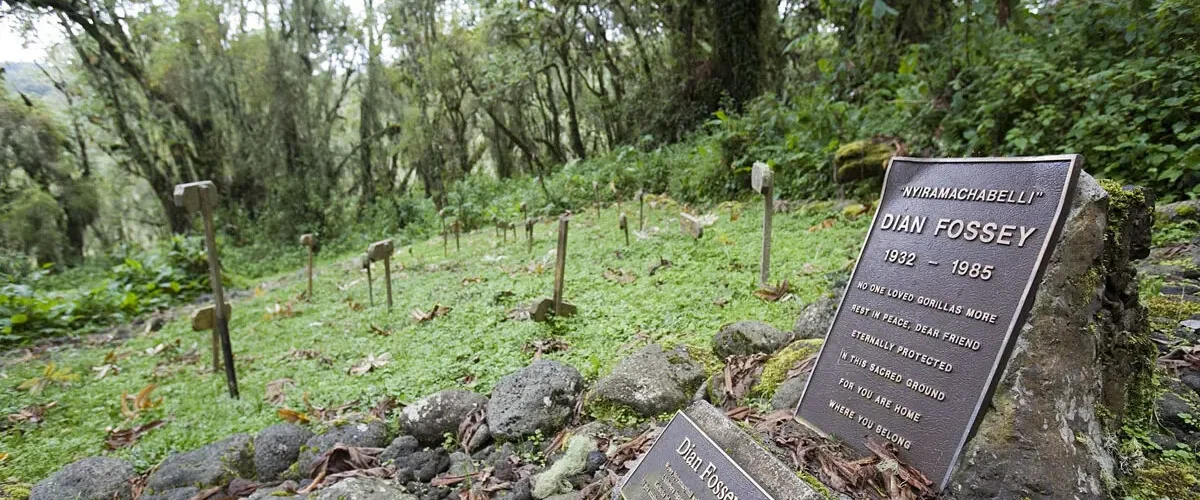
Visiting Dian Fossey’s tomb and research site

One of the most direct ways travellers connect with her legacy is by visiting her burial site near Volcanoes National Park.

Fossey was buried near her beloved gorillas, close to the research area where she spent much of her life. Her grave is located within the park boundaries.

Some trekking itineraries include a hike to the former Karisoke Research Centre site and Fossey’s grave. This experience adds historical depth to a gorilla safari.

The hike itself passes through forest terrain similar to gorilla trekking routes. It gives travellers a sense of the environment where Fossey lived and worked.

How her legacy shapes today’s gorilla trekking rules

Many rules that guide modern gorilla trekking reflect conservation principles that Fossey strongly advocated.

Limited visitor numbers per gorilla family reduce stress on the animals. Strict viewing distances protect natural behaviour. Time limits ensure minimal disruption.

Health regulations also play a major role. Visitors must maintain distance, avoid contact, and follow hygiene protocols to protect gorillas from human diseases.

These rules are not restrictions without purpose. They are conservation safeguards that preserve the species for future generations.

The connection between tourism revenue and conservation

One of the most important outcomes of Rwanda’s gorilla tourism model is financial sustainability for conservation.

Gorilla permits generate revenue that supports park rangers, anti-poaching patrols, community projects, and research programs.

This system helps ensure that gorilla populations remain protected while local communities benefit economically.

Fossey’s original mission focused on protection through direct intervention. Today, protection continues through a combination of science, tourism, and community involvement.

Why modern travellers should understand this history

Many travellers arrive in Rwanda focused only on the gorilla encounter itself. While the experience is powerful on its own, understanding Fossey’s legacy adds context.

It explains why the encounter is so structured. It explains why permits are expensive and limited. It explains why conservation rules are strict.

Without this background, gorilla trekking can feel like a luxury wildlife activity. With it, the experience becomes part of a larger conservation story.

Common misunderstanding: romanticizing gorilla conservation

Films and books often present gorilla conservation as a simple heroic story. In reality, it involved conflict, political challenges, and long-term institutional change.

Fossey’s work included both scientific discovery and aggressive anti-poaching efforts. The conservation landscape was complex and often dangerous.

Modern tourism systems are the result of decades of evolution, not a single breakthrough moment.

Understanding this helps travellers appreciate the structure behind today’s safaris.

How Fossey’s legacy connects to luxury safaris today

Luxury gorilla safaris in Rwanda are often associated with high-end lodges, private guides, and curated experiences. However, the foundation of this luxury ecosystem is conservation infrastructure.

Without strong protection systems, gorilla tourism would not exist at its current level.

Every luxury safari in Volcanoes National Park operates within boundaries established through decades of conservation work.

This means luxury travel and conservation are directly connected, not separate concepts.

The emotional dimension of gorilla trekking

For many travellers, encountering mountain gorillas is an emotional experience. The physical closeness, human-like expressions, and family interactions create strong reactions.

Knowing Fossey’s story often intensifies this emotional response. Travellers recognize that what they are seeing survived because of long-term protection efforts.

The experience becomes more than wildlife viewing. It becomes a moment of connection between past conservation work and present survival.

what Fossey’s legacy means today

Dian Fossey’s legacy is not just historical background for Rwanda. It is the foundation of modern gorilla tourism in Volcanoes National Park.

Her research changed global understanding of mountain gorillas. Her conservation work helped bring international attention to their survival. Her legacy directly influenced the creation of structured, sustainable gorilla trekking.

For today’s travellers, especially those on luxury safaris, understanding this history adds depth to the experience.

Gorilla trekking is not just an exclusive wildlife activity. It is the result of decades of conservation effort, scientific research, and evolving tourism systems.

When you stand in front of a mountain gorilla in Rwanda, you are not only witnessing wildlife. You are also experiencing the outcome of a conservation story that began with Dian Fossey in the Virunga Mountains.

Cultural Immersion in Rwanda

Cultural Immersion in Rwanda

Cultural Immersion in Rwanda: Village Visits, Craft Markets and Community Experiences

Why cultural immersion matters in a Rwanda safari

A Rwanda safari is often defined by gorilla trekking in Volcanoes National Park, chimpanzee tracking in Nyungwe Forest, and game drives in Akagera National Park. These wildlife experiences are the main reason most travellers visit the country. However, focusing only on wildlife creates an incomplete picture of Rwanda.

Cultural immersion adds depth to a safari. It connects visitors with everyday life, local traditions, and community-based tourism initiatives that support conservation and development. Rwanda is one of Africa’s strongest examples of integrated tourism, where wildlife protection and community livelihoods are closely linked.

Village visits, craft markets, and community experiences help travellers understand how Rwanda functions beyond its national parks. They also create a more balanced and meaningful travel experience.

Rwanda’s approach to community-based tourism

Rwanda has built its tourism model around conservation and community participation. National parks do not operate in isolation. Local communities play a direct role in supporting tourism and benefiting from it.

Revenue-sharing programs ensure that a portion of park income supports nearby villages. This funding helps build schools, health centres, and infrastructure. It also creates jobs in guiding, crafts, and cultural tourism.

This structure makes cultural experiences more than entertainment. They are part of the national conservation system.

When travellers visit villages or markets, they are not observing staged performances. They are engaging with real communities that benefit from tourism activity.

Village visits: understanding rural Rwanda

Village visits are one of the most direct forms of cultural immersion in Rwanda. These experiences usually take place near national parks such as Volcanoes, Nyungwe, or Akagera.

Travellers are welcomed into local communities where they can observe or participate in daily activities. These may include farming practices, livestock care, traditional cooking, or local storytelling.

The focus is not on performance but on interaction. Visitors learn how rural households live, how they use land, and how they contribute to conservation efforts.

In many cases, village visits are guided by local residents trained as cultural interpreters. This ensures authenticity and provides employment within the community.

The Iby’Iwacu Cultural Village experience

One of the most well-known cultural experiences near Volcanoes National Park is the Iby’Iwacu Cultural Village.

This community initiative was created to support former poachers by offering alternative livelihoods through tourism. Today, it functions as a cultural centre where visitors learn about traditional Rwandan life.

The experience includes demonstrations of traditional medicine, local dance performances, hunting techniques from historical periods, and explanations of rural customs.

What makes this experience important is its transformation story. It represents how communities shifted from extractive practices to conservation-focused livelihoods.

For travellers, it connects gorilla trekking with human history. It shows how conservation success depends on community involvement.

Craft markets: Rwanda’s creative economy

Craft markets in Rwanda offer another layer of cultural engagement. These markets are found in Kigali and near major tourist routes.

They sell handmade items such as baskets, woven bags, wood carvings, jewelry, and textiles. Many of these products are made using traditional techniques passed down through generations.

One of the most iconic crafts in Rwanda is basket weaving. These baskets are known locally as Agaseke and are often associated with peace and unity.

Visiting craft markets allows travellers to see how local artisans work and how traditional skills are preserved in a modern economy.

Unlike mass-produced souvenirs, Rwandan crafts often carry cultural meaning and social symbolism.

Kigali craft markets and urban culture

Kigali offers some of the best craft shopping experiences in Rwanda. Markets and cooperatives in the city bring together artisans from across the country.

These spaces are well organized and often linked to social enterprises that support women’s cooperatives and vulnerable groups.

Travellers can interact directly with artisans, learn about production techniques, and understand how craft sales contribute to household income.

Kigali’s craft markets also reflect the city’s modern identity. They combine traditional art with a clean, structured retail environment.

Community tourism near Volcanoes National Park

Around Volcanoes National Park, community tourism plays a major role in diversifying safari experiences.

Besides gorilla trekking, travellers can visit nearby villages to learn about farming systems, local music, and traditional lifestyles.

These experiences are often arranged through community cooperatives. This ensures that tourism income stays within the region.

Activities may include banana beer production demonstrations, traditional dance performances, or guided walks through agricultural areas.

These experiences are simple but meaningful. They show how people live alongside one of the world’s most important conservation areas.

Nyungwe Forest and cultural landscapes

Nyungwe Forest National Park is known for chimpanzees and canopy walks, but the surrounding region also offers cultural experiences.

Tea plantations dominate the landscape around Nyungwe. Local communities work in these estates and contribute to Rwanda’s agricultural exports.

Visitors can combine forest activities with cultural visits that explain tea production, rural life, and local traditions.

This creates a balance between biodiversity tourism and agricultural culture.

Akagera and pastoral community life

Akagera National Park in eastern Rwanda introduces a different cultural environment.

The region is more open and influenced by pastoral and farming communities. Cultural visits here often focus on cattle keeping, rural livelihoods, and traditional land use systems.

These experiences help travellers understand how conservation and community development coexist in a savannah environment.

Akagera also shows how wildlife reintroduction projects connect with local support systems.

The role of storytelling in Rwandan culture

Storytelling is an important part of cultural immersion in Rwanda. Oral traditions have historically been used to pass down history, values, and knowledge.

During village visits and cultural experiences, storytelling often explains historical events, social values, and community identity.

This adds depth to safari experiences. Instead of only observing, travellers learn through narratives shared by local guides and community members.

Storytelling also helps bridge the gap between wildlife tourism and human experience.

How cultural experiences fit into a luxury safari

Luxury safaris in Rwanda are not limited to high-end lodges and private guides. They also include curated cultural interactions.

Well-designed itineraries integrate village visits, craft markets, and community experiences between national park activities.

For example, a traveller may visit a craft market in Kigali before gorilla trekking or stop at a village after returning from Volcanoes National Park.

These experiences are scheduled carefully to avoid rushing and to maintain comfort.

Luxury in this context is not only about accommodation. It is also about access, depth, and meaningful engagement.

Common mistake: treating culture as optional

One of the most common mistakes travellers make is treating cultural experiences as optional extras.

Many itineraries prioritize wildlife only and skip village visits or craft markets entirely.

This creates a limited understanding of Rwanda. It reduces the safari to animal viewing without context.

Cultural immersion adds meaning to conservation. It explains how communities support national parks and benefit from tourism.

Skipping it removes an important layer of the travel experience.

Ethical considerations in community tourism

Responsible cultural tourism in Rwanda is carefully managed. Not all interactions are spontaneous or unstructured.

Community visits are often organized through cooperatives or tourism programs that ensure fair benefit distribution.

This structure prevents exploitation and ensures that tourism supports long-term community development.

Travellers should choose experiences that are clearly community-led and ethically managed.

How many days you need for cultural immersion

Cultural experiences do not require separate itineraries. They are best integrated into existing safari plans.

A 4 to 7-day Rwanda safari allows enough time to include at least one or two cultural activities without disrupting wildlife schedules.

Kigali stopovers are ideal for craft markets. Volcanoes itineraries often include village visits. Nyungwe routes combine forest and tea culture.

The key is planning balance between wildlife and cultural engagement.

Cultural immersion in Rwanda is an essential part of a complete safari experience.

Village visits, craft markets, and community experiences add depth, context, and human connection to wildlife-focused travel.

They show how Rwanda’s tourism system integrates conservation with community development and cultural preservation.

For travellers in 2026, the most meaningful Rwanda safaris are not only about gorillas and national parks. They are about understanding the people, traditions, and systems that make conservation possible.

When cultural experiences are included properly, Rwanda becomes more than a safari destination. It becomes a complete journey that connects wildlife, landscapes, and human life into one cohesive experience.

Rwanda’s Coffee and Tea Culture

Rwanda’s Coffee and Tea Culture

Rwanda’s Coffee and Tea Culture: Where to Visit Plantations on a Luxury Safari

Why coffee and tea belong in a Rwanda safari itinerary

Most travellers associate a Rwanda safari with mountain gorillas, Volcanoes National Park, and luxury lodges in the Virunga highlands. What many do not expect is how important coffee and tea are to the country’s identity and economy.

Rwanda produces some of the highest-quality Arabica coffee in Africa and grows tea in high-altitude volcanic soils that give it a distinctive flavour profile. These plantations are not just agricultural sites. They are part of Rwanda’s tourism experience, especially for luxury travellers who want more than wildlife encounters.

Adding coffee and tea visits to a safari creates balance. It introduces cultural context, supports local communities, and provides a slower, sensory contrast to the intensity of gorilla trekking and game drives.

Rwanda’s ideal conditions for coffee and tea production

Rwanda’s geography plays a major role in its agricultural success. The country sits at high altitude with volcanic soil, consistent rainfall, and mild temperatures throughout the year.

These conditions are especially strong in regions like the Western Province, around Lake Kivu, and parts of the Northern Province. Coffee thrives in these areas because of nutrient-rich soil and elevation. Tea grows well in cooler, misty zones with stable humidity.

This natural environment creates flavour complexity in both crops. Coffee tends to be bright and aromatic, while tea is often smooth and fresh with subtle vegetal notes.

Coffee culture in Rwanda and its tourism experience

Coffee in Rwanda is more than a crop. It is part of a national economic transformation strategy. Over the past decades, Rwanda has invested heavily in specialty coffee production, focusing on quality rather than mass export.

Many smallholder farmers work in cooperatives. These cooperatives process coffee cherries using modern washing stations and export high-grade beans to international markets.

For safari travellers, this system creates a strong tourism link. Visiting a coffee washing station or plantation allows you to follow the journey from farm to cup.

Where to visit coffee plantations in Rwanda

One of the most accessible regions for coffee experiences is around Lake Kivu. The western part of Rwanda offers plantation visits combined with scenic lake views and relaxed lodge stays.

In this region, travellers can visit coffee washing stations, meet local farmers, and observe processing stages such as sorting, fermentation, drying, and roasting.

Some luxury safari itineraries include private guided visits where guests walk through plantations, learn harvesting methods, and participate in coffee tasting sessions.

The experience is often structured to be interactive rather than observational. You do not just see coffee production. You understand the full value chain.

Tea plantations in Rwanda and their landscape appeal

Tea production in Rwanda is concentrated in high-altitude regions with cooler temperatures and frequent mist. These areas create visually striking landscapes with endless green fields stretching across rolling hills.

Tea estates are often located in places such as Nyungwe region and southwestern Rwanda. These plantations are large-scale but carefully managed, creating scenic views that contrast with forest and savannah environments.

Tea plantations in Rwanda are not just agricultural zones. They are also some of the most visually peaceful landscapes in the country.

Visiting tea estates on a safari itinerary

Tea estate visits are usually integrated into itineraries that include Nyungwe Forest National Park or Lake Kivu.

Travellers can walk through plantations, observe plucking techniques, and learn how tea leaves are processed from field to final product.

Some estates offer guided factory tours where visitors see withering, rolling, fermentation, and drying processes. This adds technical understanding to the experience and connects agriculture with global supply chains.

Tea tasting sessions are also common. These allow travellers to sample different grades and understand how altitude and processing affect flavour.

How coffee and tea fit into a luxury safari experience

Luxury safaris in Rwanda are not only about wildlife. They are about variety, pacing, and immersive experiences.

Coffee and tea visits provide a calm contrast to gorilla trekking, which is physically demanding and emotionally intense. After hiking in Volcanoes National Park or driving through national parks, plantation visits offer a slower rhythm.

They also add cultural depth. Instead of only seeing wildlife, you understand how local communities live, work, and contribute to the national economy.

For luxury travellers, this balance improves overall itinerary quality. It turns a safari into a multi-dimensional journey.

Lake Kivu as a key coffee and tea gateway

Lake Kivu is one of the most important regions for combining coffee culture with leisure travel.

The lake sits between mountain ranges and agricultural zones. It provides a relaxed environment after trekking or forest activities.

Many boutique lodges around Lake Kivu include coffee experiences as part of their guest activities. These can include plantation visits, roasting demonstrations, or curated tasting sessions.

The region is ideal for travellers who want to slow down after Volcanoes National Park or before moving to Nyungwe Forest.

Nyungwe region and tea landscapes

Nyungwe Forest National Park is not only known for chimpanzee trekking and canopy walks. It is also surrounded by tea plantations that shape the surrounding landscape.

The contrast between dense rainforest and open tea fields creates a unique visual transition.

Travellers moving through this region often experience both ecosystems in a single itinerary. One part of the journey focuses on primates and biodiversity. The other focuses on agriculture and landscape design.

Cultural importance of coffee and tea in Rwanda

Coffee and tea are not only export crops. They are also deeply connected to rural livelihoods.

Thousands of smallholder farmers depend on these industries for income. Cooperative systems help farmers access international markets and improve production quality.

Tourism supports this ecosystem by adding value at the local level. When travellers visit plantations, they contribute directly to community income and awareness.

This aligns with Rwanda’s broader tourism model, which integrates conservation, agriculture, and community development.

Common mistake: ignoring cultural experiences in Rwanda

Many safari travellers focus exclusively on gorilla trekking and wildlife parks. They skip coffee and tea experiences because they seem secondary.

This is a missed opportunity.

Without these visits, Rwanda can feel like a single-theme destination focused only on primates. With them, the country becomes more layered and complete.

Agricultural tourism adds context to what you see in national parks. It shows how communities live alongside conservation areas.

How many days you need to include coffee and tea visits

Coffee and tea experiences do not require separate trips. They are best added to existing safari itineraries.

A 4 to 7-day Rwanda safari is usually enough to include at least one plantation visit without affecting gorilla trekking schedules.

Lake Kivu stopovers are ideal for coffee experiences. Nyungwe itineraries naturally include tea landscapes.

The key is planning routing properly so that agricultural experiences fit between wildlife activities.

Rwanda’s coffee and tea culture adds an important layer to any luxury safari experience.

These plantations are not just scenic stops. They represent a key part of Rwanda’s economy, community structure, and global identity.

Coffee experiences around Lake Kivu and tea landscapes near Nyungwe Forest provide balance to the intensity of gorilla trekking and wildlife safaris.

For travellers who want a deeper understanding of Rwanda beyond wildlife, including coffee and tea visits transforms the safari from a nature-focused trip into a complete cultural and ecological journey.

The Kigali Genocide Memorial

The Kigali Genocide Memorial

The Kigali Genocide Memorial: Should It Be Part of Your Rwanda Safari?

Why this question matters in Rwanda safari planning

When travellers plan a Rwanda safari, most focus immediately on gorilla trekking in Volcanoes National Park. Kigali is often treated as a transit city, and cultural or historical stops are sometimes left out entirely.

One site that consistently raises questions is the Kigali Genocide Memorial. Some travellers actively include it in their itinerary, while others avoid it due to its emotional weight.

The real question is not whether it is “pleasant” or “easy” to visit. The real question is whether it adds value to your understanding of Rwanda as a safari destination.

For most serious safari itineraries, especially luxury and high-end trips, the answer depends on what kind of experience you want from Rwanda beyond wildlife.

What the Kigali Genocide Memorial actually is

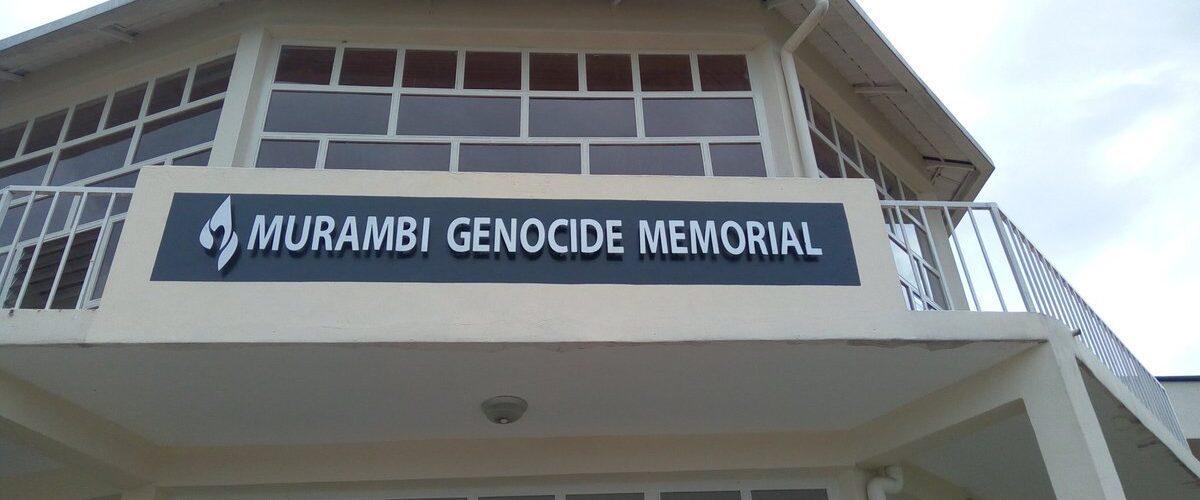
The Kigali Genocide Memorial is Rwanda’s main remembrance site for the 1994 genocide against the Tutsi. It is located in the capital city, Kigali, and serves as both a burial site and an educational centre.

The memorial documents the events that led to the genocide, how it unfolded, and how Rwanda rebuilt afterward. It includes exhibitions, survivor testimonies, historical records, and memorial gardens.

It is not a traditional tourist attraction. It is a structured place of remembrance, reflection, and education.

Why it is often included in Rwanda safari itineraries

Many Rwanda safari itineraries include Kigali at the beginning or end of the trip. This makes the memorial physically easy to access.

However, the deeper reason it is often recommended is because it explains modern Rwanda. The country’s conservation success, political stability, and tourism development are closely linked to its post-genocide recovery.

Understanding this history helps travellers interpret what they see during the safari. It adds context to why gorilla conservation is so well organized and why community-based tourism is central to Rwanda’s model.

Without this context, Rwanda can feel like just another high-end safari destination. With it, the experience becomes more meaningful and layered.

How the visit is structured

A visit to the Kigali Genocide Memorial is self-guided but structured through exhibitions and curated sections.

Visitors move through galleries that explain the historical background, the events of 1994, and the aftermath of the genocide. The site also includes burial grounds where thousands of victims are laid to rest.

The experience is designed to be reflective and educational. It encourages silence, respect, and careful engagement with the content.

Time spent at the memorial usually ranges from one to two hours depending on depth of engagement.

Emotional impact and traveller expectations

The memorial is emotionally intense. It presents real stories, images, and accounts of violence and survival.

Travellers often experience strong emotional responses, including sadness, reflection, and discomfort. This is expected and acknowledged as part of the visit.

Because of this, the memorial is not designed as light tourism. It requires emotional readiness.

Luxury travellers sometimes underestimate this aspect. They assume Kigali’s polished urban environment reflects the tone of all experiences in the city. The memorial contrasts sharply with that impression.

How it connects to gorilla trekking and conservation

Rwanda’s conservation success, especially in Volcanoes National Park, is closely linked to national rebuilding efforts after 1994.

Gorilla tourism today supports community development, park protection, and national revenue systems. This structure emerged as part of a broader strategy to rebuild the country economically and socially.

Visiting the memorial first helps travellers understand this connection.

When you later trek mountain gorillas, the experience carries additional meaning. It becomes part of a larger story about recovery, conservation, and national identity rather than just wildlife viewing.

Should luxury travellers include it in their itinerary?

For luxury travellers, the decision is not about comfort. It is about relevance.

Including the Kigali Genocide Memorial adds depth to the safari experience. It turns Rwanda from a wildlife destination into a country with a visible historical narrative.

However, it is not mandatory for every traveller. Some visitors prefer to focus exclusively on nature and wildlife experiences.

The key consideration is whether you want context alongside your safari or prefer to keep your trip purely nature-focused.

When the memorial fits best in your safari schedule

The best time to visit the memorial is usually at the beginning or end of your safari.

At the beginning, it provides context before gorilla trekking and national park visits. At the end, it allows reflection after completing wildlife experiences.

Many itineraries place it on the day of arrival in Kigali or on the final day before departure.

This avoids disrupting trekking schedules and ensures enough time for reflection without rushing.

Common mistake: skipping Kigali entirely

One of the most common mistakes in Rwanda safari planning is skipping Kigali completely.

Some travellers land, transfer immediately to Volcanoes National Park, and leave the country without spending meaningful time in the capital.

This removes all cultural and historical context from the trip.

While gorilla trekking remains the highlight, the overall understanding of Rwanda becomes incomplete.

Including at least a short Kigali stop improves the structure of the entire safari.

Balancing emotion and travel experience

It is important to acknowledge that the Kigali Genocide Memorial is not a light or recreational experience.

It sits outside the typical safari structure of wildlife viewing and scenic travel.

However, it plays an important role in understanding the country you are visiting.

Rwanda’s tourism model combines conservation, culture, and history. The memorial represents the historical foundation of that system.

Who should prioritize visiting the memorial

Travellers who value cultural depth, historical context, and meaningful storytelling will benefit most from visiting.

First-time visitors to Rwanda often gain the most insight because it frames everything they experience later in the safari.

Photographers, luxury travellers, and multi-country safari visitors also benefit because it adds narrative depth to an otherwise wildlife-focused journey.

Who may choose to skip it

Travellers who prefer purely nature-based safaris may choose to skip it.

Some visitors also find emotional experiences difficult to engage with during short trips.

In such cases, it is still possible to have a complete Rwanda safari experience focused entirely on wildlife without including the memorial.

The decision remains personal.

should it be part of your Rwanda safari?

The Kigali Genocide Memorial is not a standard tourist stop. It is a deeply significant historical site that adds important context to Rwanda as a modern safari destination.

Including it does not change the wildlife experience directly, but it changes how you understand the country around it.

For most travellers, especially those on well-planned or luxury safaris, it adds value, depth, and perspective.

Skipping it keeps the safari purely nature-focused. Including it creates a more complete understanding of Rwanda’s journey, its conservation success, and its present-day identity.

In 2026 safari planning, the strongest recommendation is not to treat it as optional entertainment, but to decide based on whether you want your Rwanda safari to be only about wildlife, or about both wildlife and the story behind the country you are exploring.

Kigali as a Safari Gateway

Kigali as a Safari Gateway

Kigali as a Safari Gateway: Why Rwanda’s Capital Deserves More Than One Night

Rethinking Kigali as more than just a transit stop

Most Rwanda safari itineraries treat Kigali as a simple entry and exit point. Travellers land, transfer quickly to Volcanoes National Park, and often return just in time for an international flight. In that model, Kigali becomes a logistical stop rather than a destination.

This approach misses a key part of Rwanda’s travel experience. Kigali is one of Africa’s cleanest, safest, and most organized capitals. It is not just a gateway city. It is a structured introduction to Rwanda’s culture, history, and modern identity.

For luxury travellers especially, Kigali deserves more than a single overnight stay. It sets the tone for the entire safari journey and adds context that improves how you experience gorilla trekking and national parks later.

Why Kigali is strategically important for safari planning

Kigali sits at the centre of Rwanda’s tourism network. Almost all international flights arrive here, and all major safari routes begin from the city.

Volcanoes National Park is about 2.5 to 3 hours away by road. Nyungwe Forest takes around 5 to 6 hours. Akagera National Park is roughly 2.5 to 3 hours in the opposite direction.

This positioning makes Kigali a natural staging point for all safari logistics.

Because of this, many travellers pass through the city without engaging with it. They focus entirely on wildlife destinations and treat Kigali as a checkpoint. However, this creates a missed opportunity to understand Rwanda before entering its national parks.

Kigali as a cultural and historical introduction

Kigali offers important context for understanding Rwanda’s conservation success and modern identity.

A key stop for many visitors is the Kigali Genocide Memorial. This site explains the 1994 genocide and the country’s recovery process. It provides historical grounding that shapes how travellers interpret Rwanda’s conservation and community-based tourism today.

Understanding this background changes the safari experience. It adds depth to gorilla trekking because it connects conservation success to national rebuilding and stability.

Without this context, Rwanda can feel like just another safari destination. With it, the experience becomes more meaningful and layered.

The value of slowing down before gorilla trekking

Gorilla trekking in Volcanoes National Park is physically demanding and emotionally intense. It involves early starts, altitude, hiking, and close wildlife encounters.

Arriving directly into this experience after a long international flight can increase fatigue and reduce enjoyment.

Spending at least one night in Kigali helps the body adjust. It also gives travellers time to recover from jet lag before moving into high-altitude trekking conditions.

Luxury safari design often includes buffer time for this reason. A relaxed start improves performance and overall comfort during the main safari activities.

Kigali’s modern identity and urban experience

Kigali is not a traditional safari town. It is a modern, well-planned city with clean streets, organized traffic, and strong public order.

The city offers upscale hotels, rooftop dining, coffee culture, art spaces, and curated urban experiences that contrast with rural safari destinations.

For luxury travellers, this creates an interesting transition. You move from a structured urban environment into wild national parks within a few hours of travel.

This contrast strengthens the overall safari narrative. It shows how Rwanda blends modern development with conservation tourism.

Dining, comfort, and luxury hospitality in Kigali

Kigali has developed a strong hospitality sector that supports high-end safari travel.

Luxury hotels offer international cuisine, spa services, and high-level comfort standards. Many travellers underestimate the quality of accommodation available in the city.

Restaurants range from fine dining experiences to modern African fusion cuisine. The city also has a growing café culture that appeals to travellers who want relaxed, high-quality urban stops.

For safari travellers, Kigali acts as a reset point before or after physically demanding national park experiences.

Kigali as a transition point between safari regions

Most Rwanda safari routes pass through Kigali multiple times. Travellers often arrive, travel to Volcanoes National Park, return for flights, or continue to other destinations like Nyungwe or Akagera.

Without proper planning, Kigali becomes a rushed stop between destinations.

When used correctly, it becomes a structured transition zone. It helps break long travel segments into manageable sections.

For example, a well-designed itinerary may include one night in Kigali on arrival, a second night after gorilla trekking, and optional time before departure. This reduces fatigue and improves overall flow.

Common mistake: treating Kigali as a logistical necessity only

One of the most common planning mistakes is minimizing Kigali’s role in the itinerary.

Travellers often book early morning arrivals and immediate transfers to Volcanoes National Park. They also schedule late-night departures that force rushed final days.

This removes Kigali entirely from the experience. It turns the city into a transit point rather than a destination.

The result is a faster but less balanced safari experience.

Adding even one additional night in Kigali changes the structure significantly. It creates breathing space and reduces travel pressure.

Why one night in Kigali is not enough

A single night in Kigali usually serves only arrival or departure logistics. It does not allow time for cultural exploration, relaxation, or proper adjustment.

Travellers who spend only one night often move directly into safari mode without understanding Rwanda’s broader context.

This limits the depth of the experience.

Kigali needs time to function as a gateway properly. It prepares travellers mentally and physically for gorilla trekking and other safari activities.

Why two or more nights make a difference

Two or more nights in Kigali allow the city to become part of the safari experience rather than just a stopover.

This structure gives time for city tours, historical visits, dining experiences, and rest. It also reduces pressure around airport transfers and long-distance road travel.

For luxury itineraries, this creates a smoother rhythm. The safari feels more like a journey rather than a sequence of rushed transfers.

It also improves flexibility in case of flight delays or schedule changes.

Kigali in luxury safari design

In high-end safari planning, Kigali is often used as a buffer city.

Luxury itineraries include it to balance travel pacing, especially when combining Rwanda with destinations like Kenya or Tanzania.

It allows travellers to transition between different ecosystems without stress. It also ensures that gorilla trekking is not rushed immediately after international arrival.

In this context, Kigali becomes a key structural component of the safari, not just an optional add-on.

Kigali deserves a real place in your safari

Kigali is often underestimated because it sits between more famous safari destinations. However, it plays a critical role in shaping the quality of a Rwanda safari.

It provides cultural context, recovery time, logistical structure, and a modern introduction to the country.

A single night is usually not enough to experience its value properly. Even two nights can significantly improve the flow of a safari itinerary.

For travellers planning Rwanda in 2026, Kigali should not be treated as a transit stop. It should be treated as the foundation of the journey.

When included properly, it strengthens the entire safari experience, making gorilla trekking and national park visits more meaningful, better paced, and more enjoyable overall.

3 Days vs 5 Days in Rwanda

3 Days vs 5 Days in Rwanda

3 Days vs 5 Days in Rwanda: Is a Short Gorilla Safari Worth It?

Understanding the real difference between 3 and 5 day Rwanda safaris

When travellers plan a Rwanda safari, the most common decision is whether to choose a short 3-day gorilla trekking trip or extend it to a 5-day itinerary. On the surface, both options deliver access to mountain gorillas in Volcanoes National Park. In reality, they create very different travel experiences in terms of pacing, comfort, fatigue, and overall safari value.

Rwanda is a compact country, but its safari experiences are intense. Gorilla trekking in Volcanoes National Park demands physical effort, early starts, and careful logistics. This means the number of days you choose directly affects how enjoyable and balanced your trip feels.

A 3-day safari focuses on speed and efficiency. A 5-day safari focuses on balance and immersion. The right choice depends on your travel style, expectations, and tolerance for fast-paced itineraries.

What a 3-day Rwanda gorilla safari actually looks like

A 3-day Rwanda safari is the shortest practical itinerary for gorilla trekking. It follows a very tight structure.

You arrive in Kigali and transfer quickly to Volcanoes National Park. On the next day, you complete gorilla trekking. On the final day, you return to Kigali for departure.

This structure gives you direct access to mountain gorillas in Volcanoes National Park without additional activities. It prioritises one core experience above everything else.

The main advantage of this format is efficiency. You spend less time in transit and more time focusing on the highlight experience. This makes it popular for travellers with limited vacation days or tight international schedules.

However, the short duration also creates pressure. You move quickly from arrival to trekking without much recovery time. You also miss opportunities to explore Rwanda beyond gorillas.

What a 5-day Rwanda safari adds to the experience

A 5-day Rwanda safari builds on the same gorilla trekking foundation but expands the journey into a more complete travel experience.

You still visit Volcanoes National Park for gorilla trekking, but you gain additional time before and after the trek. This extra time allows you to include activities such as golden monkey trekking, cultural village visits, or relaxed lodge stays near the park.

Some itineraries also include Kigali city exploration or Lake Kivu relaxation, depending on routing and preference.

The key difference is pacing. A 5-day safari removes pressure. It gives you time to rest, adjust to altitude, and enjoy the environment without rushing between activities.

This creates a more immersive and comfortable safari experience.

Gorilla trekking experience remains the same in both options

One important point often misunderstood is that the gorilla trekking experience itself does not change between 3-day and 5-day itineraries.

Both options include the same permit system. You still join a small group. You still hike through Volcanoes National Park with rangers and trackers. You still spend one hour with a gorilla family.

The difference lies in how prepared and relaxed you feel before and after the trek.

In a 3-day safari, you often move directly into trekking soon after arrival. In a 5-day safari, you have more time to adjust physically and mentally before the hike.

This difference strongly affects overall comfort.

Travel fatigue and pacing differences

Travel fatigue plays a major role in Rwanda safari quality.

A 3-day itinerary compresses arrival, trekking, and departure into a very short window. This creates a fast-paced rhythm. Many travellers feel rushed even if everything runs smoothly.

A 5-day itinerary spreads the same experience across more time. You rest more before trekking. You recover after trekking. You also reduce stress around flight timing and transfers.

Rwanda’s terrain adds another factor. Volcanoes National Park sits at high altitude. Gorilla trekking involves uphill hiking in humid forest conditions. Recovery time becomes important for comfort.

A 5-day safari handles this better because it introduces natural breaks in the schedule.

Cost comparison between 3-day and 5-day safaris

A 3-day Rwanda safari costs less overall because it includes fewer hotel nights and shorter logistics. It remains the most budget-efficient option for gorilla trekking.

However, the gorilla permit cost stays the same in both itineraries. This means a large portion of your total cost remains fixed regardless of duration.

A 5-day safari costs more because you add extra accommodation nights and potentially additional activities. However, the cost increase often delivers better value per experience.

Instead of paying mainly for speed, you pay for comfort, flexibility, and additional exploration.

For luxury travellers, the difference in value often matters more than the difference in price.

Experience depth: rushed visit vs immersive journey

A 3-day safari delivers a focused experience. You see gorillas and leave. The structure works well for travellers who want a single highlight.

However, it limits your exposure to Rwanda’s broader environment. You do not have time to explore cultural sites, relax at lodges, or experience different landscapes.

A 5-day safari creates a deeper connection. You experience Rwanda beyond gorillas. You slow down and absorb the environment. You also reduce the sense of urgency that comes with short travel windows.

This difference matters most for first-time visitors who want more than a checklist experience.

Logistics and stress levels

Short itineraries often increase stress levels because timing becomes critical.

In a 3-day safari, any delay in flights, transfers, or weather can affect your entire experience. You have very little buffer time.

A 5-day safari reduces this pressure. You have flexibility built into the itinerary. If one part of the schedule changes, it does not disrupt the entire trip.

Rwanda’s safari system is highly structured, so flexibility is limited once permits are confirmed. This makes buffer days very valuable.

Who should choose a 3-day Rwanda safari

A 3-day safari works best for travellers with limited time. It suits people who want to combine Rwanda with other countries like Kenya or Tanzania.

It also works well for travellers who prioritise gorilla trekking above all other experiences. If your main goal is to see mountain gorillas and return quickly, this option delivers that efficiently.

It suits business travellers, stopover visitors, or travellers adding Rwanda as a short extension to a larger East African trip.

However, it requires acceptance of a fast pace and limited flexibility.

Who should choose a 5-day Rwanda safari

A 5-day safari suits travellers who want a more relaxed and complete experience. It works well for honeymooners, luxury travellers, photographers, and first-time safari visitors.

It also suits people who want to reduce stress and avoid rushed schedules.

This option allows you to enjoy Volcanoes National Park without pressure. It also gives space for additional activities beyond gorilla trekking.

If you value comfort, pacing, and variety, the 5-day option delivers a stronger overall experience.

Common mistake travellers make when choosing duration

Many travellers underestimate how physically and emotionally intense gorilla trekking can be. They assume a short trip is enough because Rwanda is geographically small.

This often leads to choosing a 3-day safari without considering recovery time or travel fatigue.

The result is a rushed experience that feels efficient but not fully enjoyable.

A better approach is to match itinerary length with comfort expectations, not just availability.

Value comparison: time efficiency vs experience quality

A 3-day safari offers maximum time efficiency. You complete gorilla trekking in the shortest possible timeframe.

A 5-day safari offers higher experience quality. You gain better pacing, additional activities, and reduced fatigue.

Neither option is wrong. They simply serve different travel priorities.

The key decision is whether you value speed or depth more.

Is a short gorilla safari worth it?

A 3-day Rwanda safari is absolutely worth it if your goal is focused gorilla trekking within a tight schedule. It delivers the core experience efficiently and directly.

However, it comes with trade-offs in pacing, comfort, and depth.

A 5-day safari delivers a more complete and relaxed experience. It allows you to enjoy gorilla trekking without pressure and adds time for additional exploration.

In 2026, most experienced safari planners recommend 4 to 5 days as the ideal balance for Rwanda. This duration protects the quality of the gorilla trekking experience while still keeping the itinerary compact.

Ultimately, Rwanda rewards both short and long itineraries. The difference lies in how you want to experience it. A short safari gives you speed and focus. A longer safari gives you balance and immersion.

First Time Rwanda Safari

First-Time Rwanda Safari

First-Time Rwanda Safari: The Mistakes Luxury Travellers Make (and How to Avoid Them)

Why first-time Rwanda safaris often go wrong in planning

A first-time Rwanda safari looks simple on paper. You fly into Kigali, drive to Volcanoes National Park, trek gorillas, and return home. In reality, many luxury travellers still make costly mistakes that affect comfort, timing, and even the quality of the gorilla trekking experience.

Rwanda is a highly structured safari destination. It runs on strict timing, permit systems, and controlled wildlife access. Small planning errors create big consequences because activities like gorilla trekking cannot be adjusted once booked.

Luxury travellers often assume Rwanda works like other safari destinations. It does not. It operates with tighter schedules, higher conservation rules, and faster transitions between experiences.

Understanding the most common mistakes helps you build a smoother and more rewarding safari.

Mistake 1: Underestimating how physically demanding gorilla trekking is

Many first-time luxury travellers assume gorilla trekking is a light forest walk. This is incorrect.

Volcanoes National Park sits at high altitude. The terrain includes steep slopes, thick vegetation, and muddy paths. Gorilla families move daily, so tracking them can take anywhere from one hour to several hours.

Travellers who do not prepare physically often struggle during the hike. This reduces enjoyment even if the gorilla encounter itself is successful.

The correct approach is simple. Prepare for moderate trekking conditions. Improve basic fitness before travel. Wear proper hiking boots and use porters for support.

Luxury does not reduce the physical effort. It only improves comfort around the experience.

Mistake 2: Booking too few days in Rwanda

A very common mistake is treating Rwanda as a quick stop rather than a complete safari destination.

Many travellers book a 2 to 3-day itinerary thinking it is enough. This often leads to rushed travel, limited recovery time, and missed opportunities for additional activities.

Rwanda works best with at least 4 to 6 days if you want a balanced experience. This allows time for gorilla trekking, golden monkey trekking, cultural visits, or even relaxation in Kigali or Lake Kivu.

Short itineraries focus only on one highlight. Longer itineraries create a complete safari rhythm.

Mistake 3: Ignoring altitude and recovery time

Volcanoes National Park sits at high elevation. Many travellers arrive from low-altitude cities and go directly into trekking within 24 hours.

This creates unnecessary fatigue. Even experienced travellers feel the effects of altitude during steep climbs.

Luxury travellers often overlook this detail because they expect comfort in accommodation to solve everything. In reality, the body still needs time to adjust.

A better approach is to arrive in Kigali early, spend at least one night adjusting, and avoid immediately scheduling strenuous activities.

Mistake 4: Choosing accommodation based only on price or brand

Rwanda has some of Africa’s most exclusive safari lodges, especially around Volcanoes National Park. However, not all luxury-labelled lodges deliver the same experience.

Some travellers choose accommodation based only on brand reputation or price range. This leads to mismatched expectations in location, view quality, or travel time to park headquarters.

Proximity to Volcanoes National Park is critical. A lodge that is closer reduces early morning stress and improves overall trekking efficiency.

Luxury in Rwanda is not only about interiors. It is also about location, logistics, and access to the park.

Mistake 5: Misunderstanding gorilla permit structure

Gorilla permits in Rwanda are fixed and strictly controlled. Each permit allows one hour with a specific gorilla family. It does not guarantee comfort level, weather conditions, or proximity during the trek.

Some luxury travellers assume paying more for accommodation or private travel changes the gorilla experience itself. It does not.

The permit system is equal for all visitors. What changes is the journey to the gorillas, not the rules around them.

Understanding this helps manage expectations and avoids disappointment.

Mistake 6: Overpacking the itinerary with too many activities

Rwanda is small geographically, but safari experiences are physically and emotionally intense.

Some travellers try to combine gorilla trekking, golden monkeys, chimpanzees, Akagera game drives, Lake Kivu relaxation, and Kigali city tours in just a few days.

This creates fatigue and reduces the quality of each experience.

Luxury safaris work better when paced. Gorilla trekking alone is a full-day experience. Adding too many activities reduces recovery time and weakens overall enjoyment.

A better strategy is to prioritise key experiences rather than trying to include everything.

Mistake 7: Booking flights without aligning safari logistics

Rwanda safari timing depends heavily on flight arrival and departure schedules.

A common mistake is booking international flights without considering gorilla trekking dates or lodge check-in times.

If your flight arrives too late, you may lose a full safari day. If departure is too early, you may rush the final day and miss proper transfer timing from Volcanoes National Park to Kigali.

Luxury travellers often assume flexibility, but safari schedules are tightly structured.

Aligning flights with safari movements is essential for a smooth itinerary.

Mistake 8: Underestimating weather conditions

Rwanda has a tropical highland climate. Volcanoes National Park often experiences rain, mist, and sudden weather changes.

Some travellers expect clear and predictable conditions. This leads to poor preparation in clothing and equipment.

Rain does not stop gorilla trekking, and it often makes the forest more dramatic. However, it does affect trail conditions.

Proper waterproof gear, layered clothing, and protective bags for electronics are essential.

Luxury travel does not eliminate weather challenges. It only helps you manage them better.

Mistake 9: Not using porters during trekking

Some first-time visitors avoid hiring porters, assuming it is unnecessary or purely optional.

In reality, porters significantly improve the trekking experience. They carry bags, assist on steep sections, and provide stability on difficult terrain.

They also support local communities directly, which is an important part of Rwanda’s conservation tourism model.

Luxury travellers often overlook this support role, but it enhances comfort and safety during the trek.

Mistake 10: Expecting guaranteed wildlife proximity

Gorilla trekking is a wild experience. Gorilla families move naturally through the forest. Their location changes daily.

Some travellers expect guaranteed close-up positioning or controlled viewing conditions. This expectation leads to misunderstanding the nature of the experience.

Rangers ensure safety and structure, but gorillas remain wild animals. Distance, movement, and visibility vary.

The value of the experience lies in observation, not control.

How to avoid all these mistakes

Successful Rwanda safari planning focuses on simplicity, timing, and realistic expectations.

Start by allocating enough days for a relaxed itinerary. Prioritise one or two key experiences rather than trying to include everything. Choose accommodation based on location and logistics, not only branding.

Prepare physically for trekking conditions. Align flights carefully with safari schedules. Accept weather variability and wildlife unpredictability as part of the experience.

Most importantly, understand that Rwanda is a high-structure safari destination. Once you align with that structure, the experience becomes smooth and highly rewarding.

A first-time Rwanda safari delivers one of the most powerful wildlife experiences in Africa, but only when planned correctly.

Most mistakes made by luxury travellers come from assuming flexibility where there is none. Rwanda operates with strict conservation systems, fixed permits, and tightly controlled trekking operations.

Once you understand these rules, the safari becomes much easier to enjoy. Proper planning ensures smoother logistics, better physical preparation, and more time to focus on the actual experience rather than correcting avoidable errors.

In 2026, Rwanda remains one of the most refined safari destinations in Africa, but it rewards travellers who plan carefully and respect the structure that protects its wildlife.

Rwanda and Kenya Combined Safari

Rwanda and Kenya Combined Safari

Rwanda and Kenya Combined Safari: Volcanoes and the Masai Mara Back to Back

Why this combined safari route is so powerful

A Rwanda and Kenya combined safari connects two of East Africa’s most iconic wildlife destinations in a single journey. Rwanda delivers mountain gorilla trekking in Volcanoes National Park. Kenya delivers classic big game viewing in the Masai Mara.

This combination works because it gives you two completely different safari worlds in one trip. Rwanda focuses on rainforest trekking in volcanic mountains. Kenya focuses on open savannah plains filled with large wildlife herds and predators.

Instead of repeating similar safari scenery, you move between two ecosystems that feel entirely different. That contrast is what makes this itinerary so appealing for luxury travellers, photographers, and first-time safari visitors who want maximum variety.

The core idea: forest intimacy vs savannah scale

The Rwanda and Kenya combination works because it balances two extremes of African wildlife experience.

Rwanda offers close-range encounters. You hike through dense forest, often in misty and humid conditions. You follow trackers who locate a specific gorilla family. You then observe them quietly for one hour at close distance.

Kenya offers wide-angle wildlife viewing. You drive across open plains in search of animals spread across large landscapes. You see movement, migration, and predator-prey interaction on a large scale.

One experience feels intimate and silent. The other feels expansive and dynamic. Together, they create a complete safari story.

How the itinerary usually flows

Most Rwanda and Kenya safaris follow a clear structure. The journey begins in Kigali, Rwanda. You then travel to Volcanoes National Park for gorilla trekking.

After Rwanda, you fly to Nairobi, Kenya. From Nairobi, you continue to the Masai Mara either by small aircraft or road transfer depending on budget and style.

Some itineraries reverse this order, but starting in Rwanda is more common because gorilla trekking dates are fixed and easier to structure first.

This flow ensures a logical progression from rainforest trekking to savannah game drives.

Gorilla trekking in Volcanoes National Park

The Rwanda portion of the safari focuses on Volcanoes National Park in the Virunga Mountains. This is one of the few places in the world where mountain gorillas can be observed in the wild.

The experience begins early in the morning at park headquarters. Rangers brief all visitors and assign them to different gorilla families. Groups are small and strictly controlled.

You then begin your hike into the forest. The terrain includes steep volcanic slopes, bamboo zones, and thick vegetation. The trek duration depends on the location of the gorillas on that specific day.

Once you find the gorilla family, you spend one hour with them. This is a strictly timed experience designed to protect the animals and reduce stress.

During this hour, you observe feeding behaviour, social interaction, grooming, and movement within the group. The experience is quiet, focused, and highly emotional for many travellers.

Rwanda tightly regulates this process. It limits visitor numbers and ensures that each gorilla family is only visited once per day.

Transition from Rwanda to Kenya

After completing gorilla trekking, you transfer to Kigali for your flight to Kenya. Most travellers fly into Nairobi, which acts as the main hub for Kenyan safaris.

From Nairobi, you continue to the Masai Mara either by light aircraft or road transfer. Air transfers are more common in luxury itineraries because they reduce travel time and improve comfort.

This transition is one of the most important parts of the itinerary. It connects two very different safari systems. Rwanda focuses on trekking logistics. Kenya focuses on game drive logistics.

Proper scheduling ensures that gorilla trekking dates and safari flights align smoothly.

The Masai Mara safari experience

The Masai Mara is one of Africa’s most famous wildlife reserves. It forms part of the larger Serengeti ecosystem and is known for its high concentration of wildlife.

Game drives take place in open savannah. You move across large areas in search of animals. Unlike gorilla trekking, there is no fixed path or time limit. Wildlife sightings happen naturally throughout the day.

You commonly see lions, elephants, buffalo, giraffes, zebras, and antelope species. If you travel during the migration season, you also see massive herds of wildebeest moving across the plains.

Predator activity is a major highlight in the Masai Mara. Lions, cheetahs, and hyenas actively hunt within the ecosystem, creating dynamic wildlife encounters.

Game drives often last several hours and can take place early in the morning and late in the afternoon.

The Great Migration factor

One of the biggest attractions in the Masai Mara is the Great Migration.

Every year, millions of wildebeest and zebras move between Tanzania and Kenya in search of grazing. This movement creates one of the most dramatic wildlife events in the world.

River crossings, predator chases, and large herd movements define this period. If your safari aligns with the migration, the Kenya portion becomes even more intense and visually powerful.

However, even outside migration season, the Masai Mara remains one of the richest wildlife areas in Africa.

How many days you need for this safari

A Rwanda and Kenya combined safari requires careful time planning because it spans two countries and two different safari systems.

A shorter itinerary usually takes 7 to 9 days. This includes one gorilla trek in Rwanda and about three to four days in the Masai Mara.

This version is fast-paced but still allows you to experience both ecosystems.

A more balanced itinerary takes 10 to 12 days. This allows better pacing, optional second activities in Kenya, and more relaxed travel between destinations.

Longer itineraries improve overall experience quality because they reduce fatigue and allow deeper engagement with each location.

Cost structure of the combined safari

This safari sits in the premium and luxury category due to multiple high-value components.

The largest cost in Rwanda is the gorilla trekking permit. This is a fixed conservation fee and forms a major part of the itinerary cost.

Kenya adds safari lodge expenses, park fees, and vehicle costs in the Masai Mara. High-end lodges in private conservancies increase comfort but also increase price.

Flights between Kigali and Nairobi add another cost layer. Internal flights within Kenya also contribute depending on itinerary design.

Luxury versions of this safari include private guiding, fly-in safaris, high-end lodges, and personalised itineraries.

Who this safari is best suited for

This combination suits travellers who want variety in a single trip. It works especially well for first-time visitors to East Africa who want both primate and big game experiences.

It also suits luxury travellers who value comfort and curated experiences. Photographers benefit significantly because they get two completely different environments to work with.

This safari is not ideal for budget travellers due to permit costs and flight requirements.

It is also not ideal for very short trips because both destinations require separate travel time.

Key advantages of combining Rwanda and Kenya

The main advantage is diversity. You experience two completely different wildlife systems in one itinerary.

Rwanda offers close-up, controlled wildlife interaction. Kenya offers wide, unpredictable wildlife movement.

Another advantage is efficiency. Short regional flights connect both countries easily, making multi-country travel practical.

You also avoid repetition. Each destination feels unique and distinct.

Common planning mistakes

One common mistake is underestimating travel time between countries. Although flights are available, coordination still matters.

Another mistake is overpacking the itinerary with too many activities. Both gorilla trekking and Masai Mara game drives require time and energy. Rushing reduces the quality of experience.

Some travellers also fail to consider seasonality. The Masai Mara changes dramatically depending on migration timing, while Rwanda remains stable year-round.

A Rwanda and Kenya combined safari delivers one of the most complete wildlife journeys in East Africa.

Rwanda gives you gorilla trekking in the misty volcanic forests of Volcanoes National Park. Kenya gives you classic savannah safaris in the Masai Mara with large wildlife populations and dramatic predator activity.

The combination works because it balances two extremes of safari experience. One is quiet and close. The other is open and expansive.

For 2026 travel planning, this remains one of the strongest multi-country safari options available. It offers contrast, variety, and a full spectrum of African wildlife experiences in one carefully designed itinerary.