Tanzania in the Green Season: Why the “Low Season” Is a Serious Safari Option
The green season in Tanzania is often underestimated because it is labelled as “low season.” That label creates the wrong expectation. It suggests reduced value, fewer sightings, or a weaker safari experience. In reality, the green season is simply a different ecological phase of the same system, especially in the Serengeti National Park.
What changes is not whether wildlife exists, but how it is distributed, how it behaves, and how you experience it as a traveller.
What the Green Season Actually Is
The green season refers to Tanzania’s rainy periods, mainly from November to May, with variations depending on region and rainfall timing.
Rainfall reshapes the entire ecosystem. Grasslands regenerate, water becomes widely available, and wildlife no longer needs to concentrate around limited dry-season water sources. The result is a more spread-out, less predictable but more natural safari environment.
Instead of dense gatherings, you get wider movement across landscapes and a more fluid wildlife pattern.
The Key Shift: Less Concentration, More Distribution
In the dry season, animals are forced into predictable areas. This creates high-density sightings and easy visibility.
In the green season, that pressure disappears. Water and food are widely available, so wildlife spreads out.
This changes the safari experience in a fundamental way. You may see fewer large congregations, but you experience more natural spacing, more behaviour-based sightings, and less competition between vehicles.
The safari becomes less about “where are the animals gathered” and more about “how are they moving through the landscape.”
The Serengeti Becomes a Different Landscape
In the Serengeti National Park, the transformation is especially noticeable.
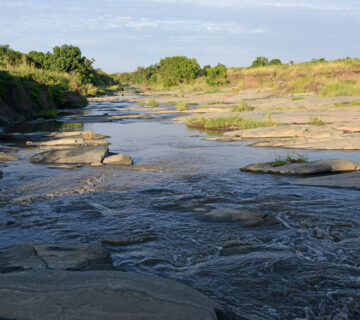
Dry plains turn green. Dust disappears. The horizon becomes softer and more layered. Storm systems build and clear, constantly changing light conditions across the savannah.
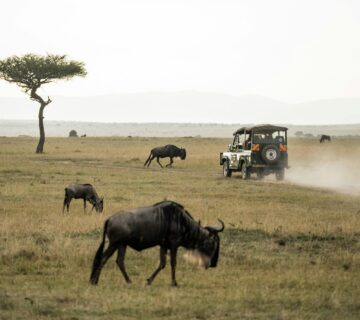
Wildlife is still active, but it is no longer compressed into predictable dry-season hotspots. Movement becomes more dynamic and spread across wider areas.
This is a different version of the Serengeti—less concentrated, but more atmospheric and visually rich.
Fewer Vehicles, More Space
One of the strongest advantages of the green season is the reduction in tourist numbers.
Many parts of the safari circuit become noticeably quieter. Instead of multiple vehicles at sightings, you often find long periods of isolation in the bush.
This changes the entire rhythm of the safari. You are not sharing space or timing with large groups. You are moving through ecosystems with more flexibility and less pressure.
For many travellers, this sense of space is one of the most valuable parts of the experience.
Calving Season Changes Everything
Between January and March, the southern Serengeti becomes a major calving zone.
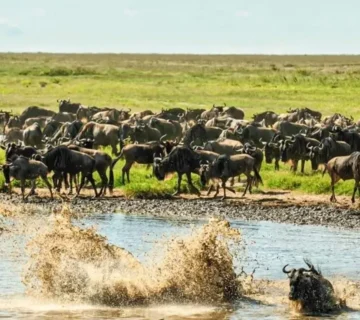
Thousands of wildebeest give birth in a short period, creating one of the most intense predator-prey environments in Africa. Lions, hyenas, and cheetahs follow closely behind the herds, leading to constant interaction.
This period proves an important point: the green season is not quiet. In fact, it can be one of the most active wildlife periods of the year.
Wildlife Is Still There, Just Not Clustered
A common misunderstanding is that green season means fewer animals. That is not correct.
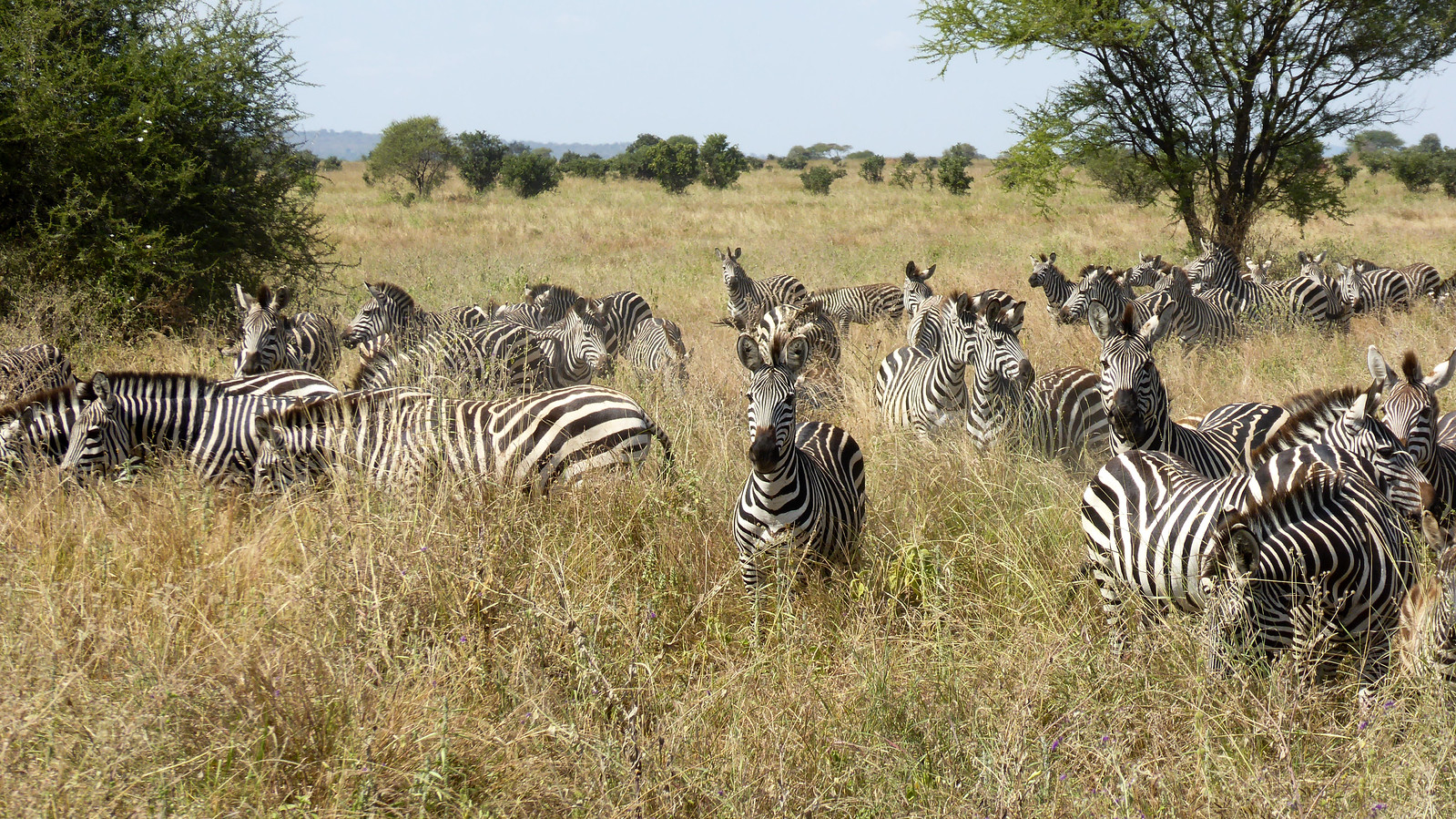
Wildlife remains present across the ecosystem. The difference is that animals are no longer forced into concentrated dry-season patterns.
This leads to more scattered sightings, more tracking-based game drives, and a stronger emphasis on behaviour rather than density.
You may not always find large herds immediately, but the encounters often feel more natural and less staged by environmental pressure.
Photography Conditions Improve
From a visual perspective, the green season offers some of the strongest photography conditions of the year.
The landscape is greener, the air is cleaner, and the light is softer. Clouds and storm systems add depth and drama to the sky, creating far more dynamic compositions.
Instead of dusty, high-contrast dry-season scenes, you get layered colour, richer backgrounds, and more atmospheric wildlife imagery.
Even fewer sightings can produce stronger visual results.
Lower Costs and Better Availability
The green season also changes the economics of safari travel.
Many lodges reduce rates due to lower demand, and availability is significantly higher. This means access to high-end properties that may be fully booked or far more expensive in peak season.
For travellers focused on value and comfort, this period often provides better accommodation options for the same budget.
The Trade-Offs You Must Understand
The green season is not perfect, and it is important to be realistic about its limitations.
Wildlife is less concentrated, which means sightings can take more patience. Some roads may be affected by rainfall. Migration river-crossing events are not a focus during this period. Game drives can feel more exploratory and less predictable.
If your priority is high-density, guaranteed sightings in a short time, the dry season is more suitable.
Who Should Choose the Green Season
The green season is ideal for travellers who value space, photography, and atmosphere over constant high-density sightings.
It works best for those who want fewer crowds, more immersive landscapes, calving season predator activity, and a more flexible safari rhythm.
It is also particularly strong for experienced safari travellers who want to see a different side of the ecosystem beyond peak-season behaviour.
Insight
The green season in Tanzania is not a reduced safari experience. It is a redistribution of the ecosystem.
The Serengeti National Park remains fully active, but wildlife spreads out instead of clustering. Behaviour becomes more natural, landscapes become more dramatic, and safari traffic becomes lighter.
What changes is not quality, but structure.
For travellers who understand this, the green season is not a compromise. It is a different, often more atmospheric and visually rich way to experience Tanzania’s wilderness.
Start Planning Your Next Trip To Africa
If you can picture yourself in one—or several—of these exceptional retreats, the next move is simple. We design fully tailored African safaris that bring these experiences together seamlessly, from private gorilla encounters to luxury lodges in the heart of the wild.
Every detail is carefully planned, so your journey feels effortless from start to finish. Reach out in whichever way suits you best, and let’s begin crafting your safari.
Start Planning