Tanzania in January and February: Calving Season and Why It’s Africa’s Best-Kept Secret
January and February in Tanzania are often overlooked by first-time safari travellers, largely because most marketing attention goes to the dry season months. That is a mistake. These two months represent one of the most biologically intense periods in the entire African safari calendar, especially inside the Serengeti National Park ecosystem.
This is calving season. It is not a quiet transition period or a shoulder season. It is a concentrated wildlife event that reshapes predator behaviour, herd movement, and overall safari dynamics on a massive scale.
What happens during this window is simple but powerful: life begins at scale, and predators respond immediately.
What Calving Season Actually Means
Calving season refers to the synchronized birthing period of wildebeest in the southern Serengeti plains.
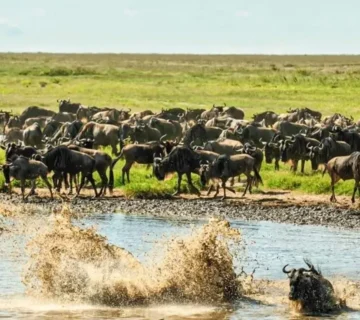
Within a very short window, typically from late January through February, hundreds of thousands of calves are born. The density is extreme, with thousands of births occurring daily during peak phases.
This creates one of the most concentrated wildlife events on Earth, not because of migration movement, but because of reproduction at scale.
The southern plains of the Serengeti become a nursery ecosystem almost overnight.
Why the Southern Serengeti Becomes the Focus
During this period, wildebeest concentrate on short grass plains in the southern Serengeti because the fresh vegetation is highly nutritious and easy to access after seasonal rains.
These open plains are critical because they allow mothers to give birth in relatively flat, open terrain where visibility is high. However, this same openness also increases vulnerability.
There is nowhere to hide, and predators take full advantage of that.
Predator Response: Nature at Full Intensity
The arrival of thousands of newborn calves triggers immediate and aggressive predator response.
Lions, hyenas, cheetahs, and opportunistic scavengers adjust their movement patterns to follow the herds. Hunting frequency increases significantly, not because predators change behaviour, but because prey density increases dramatically.
This creates constant interaction across the landscape:
survival, loss, regrouping, and movement all happening in real time.
It is one of the most behaviourally intense safari experiences in Africa.
The Role of the Serengeti Ecosystem
The Serengeti National Park is not just a backdrop for calving season—it is the system that enables it.
The southern plains provide the short grass environment needed for grazing and calving. Seasonal rainfall patterns determine when these conditions peak. The entire cycle is timed by ecological pressure rather than human-defined seasons.
This is why January and February are so consistent in delivering this experience: the ecosystem itself drives the timing.
What You Actually See on Safari
A safari during calving season is not structured around single iconic moments. It is structured around continuous wildlife behaviour.
On a typical day, you may observe:
newborn calves taking their first steps within minutes of birth
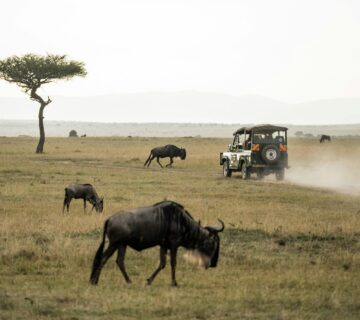
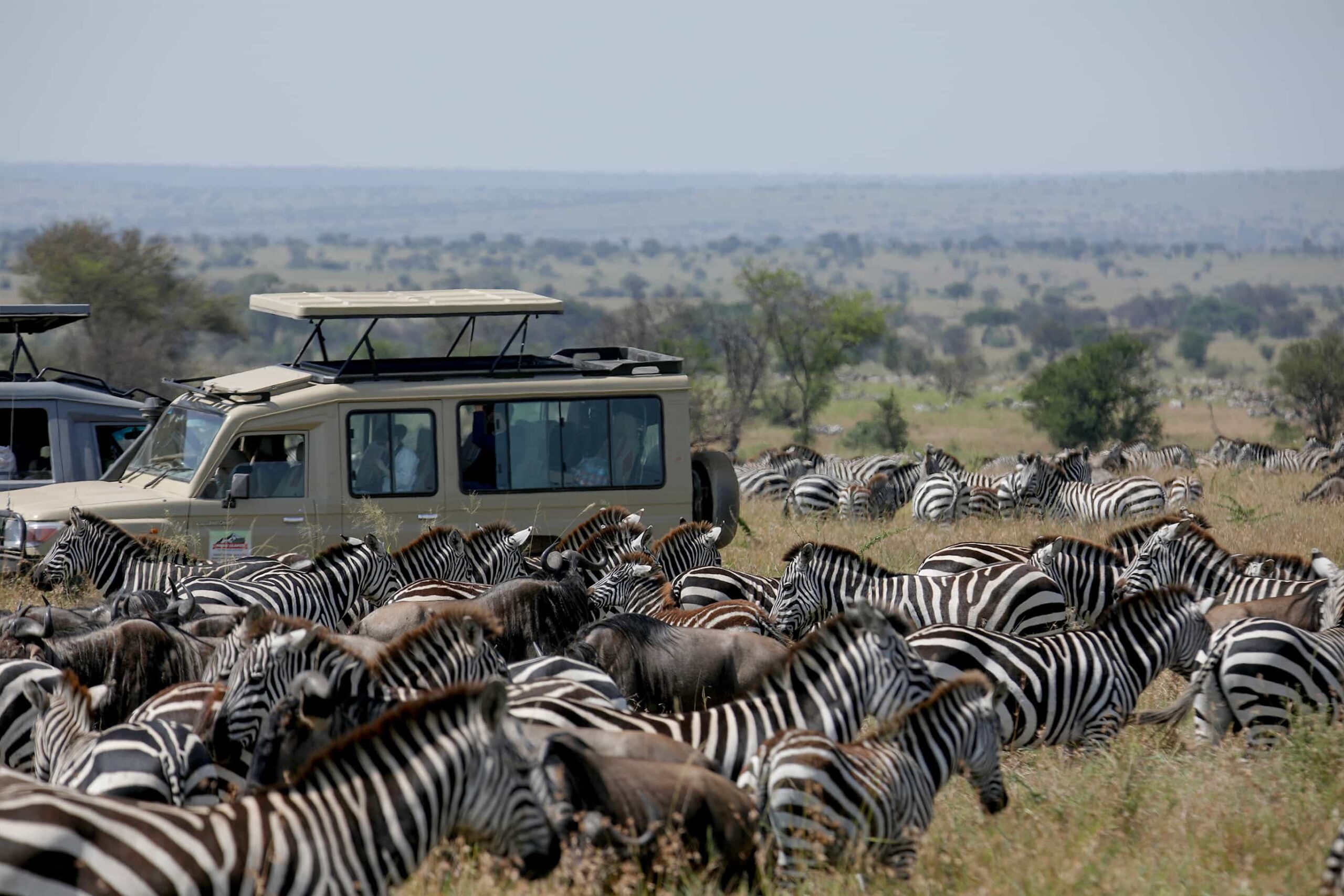
large herds moving slowly across open plains
lions tracking groups over extended distances
hyenas testing weak or isolated calves
cheetahs using speed-based hunting strategies in open terrain
Unlike migration river crossings, where action is concentrated in short bursts, calving season is sustained and continuous.
Why This Season Feels Different
Most safari periods are defined by movement or scarcity. Calving season is defined by density.
There is an overwhelming presence of life across the plains. It is not random wildlife spotting. It is structured biological activity happening at scale.
This creates a very different emotional tone on safari:
less anticipation of “where is the wildlife,” and more observation of “how is the ecosystem functioning right now.”
Photographic Conditions
January and February also offer strong photographic conditions.
The landscapes are green from seasonal rains, which creates strong contrast against the golden coats of wildlife. Light conditions are often soft due to cloud cover, which reduces harsh shadows and improves detail capture.
Storm systems can add dramatic skies, and the open plains provide clear visibility for action photography.
Even though wildlife density is already high, the visual environment elevates the experience further.
Crowd Levels and Accessibility
Despite the intensity of wildlife activity, this period is not the busiest safari season.
It falls outside peak migration travel months, which means fewer tourists in many parts of the southern Serengeti. This creates more space at sightings and a less congested safari experience.
However, access to key calving areas still depends on guide knowledge and positioning, as wildlife is spread across large but specific grazing zones.
The Trade-Offs You Should Understand
Calving season is not perfect for every type of traveller.
Wildlife is highly spread across southern plains, so you may need patience to track movement. It is also not the period for river crossings or large migration river drama, which occur later in the year.
Predator activity can be intense and sometimes sensitive to observe, as it involves natural survival outcomes.
It is a season of realism, not spectacle in the traditional sense.
Who This Season Is Best For
January and February are ideal for travellers who want:
high-intensity predator-prey behaviour
raw ecological interaction rather than staged moments
strong photographic landscapes with green contrast
fewer crowds compared to peak migration months
deep immersion into natural life cycles
It is especially suited for travellers who have already experienced dry-season safaris and want a deeper ecological perspective.
Insight
Calving season in Tanzania is one of the most important but under-discussed wildlife events in Africa.
Inside the Serengeti National Park, it represents a full ecological reset point where reproduction, survival, and predator dynamics intersect at scale.
January and February are not transitional months. They are active biological months where the ecosystem operates at full intensity in a different form from migration season.
For those who understand it, this period is not a secret because it is hidden. It is a secret because it is misunderstood.
Start Planning Your Next Trip To Africa
If you can picture yourself in one—or several—of these exceptional retreats, the next move is simple. We design fully tailored African safaris that bring these experiences together seamlessly, from private gorilla encounters to luxury lodges in the heart of the wild.
Every detail is carefully planned, so your journey feels effortless from start to finish. Reach out in whichever way suits you best, and let’s begin crafting your safari.
Start Planning