Why Tanzania’s Southern Parks Receive Only 5% of Visitors: The Case for Ruaha and Selous
Tanzania’s safari industry is heavily dominated by the northern circuit. Most travellers head straight to the Serengeti ecosystem, Ngorongoro Crater, and surrounding parks, leaving the southern regions dramatically under-visited by comparison.
In fact, the southern safari circuit receives only a small fraction of total tourist traffic—estimated at around 5% of visitors. Yet this region contains some of the largest, wildest, and most ecologically intact protected areas in Africa, including Nyerere National Park (formerly Selous Game Reserve) and Ruaha National Park.
The imbalance is not because the south is inferior. It is because safari development, accessibility, and marketing have historically concentrated around the north.
Understanding this gap explains why the southern circuit remains one of Africa’s most authentic wilderness experiences.
The Northern Circuit Effect
The dominance of the northern circuit is the single biggest reason for the southern region’s low visitor numbers.
The north offers:
high-density wildlife viewing
iconic landscapes like the Serengeti plains
established lodge networks
shorter internal logistics between parks
well-developed safari infrastructure
This makes it easier for first-time travellers to design simple, predictable itineraries.
In contrast, the southern circuit requires more time, more internal flight planning, and a greater willingness to travel into remote wilderness zones.
Accessibility: The Core Structural Barrier
The southern parks are not difficult to reach, but they are less direct.
Most travellers heading to Ruaha or Nyerere must use domestic flights from Dar es Salaam or other regional hubs rather than direct international-to-park routing.
This adds an additional layer of planning compared to northern parks that connect more seamlessly through Kilimanjaro International Airport and Arusha.
Even though bush flights are efficient, the perception of “extra step” travel discourages many first-time visitors.
The Scale Difference: Wilderness Without Crowds
One of the defining characteristics of the southern circuit is scale.
Ruaha National Park is Tanzania’s largest national park, covering vast, remote landscapes with low visitor density. Similarly, Nyerere National Park is one of the largest protected wilderness areas in Africa.
These parks are not designed for high-volume tourism. They are designed for low-density, high-immersion safari experiences.
This means:
fewer vehicles at sightings
long uninterrupted wildlife encounters
larger territories per animal group
less infrastructure intrusion
The experience is fundamentally different from the busier northern parks.
Wildlife Density vs Wilderness Experience
The northern circuit is known for concentrated wildlife visibility, especially in ecosystems like the Serengeti.
The southern circuit is known for spread-out, behaviour-focused wildlife encounters.
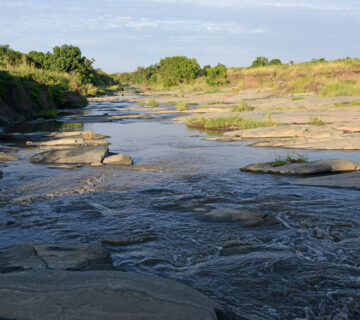
In Ruaha, for example, lion prides are large and territorial, but sightings are less clustered around predictable routes. In Nyerere, river-based ecosystems create different movement patterns influenced by water systems rather than open plains migration.
This difference is often misunderstood as “less wildlife,” when in reality it is simply less concentrated viewing.
Infrastructure and Lodge Distribution
Another reason for lower visitor numbers is the distribution of accommodation.
The northern circuit has a high density of lodges, camps, and luxury properties across multiple price ranges.
The southern circuit has fewer properties, often more widely spaced and designed for longer stays.
This creates a psychological barrier for travellers who prefer more frequent lodge options or shorter hop itineraries.
However, for those who do visit, the limited density often translates into more exclusive safari experiences.
The Serengeti Contrast Effect
The global fame of the Serengeti National Park plays a major role in drawing attention away from southern parks.
The Serengeti is one of the most marketed safari destinations in the world, particularly due to the Great Migration and its high visibility in media and documentaries.
As a result, many travellers design itineraries around the north by default, often without considering alternatives.
This creates a strong “first-choice bias” toward northern Tanzania.
Why the South Is Still Wild
One of the strongest arguments for the southern circuit is its ecological integrity.
Because visitor numbers are lower, these ecosystems retain a stronger sense of untouched wilderness. This includes:
larger predator territories
less road density
fewer vehicle encounters per sighting
stronger natural behavioural patterns
In places like Ruaha, you often experience long periods without seeing other safari vehicles, which is increasingly rare in more popular parks.
The Trade-Off: Comfort vs Immersion
The northern circuit prioritises convenience and structured safari flow.
The southern circuit prioritises immersion and raw wilderness exposure.
Neither is better universally. They simply serve different travel styles.
Northern Tanzania is ideal for first-time safari travellers seeking iconic experiences.
Southern Tanzania is better suited for returning travellers or those prioritising exclusivity and depth over predictability.
Why the Southern Circuit Is Growing Slowly
Interest in southern parks is increasing, but gradually.
The main constraints remain:
flight connectivity perception
limited marketing compared to the north
longer minimum stay requirements for meaningful itineraries
However, high-end safari operators are increasingly positioning Ruaha and Nyerere as premium alternatives to crowded northern routes.
Insight
The reason Tanzania’s southern parks receive only a small fraction of visitors is not because they lack wildlife or quality. It is because safari tourism has historically developed around accessibility, familiarity, and marketing concentration in the north.
Inside ecosystems like Ruaha National Park and Nyerere National Park, the experience is defined less by density and more by scale, solitude, and ecological immersion.
While the north delivers iconic safari imagery, the south delivers space and exclusivity.
The imbalance in visitor numbers reflects perception and logistics more than wilderness value. For travellers willing to go beyond the default route, the southern circuit offers one of the most authentic safari experiences left in Africa.
Start Planning Your Next Trip To Africa
If you can picture yourself in one—or several—of these exceptional retreats, the next move is simple. We design fully tailored African safaris that bring these experiences together seamlessly, from private gorilla encounters to luxury lodges in the heart of the wild.
Every detail is carefully planned, so your journey feels effortless from start to finish. Reach out in whichever way suits you best, and let’s begin crafting your safari.
Start Planning