Tanzania’s Anti-Poaching Progress: How the Country Is Winning the War on Wildlife Crime
Tanzania has one of the most ambitious wildlife protection systems in Africa, and its anti-poaching progress over the past decade is not based on a single strategy, but on a layered enforcement and conservation model that combines ranger deployment, technology, legal reform, and tourism funding.
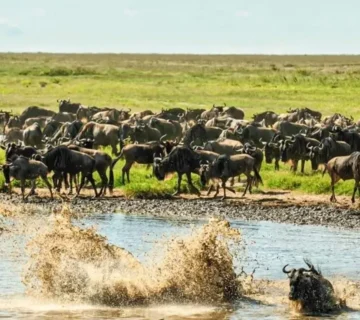
In major ecosystems like the Serengeti National Park, this system is not theoretical. It is operational on a daily basis, shaping how wildlife is monitored and protected across vast, remote landscapes.
The phrase “winning the war on wildlife crime” is not absolute, but it reflects a measurable shift: poaching pressure has reduced in many key areas compared to previous decades due to sustained enforcement and coordinated conservation investment.
The Scale of the Challenge
Wildlife crime in Tanzania has historically been driven by illegal hunting, particularly targeting elephants and other high-value species.
The challenge is structural:
large, remote ecosystems
porous borders in some regions
high demand for illegal wildlife products
limited historical enforcement capacity across vast territories
Protecting ecosystems like the Serengeti requires constant surveillance across thousands of square kilometres, which is logistically complex and expensive.
The Ranger Network: The Foundation of Protection
The backbone of Tanzania’s anti-poaching system is its ranger force.
Rangers operate in national parks, conservation areas, and buffer zones, conducting:
routine patrols
anti-poaching sweeps
wildlife monitoring
intelligence-based operations
These teams are often deployed in difficult terrain for extended periods, particularly in remote sections of the Serengeti ecosystem where human access is limited but wildlife movement is constant.
Without this ground presence, enforcement would not be possible at scale.
Intelligence-Led Anti-Poaching Operations
One of the most important improvements in recent years has been the shift from reactive enforcement to intelligence-led operations.
Instead of simply responding to incidents, anti-poaching units now rely on:
community reporting networks
informant systems in high-risk zones
data tracking of illegal activity patterns
coordinated response units
This approach allows enforcement teams to target poaching networks more effectively rather than relying solely on random patrol coverage.
Technology and Surveillance Expansion
Technology has become a key force multiplier in conservation enforcement.
Tanzania now uses a combination of:
aerial surveillance in large ecosystems
GPS tracking of wildlife movements
real-time communication systems between ranger units
data mapping for identifying risk zones
In large landscapes like the Serengeti, aerial observation is particularly important because ground coverage alone is not sufficient to monitor all areas effectively.
The Role of Tourism in Anti-Poaching Funding
Tourism is not separate from conservation enforcement—it directly funds it.
Park fees and tourism revenue contribute to:
ranger salaries and deployment
vehicle fleets and fuel costs
surveillance systems and infrastructure
training and operational logistics
This creates a feedback loop where increased tourism strengthens conservation capacity.
Inside the Serengeti National Park, this funding model is especially important due to the park’s size and ecological significance.
Legal Enforcement and Wildlife Crime Penalties
Tanzania has strengthened its legal framework for wildlife crime, with stricter penalties and improved enforcement mechanisms.
This includes:
harsher sentencing for poaching offences
improved prosecution systems
specialised wildlife crime courts in some cases
cross-border cooperation on trafficking networks
The goal is not only to prevent poaching in the field but also to dismantle the networks that drive it.
Community Involvement in Conservation
A key factor in anti-poaching progress is the involvement of local communities living near wildlife areas.
When communities benefit from conservation through employment or tourism-linked revenue, incentives shift away from illegal hunting.
This is particularly relevant in areas bordering major ecosystems, where human-wildlife interaction is constant.
Community reporting systems also play a role in identifying suspicious activity early.
Air and Ground Integration
Modern anti-poaching strategy relies on combining aerial and ground operations.
Aircraft are used to:
monitor remote regions
track large-scale wildlife movement patterns
identify potential illegal activity zones
Ground teams then respond based on this intelligence.
This integrated approach is especially important in vast ecosystems like the Serengeti, where distance alone makes ground-only enforcement inefficient.
Measurable Progress, Not Absolute Victory
It is important to be precise: Tanzania has made significant progress in reducing poaching pressure in key wildlife areas, but wildlife crime has not been completely eliminated.
The situation is better than in previous decades, but still requires constant enforcement, funding, and international cooperation.
Conservation is not a finished outcome. It is an ongoing operational system.
Remaining Challenges
Despite progress, several challenges remain:
large geographic scale of protected areas
resource demands for continuous ranger deployment
border-related trafficking risks in some regions
economic pressures in surrounding communities
These factors mean enforcement must remain adaptive rather than static.
Why the Serengeti Is Central to Conservation Success
The Serengeti ecosystem is both a conservation priority and a symbolic benchmark for Tanzania’s anti-poaching success.
Inside the Serengeti National Park, stable wildlife populations and consistent monitoring systems reflect the effectiveness of long-term investment in protection.
Because of its global importance, the Serengeti receives sustained attention from conservation authorities, tourism revenue systems, and research organisations.
Insight
Tanzania’s anti-poaching progress is not the result of a single policy or intervention. It is the outcome of a multi-layered system combining ranger enforcement, intelligence networks, legal reform, technology, community participation, and tourism funding.
Inside major ecosystems like the Serengeti, this system is active every day, protecting one of the most important wildlife landscapes on Earth.
The reality is balanced: Tanzania is not free from wildlife crime, but it has built one of the more structured and increasingly effective conservation systems in Africa. The “war” is not over, but the capacity to fight it has become significantly stronger and more coordinated than in the past.
Start Planning Your Next Trip To Africa
If you can picture yourself in one—or several—of these exceptional retreats, the next move is simple. We design fully tailored African safaris that bring these experiences together seamlessly, from private gorilla encounters to luxury lodges in the heart of the wild.
Every detail is carefully planned, so your journey feels effortless from start to finish. Reach out in whichever way suits you best, and let’s begin crafting your safari.
Start Planning