Tanzania and Kenya Combined Safari: The Ultimate East Africa Itinerary
A combined safari through Tanzania and Kenya is widely considered the most complete wildlife journey in Africa. It connects two of the continent’s most iconic ecosystems: the vast plains of the Serengeti National Park and the equally famous savannahs of the Maasai Mara National Reserve. When structured correctly, this itinerary is not just about seeing animals in two countries—it is about following the same ecological system across a political border and experiencing it in different stages.
This is where the real value lies. You are not switching destinations. You are following a continuous wildlife migration corridor across East Africa.
Why Combine Tanzania and Kenya in One Safari
The main reason travellers choose a combined itinerary is simple: variation within the same ecosystem.
The Serengeti and Maasai Mara are essentially one connected system. Wildlife does not recognize borders. The Great Migration moves between these two regions depending on rainfall and seasonal patterns.
By combining both countries, you get:
- Different perspectives of the same migration cycle
- Variation in landscape density and terrain
- Different safari styles and conservancy models
- A more complete understanding of predator-prey dynamics
In Tanzania, you experience scale. In Kenya, you often experience concentration.
The Core Route Structure (How the Journey Actually Works)
A well-designed combined safari is not random travel between parks. It follows a logical movement pattern based on geography and wildlife timing.
Most itineraries begin in northern Tanzania because it offers the widest range of safari environments in a relatively structured circuit.
Travellers typically move through the Serengeti, sometimes including the Ngorongoro highlands, before crossing into Kenya’s Maasai Mara via the northern border.
From there, the safari can either end in Nairobi or continue into other Kenyan parks such as Amboseli or Lake Naivasha, depending on duration.
The structure is important because it follows wildlife movement rather than administrative boundaries.
Tanzania Phase: Scale, Diversity, and Migration Foundation
The Tanzania segment is usually the longer and more expansive part of the journey.
In the Serengeti, you experience vast open plains where wildlife is spread across large territories. This is where the Great Migration forms its massive herds, especially during calving and movement phases.
The ecosystem here is less compressed, meaning sightings often require more exploration. You are not just watching animals—you are tracking patterns across distance.
The Ngorongoro Crater adds a contrasting experience. Instead of open plains, you enter a contained volcanic caldera where wildlife density is extremely high. It is one of the few places in Africa where you can see a large variety of species within a short driving radius.
Together, these areas create a foundation for the safari experience: scale followed by concentration.
Crossing Into Kenya: The Shift in Safari Style
Once you move into Kenya and enter the Maasai Mara National Reserve, the experience changes subtly but noticeably.
The landscape becomes more rolling and compact compared to the vast openness of the Serengeti. Wildlife sightings often feel closer and more frequent due to the terrain and vegetation patterns.
Another important difference is safari structure. Kenya has a strong network of private conservancies surrounding the main reserve. These conservancies often limit vehicle numbers, allow off-road driving in designated areas, and offer more flexible safari rules compared to national reserves.
This creates a more controlled and intimate safari experience.
The Great Migration Across Two Countries
The most powerful reason to combine Tanzania and Kenya is the Great Migration.
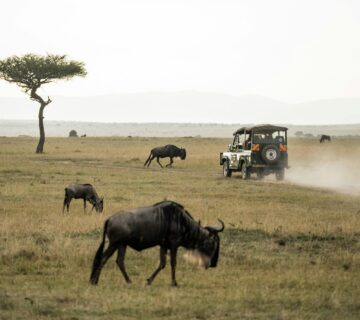
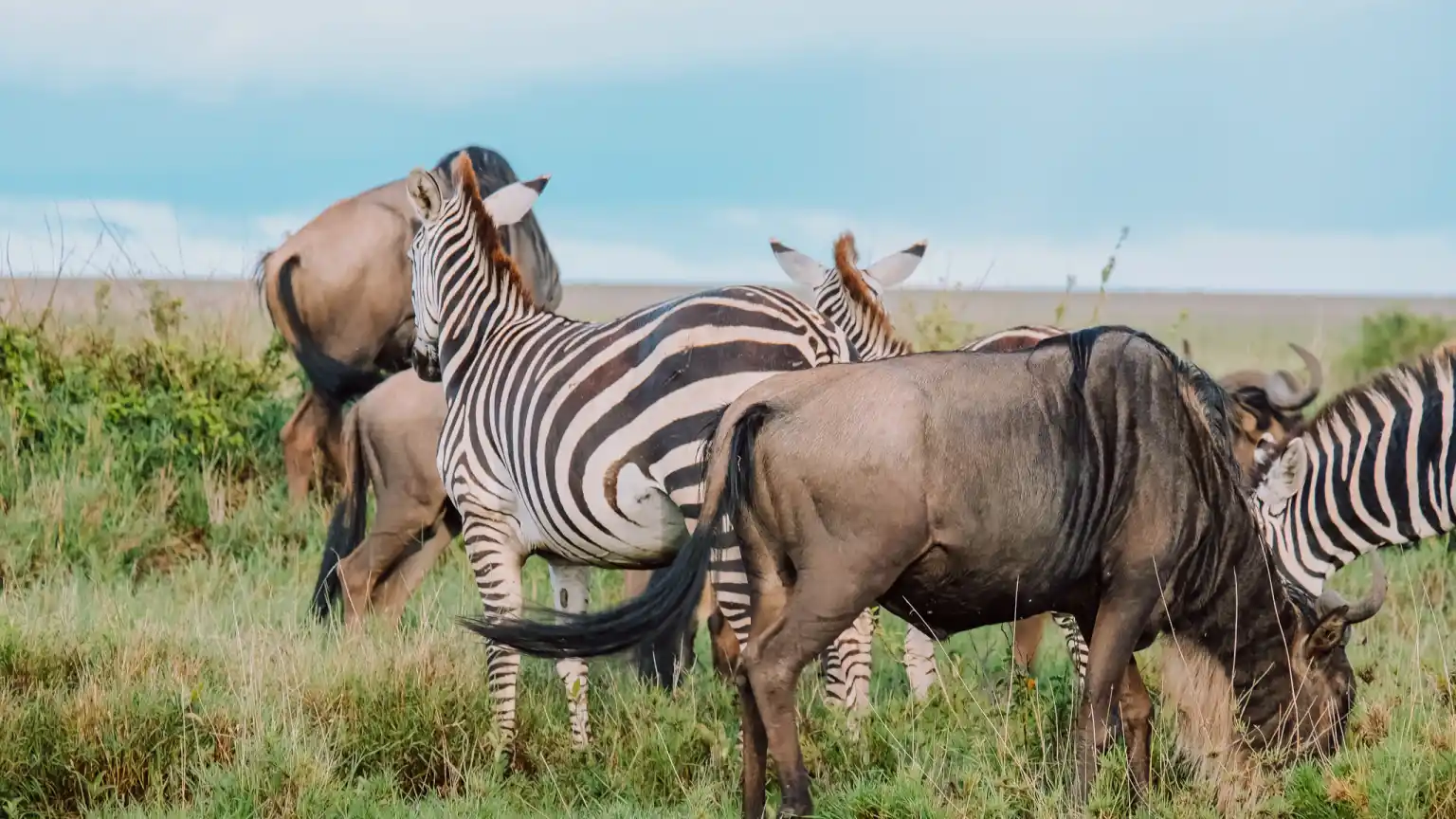
This is not a single event but a continuous movement of wildebeest, zebras, and gazelles across the Serengeti-Mara ecosystem.
In Tanzania, you often witness:
- Calving season in the southern plains
- Large herd movement across central Serengeti
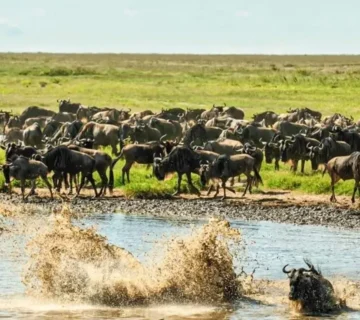
- River crossings in northern regions depending on timing
In Kenya, the focus shifts to:
- Mara River crossings (when herds enter or exit the Mara)
- Predator action in concentrated areas
- Herd staging and grazing in open plains
By combining both countries, you increase your chances of seeing different phases of the same migration cycle rather than relying on one location.
Ideal Duration for a Combined Safari
A combined itinerary requires more time than a single-country safari because you are crossing borders and covering multiple ecosystems.
Short versions tend to feel rushed and may limit the depth of experience. Medium and longer itineraries allow the ecosystem transitions to feel natural rather than compressed.
The key principle is not just how many days you travel, but whether each region is given enough time to develop its own rhythm.
Tanzania typically requires more time due to distances between parks. Kenya often feels more compact due to shorter travel distances between key safari areas.
Accommodation Differences Between Tanzania and Kenya
Accommodation style also changes between the two countries.
In Tanzania, especially in the Serengeti, mobile tented camps are common during migration seasons. These camps move with wildlife patterns, offering direct access to migration zones.
Permanent luxury lodges are also available in areas like Ngorongoro and central Serengeti, offering more structured comfort.
In Kenya, luxury safari lodges and conservancy-based camps are more dominant. These properties often focus on exclusivity, fewer vehicles, and controlled safari experiences.
The result is a subtle difference in atmosphere: Tanzania feels more expansive and exploratory, while Kenya often feels more curated and refined.
Border Logistics and Flight Connections
A combined safari usually involves either road crossing at the Isebania border or short regional flights between key safari hubs.
Flights are commonly used to move between Serengeti airstrips and Maasai Mara airstrips, reducing travel time and avoiding long overland border procedures.
This air-link system is what makes the combined itinerary practical despite covering two countries.
Who This Itinerary Is Best For
A Tanzania-Kenya combined safari is best suited for travellers who want depth rather than simplicity.
It works particularly well for:
- First-time Africa travellers who want a “complete” safari experience
- Repeat safari travellers seeking variation in ecosystems and styles
- Photographers following migration patterns
- Honeymooners wanting a long, immersive journey
It is less suitable for very short trips or travellers who prefer a single-base safari without movement.
Common Mistakes in Planning a Combined Safari
One of the most common mistakes is trying to fit too many destinations into too few days. This results in excessive travel time and reduced wildlife immersion.
Another mistake is ignoring migration timing. The Serengeti and Maasai Mara do not offer the same wildlife density at all times of year in all areas. Without timing alignment, expectations may not match reality.
A third issue is over-prioritizing luxury logistics while underestimating travel distances. Even short flights still require transfers, timing buffers, and coordination.
Why This Combination Is Considered the “Ultimate” East Africa Safari
The Tanzania and Kenya combination is considered the most complete safari circuit because it offers ecological continuity with geographical variation.
You are not switching ecosystems entirely. You are following one of the largest terrestrial migrations on Earth across two landscapes shaped differently by geography, rainfall, and conservation models.
In Tanzania, you experience scale and movement. In Kenya, you experience proximity and intensity.
Together, they form a single connected wildlife narrative.
Insight
A Tanzania and Kenya combined safari is not simply a longer itinerary. It is a layered wildlife journey that follows the natural rhythm of the Great Migration across the Serengeti and Maasai Mara ecosystem.
When planned correctly, it delivers something that single-country safaris cannot: a full-circle understanding of East Africa’s most important wildlife system.
The key to success is not just combining countries, but sequencing them properly so that each region builds on the last rather than competing with it.
Start Planning Your Next Trip To Africa
If you can picture yourself in one—or several—of these exceptional retreats, the next move is simple. We design fully tailored African safaris that bring these experiences together seamlessly, from private gorilla encounters to luxury lodges in the heart of the wild.
Every detail is carefully planned, so your journey feels effortless from start to finish. Reach out in whichever way suits you best, and let’s begin crafting your safari.
Start Planning