Malaria in Tanzania: Which Parks Are High Risk and What Do Safari Operators Recommend?
Malaria is one of the most important health considerations when planning a safari in Tanzania, but it is also one of the most misunderstood. Many travellers either overestimate the risk and worry unnecessarily, or underestimate it and arrive unprepared.
The correct understanding sits in the middle: malaria exists in Tanzania, especially in lower-altitude and warmer regions, but the actual risk to safari travellers can be managed effectively with proper precautions.
Inside major safari areas like the Serengeti National Park, Ngorongoro, Tarangire, and Ruaha, malaria risk varies depending on altitude, season, and exact location.
What Malaria Risk Actually Means in Tanzania
Malaria in Tanzania is primarily transmitted by mosquitoes in warmer, lower-altitude environments. This means risk is not uniform across the country.
It is influenced by:
altitude
temperature
rainfall patterns
proximity to water and vegetation
seasonal mosquito activity
Safari areas are not equally affected. Some zones have consistently low risk due to elevation and climate, while others have higher seasonal exposure.
High-Risk Safari Regions
Lower-altitude and warmer ecosystems generally carry higher malaria risk.
This includes areas such as:
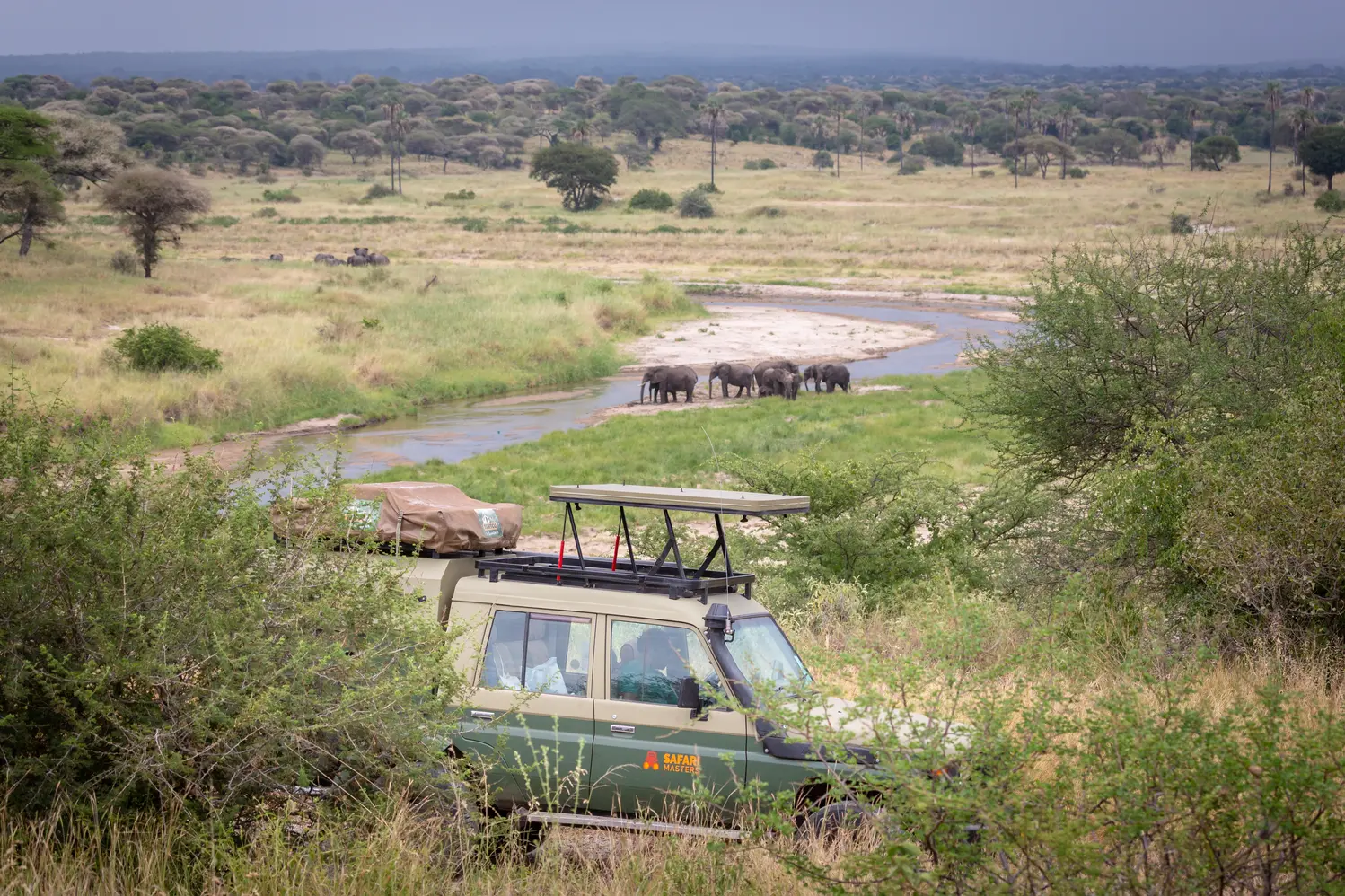
Tarangire National Park and surrounding river systems
parts of southern Tanzania safari circuits like Nyerere and Ruaha lowlands
coastal regions including Zanzibar
These areas combine heat, humidity, and water sources, which create favourable mosquito breeding conditions.
Even in these regions, risk is manageable, but it is higher compared to cooler highland zones.
Moderate-Risk Areas
The central Serengeti ecosystem and surrounding plains are generally considered moderate risk zones.
In the Serengeti National Park, risk varies by season. During wetter periods, mosquito activity increases, while in dry months it decreases significantly.
However, because the Serengeti is a large and ecologically diverse system, risk is not uniform across the park.
Low-Risk Areas: High Altitude Advantage
High-altitude regions are where malaria risk drops significantly.
The most important example is the Ngorongoro highlands and crater rim areas. Elevated temperatures are lower, and mosquito populations are reduced compared to lowland regions.
This makes highland lodges and crater rim properties relatively safer from a malaria exposure perspective.
Seasonal Variation: Why Timing Matters
Malaria risk in Tanzania is not constant throughout the year.
During rainy seasons, mosquito populations increase due to standing water and higher humidity. This typically raises exposure risk in both safari and coastal areas.
During dry seasons, mosquito activity decreases significantly, especially in open savannah environments where water sources are limited.
This is why safari timing can indirectly influence malaria exposure levels.
What Safari Operators Actually Recommend
Professional safari operators in Tanzania follow a consistent approach to malaria risk management.
Their recommendations typically include a combination of preventive medication, environmental awareness, and practical in-camp precautions.
The most common recommendation is the use of antimalarial prophylaxis prescribed before travel. This is not optional advice—it is standard medical guidance for travellers entering risk zones.
Operators also emphasize that medication should be combined with behavioural precautions rather than treated as the only protection method.
Accommodation Design and Mosquito Control
Most safari lodges and camps in Tanzania are designed with malaria prevention in mind.
Common features include:
mosquito netting around beds
screened windows or enclosed tent structures
regular insect control measures around camp areas
evening spraying or repellent protocols in some properties
These measures significantly reduce exposure risk inside accommodation spaces.
Personal Protection Measures on Safari
Beyond medication and lodge systems, personal habits play a major role in reducing mosquito exposure.
Safari operators typically recommend:
wearing long sleeves and trousers in the evening
using insect repellent on exposed skin
avoiding outdoor seating during peak mosquito activity hours at dusk and dawn
sleeping under properly used mosquito nets when provided
These steps are simple but effective when consistently followed.
The Realistic Risk Perspective
One of the most important truths is that most safari travellers in Tanzania do not experience malaria during their trips.
However, absence of frequent cases does not mean absence of risk. It means risk is managed through a combination of environment, prevention, and awareness.
Inside ecosystems like the Serengeti National Park, the combination of altitude variation, dry-season travel patterns, and controlled lodge environments significantly reduces practical exposure.
Common Misunderstandings
Many travellers assume malaria is equally dangerous everywhere in Tanzania, which is incorrect.
Others assume safari areas are malaria-free, which is also incorrect.
The reality is more nuanced: risk exists, but it is uneven and controllable.
Another misconception is that mosquito presence equals infection risk. In reality, transmission depends on infected mosquito populations, not just presence of mosquitoes.
Who Needs to Be Most Careful
Certain travellers should take extra care with malaria prevention:
first-time travellers unfamiliar with tropical disease environments
travellers visiting multiple ecosystems in one trip, including coastal regions
families with children, depending on medical guidance
travellers spending time in lowland or humid regions for extended periods
In all cases, medical consultation before travel is strongly recommended.
Insight
Malaria in Tanzania is a real but manageable risk, and it should be approached with balance rather than fear.
Inside safari systems like the Serengeti National Park and surrounding parks, exposure varies by altitude, season, and environment, with many lodges and camps actively designed to reduce risk.
The most reliable approach is simple: use prescribed prevention medication, follow basic protective habits, and understand that risk is environmental, not uniform.
For informed travellers, malaria is not a barrier to safari travel in Tanzania. It is a manageable health factor within a well-established tourism system.
Start Planning Your Next Trip To Africa
If you can picture yourself in one—or several—of these exceptional retreats, the next move is simple. We design fully tailored African safaris that bring these experiences together seamlessly, from private gorilla encounters to luxury lodges in the heart of the wild.
Every detail is carefully planned, so your journey feels effortless from start to finish. Reach out in whichever way suits you best, and let’s begin crafting your safari.
Start Planning