Great Migration vs Kenya’s Masai Mara: Do You Need to Cross the Border to See the Best of It?
The Great Migration is often presented as if you must choose between two separate experiences: Tanzania’s Serengeti or Kenya’s Masai Mara. In reality, that framing is misleading. The migration is one continuous ecological system moving across an international boundary that wildlife does not recognize. What changes is not the migration itself, but where you are positioned within it at a given time.
The real question is not which is “better,” but whether you need to cross the border between the Serengeti National Park and the Masai Mara National Reserve to experience the most dramatic parts of the migration. The answer depends entirely on timing, expectations, and what you define as “the best” experience.
The Serengeti–Masai Mara System Is One Ecosystem, Not Two Separate Safaris
The first key point to understand is that the migration is a single circular movement across a shared ecosystem. The wildebeest, zebras, and gazelles move freely between southern, central, and northern Serengeti before crossing into the Masai Mara when conditions push them north.
The border between Tanzania and Kenya is a political line, not a biological one. The animals follow rainfall and grazing patterns, not national boundaries. This means that both the Serengeti and Masai Mara are different sections of the same annual journey, not competing safari destinations.
Because of this, comparing them as entirely separate experiences is less useful than understanding what each region contributes to the migration at different times of year.
What the Serengeti Offers in the Migration Cycle
The Serengeti forms the largest and most consistent portion of the migration route. It is where the cycle begins and ends, and where the herds spend the majority of the year.
In the southern plains of the Serengeti National Park, between December and March, the calving season takes place. This is when hundreds of thousands of wildebeest give birth in a relatively short window. The result is one of the most intense predator-prey environments in Africa, with lions, cheetahs, and hyenas closely following the herds.
From April through June, the herds move through central and western Serengeti. This stage is more spread out and less dramatic in concentrated action, but it represents the core movement phase of the migration as the animals follow fresh grazing northward.
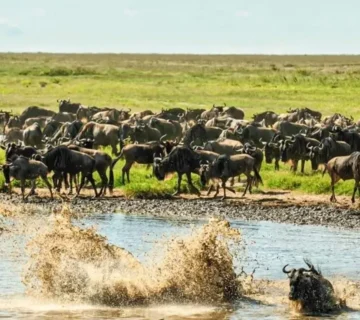
By July to October, the northern Serengeti becomes the critical staging ground before crossing into Kenya. This is where river crossings begin, particularly at the Mara River. However, many travellers do not realize that some of the most dramatic crossings actually occur on the Tanzanian side before the animals even enter the Masai Mara.
The Serengeti therefore offers the widest range of migration phases across the entire year, from birth to movement to crossing.
What the Masai Mara Offers in the Migration Cycle
The Masai Mara National Reserve represents a smaller but highly concentrated extension of the same ecosystem.
When the herds enter the Masai Mara between roughly July and October, they find open grasslands that support dense grazing and high predator activity. Because the area is more compact than the Serengeti, wildlife density often appears higher, and sightings can feel more concentrated.
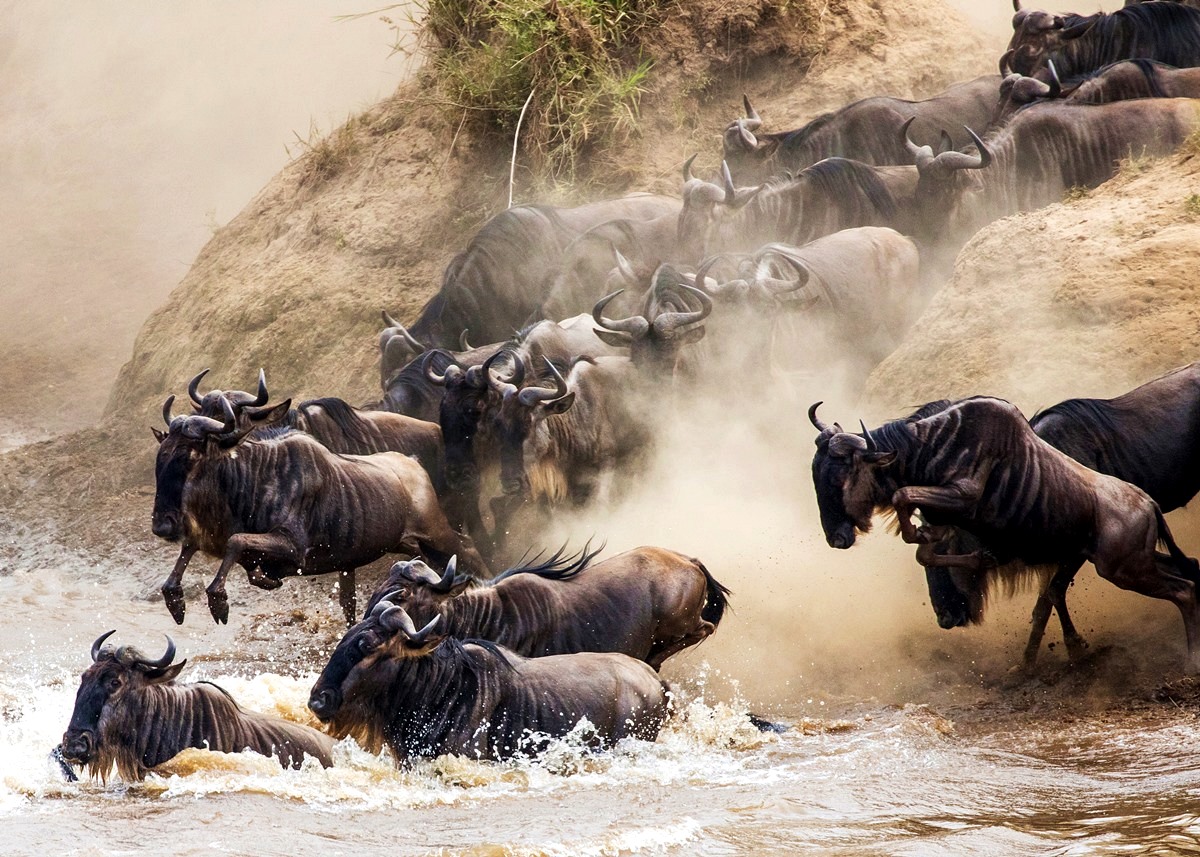
This is also where some of the most iconic river crossings occur along the Mara River. The drama of crocodile encounters, steep riverbanks, and large herd pressure makes this one of the most photographed wildlife events in the world.
However, it is important to understand that the Masai Mara represents only a short phase of the full migration cycle. The herds spend fewer months here compared to their time in Tanzania, and their presence is highly seasonal and concentrated.
Do You Need to Cross the Border to See the Best of the Migration?
The answer depends on what you define as “best.”
If your definition of the best experience is witnessing river crossings in a high-density, open savannah environment with relatively easy wildlife viewing, then the Masai Mara during peak season delivers one of the most intense safari experiences in Africa.
However, if your definition of the best experience includes variety, different migration phases, and a longer window of wildlife activity, then the Serengeti offers a more complete picture of the migration cycle.
Crossing the border is not necessary to see the migration at its peak. Both sides experience peak moments, but at different times and in different forms.
In fact, many of the most experienced safari travellers do not choose one over the other. Instead, they position themselves based on timing, following the herds either north into Kenya or staying in Tanzania depending on where the migration is concentrated at that moment.
Timing Matters More Than Location
One of the biggest misconceptions in migration planning is that location alone determines the quality of your safari. In reality, timing is far more important.
Being in the Masai Mara at the wrong time will feel quiet and uneventful. Being in the Serengeti at the wrong time will produce the same result. Conversely, being in either location at the right moment can deliver extraordinary wildlife encounters.
From July to October, both regions can deliver river crossings, although the concentration and frequency may differ depending on rainfall and herd movement patterns. From December to March, the southern Serengeti becomes the global center of calving activity, while the Masai Mara has little migration presence.
This means the “better” destination changes throughout the year.
The Real Advantage of Tanzania
Tanzania’s advantage is scale. The Serengeti National Park offers a vast and diverse landscape where the migration can be tracked across multiple months and regions.
Travellers can experience calving, movement phases, and early river crossings within one country without needing to cross borders. This makes Tanzania particularly strong for longer safari itineraries and for those who want to follow the migration as a progression rather than a single event.
It also provides more flexibility in terms of avoiding peak crowding in one concentrated area.
The Real Advantage of Kenya
Kenya’s advantage is concentration. The Masai Mara National Reserve offers a compact, high-density wildlife environment where sightings are often more immediate and visually intense during peak migration months.
Because the area is smaller, the chances of encountering large herds and predator interactions in a shorter period can be very high. This makes it particularly attractive for shorter safaris or first-time visitors who want maximum action in minimal time.
Final Answer: Is Crossing the Border Necessary?
You do not need to cross the border to experience the Great Migration at its best. Both Tanzania and Kenya offer peak wildlife moments, but they occur at different times and in different forms.
If you want a broader, more complete migration journey across multiple phases, the Serengeti provides the full cycle experience. If you want concentrated drama during river crossings in a shorter, high-intensity safari window, the Masai Mara delivers that impact.
The most important factor is not the country you choose, but the timing of your visit. The migration rewards alignment with nature, not geography alone.
Start Planning Your Next Trip To Africa
If you can picture yourself in one—or several—of these exceptional retreats, the next move is simple. We design fully tailored African safaris that bring these experiences together seamlessly, from private gorilla encounters to luxury lodges in the heart of the wild.
Every detail is carefully planned, so your journey feels effortless from start to finish. Reach out in whichever way suits you best, and let’s begin crafting your safari.
Start Planning