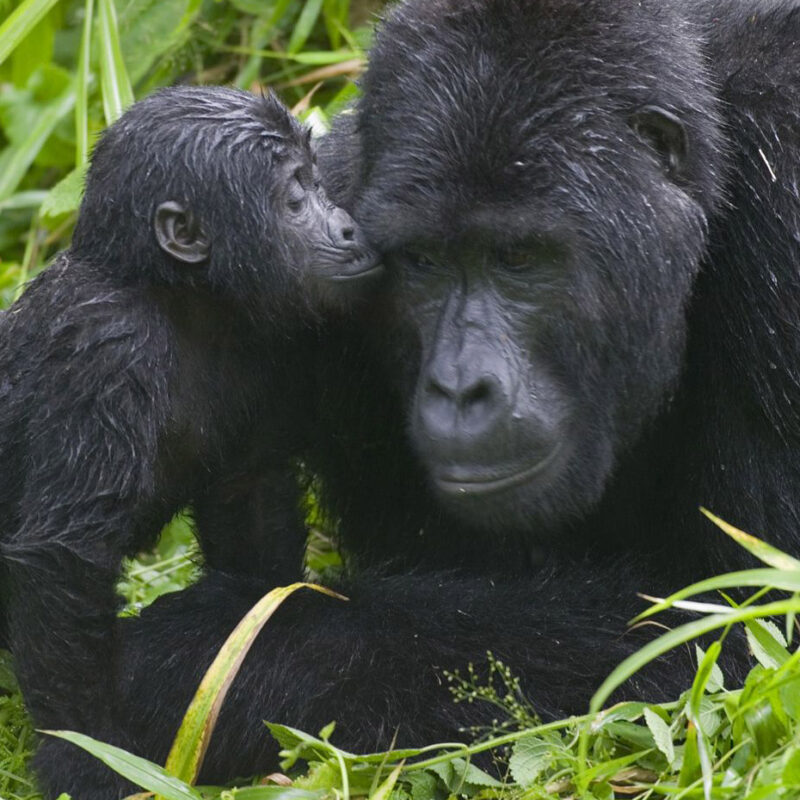
Kidepo National Park Uganda
Uganda’s Most Remote & Untamed Safari Destination
Location: Northeastern Uganda, near the borders with South Sudan and Kenya.
Located in the remote rugged semi-arid landscapes of the Karamoja region in northeastern Uganda, Kidepo feels like the Africa that time forgot, vast, wild and almost entirely undiscovered. The park is home to an impressive range of wildlife: lions, cheetahs, leopards, elephants, buffalos, elands, zebras and over 475 bird species and because it receives relatively few visitors, game viewing here has an intimacy and exclusivity that is difficult to find elsewhere. Kidepo is also a deeply cultural destination, offering rich interactions with the semi-nomadic Karamojong people, one of Uganda’s most distinctive traditional communities. Getting to Kidepo requires either a long overland drive or a short scheduled domestic flight.
Kidepo National Park Uganda
Game Drives on the Narus & Kidepo Valleys | Cheetahs & Species Found Nowhere Else in Uganda | Birdwatching | Karamojong & Ik Cultural Encounters | Rhino Return
Located in the Kaabong District of northeastern Uganda, tucked between the borders of South Sudan to the north and Kenya to the east, Kidepo Valley National Park covers 1,442 square kilometres of semi-arid savannah, rugged mountain terrain, and sweeping valley grassland in the heart of the Karamoja region. The park is dominated by two valleys: the Narus Valley in the south, where water is available year-round and wildlife concentrations reach their most spectacular during the dry season, and the larger, drier, more dramatic Kidepo Valley to the north, a vast open plain flanked by the Morungole mountain range on one side and the Jebel Lotuke mountains of South Sudan on the other.
It was gazetted as a national park in 1962, and in the decades since has been shaped by the cycles of conservation triumph and challenge that define so many of Africa’s great wilderness areas. Today it stands as one of Uganda’s finest and most biodiverse protected areas, home to 86 mammal species and over 475 bird species, with a list of wildlife exclusives that no other park in Uganda can match. The cheetah is found only here. The black-backed jackal, the bat-eared fox, the caracal, the striped hyena, and the greater kudu are all found only in Kidepo within Uganda. And the ostrich, the world’s largest bird, inhabits the open plains of this park and nowhere else in the country.
About Kidepo Valley National Park
Kidepo sits in the semi-arid Karamoja region, a landscape shaped by ancient volcanic forces, seasonal extremes of heat and rainfall, and the enduring presence of the pastoral Karamojong people who have herded cattle across these plains for centuries alongside the wildlife. The park’s position at the intersection of three countries, Uganda, South Sudan, and Kenya, gives it a remoteness that is genuine rather than manufactured, and a wildness that feels consequential rather than curated.
The landscape is unlike anything else in Uganda. Wide open plains of golden grassland roll toward distant mountain horizons. Rocky outcrops and ancient kopje formations break the savannah in dramatic silhouette. Seasonal rivers wind through the valleys in white sandy beds lined with Borassus palms. And rising to the northeast, Mount Morungole reaches 2,750 metres, the park’s highest point and one of the most visually dramatic natural landmarks in northern Uganda.
The Narus Valley, in the park’s southwestern sector around the Apoka tourism hub, is the engine of the wildlife experience. The Narus River provides permanent water in an otherwise seasonally dry landscape, and this reliability draws wildlife from across the park and beyond in extraordinary concentrations, particularly during the dry season months of December to March when it becomes the only reliable water source across a vast area. Buffalo herds that can number into the thousands gather here. Lion prides patrol the valley floor. Elephants move in quiet processions toward the river in the early morning light.
The Kidepo Valley to the north is an entirely different experience. Drier, more dramatic, and with far fewer animals, it is a landscape of almost overwhelming scale and beauty, best experienced as a half-day drive from Apoka, taking in the Kanangorok Hot Springs and the views across the valley toward South Sudan. Secretary birds and ostriches stalk the open plain here. Greater kudu pick their way along the mountain edges. And the sense of standing at the edge of the known world, at the convergence of three countries on an ancient, wind-swept plain, is one that no other national park in Uganda can replicate.
Wildlife of Kidepo Valley National Park
Kidepo’s wildlife is defined by exclusivity and abundance in equal measure. The park holds 86 mammal species, 28 of which are found only in the Karamoja region and nowhere else in Uganda. Several species are found only in Kidepo within the entire Uganda national park system.
Lion is the park’s most iconic large predator, with an estimated population of over 130 individuals making Kidepo one of Uganda’s most important lion conservation areas. Lions are reliably encountered on game drives in the Narus Valley, where the open terrain and year-round prey abundance supports multiple resident prides.
Cheetah is found in Kidepo and nowhere else in Uganda. The park’s open savannah habitat is ideal for this fastest of all land animals, and sightings, while not guaranteed, are realistic for guests who spend three or more days in the park. Kidepo is one of the very few places in East Africa where cheetah can be reliably pursued as a specific target species.
Leopard inhabits the rocky outcrops and acacia woodland edges of the Narus Valley, most visible on night game drives when these naturally elusive cats become active and hunt under cover of darkness.
African Wild Dog is occasionally sighted in Kidepo, making it one of the few places in Uganda where this critically endangered predator can be encountered.
Elephant is present in substantial numbers, frequently seen in the Narus Valley moving toward the river in the early morning hours. Family groups are commonly encountered at close range during game drives.
Buffalo are present in numbers that are truly staggering. Herds in the Narus Valley swamps can reach well over a thousand animals during the dry season, creating one of the most spectacular wildlife spectacles in Africa. Individual bulls, too old and solitary to remain with the herd, are regular fixtures around the Apoka area.
Rothschild’s Giraffe, the same critically endangered subspecies found in Murchison Falls, moves gracefully through the acacia woodland of the Narus Valley and is a reliable and beautiful sighting on any game drive.
Plains Zebra, Jackson’s Hartebeest, Eland, Waterbuck, Oribi, Bohor Reedbuck, and Greater Kudu represent just a portion of the twelve antelope species found in Kidepo, several of which occur nowhere else in Uganda.
Ostrich, the world’s largest bird, inhabits the open plains of the Kidepo Valley and is found in no other Ugandan national park. Seeing these extraordinary birds striding across the savannah against the mountain backdrop is one of Kidepo’s most distinctive and memorable wildlife moments.
Bat-eared Fox, Striped Hyena, and Caracal are all found only in Kidepo within Uganda, adding further to the park’s impressive list of species that can be encountered nowhere else in the country.
Patas Monkey is commonly seen around the Apoka area, a ground-dwelling primate with a distinctive reddish coat found only in northern and central Uganda and across West Africa.
Activities in Kidepo Valley National Park
Game Drives in the Narus Valley
Game drives are the defining activity of any Kidepo safari, and the Narus Valley is where they deliver their most extraordinary results. Conducted in open-top 4WD vehicles with experienced Uganda Wildlife Authority ranger guides, game drives in the Narus Valley cover a network of tracks through open grassland, acacia woodland, and along the Narus River, where wildlife concentrations are at their most intense during the dry season months.
Morning drives, departing around 6:30 AM, are the most productive for predator activity. Lion prides are often encountered resting in the shade of acacia trees or moving across the open plain in the cool hours before the heat builds. Cheetahs, when present, are most active in the early morning. Elephants move to the river to drink in large family groups at first light, and the golden hour over the Narus Valley, with the Morungole mountains glowing in the distance, produces photography of an order rarely achievable in busier, more crowded parks.
Afternoon drives, beginning around 4:00 PM as the heat of the day begins to ease, offer a different quality of encounter. Lions become active again as the temperature drops. Buffalo herds move across the open plain. And as the sun sets behind the mountains of South Sudan, the light on the savannah takes on a warmth and depth that makes Kidepo one of the most visually spectacular parks in Africa for late afternoon photography.
What makes game drives in Kidepo fundamentally different from any other park in Uganda is the almost complete absence of other vehicles. On a typical game drive in the Narus Valley, you may not see another safari car for the entire morning. Wildlife encounters are genuinely private, unhurried, and entirely on your own terms. That quality of solitude is extraordinarily rare in modern African safari travel, and it is one of the defining reasons that experienced travellers return to Kidepo repeatedly.
Game Drives in the Kidepo Valley
The Kidepo Valley itself, to the north of Apoka, is a different game drive experience entirely: less about wildlife density and more about landscape, scale, and the species that are specific to this drier, more dramatic terrain. The drive to the Kanangorok Hot Springs, approximately 30 kilometres north of Apoka, crosses the dry, sandy bed of the Kidepo River and enters an expansive plain lined on one side by the Morungole range and on the other by the mountains of South Sudan.
Ostriches are reliably seen on the open plain here. Secretary birds stalk through the grassland with their extraordinary deliberate gait. Greater kudu, Beisa oryx, and caracal inhabit the drier scrub vegetation of this valley. And the Kanangorok Hot Springs themselves, where mineral-rich water bubbles from the earth at the base of the mountains, are a fascinating and unusual natural feature that adds a geological dimension to the wildlife experience.
The sense of absolute remoteness in the northern Kidepo Valley, far from any town, far from any other visitor, with South Sudan visible on the horizon and nothing between you and the sky but the mountains, is one that stays with guests long after they have left the park.
Night Game Drives
Night game drives in Kidepo are among the most rewarding after-dark safari experiences in Uganda. The nocturnal landscape of the Narus Valley is populated by species that are rarely seen during daylight hours, and the combination of expert guides, powerful spotlights, and the park’s extraordinary predator density makes for consistently exciting encounters.
Leopards, which may be glimpsed only briefly on daytime drives, become confident and active hunters after dark, moving along the rocky outcrops and through the acacia woodland in search of prey. Spotted hyenas range across the valley floor in noisy, energetic packs. Black-backed jackals hunt at the river edges. Striped hyenas, rare and seldom-seen even at night, are occasionally encountered. Bush babies launch between branches in the trees above the road. And the darkness of the Kidepo sky, completely free of light pollution, reveals a canopy of stars of breathtaking density that turns every night drive into something close to an astronomical experience as well as a wildlife one.
Nature Walks and Bush Walks
Kidepo offers several outstanding walking experiences that provide a completely different and deeply intimate encounter with the landscape and its wildlife.
Guided five-kilometre nature walks depart from the Apoka Tourism Centre through the Narus Valley, led by armed Uganda Wildlife Authority ranger guides. Walking on the open savannah at ground level, reading animal tracks in the dust, listening to the sounds of the bush without the engine of a vehicle, and approaching wildlife on foot creates a quality of connection with the landscape that no game drive can fully replicate. Zebras, hartebeest, and reedbucks are commonly encountered on these walks at surprisingly close range.
The Kidepo River Valley walk follows the sandy bed of the dry Kidepo River between banks of Borassus palm forest, one of the most atmospheric and distinctive walks in Uganda. In the dry season, when the river bed is entirely white sand, the walk has an almost otherworldly beauty.
The Namamkweny Valley, reachable in approximately one hour from Apoka, offers a quieter and more remote walking experience through a landscape of open grassland and rocky outcrops.
Hiking Mount Morungole and the IK People
For guests who want to add an adventurous physical dimension to their Kidepo experience, a guided hike into the Morungole Mountains outside the park boundary is one of the most rewarding and unusual excursions available anywhere in Uganda. The Morungole range rises dramatically from the plains to the northeast of Apoka, reaching 2,750 metres at its highest point, and the hike to the upper ridges passes through changing vegetation zones, open moorland, and rocky mountain scenery with increasingly extraordinary views across the valley below.
On the slopes of Morungole lives one of Uganda’s most fascinating and least-known peoples: the IK, a small community of around 10,000 to 11,000 people who migrated to these mountain slopes in the 1960s following the establishment of the national park on their ancestral lands. Once hunter-gatherers who lived alongside the wildlife of the Kidepo plains, the IK now practice subsistence farming and honey production high on the mountain, maintaining a way of life of remarkable resilience and distinctiveness. A prearranged visit to an IK settlement, combined with the mountain hike, turns a physical challenge into one of the most complete natural and cultural encounters available in northern Uganda.
Hikers should depart early from Apoka and carry adequate water for the exposed upper sections of the trail. A ranger guide is required and should be arranged through Uganda Wildlife Authority or your lodge.
Birdwatching
With over 475 recorded bird species, Kidepo is the second most species-rich national park in Uganda after Queen Elizabeth, and for dedicated birdwatchers it is one of the most exciting and unusual destinations in East Africa. What makes Kidepo’s bird list truly distinctive is not its length but its composition: over 100 dry-country and arid-zone species are found here that occur in no other Ugandan national park, giving the park’s bird list a character entirely unlike anywhere else in the country.
The ostrich, Uganda’s only population, is found on the open plains of the Kidepo Valley and is a target species for any visiting birder. The kori bustard, one of the world’s heaviest flying birds, stalks through the grassland of the Narus Valley. The secretary bird strides across the open savannah with its extraordinary long-legged gait. The Karamoja apalis, a small warbler endemic to the Karamoja region, is one of Uganda’s most sought-after restricted-range species and is found in Kidepo’s acacia scrub. The pygmy falcon, one of Africa’s smallest birds of prey, nests in the weaver colonies of the Narus Valley. And the Abyssinian ground hornbill, the Abyssinian roller, the carmine bee-eater, and the Abyssinian scimitar-bill are all regularly encountered.
Of the 56 raptor species recorded in the park, 14 are believed to be endemic to the Kidepo and Karamoja region, including Verreaux’s eagle, the Egyptian vulture, and the white-eyed kestrel. For birdwatchers, this represents one of the finest concentrations of raptor diversity in East Africa.
Birding can be conducted across multiple areas: the Narus Valley grassland and riverside vegetation, the Namamkweny Valley, and on game drives through the Kidepo Valley itself, where the arid-zone specialities are most concentrated.
Karamojong Cultural Visits
The Karamojong are one of Uganda’s most distinctive and visually striking peoples, a semi-nomadic, cattle-keeping community with a warrior culture and aesthetic tradition of extraordinary richness. Their homeland is the Karamoja region that surrounds Kidepo, and the relationship between the Karamojong and the wildlife of these plains is ancient and complex. Guided visits to Karamojong villages can be arranged from Apoka Safari Lodge, offering guests a genuine and respectful encounter with a community whose way of life, traditional dress, cattle culture, and social customs are unlike anything else in Uganda.
The Karamojong maintain a strong tradition of oral storytelling, traditional dance, and age-group social structure that visitors consistently find fascinating and deeply moving. For guests who want to add a meaningful human dimension to their wildlife safari, the cultural visit is an outstanding addition and one that contextualises the broader landscape of Kidepo in an important way.
Best Time to Visit Kidepo Valley National Park
Kidepo’s semi-arid climate gives it a seasonal pattern that differs meaningfully from Uganda’s other national parks, and timing your visit well significantly affects the quality of the wildlife experience.
Dry Season: June to September and December to March (Recommended)
These are the prime months for wildlife viewing in Kidepo. As the dry season progresses and other water sources evaporate, wildlife concentrates around the Narus River and the permanent water sources of the Narus Valley in extraordinary numbers. Buffalo herds swell to their largest as individuals converge from across the wider landscape. Lions, cheetahs, and leopards follow the prey concentrations, and predator activity is at its most intense and most visible. Vegetation thins on the open plains, making sightings easier and game drive tracks more navigable. The months of January to March are particularly spectacular, when wildlife concentrations in the Narus Valley reach their annual peak and the landscape has the dry, golden quality that defines the classic Kidepo aesthetic.
December to February brings very hot and dusty conditions, particularly in the afternoons. Starting game drives early is essential during these months. June to September is slightly cooler and is the more comfortable period for extended time in the park.
Green Season: April to May and October to November
The rainy season brings dramatic changes to the Kidepo landscape. The plains flush vivid green, seasonal rivers run with water, and the park takes on a lushness entirely different from its dry season character. Game drives are more challenging as vegetation thickens and some tracks become temporarily inaccessible, and wildlife disperses more widely across the park as water becomes available everywhere. The birdwatching, however, is exceptional during this period, with migratory species arriving from October and the total species count reaching its annual high. Some tracks in the Kidepo Valley become impassable in heavy rain and a capable 4WD vehicle is essential. Some accommodation closes during the heaviest wet season months of April and May.
Getting to Kidepo Valley National Park from Kampala
By Domestic Scheduled Flight (Strongly Recommended)
The most practical and by far the most enjoyable way to reach Kidepo is by scheduled flight. The park’s extreme remoteness makes the road journey exceptionally long, and flying transforms what would be two days of difficult driving into a one-and-a-half to two-hour journey that reveals the scale and beauty of Uganda’s northern landscape from the air.
Scheduled flights operate from Entebbe International Airport and Kajjansi Airstrip near Kampala to Apoka Airstrip, located just a few minutes’ drive from the Apoka tourism centre within the park. Flights are available as scheduled or private charters through Aerolink Uganda and can be arranged by your tour operator. Flying in allows guests to arrive at Apoka in time for an afternoon game drive on the day of arrival, making the most of every day in the park.
The aerial approach to Kidepo is an experience in itself. As the savannah of the north stretches below the aircraft, the scale of the wilderness becomes immediately apparent, and the first views of the Narus Valley and the Morungole mountains from the air provide an extraordinary introduction to the landscape waiting below.
By Road from Kampala
Kidepo is approximately 700 kilometres from Kampala by road, a journey of approximately 10 to 12 hours depending on road conditions and the route taken. The road is long and in places demanding, particularly the final stretch through Karamoja where surfaces can be rough and the landscape increasingly remote. A 4WD vehicle is essential for the full road journey.
For guests who particularly want to experience the northern Uganda landscape by road, the route through Gulu and Kitgum passes through some of the country’s most historically significant territory and offers interesting stops en route. However, for most guests with limited time and a priority on maximising their park experience, the charter flight is the strongly recommended option.
Combining Kidepo with Other Destinations
Kidepo’s remote northern location makes it most naturally suited to dedicated three to five-night fly-in safari visits rather than multi-park road circuits. That said, it combines well with:
Murchison Falls National Park: a classic northern Uganda circuit by air, combining the spectacular waterfall, Nile boat cruise, and Budongo chimpanzee trekking of Murchison with the exclusive wilderness and unique wildlife of Kidepo. Both parks are served by airstrips with Aerolink Uganda, making the combination straightforward by charter flight.
Sipi Falls: on the road between Kampala and Kidepo for guests driving, Sipi Falls on the slopes of Mount Elgon offers beautiful scenery and a pleasant overnight stop.
A four to five-night Kidepo visit, ideally as a fly-in safari from Entebbe with a possible combination with Murchison Falls, represents one of the most exclusive and extraordinary safari experiences available in Uganda, and one that is entirely unlike anything else on the East Africa circuit.
Where To Find It
LOCATION
Luxury Lodges In Kidepo Valley
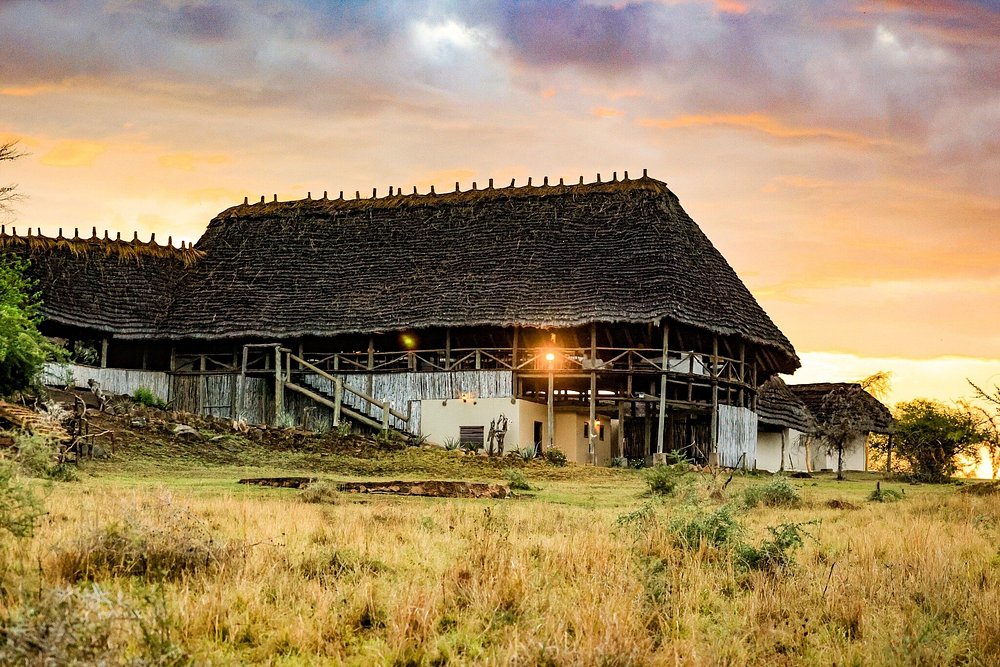
Uganda Travel Advice
What Actually Happens on a Gorilla Trek
Uganda’s Dry Season : What June to August Really Looks Like
Chimpanzee Tracking in Kibale
Uganda Gorilla Permit Cost
First-Time Uganda Safari