The Great Migration Is Not Just in the Serengeti: The Full Annual Route Explained
The Great Migration is often described in simplified terms as “the Serengeti migration,” but that framing is incomplete and can lead to a misunderstanding of one of the most complex wildlife movements on Earth. In reality, the migration is a continuous, circular ecosystem journey that spans national borders, multiple ecosystems, and radically different landscapes throughout the year.
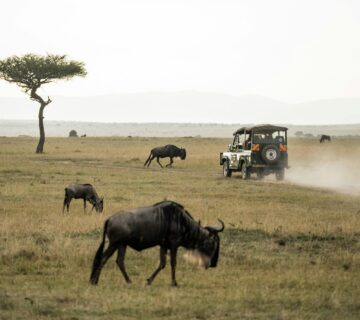
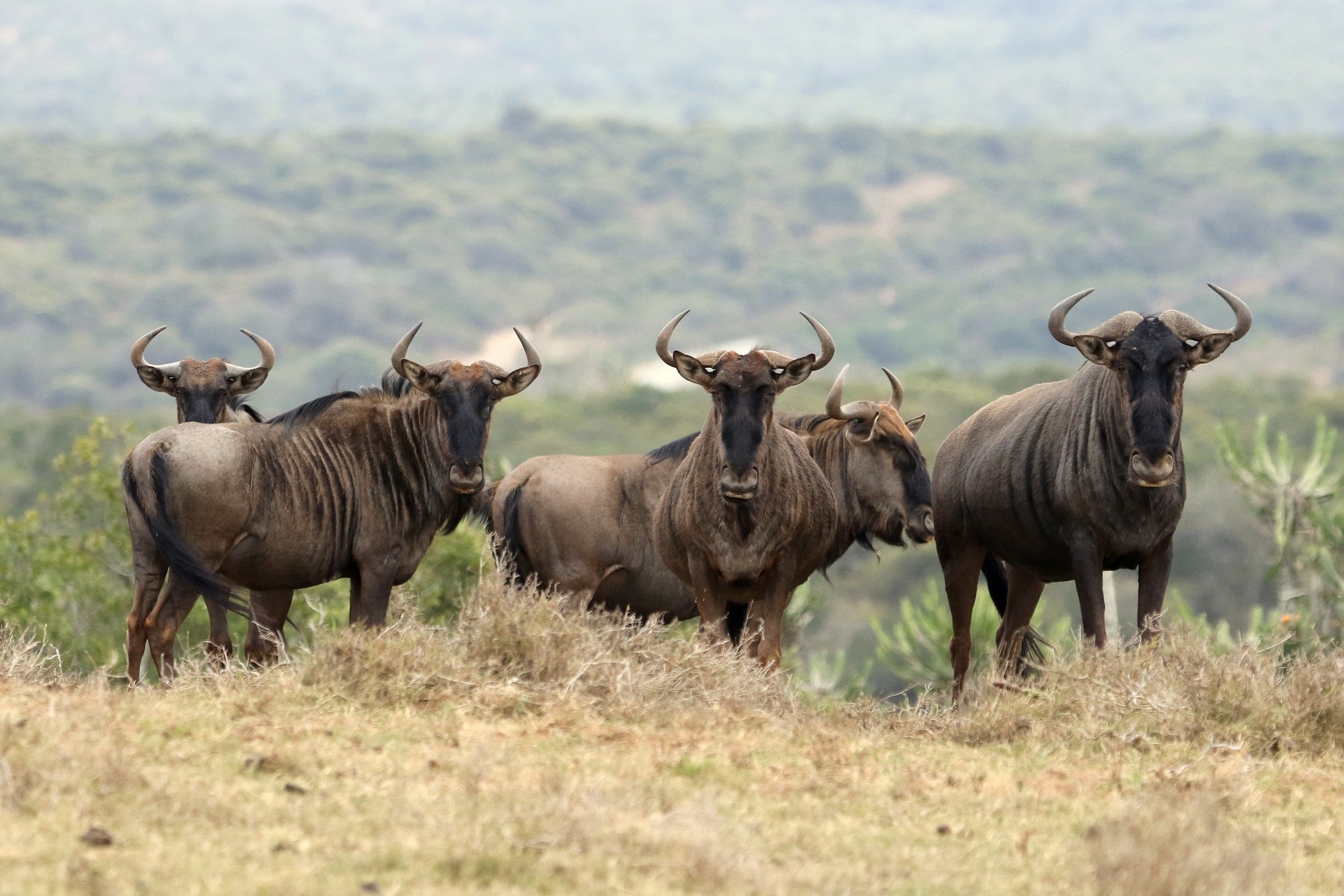
At its core, the migration is driven by over a million wildebeest, joined by zebras and gazelles, following rainfall patterns in search of fresh grazing. While the Serengeti National Park is a central and iconic part of this system, it is only one section of a much larger annual loop that also includes the Masai Mara National Reserve and surrounding conservation areas.
Understanding the full route is essential if you want to plan a safari properly, because where you go depends entirely on when you travel. The migration is not static, and different regions become active at different times of the year.
The Southern Serengeti: Calving Grounds and New Life
The cycle begins in the southern plains of the Serengeti ecosystem, where the herds gather between roughly December and March. This area is dominated by short grass plains that offer nutrient-rich grazing after seasonal rains.
This is the calving season, one of the most dramatic wildlife periods in Africa. Hundreds of thousands of wildebeest calves are born within a few weeks, creating a sudden explosion of life across the plains. The abundance of vulnerable newborns also attracts predators in large numbers, including lions, cheetahs, and hyenas, leading to intense predator-prey interactions.
During this stage, the migration is concentrated in a relatively compact area, making wildlife viewing exceptionally dense and predictable compared to other phases of the cycle.
Central and Western Serengeti: Movement Through the Heartland
As the rains shift, the herds begin moving north and west between April and June. This stage takes them through the central and western corridors of the Serengeti National Park.
Unlike the calving season, the migration during this phase is more spread out. The herds are in motion, following fresh grazing areas and gradually moving toward the northern reaches of the ecosystem. River systems and woodlands become more prominent, and the landscape changes from open plains to more varied terrain.
This part of the route is often less crowded with tourists, but it is still a critical stage in the migration cycle. It represents the transition between the birthing grounds in the south and the dramatic river crossings in the north.
Northern Serengeti: River Crossings and High Drama
Between July and October, the migration reaches the northern Serengeti, where it becomes one of the most famous wildlife spectacles in the world. This is the stage most travellers associate with the Great Migration, but it is only one segment of the full journey.
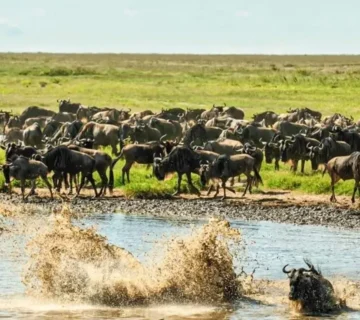
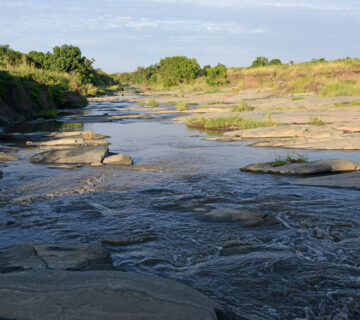
Here, the herds gather around river systems, most notably the Mara River, where they face one of nature’s most dangerous obstacles: crossing crocodile-infested waters while avoiding predators on both banks.
This region forms a direct connection between Tanzania and Kenya, linking the Serengeti ecosystem with the Masai Mara National Reserve. The river crossings are unpredictable in timing and intensity, but when they occur, they create dramatic scenes of survival, pressure, and movement.
This is also the most competitive safari period. Camps positioned near crossing points are extremely limited and often fully booked long in advance due to the global demand for this specific wildlife event.
The Masai Mara: Extension of the Same Ecosystem
A common misconception is that the migration ends when it crosses into Kenya. In reality, the Masai Mara is simply the northern extension of the same ecosystem.
Once the herds enter the Masai Mara, they continue grazing across its open plains, taking advantage of fresh grass and scattered rainfall. The landscape here is slightly more compact than the Serengeti, which increases wildlife visibility and density.
During peak months, the Masai Mara becomes one of the most active predator zones in Africa. Lions, cheetahs, and leopards follow the herds closely, creating continuous predator-prey interactions.
Eventually, as conditions change, the herds begin to move back south into Tanzania, continuing the circular journey.
The Return South: Completing the Circle
From late October into November, the herds gradually leave the Masai Mara and northern Serengeti, moving back toward central and southern regions. This return is driven by changing rainfall patterns and the regeneration of grass in the southern plains.
By December, the migration cycle resets as the herds once again concentrate in the southern Serengeti for calving season. This continuous loop is what defines the Great Migration as a year-round ecological system rather than a single seasonal event.
Why Understanding the Full Route Matters for Safari Planning
Many travellers focus only on river crossings or calving season, but understanding the full route is essential for making informed travel decisions.
The migration is not predictable in exact timing, but its general movement pattern is consistent enough to plan around. This means your safari experience depends entirely on matching your travel dates with the correct region of the ecosystem.
If you travel at the wrong time for the wrong location, you may still see wildlife, but you will miss the density and drama that defines the migration experience.
For example, being in the southern Serengeti during river crossing season will not give you the same experience as being in the north. Likewise, visiting the Masai Mara outside peak months will feel very different from visiting during high migration activity.
The Key Insight Most Travellers Miss
The most important thing to understand is that the Great Migration is not a single destination but a moving system.
It is shaped by rainfall, grass growth, predator behavior, and survival pressure. It does not pause for tourism schedules, and it does not concentrate itself in one predictable place year-round.
The Serengeti and the Masai Mara are not separate experiences. They are connected parts of the same ecological circuit.
Once you understand that, safari planning becomes less about choosing “where to go” and more about understanding “when the system is where.”
The Great Migration is often marketed as a single spectacle, but in reality it is a year-long movement across two countries and multiple ecosystems. The Serengeti National Park and the Masai Mara National Reserve are simply different stages of the same continuous journey.
Understanding this full route changes everything about how you plan a safari. It allows you to align your travel dates with the natural rhythm of the migration rather than relying on chance.
When you see the migration as a full cycle instead of a single event, you stop asking where it is and start asking when you should be there.
Start Planning Your Next Trip To Africa
If you can picture yourself in one—or several—of these exceptional retreats, the next move is simple. We design fully tailored African safaris that bring these experiences together seamlessly, from private gorilla encounters to luxury lodges in the heart of the wild.
Every detail is carefully planned, so your journey feels effortless from start to finish. Reach out in whichever way suits you best, and let’s begin crafting your safari.
Start Planning