Chimpanzee Tracking in Kibale National Park – Meet Man’s Closest Relative in the Wild
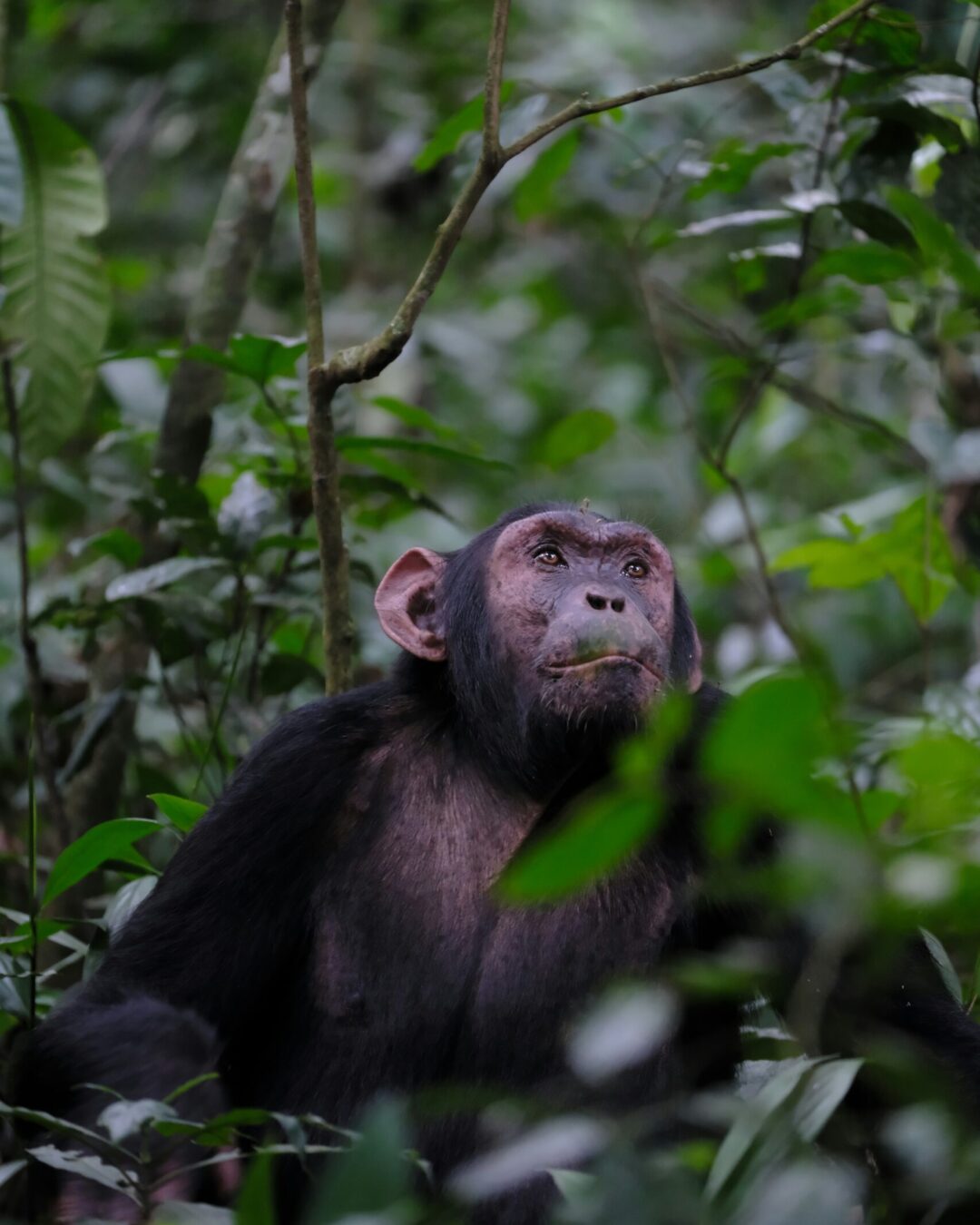
If gorilla trekking is Uganda’s headline act, chimpanzee tracking is the supporting experience that frequently steals the show. Kibale National Park is the best place in the world to track habituated chimpanzees, with remarkably high success rates and expert guides who know the chimps’ habits and territories intimately. Chimps are fascinatingly human: loud, expressive, social, and often chaotic and an encounter with a troop of them swinging through the Kibale canopy is utterly thrilling.
Chimpanzees can also be tracked in the Kyambura Gorge in Queen Elizabeth National Park, the Budongo Forest near Murchison Falls, and Ngamba Island Sanctuary on Lake Victoria.
Chimpanzee Tracking in Kibale
World’s Best Destination for Chimpanzee Tracking | What to Expect | Tracking Sessions | Chimpanzee Habituation Experience | 13 Primates & Other Wildlife in Kibale | Booking and Planning
There is a moment on every chimpanzee trek in Kibale Forest when the forest stops being a backdrop and becomes something else entirely. You have been walking for an hour or two through dense, high-canopy rainforest, following your ranger guide along a trail that climbs and winds through the undergrowth. And then the sounds begin. Not birdsong, not insects, but something louder and more urgent and strikingly, disconcertingly familiar: the pant-hoot calls of chimpanzees reverberating through the forest canopy, building from individual voices into a chorus that seems to come from everywhere at once.
You share approximately 98.7 percent of your DNA with a chimpanzee. Science tells you this and you think you understand it. You do not fully understand it until you are standing in a forest clearing in western Uganda watching a chimpanzee family go about their morning, and something in the way one of them looks at you, direct and intelligent and entirely unbothered, makes the percentage suddenly feel very real.
Chimpanzee tracking in Uganda is the finest chimpanzee experience available anywhere in Africa, and Kibale National Park is where that experience reaches its absolute peak. This is the Primate Capital of the World: home to more than 1,500 chimpanzees across at least 12 distinct communities, with a sighting success rate exceeding 95 percent, and the only park in Uganda offering both the standard chimpanzee trekking experience and the extended Chimpanzee Habituation Experience in a single location. This is the guide to making the most of it.
Why Kibale Forest is the World’s Best Chimpanzee Destination
Several forests in Africa offer chimpanzee trekking. Only Kibale offers it at this standard, with this consistency, and in this setting.
The numbers alone are compelling. Kibale’s population of over 1,500 chimpanzees is the largest in Uganda and one of the largest in East Africa, concentrated within 795 square kilometres of magnificent tropical rainforest ranging from dense high-canopy forest in the north to more open woodland in the south. At least four communities have been fully habituated for tourism and research, with the Kanyantale community at the Kanyanchu Visitor Centre being the primary trekking community and the one with the longest habituation history, running continuously since 1993.
But the numbers are only part of the story. What makes Kibale exceptional is the combination of wildlife density, forest beauty, lodge quality, and research infrastructure that surrounds the chimpanzee experience. The forest is ancient, stratified, and extraordinarily lush: trees of 351 recorded species rising to over 55 metres, their canopies filtering light in green and gold, the forest floor alive with the calls and movements of 13 primate species going about their lives in the same space. A chimpanzee trek in Kibale is never just about finding chimpanzees. It is about entering one of the most biodiverse forests in Africa and encountering everything that lives inside it on the way.
The trekking programme has been running continuously for over 30 years, which means the rangers, trackers, and guides who accompany guests in Kibale have a depth of knowledge of the forest, its chimpanzee communities, and their individual personalities that is simply not replicated anywhere else. The quality of interpretation available on a Kibale chimpanzee trek, when you want it, is outstanding.
Chimpanzee Tracking vs the Chimpanzee Habituation Experience
Kibale offers two distinct chimpanzee experiences, each designed for a different kind of visitor and a different depth of encounter. Understanding the difference helps you choose the right one for your priorities.
Standard Chimpanzee Trekking
Standard chimpanzee trekking is the classic experience and the one most visitors choose. It begins with a briefing at the Kanyanchu Visitor Centre, typically at 8:00 AM, 11:00 AM, or 2:00 PM, followed by a guided walk into the forest with an experienced Uganda Wildlife Authority ranger to locate the habituated Kanyantale community.
Groups are limited in size to protect the chimpanzees and ensure an intimate experience for visitors.
Once the chimps are located, usually within two to three hours of trekking depending on their overnight movement, you spend one hour in their company. The hour unfolds on the chimps’ own terms, at their own pace. Some mornings they are feeding high in the canopy, crashing through the branches above your head. On others they are settled on the forest floor, grooming each other, nursing young, or simply resting in shafts of forest light. Young chimps play with a reckless, tumbling energy that is irresistibly entertaining to watch. Dominant males display in spectacular bursts of drumming and running that shake the undergrowth and send shivers through the group.
The one-hour limit is enforced from the moment of first contact and exists to minimise stress on the chimpanzee family. When the hour is up, the group moves quietly back through the forest. Most guests describe the walk out in near silence, processing an encounter that is more emotionally resonant than they expected.
The morning trek departure, at 8:00 AM, is generally the most rewarding. Chimpanzees are most active in the early hours, foraging and socialising before the heat of the day, and the quality of light through the high forest canopy in the morning hours is exceptional for photography.
Permit cost: USD $300 per person for foreign non-residents, USD $200 for foreign residents, USD $100 for African residents and UGX 180,000 for East Africans.
The Chimpanzee Habituation Experience
The Chimpanzee Habituation Experience is one of the most profound and immersive wildlife encounters available anywhere in Africa, and it is available only in Kibale within Uganda. Rather than spending one hour with a fully habituated community, you join researchers and rangers for a full day with a chimpanzee group that is still in the process of becoming comfortable with consistent human presence.
The day begins before dawn, when you meet your ranger and research team at the visitor centre and set off into the forest to locate the community at their overnight nest sites. You stay with them from the moment they de-nest and begin their morning activity until they build new sleeping nests and settle at dusk, typically eight to ten hours in the forest.
Over the course of the day you observe the full arc of chimpanzee life in a way that the one-hour standard trek cannot approach. Morning grooming and social hierarchies playing out between individuals. Foraging parties splitting from the main group and reassembling. The extraordinary spectacle of territorial boundary patrols, when males move through the forest in tense, silent single file before erupting into displays at the edge of a rival community’s range. Midday rest periods when the whole group settles in the shade and the forest goes quiet around you. And in the late afternoon, the nest-building that signals the end of the day, each individual constructing a new platform of bent branches and leaves in the canopy above.
Throughout the day, researchers and guides provide a running commentary that transforms the raw observation into understanding. You learn to distinguish individual chimps by face and behaviour. You understand the meaning of different vocalisations. You begin to see the social structure of the community as something complex and coherent rather than chaotic.
The Chimpanzee Habituation Experience is physically demanding. A full day in the forest, moving with the chimps as they range across their territory, requires reasonable fitness and a willingness to push through difficult terrain. It is not recommended for guests with significant mobility concerns. For guests who are physically able and deeply motivated by primate behaviour and conservation, it is absolutely extraordinary.
Permit cost: USD $400 per person for foreign non-residents, USD $300 for foreign residents, USD $250 for African residents and UGX 250,000 for East Africans.
Other Chimpanzee Destinations in Uganda
While Kibale is the undisputed premier chimpanzee destination in Uganda, chimpanzee tracking is available at several other locations across the country, each offering a different context and setting.
Kyambura Gorge, Queen Elizabeth National Park
Kyambura Gorge is one of the most visually dramatic wildlife habitats in Africa. The Kyambura River has carved a lush forested ravine up to 100 metres deep into the surrounding open savannah of Queen Elizabeth National Park, creating a sunken world of forest within a landscape of grassland that produces a visual contrast of almost surreal beauty. A habituated chimpanzee community lives within this gorge, and trekking to find them means descending into the forest, crossing log bridges over the river, and navigating the gorge floor and canopy.
The chimpanzee community in Kyambura is smaller than Kibale’s, and sighting success rates are lower. But the setting, descending from open savannah into a deep forested gorge in search of the calls that echo up from below, is unlike anything else in Uganda. Other primates including red-tailed monkeys, black-and-white colobus, and olive baboons are commonly encountered in the gorge alongside the chimps.
Permit cost: USD $200 for foreign non-residents, USD $150 for foreign residents, USD $100 for African residents and UGX 50,000 for East Africans.
Budongo Forest, Murchison Falls National Park
The Budongo Forest Reserve borders the southern section of Murchison Falls National Park and is home to over 800 chimpanzees, one of the largest populations in East Africa. Around 90 of these are habituated for tourism in the Kaniyo-Pabidi section of the forest. Chimpanzee trekking in Budongo is an excellent and considerably less visited experience than Kibale, conducted in a forest dominated by magnificent mahogany trees that give it a cathedral-like quality entirely different from Kibale’s denser, higher rainforest.
For guests already visiting Murchison Falls for game drives and the Nile boat cruise, adding a day or two in Budongo is one of the most rewarding and underutilised additions to a northern Uganda itinerary.
Permit cost: USD $90 per person.
Kalinzu Forest Reserve, Queen Elizabeth National Park
Kalinzu Forest Reserve lies approximately 30 minutes from Kyambura Gorge, accessible as a half-day excursion from any Queen Elizabeth lodge. A community of around 40 habituated chimpanzees can be tracked through a beautiful moist tropical forest in a setting that is quieter and more intimate than either Kibale or Budongo. For guests who want a primate encounter alongside their Queen Elizabeth safari without the full Kibale detour, Kalinzu is an excellent option.
Permit cost: USD $50 per person.
The Chimpanzee Tracking Experience – What to Expect on the Day
Before the Trek
All chimpanzee treks in Kibale begin at the Kanyanchu Visitor Centre, located approximately five kilometres from the main Fort Portal road and a short drive from any of the lodges in the area. Arrive at least 15 minutes before your scheduled departure for the briefing.
The briefing is conducted by a Uganda Wildlife Authority ranger and covers the rules and protocols of the encounter, safety procedures in the forest, and practical information about the trek ahead. You will be assigned to a group and allocated a ranger guide. This is also the time to hire a porter if you have not already arranged one, and to make any final adjustments to your kit before entering the forest.
In the Forest
After the briefing, the group sets off into the forest along trails that have been walked by researchers and rangers every day for over 30 years. The trackers, who have been in the forest since early morning, communicate the community’s position by radio as your group moves toward them.
The trekking terrain in Kibale varies from relatively flat sections on the forest floor to steeper, rooted slopes where hands as well as feet are useful for navigation. The forest is dense in places and requires attention underfoot. The trail can be muddy year-round, and wet season treks require additional care on slippery surfaces.
As you move through the forest, the other primate species of Kibale are frequently encountered along the way. Red colobus troops move through the mid-canopy in colourful, noisy processions. Black-and-white colobus float between trees above. L’Hoest’s monkeys pick through the undergrowth in small, quiet family groups. Grey-cheeked mangabeys call from the canopy. The primate richness of the forest is present and visible even before you reach the chimpanzees, and many guests find these incidental encounters as rewarding as the main event.
The pace of the trek is determined entirely by where the chimps are. On a morning when they have stayed close to their nest sites, the walk to find them may take 30 minutes. On a morning when they have ranged to the far edge of their territory, it may take four hours. Most treks fall between one and two hours in each direction.
When you hear the pant-hoot calls building ahead of you, your guide signals the group to slow and quiet. You move toward the sound carefully, and then you find them.
With the Chimpanzees
The rules of the encounter are similar to those for gorilla trekking, but adapted to the different behavioural profile of chimpanzees. Maintain a minimum distance of eight metres at all times. No flash photography. No eating, drinking, or smoking in the presence of the chimps. No sudden movements or loud sounds. Wear a face mask throughout the encounter to protect the animals from human respiratory pathogens.
Unlike gorillas, who tend to be settled and relatively stationary during the one-hour encounter, chimpanzees are dynamic, fast-moving, and unpredictable. They may be feeding high in the canopy above you, moving rapidly between trees, and the encounter requires you to keep pace with their energy while staying calm and quiet below. At other times they come to the forest floor and pass through the group at remarkably close range, going about their business with complete indifference to the humans below them.
The intelligence visible in their eyes and behaviour is striking. The way a mother positions herself to keep her infant out of the path of a displaying male. The social negotiation between two juveniles competing for a piece of fruit. The relaxed confidence of the dominant male as he sits in the open, aware of everything. These are not vague behavioural signals. They are unmistakably purposeful, unmistakably social, and unmistakably familiar.
One hour passes faster in a forest with chimpanzees than almost anywhere else in the world.
Everything You Need to Know
How to Book
Chimpanzee trekking permits for Kibale are issued by Uganda Wildlife Authority and can be booked in two ways:
Through a licensed Uganda tour operator: This is the strongly recommended route for international visitors. Your tour operator accesses the UWA permit system in real time, confirms availability, handles payment, and ensures your accommodation is correctly positioned near the Kanyanchu Visitor Centre. They also manage any rescheduling or adjustments if circumstances change. Engabi Tours and Travel handles all Kibale permit bookings as part of a complete Uganda safari itinerary.
Directly through Uganda Wildlife Authority: Possible for guests who want to self-manage, but more complex for international visitors. Payment is made by bank transfer to UWA’s official accounts, and the process requires more coordination than booking through an operator. As of July 2025, full payment is required at the time of booking rather than on arrival.
How Far in Advance to Book
Peak season permits covering June to September and December to February should be booked a minimum of three to four months in advance. Demand is highest during these months and morning time slots, which are the most popular, fill first.
Green season permits covering March to May and October to November are more available and can sometimes be secured with shorter notice, though advance booking is always advisable for a smooth trip.
The Chimpanzee Habituation Experience, being more exclusive and limited in daily availability, should always be booked as early as possible regardless of season.
Permit Rules and Conditions
Trekkers must be a minimum of 12 years old. Some sources cite 15 as the minimum age, and Uganda Wildlife Authority guidance should be confirmed at the time of booking as this rule is subject to change.
Any visitor displaying signs of illness, including cold, flu, fever, or respiratory symptoms, will not be permitted to trek. Chimpanzees share approximately 98.7 percent of human DNA and are highly vulnerable to human diseases. Inform your guide and ranger immediately if you are unwell on your trekking day.
Permits are non-refundable in most circumstances. In cases of illness, Uganda Wildlife Authority may offer partial consideration on a case-by-case basis. If you need to reschedule, contact your tour operator or UWA at least two weeks before your trekking date.
A face mask must be worn throughout the time spent with the chimpanzees. This is a permanent biosecurity rule and is enforced by the ranger team.
What to Wear and Bring
Preparing correctly for a chimpanzee trek in Kibale significantly improves comfort and enjoyment, particularly on longer treks or during the rainy season.
Clothing: Long-sleeved shirt and long trousers are essential for protection against insects, vegetation, and the forest undergrowth. Neutral or dark colours are preferable. Bring clothing you are comfortable getting muddy. A light warm layer is useful for early morning departures when the forest is cool.
Footwear: Sturdy, waterproof hiking boots with good ankle support are essential. The forest floor is uneven, rooted, and often wet. Sandals, trainers, and canvas shoes are not suitable.
Gaiters: Highly recommended, particularly in the rainy season. They protect the lower legs from mud and moisture and make a meaningful difference on longer treks.
Waterproof jacket: Rain arrives in Kibale without warning in any season. A lightweight, packable waterproof layer is non-negotiable.
Insect repellent: The forest is home to a variety of biting insects including mosquitoes. Apply before the trek and carry a small bottle in your daypack.
Daypack: Carry a minimum of two litres of water, light snacks, your camera, insect repellent, sunscreen, and any personal medications.
Porter: Hiring a porter is strongly recommended for most guests. Porters carry your daypack, support you physically on difficult sections of the trail, and provide important income for the communities surrounding the park. The cost is typically around USD $15 per porter for the day.
Face mask: Required in the presence of chimpanzees. Carry at least two clean masks, as trekking through dense forest can leave a mask damp and uncomfortable.
Best Time for Chimpanzee Tracking in Kibale
Chimpanzee tracking is available year-round in Kibale, and sighting success rates remain consistently high in all seasons. The choice of when to visit depends primarily on your preference for trekking conditions and the broader Uganda itinerary you are combining with Kibale.
Dry Season: June to September and December to February (Recommended)
These are the most popular months for chimpanzee tracking and offer the most comfortable trekking conditions. Forest trails are firmer and drier, the terrain is more manageable, and chimpanzees tend to spend more time at lower canopy levels and on the forest floor during dry periods, which generally results in closer and more sustained sightings. This is also the best season for combining Kibale with Queen Elizabeth National Park, as both parks offer their finest wildlife conditions simultaneously. Book permits and accommodation well in advance.
Green Season: March to May and October to November
The rainy season transforms Kibale’s forest into a world of extraordinary lushness. The canopy darkens and thickens, the forest floor fills with water and new growth, and the birdlife reaches its most abundant and vocal. Chimpanzee sightings remain highly reliable throughout the wet season, though the animals may range more widely when forest fruits are plentiful. Trails can be slippery and muddy, making waterproof footwear and gaiters essential. Permits are more available, the park is quieter, and rates at some lodges are lower. The green season is the finest time for birdwatching in Kibale and produces some of the most atmospheric and photographically dramatic forest conditions of any season.
How Chimpanzee Tracking Fits into a Uganda Safari
Chimpanzee tracking in Kibale combines naturally and powerfully with almost every other major destination on the Uganda safari circuit, and it is most rewarding when experienced as part of a broader itinerary rather than as an isolated activity.
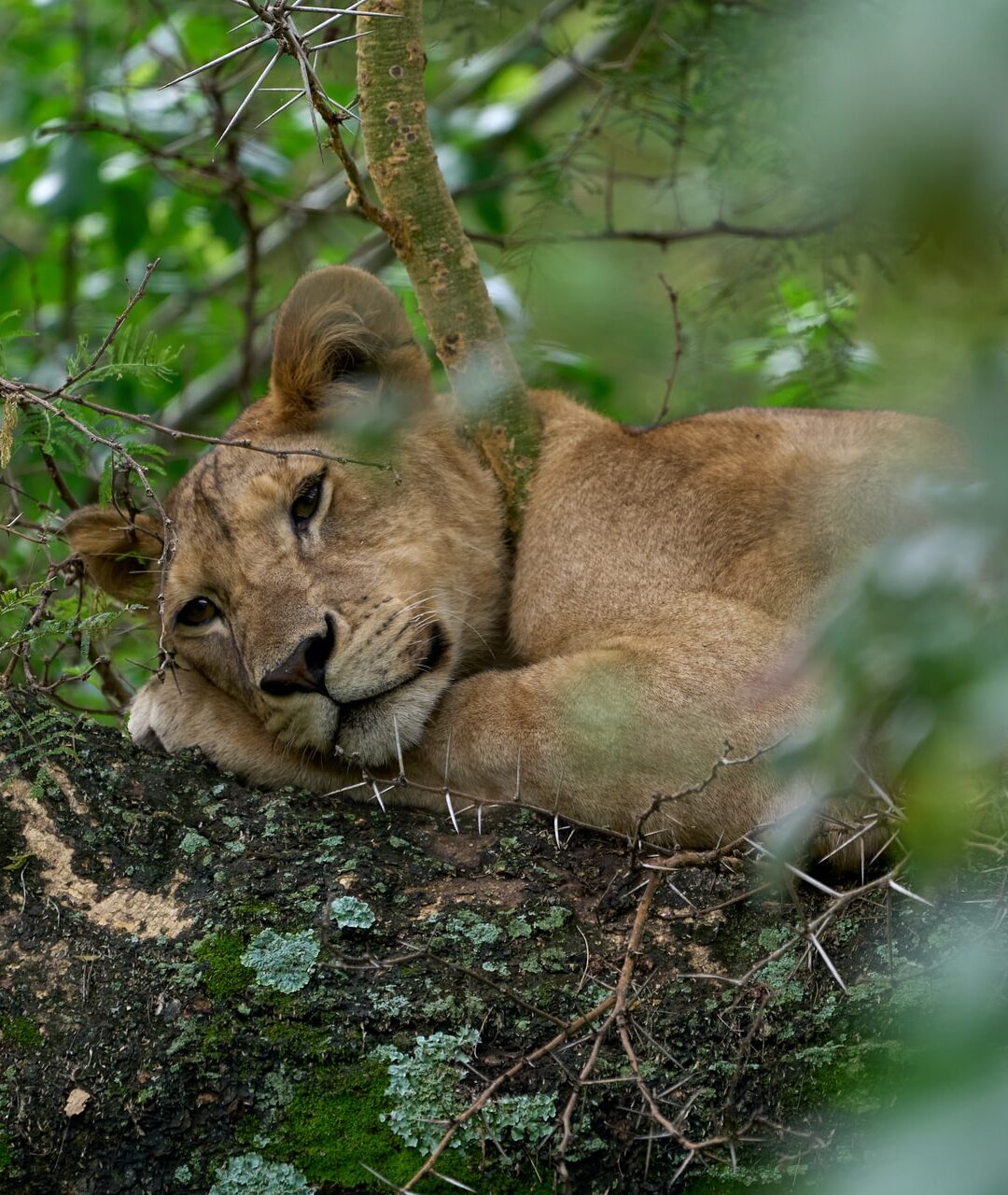
The most popular and most satisfying combination pairs Kibale with Queen Elizabeth National Park, approximately two hours south. Two nights at Kibale for chimpanzee trekking and the Kanyanchu Primate Walk, followed by two to three nights at Queen Elizabeth for the Kazinga Channel boat cruise, Kasenyi game drives, and a night in Ishasha for tree-climbing lions, covers the finest of Uganda’s western safari offering in five to six nights and is one of the best value-for-experience itineraries in East Africa.
For guests with more time, adding gorilla trekking in Bwindi Impenetrable National Park to the south creates the full Uganda primate circuit: chimpanzees in Kibale, tree-climbing lions at Ishasha, the Kazinga Channel at Queen Elizabeth, and mountain gorillas in Bwindi. This circuit, requiring eight to ten nights and combining road or charter flight transfers between destinations, is one of the finest safari itineraries available anywhere on the continent.
Guests who want to experience chimpanzees in multiple settings can combine Kibale with a secondary chimpanzee encounter at Kyambura Gorge during a Queen Elizabeth visit, or at Budongo Forest during a Murchison Falls stay, for a genuinely comprehensive survey of Uganda’s chimpanzee ecosystems.
Why Chimpanzee Tracking Matters
Uganda’s chimpanzee population is listed as endangered. Across their range in equatorial Africa, chimpanzees face significant pressure from habitat loss, the bushmeat trade, and disease. Uganda’s community of over 5,000 chimpanzees represents one of the most important national populations remaining in East Africa, and the protection of Kibale’s forest and its resident communities is directly dependent on the conservation funding generated by trekking tourism.
Every chimpanzee trekking permit purchased in Kibale contributes to Uganda Wildlife Authority’s ranger salaries, anti-poaching operations, and the community revenue sharing programme that gives local families living alongside the park a direct financial stake in the forest’s protection. The research programmes that have produced the scientific understanding on which all chimpanzee conservation work is based were funded, in significant part, by the trekking infrastructure built around Kanyanchu.
When you spend an hour in the forest with a Kibale chimpanzee community, you are not simply a wildlife tourist. You are a participant in the system that is keeping these animals alive and these forests standing.
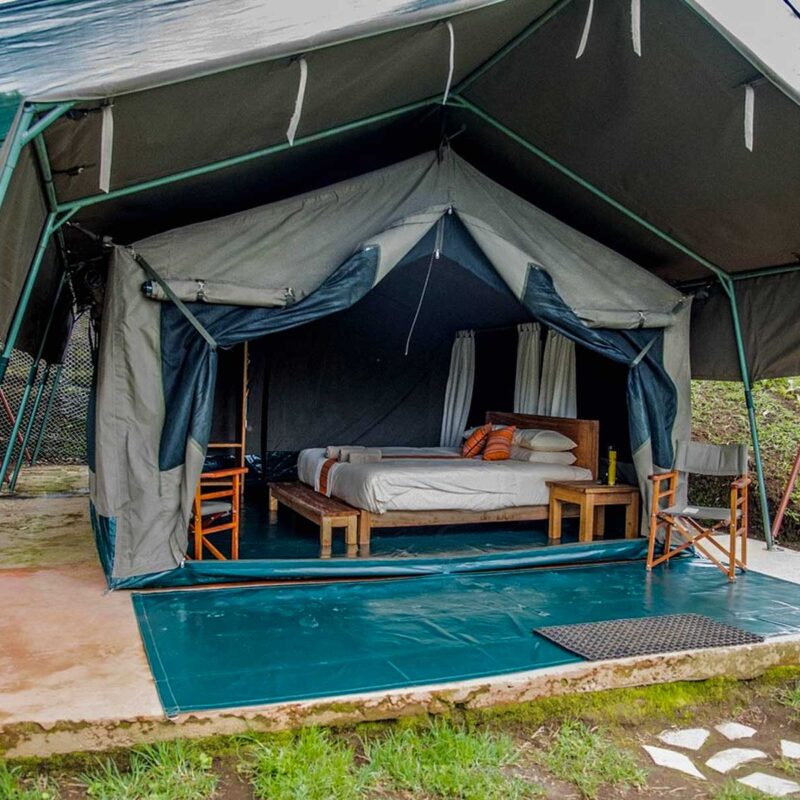
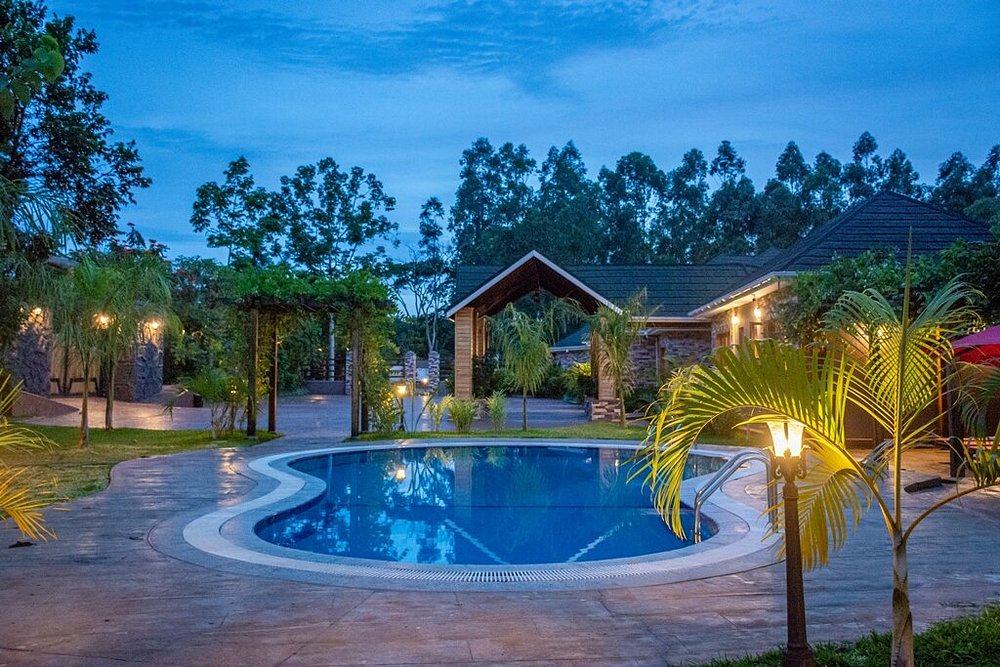
Where To Stay During The Experience
Where To Do Chimpanzee Tracking
Uganda Travel Advice
Uganda Beyond the Gorillas
What’s Included in a Luxury Uganda Safari Package?
Driving from Entebbe to Bwindi
Is It Worth Visiting Uganda in the Rainy Season For Safaris?
Travel Insurance for a Uganda Gorilla Safari