Uganda and Rwanda Combined Safari: The Perfect 10-Day Gorilla Itinerary
A combined Uganda and Rwanda safari is one of the most efficient ways to experience mountain gorillas, chimpanzees, and classic savannah wildlife within a single itinerary. By leveraging Rwanda’s accessibility through Kigali and Uganda’s depth of wildlife experiences, a cross-border safari creates a well-balanced route that minimizes travel fatigue while maximizing ecological variety.
This 10-day structure is designed around logical movement between Kigali, Volcanoes National Park, Bwindi Impenetrable National Park, Queen Elizabeth National Park, and Kibale National Park, ensuring that each destination contributes a distinct layer to the overall experience.
The itinerary is structured to prioritize gorilla trekking while integrating primate tracking, savannah wildlife, and varied landscapes without excessive backtracking.
Day 1: Arrival in Kigali and Immediate Transfer Toward Volcanoes Region
Arrival is through Kigali International Airport, which offers the most efficient entry point for this itinerary. After arrival, the route moves north toward the Volcanoes region.
This first day is primarily logistical but strategically important. Starting in Rwanda reduces the need for long drives from Entebbe to southwestern Uganda.
Depending on arrival time, the afternoon may allow for a short Kigali city orientation before departure.
Day 2: Gorilla Trekking in Volcanoes National Park
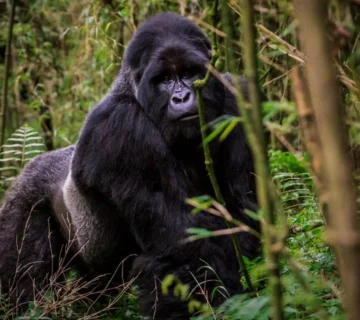
Volcanoes National Park provides one of the most accessible gorilla trekking experiences in Africa.
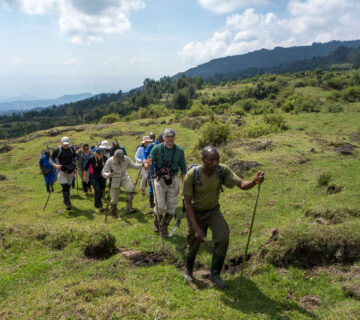
The trek begins early with a briefing from park authorities before entering the forest to track a habituated gorilla family.
Rwanda’s terrain is generally more open compared to Bwindi, and trekking distances can be shorter depending on the assigned group.
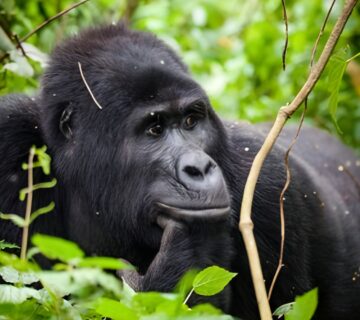
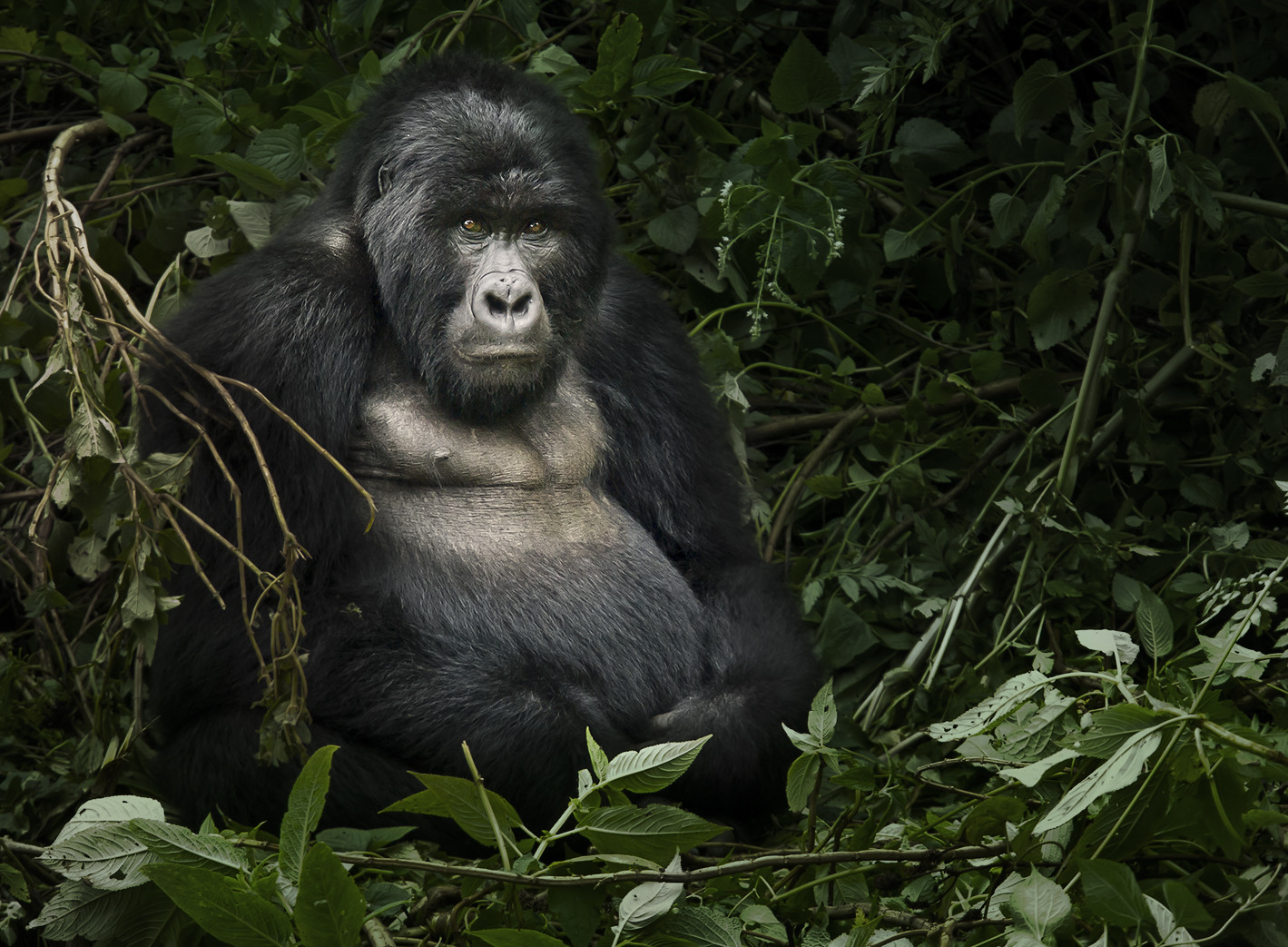
The one-hour gorilla viewing experience follows strict conservation rules and offers close-range observation of social behavior, feeding, and interaction.
Day 3: Cross-Border Transfer to Bwindi Impenetrable National Park
The itinerary transitions into Uganda with a cross-border transfer to Bwindi Impenetrable National Park.
This route avoids the long drive from Entebbe and allows for a relatively direct connection between gorilla habitats.
Border crossing logistics are handled with pre-arranged documentation, and the journey provides a gradual shift from Rwanda’s volcanic landscape into Uganda’s dense montane forest.
Arrival in Bwindi is typically in the afternoon, allowing time for rest before the next trek.
Day 4: Gorilla Trekking in Bwindi Impenetrable National Park
Bwindi offers a contrasting gorilla trekking experience compared to Rwanda.
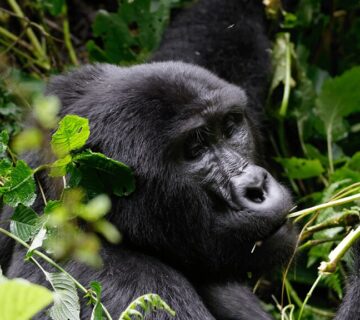
The forest is denser, terrain steeper, and trekking more physically demanding. However, the reward is a deeper sense of immersion in a wild, less structured environment.
Tracking involves navigating thick vegetation, following ranger guidance, and adapting to the movement of the gorilla family.
The one-hour viewing period allows for detailed observation of group dynamics, including dominant silverbacks, juveniles, and maternal behavior.
This second trek provides comparative insight into gorilla behavior across different habitats.
Day 5: Transfer to Queen Elizabeth National Park via Ishasha
The route continues north toward Queen Elizabeth National Park, passing through the Ishasha sector.
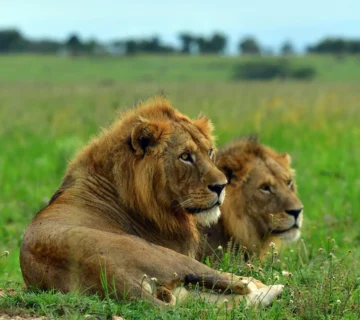
This area is known for its tree-climbing lions, which are occasionally seen resting in fig trees along the savannah.
The drive itself becomes part of the safari experience, with opportunities for wildlife sightings en route.
Arrival in Queen Elizabeth is typically in the afternoon, setting up for savannah-based activities.
Day 6: Game Drives and Kazinga Channel Boat Safari
Queen Elizabeth National Park introduces classic East African safari elements.
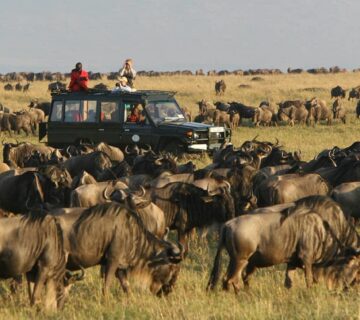
Morning game drives focus on open plains where species such as elephants, buffalo, and antelope are commonly seen.
In the afternoon, a boat safari along the Kazinga Channel provides close-range encounters with hippos, elephants, and dense birdlife.
This combination of land and water-based experiences creates a contrast to the forest environments of previous days.
Day 7: Transfer to Kibale National Park
The journey continues to Kibale National Park, a key destination for chimpanzee tracking.
The drive passes through crater lakes and transitional landscapes, gradually shifting from savannah to forest ecosystems.
Arrival is typically in the afternoon, allowing time for rest or a short guided walk.
Day 8: Chimpanzee Tracking in Kibale National Park
Chimpanzee tracking in Kibale offers a faster-paced and more dynamic primate experience compared to gorilla trekking.
Tracking relies on vocalizations and movement patterns, with chimpanzees often seen both on the ground and in the canopy.
The experience is characterized by sound, motion, and rapid changes in direction as the group moves through the forest.
This provides a complementary perspective on primate behavior.
Day 9: Return Toward Entebbe or Optional Domestic Flight
The itinerary begins its return phase, either by road or domestic flight.
Road transfers provide a final opportunity to observe Uganda’s rural landscapes and transitional ecosystems.
Flights offer a faster alternative, reducing travel time and allowing for a more relaxed final day.
Day 10: Departure
Departure is typically from Entebbe International Airport, marking the end of a multi-ecosystem safari that has covered both Rwanda and Uganda.
Why This 10-Day Structure Works
This itinerary balances travel efficiency with experience depth.
Starting in Kigali eliminates the need for long initial drives, while the cross-border route maintains forward progression without backtracking.
The combination of Volcanoes National Park and Bwindi Impenetrable National Park provides two distinct gorilla trekking environments.
Queen Elizabeth National Park adds savannah wildlife and water-based experiences, while Kibale National Park introduces chimpanzee tracking.
Each destination contributes a unique ecological and behavioral layer, creating a comprehensive safari experience within a manageable timeframe.
Logistics and Border Considerations
Cross-border travel between Rwanda and Uganda requires proper documentation, including visas and gorilla permits aligned with itinerary dates.
Timing is critical, as permit availability determines trekking days and overall itinerary flow.
Working with experienced operators ensures smooth coordination of permits, transport, and park logistics.
Combined Uganda-Rwanda Safari
In practical terms, a combined safari is one of the most efficient ways to experience East Africa’s primates while still including classic safari elements.
It reduces unnecessary travel distances, improves itinerary flow, and allows for direct comparison between different gorilla habitats and tracking conditions.
The result is a safari that is both logistically efficient and experientially diverse, covering multiple ecosystems within a structured 10-day framework.
Start Planning Your Next Trip To Africa
If you can picture yourself in one—or several—of these exceptional retreats, the next move is simple. We design fully tailored African safaris that bring these experiences together seamlessly, from private gorilla encounters to luxury lodges in the heart of the wild.
Every detail is carefully planned, so your journey feels effortless from start to finish. Reach out in whichever way suits you best, and let’s begin crafting your safari.
Start Planning