Kibale National Park
The Primate Capital of the World
Location: Western Uganda, east of the Rwenzori Mountains.
Kibale National Park is a place of deep, peaceful forest and extraordinary primate diversity. It is best known as Uganda’s and the world’s finest destination for chimpanzee tracking, with a population of over 1,500 chimpanzees. Beyond chimpanzees, Kibale is home to 12 other primate species, including the red colobus monkey, L’Hoest’s monkey, and the black-and-white colobus. The Bigodi Wetland Sanctuary, located just outside the park boundary, is a community-managed wetland boardwalk that is exceptional for birdwatching and a wonderful way to support local conservation efforts.
Kibale National Park
Chimpanzee Trekking in Kibale | Chimpanzee Habituation Experience | 13 Primate Species in Kibale Forest | Birdwatching in Kibale | Bigodi Wetland Sanctuary | Ndali-Kasenda Crater Lakes
Located in western Uganda in Kabarole District, about 26 kilometres southeast of Fort Portal, Kibale Forest National Park covers 795 square kilometres of tropical rainforest ranging in elevation from 1,100 metres on the Albertine Rift Valley floor in the south to 1,590 metres on the Fort Portal plateau in the north. This variation creates a rich mosaic of habitats, from dense wet rainforest in the north and moist semi-deciduous forest in the centre to woodland and savannah on the rift floor in the south. The forest contains 351 recorded tree species, some rising over 55 metres to form a vast canopy above a vibrant forest floor.
First gazetted as a managed forest reserve in 1932 and established as a national park in 1993, Kibale was created to protect one of East Africa’s last significant expanses of pre-montane forest. Today, it is best known for its exceptional primate diversity, with 13 species recorded, the highest of any national park in Uganda. The park is home to more than 1,500 chimpanzees across at least 12 communities, the largest chimpanzee population in the country. Four of these communities are habituated for tourism and research, with the Kanyantale community at Kanyanchu Visitor Centre forming the core of the trekking programme, which has operated continuously since 1993 and achieves a sighting success rate of over 90%.
Kibale is also home to 70 mammal species, including forest elephants, buffaloes, leopards, African golden cats and giant forest hogs, as well as 375 recorded bird species and more than 250 butterfly species. To the south, the park adjoins Queen Elizabeth National Park, forming a 180-kilometre wildlife corridor stretching from Sebitoli in Kibale to the Ishasha sector of Queen Elizabeth, one of East Africa’s most important continuous conservation landscapes.
13 Primate Species in Kibale Forest
No other forest in Africa packs as many primate species into a single protected area as Kibale. The full list reads like a field guide to East African primates:
1. Chimpanzee – The flagship species. Over 1,500 individuals across 12 communities, four of them habituated. Kibale offers the best chimpanzee trekking experience in the world.
2. Red Colobus Monkey – One of the largest red colobus populations in East Africa, frequently encountered in large, colourful, highly vocal troops. A spectacular primate by any measure.
3. Black-and-White Colobus – Strikingly beautiful, with flowing white mantles and long tails. Commonly seen in the forest canopy, often in the company of red colobus in mixed-species troops.
4. L’Hoest’s Monkey – A distinctive, dark-coated species with a characteristic white beard, found in small family groups moving quietly through the understorey. Kibale is one of the best places in Uganda to see them reliably.
5. Grey-Cheeked Mangabey – A large, forest-dwelling monkey with a haunting, far-carrying call. Regularly encountered on the Kanyanchu forest trails.
6. Red-Tailed Monkey – One of the most commonly seen primates in Kibale, identified by its distinctive white nose and chestnut-red tail. Found in large, active groups throughout the forest.
7. Blue Monkey – Widespread across the park, the blue monkey is a forest generalist comfortable in a range of habitats. Often seen in mixed-species associations with red-tailed monkeys.
8. Olive Baboon – The most terrestrial of Kibale’s primates, olive baboons are found across the park’s more open areas and forest edges, typically in large, highly social troops.
9. Uganda Mangabey – Also known as the grey-cheeked mangabey, this species is endemic to a small range in East Africa and Kibale is one of its strongholds.
10. Potto – A slow-moving, nocturnal prosimian that clings motionless to branches in the forest canopy. Rarely seen during the day; best encountered on guided nocturnal forest walks.
11. Bush Baby (Galago) – Another nocturnal species, the bush baby — or galago — is a tiny, enormous-eyed primate whose haunting calls carry through the Kibale night. A highlight of the nocturnal walk.
12. Black-and-Red Colobus – Also found within Kibale’s primate community, adding to the park’s extraordinary colobine diversity.
13. Central African Red Colobus – Distinguished from other colobus species by range and physical characteristics, this species adds further to Kibale’s remarkable primate count.
No single day in Kibale can promise all thirteen, but with the right combination of activities: a chimpanzee trek, a Kanyanchu Primate Walk and a nocturnal forest walk encountering eight or more species on a two-night stay is entirely realistic.
Activities in Kibale National Park
Chimpanzee Trekking
Chimpanzee trekking is the undisputed heart of Kibale and the experience ranks among the finest wildlife encounters anywhere in Africa. The trek begins with a briefing at the Kanyanchu Visitor Centre before setting off into the forest in small groups with expert Uganda Wildlife Authority ranger guides. Treks depart at 8:00 AM, 11:00 AM and 2:00 PM daily, with the morning departure generally considered the best for forest light and chimpanzee activity.
Once the chimps are located typically within two to three hours of trekking, you spend one extraordinary hour in their company. Watching a chimpanzee family go about their morning: a silverback male displaying through the undergrowth, mothers nursing infants in the canopy above, juveniles wrestling and chasing each other through the branches, it is startlingly, movingly close to something human. The vocalisations, the social dynamics, the intelligence visible in their behaviour, nothing fully prepares you for how affecting the encounter is.
With a sighting success rate of over 90%, Kibale delivers consistently. Chimpanzee trekking permits should be booked in advance through the Uganda Wildlife Authority or through your tour operator, demand is high year-round and peak season availability fills quickly. Permit cost: USD $300 for foreign non-resisdents, USD $200 for foreign residents, USD $100 for African residents and UGX180,000 for East Africans. Low Season discounted permits: USD $200 for foreign non-residents and USD $150 for foreign residents.
Chimpanzee Habituation Experience
For those who want to go significantly further, the Chimpanzee Habituation Experience is one of the most profound wildlife experiences available anywhere in East Africa. Rather than spending one hour with a fully habituated community, you join researchers and rangers for a full day following a semi-habituated chimpanzee community through the forest, from the moment they descend from their night nests at dawn until they build new nests and settle at dusk.
Over the course of the day you witness the full arc of chimpanzee life: de-nesting, morning grooming, foraging and food-sharing, territorial boundary patrols, social hierarchies playing out in real time, rest periods and the complex communication that holds the community together. Expert guides and researchers explain what you are observing throughout, giving the experience a depth and educational richness that the standard trek cannot match.
The experience is limited to a very small number of participants per day, making it one of Kibale’s most exclusive and intimate offerings. It is physically demanding: you are in the forest for a full day but for guests with a serious interest in primate behaviour, it is absolutely extraordinary. Permit cost: USD $400 for foreign non-resisdents, USD $300 for foreign residents, USD $250 for African residents and UGX250,000 for East Africans.
Kanyanchu Primate Walk
The Kanyanchu Primate Walk is a guided forest walk specifically designed to maximise encounters across Kibale’s full breadth of primate species not just chimpanzees. Setting off from the Kanyanchu Visitor Centre with experienced ranger guides who know the forest trails and primate territories intimately, guests can expect to encounter red colobus in large, vocal troops, black-and-white colobus floating through the upper canopy, L’Hoest’s monkeys moving quietly through the understorey, grey-cheeked mangabeys, red-tailed monkeys, blue monkeys and olive baboons.
This walk is also outstanding for birding and butterfly observation. It runs at a more relaxed pace than the chimpanzee trek more exploratory, more multi-layered and is an excellent complement to a chimpanzee trekking day, or a rewarding stand-alone activity for guests with a broader naturalist interest.
Birdwatching
Kibale is a premier birdwatching destination, with 375 recorded species including four that are endemic to the park itself: Cassin’s spinetail, blue-headed bee-eater, masked apalis, and Nahan’s francolin all of them high on the target list for any serious African birding itinerary.
The best birding areas are the forest trails around Kanyanchu, the forest edges where different habitat types meet, and the Bigodi Wetland Sanctuary (see below). The great blue turaco one of Africa’s most spectacular birds is reliably seen in Kibale’s canopy.
Other key species include the African pitta, green-breasted pitta, African grey parrot, black bee-eater, crowned eagle, and numerous forest sunbirds, hornbills and weavers. Early morning is the prime time for forest birding, when the canopy is at its most active and the light through the high forest is simply beautiful.
A dedicated birding guide can be arranged through any of the Kibale-area lodges and will significantly increase both your species count and the quality of each encounter.
Albertine Rift Endemics
Kibale sits within the Albertine Rift one of the most biodiverse regions on the planet and an area of global priority for conservation, partly because of the extraordinary number of species found nowhere else on earth. For birdwatchers and wildlife enthusiasts with a particular interest in range-restricted species, Kibale’s position within this zone makes it exceptional.
The Albertine Rift endemics that can be sought within Kibale and the wider Fort Portal area include the African green broadbill, the Grauer’s rush warbler, the Shelley’s crimsonwing, the strange weaver, and Chapin’s flycatcher all of them deeply sought-after species for visiting birders. The combination of Kibale with the Bigodi Wetland Sanctuary and the Ndali-Kasenda crater lakes area creates one of Uganda’s finest Albertine Rift endemic circuits.
Bigodi Wetland Sanctuary
Located approximately six kilometres from the Kanyanchu Visitor Centre, adjacent to the park boundary, the Bigodi Wetland Sanctuary is a community-managed conservation area in the Magombe Swamp that is exceptional for both birdwatching and primate encounters and one of the most rewarding half-day excursions in western Uganda.
The sanctuary is home to over 138 bird species including the great blue turaco, black-and-white casqued hornbill, African grey parrot, and the elusive papyrus gonolek and 8 primate species, among them black-and-white colobus, red-tailed monkeys, grey-cheeked mangabeys, and L’Hoest’s monkeys. A guided boardwalk trail winds through the papyrus swamp, offering intimate, unhurried wildlife encounters in a setting that feels entirely distinct from the main forest.
Beyond its wildlife value, Bigodi is a deeply meaningful visit. The sanctuary is managed by the Kibale Association for Rural and Environmental Development (KAFRED), a community organisation that channels all proceeds into local schools, medical projects, and conservation education. Visiting Bigodi is one of the most direct ways a guest can contribute to the communities living alongside Kibale Forest.
Ndali-Kasenda Crater Lakes
Thirty kilometres south of Fort Portal, the Ndali-Kasenda Crater Lake Field is one of western Uganda’s most photogenic and distinctive landscapes dozens of shimmering volcanic crater lakes nestled in green hills, each one a world unto itself. The area is exceptional for scenery and photography and the combination of guided crater lake walks, swimming in the clear lake waters, canoeing at sunrise, and birding along the lake shores makes it an outstanding complement to the forest activities of Kibale itself.
Several of Uganda’s most celebrated lodges sit within the crater lake landscape including Kyaninga Lodge, perched dramatically on the rim of Kyaninga crater and staying here for a night before or after Kibale adds a completely different aesthetic dimension to the western Uganda experience. The crater lakes area is also excellent for birding, with species including the African fish eagle, malachite kingfisher, and various bee-eaters reliably seen.
Nocturnal Forest Walk
An entirely different Kibale reveals itself after dark. The guided nocturnal forest walk takes guests into the forest at night with experienced guides and powerful spotlights, in search of the park’s extraordinary cast of nocturnal inhabitants pottos clinging motionless to branches, bush babies launching themselves between trees with huge reflective eyes, tree hyraxes calling with a sound that seems impossible for so small a creature, owls perched silently in the canopy, and a whole world of insects, amphibians, and reptiles that are invisible during daylight hours.
For keen naturalists, photographers, and anyone who wants to experience the forest in its fullest dimension, the nocturnal walk is a highlight not to be missed. It is led by guides with deep familiarity with the forest trails and the species likely to be encountered after dark, and it runs at a wonderfully unhurried pace.
Tea Estate Walks
Kibale Forest is ringed by large, beautiful tea plantations an unexpectedly lovely backdrop for a national park, and one that gives the landscape around Fort Portal a quality unlike any other part of Uganda. Guided walks through the tea estates offer a completely different perspective: rows of clipped green bushes sweeping across the hillsides, the Rwenzori Mountains visible on clear days above the treeline, and the opportunity to meet local workers and learn about the cultivation and processing of tea that has been grown in this region for over a century. It is a gentle, human, and genuinely enjoyable excursion a useful change of pace between forest activities.
Best Time to Visit Kibale National Park
Chimpanzee trekking and the Chimpanzee Habituation Experience are available year-round at Kibale, and the forest’s dense canopy means that even heavy rain rarely disrupts activities for long. That said, season does meaningfully affect conditions, and the best timing depends on your priorities.
Dry Season: June to September & December to February (Recommended)
These are the most popular months to visit Kibale. Forest trails are drier and firmer underfoot, making trekking more physically comfortable. Chimpanzees tend to spend more time in the lower canopy and on the forest floor during dry periods, which generally makes for easier and more sustained sightings at closer range. This is also the peak period for combining Kibale with gorilla trekking at Bwindi the dry season aligns across both parks, allowing for a well-timed Uganda circuit. Book permits and lodge accommodation well in advance.
Green Season: March to May & October to November
The rainy seasons transform Kibale into a forest of extraordinary lushness the canopy thickens, waterfalls appear throughout the landscape, and the light through the high forest takes on a deep, saturated green quality that is exceptional for photography. Chimpanzee sightings remain reliable, though the chimps may range more widely in the upper canopy when forest fruits are abundant. Birding is outstanding during the green season migratory species are present from October onwards, and the forest is at its most vocally active. The Bigodi Wetland Sanctuary and crater lakes are beautiful in the rains. Permits and lodges are easier to secure, the park is quieter, and rates at some properties are lower.
Getting to Kibale National Park from Kampala
By Road (Recommended for First-Time Visitors)
Kibale is approximately 309 kilometres from Kampala, a drive of five to six hours via the main western highway through Mubende and Fort Portal. The route is well-maintained by Ugandan standards and passes through some of the country’s most scenic terrain, including the rolling green hills of western Uganda and the first distant views of the Rwenzori Mountains as you approach Fort Portal.
Most guests depart Kampala in the morning and arrive in time for a late afternoon activity either a Kanyanchu Primate Walk or a relaxed crater lake exploration before beginning chimpanzee trekking the following morning. The town of Fort Portal, just 26 kilometres from the park, is a pleasant overnight stop if you prefer to break the drive, and offers several good lunch options en route.
By Scheduled Domestic Flight
For guests who prefer to minimise road time, scheduled flights operate from Entebbe International Airport to Kasese Airstrip, approximately one hour from the park by road. Flight time from Entebbe is approximately 45 to 55 minutes. Flights are operated by Aerolink Uganda and can be booked as scheduled.
Flying in to Kasese allows for an afternoon activity on the day of arrival a meaningful difference on shorter itineraries. Note that Kasese is also the closest airstrip to Queen Elizabeth National Park, making it the logical hub for a combined Kibale and Queen Elizabeth circuit by air.
Combining Kibale with Other Uganda Destinations
Kibale’s position in western Uganda makes it an outstanding anchor point for a broader Uganda safari circuit:
Queen Elizabeth National Park – approximately 2 hours south of Kibale via the scenic Kasese road, and Uganda’s most popular combination with Kibale. Tree-climbing lions, the Kazinga Channel and the vast open plains of Kasenyi follow naturally from the chimpanzee forest.
Rwenzori Mountains National Park – approximately 1 hour from Kibale near Kasese, for day hikes or multi-day mountain treks on the “Mountains of the Moon.”
Bwindi Impenetrable National Park approximately 4 to 5 hours south of Kibale, making a Kibale – Queen Elizabeth – Bwindi circuit one of Uganda’s finest itineraries: chimpanzees, tree-climbing lions, the Kazinga Channel and mountain gorillas in a single trip.
A seven to ten-night itinerary covering Kibale, Queen Elizabeth (with an Ishasha night) and Bwindi represents one of the finest safari experiences in Africa and one of the most rewarding ways to experience the full depth of Uganda’s extraordinary wildlife offering.
Where To Find It
LOCATION
Luxury Lodges In Kibale
Uganda Travel Advice
Uganda vs Rwanda for Gorilla Trekking
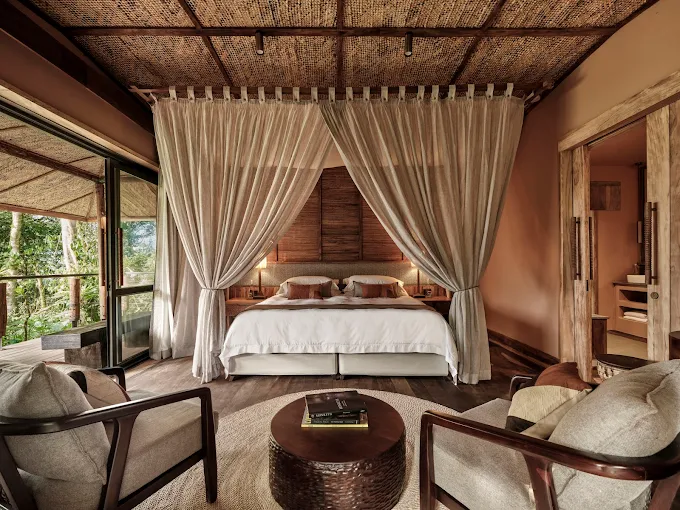
What’s Included in a Luxury Uganda Safari Package?
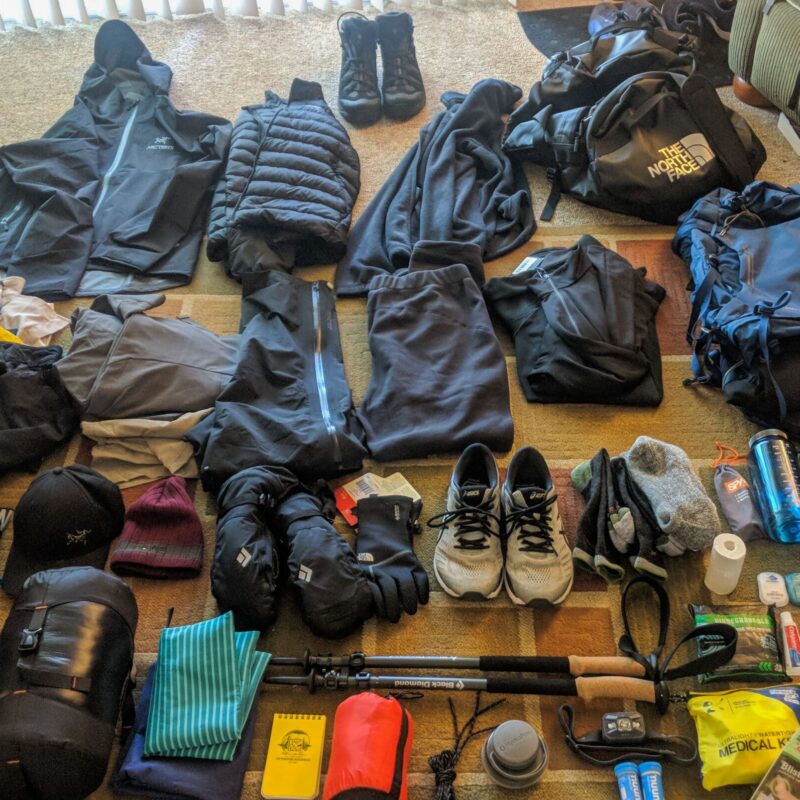
Uganda Safari Packing List
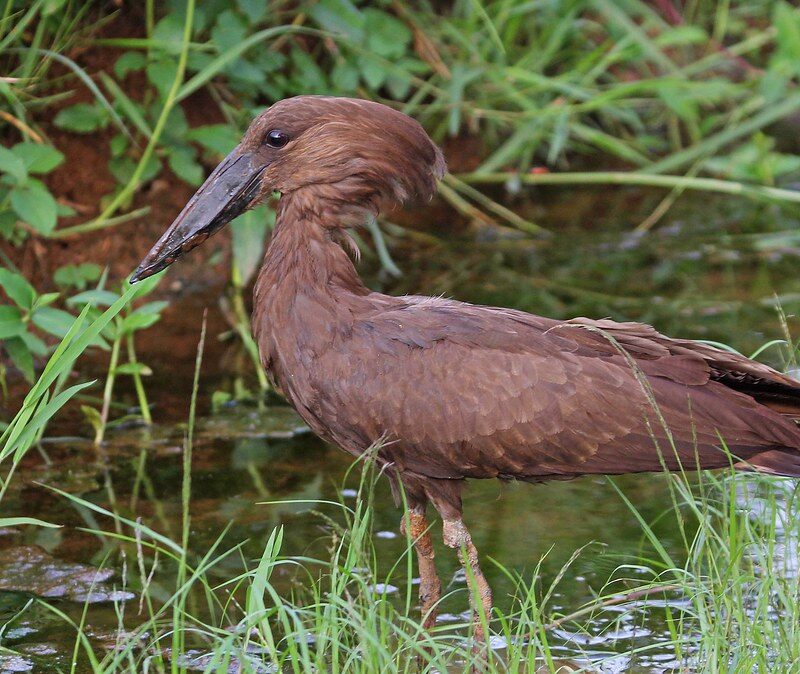
Birding in Uganda