Staying at the River Station on the Kazinga Channel: What to Know Before You Book
Staying at the River Station on the Kazinga Channel is one of those safari decisions that looks like a simple accommodation choice on paper but becomes a full ecosystem experience once you understand what the location actually controls. In the context of Queen Elizabeth National Park, this stay is not just about the room category or comfort level—it is about being positioned directly along one of East Africa’s most active freshwater wildlife corridors: the Kazinga Channel.
The Kazinga Channel itself is a 32-kilometre natural waterway linking Lake Edward and Lake George, and it concentrates some of the highest densities of hippos and water-dependent wildlife in Uganda. A stay at River Station places you within direct sensory range of this system, meaning your safari experience is shaped continuously by water, animal movement, and shoreline activity rather than scheduled excursions alone.
Understanding what to know before booking requires breaking down how location, wildlife density, logistics, seasonal variation, and lodge design interact in a way that fundamentally changes the rhythm of a safari stay.
Location Intelligence: Why the Kazinga Channel Changes Everything
Water as the Primary Safari Axis
Most safari lodges in Uganda operate from land-based positioning where wildlife viewing requires travel into national park sectors. River Station reverses this logic by placing water at the centre of the experience.
The Kazinga Channel functions as a permanent wildlife highway. Hippos remain submerged in large pods during the day, crocodiles occupy shallow edges, and elephants regularly move down to drink and bathe during heat cycles. This creates continuous movement along the waterline rather than intermittent sightings.
Proximity Advantage Inside Queen Elizabeth Ecosystem
Being positioned within the broader Queen Elizabeth system means access is not limited to river activity alone. The lodge sits within reach of savannah plains, crater lake regions, and predator territories that define the park’s ecological diversity.
However, unlike inland lodges, the channel itself becomes the primary wildlife anchor point, meaning even without game drives, wildlife interaction remains high-density and constant.
Wildlife Density Reality: What You Actually See From the Lodge
Hippo Aggregation Systems
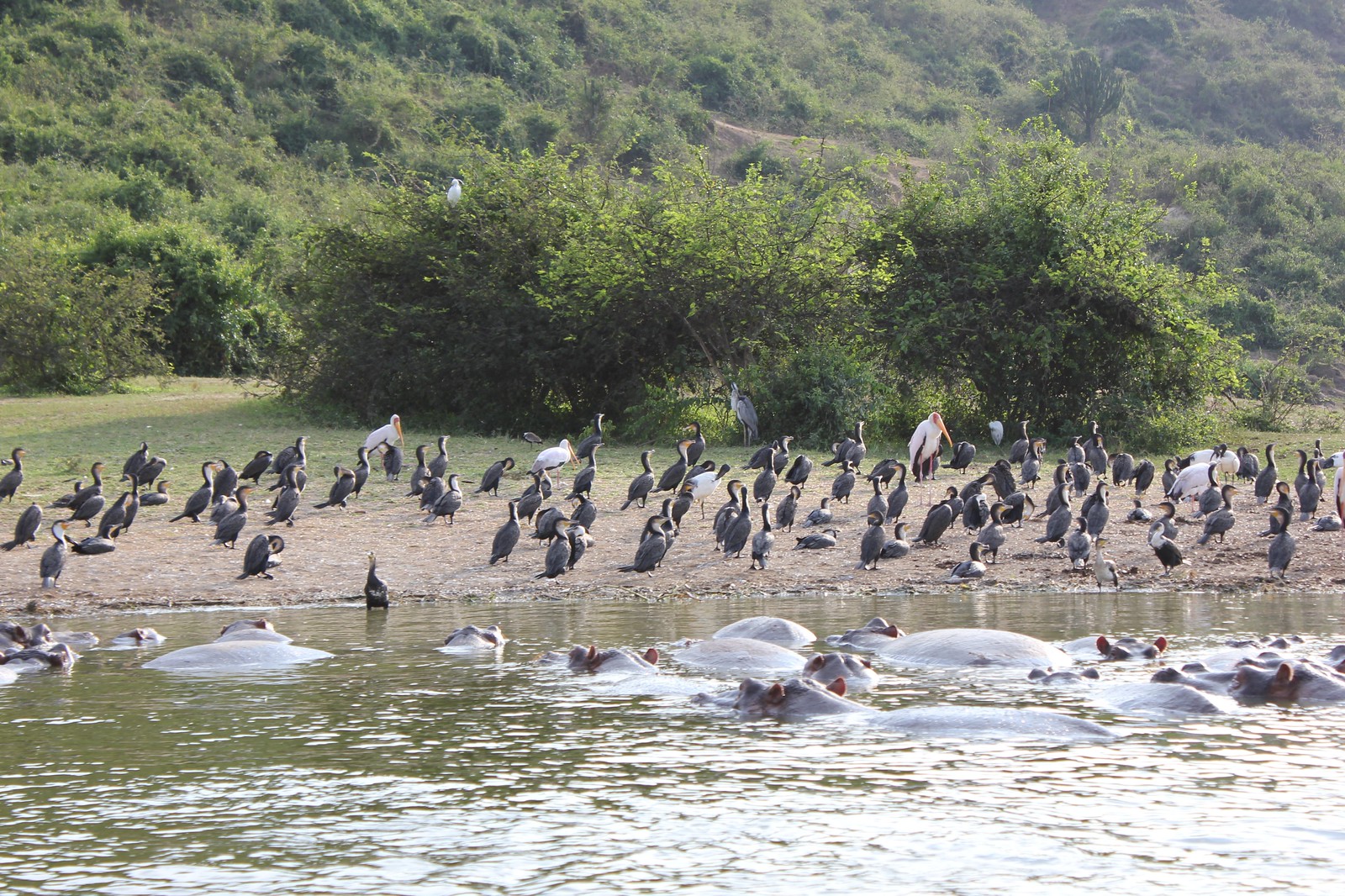
The Kazinga Channel is widely recognized for extreme hippo population density, with groups clustering in tightly packed pods across shallow river segments. From River Station, these groups are not distant viewing subjects—they are part of the immediate riverscape.
At night and early morning, hippo vocalizations become part of the ambient environment, shaping the acoustic identity of the stay.
Elephant Shoreline Behavior
Elephants are one of the most visually impactful species along the channel. During dry periods, herds move down to the water in predictable cycles, often crossing open shoreline areas in full daylight.
This creates high-probability viewing windows directly from the lodge perimeter or during short boat transfers.
Bird Population Intensity
The channel supports one of Uganda’s most concentrated aquatic bird ecosystems. Species such as African fish eagles, pelicans, herons, and kingfishers are present in continuous activity cycles due to fish abundance and stable water levels.
Bird activity is not seasonal spectacle here—it is a constant ecological layer.
Accommodation Structure: How River Station Is Built Around Water
Elevated Design Logic
Accommodation units are typically designed with elevation and water-facing orientation in mind. This ensures that even during peak wildlife activity, guests maintain visual access to the channel system.
The architecture prioritizes open sightlines over enclosure, meaning rooms are positioned to maximize environmental exposure rather than isolate from it.
Tented Luxury Integration
River Station follows a luxury tented camp model with permanent structural reinforcement. This includes proper flooring, en-suite bathroom systems, and weather-resistant canvas architecture designed for long-term comfort in humid river environments.
Unlike standard lodges, the structure is intentionally semi-permeable to sound and atmosphere, allowing the channel environment to remain present even inside private spaces.
Arrival and Access: The Water-Based Entry System
Boat-Linked Entry Flow
One of the defining logistical features of River Station is that access often includes boat transfer segments across or along parts of the Kazinga Channel system.
This means your safari experience begins on water rather than land, immediately introducing you to hippo zones, bird corridors, and shoreline elephant pathways.
Reduced Road Dependency
Compared to inland accommodations, River Station reduces reliance on long road transfers within Queen Elizabeth National Park sectors. This minimizes travel fatigue and increases time spent in active wildlife zones.
Safari Integration: How Game Drives Work From the Lodge
Dual-Zone Wildlife Access
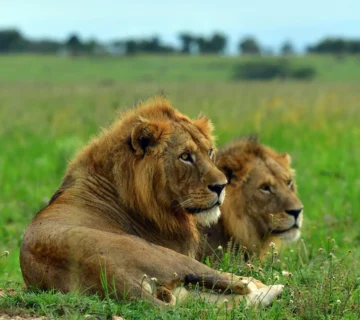
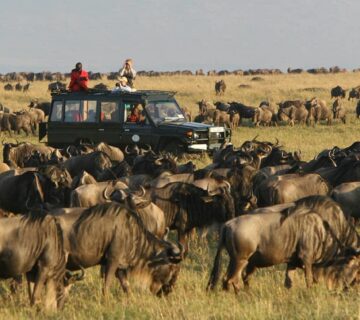
Staying at River Station provides access to both aquatic and savannah ecosystems. Game drives still operate into Queen Elizabeth National Park’s inland areas, where lions, leopards, buffalo, and antelope species dominate.
However, the contrast between river-based density and savannah-based distribution becomes a key part of the experience.
Early Morning and Late Afternoon Movement Advantage
Because the lodge is already positioned within a high-activity corridor, early morning departures into game drive zones are faster and more efficient. This improves chances of reaching predator movement zones during peak activity periods.
Seasonal Variability at River Station
Dry Season: Peak Water Compression Effect
During dry periods, wildlife concentrates heavily around the Kazinga Channel. This increases predictability of elephant and hippo encounters and intensifies shoreline activity.
The river becomes a magnet for large mammals, making visual density extremely high.
Wet Season: Expansion of Movement Networks
During rainy periods, surrounding ecosystems expand and wildlife disperses into inland feeding zones. While channel activity remains strong, sightings become more distributed rather than concentrated.
This creates a more exploratory but less predictable viewing pattern.
Sensory Environment: What Guests Often Underestimate
Continuous Natural Soundscape
Unlike inland lodges where silence dominates, River Station operates within a constant natural sound environment. This includes hippo vocalizations, bird calls, insect activity, and water movement.
This soundscape does not stop at night—it simply shifts in intensity and composition.
Nighttime River Dynamics
At night, the Kazinga Channel becomes acoustically dominant. Hippo movement increases in audible range, crocodile activity intensifies near banks, and bird activity transitions into nocturnal species cycles.
Wildlife Viewing From Camp: Beyond Game Drives
Direct Shoreline Observation
One of the strongest advantages of River Station is the ability to observe wildlife directly from lodge boundaries. This includes elephants approaching water edges, hippos surfacing in nearby pods, and birdlife feeding in shallow zones.
Boat-Based Wildlife Proximity
Boat excursions along the Kazinga Channel allow for close-range observation of large mammals at water level, offering a perspective that differs significantly from land-based game drives.
Operational Realities Before Booking
Water-Level Dependency and Movement Timing
Because the lodge is water-integrated, certain movement patterns and access routes depend on channel conditions and seasonal water levels. This requires coordination for transfers and excursions.
Wildlife Is Not Controlled or Scheduled
Despite high density, wildlife movement is entirely natural. There are no guaranteed sighting times or fixed animal locations. The strength of the experience lies in constant ecological presence rather than predictability.
Comparative Position Within Queen Elizabeth Safari Circuit
River Station vs Inland Lodges
Inland lodges prioritize savannah game drives as the primary wildlife interface, while River Station prioritizes continuous water-based interaction as a baseline experience.
This creates two fundamentally different safari styles within the same national park system.
Strategic Value of Water Corridor Positioning
Positioning along the Kazinga Channel means guests are embedded in one of Uganda’s most active ecological arteries rather than peripheral viewing zones.
Field-Level Interpretation of the Experience
A stay at River Station is defined by continuous ecological proximity rather than scheduled wildlife encounters. The Kazinga Channel does not operate on safari timing—it operates on biological cycles of feeding, movement, and territorial interaction.
Hippos maintain constant aquatic presence, elephants move according to environmental pressure, and birdlife cycles through uninterrupted feeding networks. The lodge sits directly within this system, meaning the boundary between accommodation and ecosystem is deliberately minimal.
What a guest receives is not a structured safari experience layered onto a hotel stay, but a direct positioning inside a functioning river-based wildlife network where observation is constant, variable, and fully dictated by natural movement systems rather than human scheduling.
Start Planning Your Next Trip To Africa
If you can picture yourself in one—or several—of these exceptional retreats, the next move is simple. We design fully tailored African safaris that bring these experiences together seamlessly, from private gorilla encounters to luxury lodges in the heart of the wild.
Every detail is carefully planned, so your journey feels effortless from start to finish. Reach out in whichever way suits you best, and let’s begin crafting your safari.
Start Planning