Tented Camp vs Fixed Lodge in Uganda: Which Is the Better Luxury Choice?
Uganda tented camp vs lodge luxury is not a simple accommodation comparison. It is a strategic decision that shapes how you experience landscapes, wildlife proximity, comfort levels, and even emotional immersion during a safari. In Uganda, especially within ecosystems such as Queen Elizabeth National Park, Murchison Falls National Park, and forest-edge zones around Bwindi Impenetrable National Park, the difference between a tented camp and a fixed lodge is not cosmetic—it is experiential, environmental, and operational.
Luxury in Uganda does not follow a single definition. Instead, it splits into two distinct philosophies: structured permanence versus adaptive immersion. Understanding this distinction is what determines whether your safari feels like a controlled retreat or an integrated wilderness experience.
Structural Design Philosophy: How Each Accommodation Type Exists in the Wild
Fixed Lodge Architecture and Stability Logic
Fixed lodges are permanent structures built with concrete, wood, and stone foundations. They are designed for long-term durability and consistent guest comfort regardless of environmental changes.
In Uganda safari contexts, fixed lodges prioritize insulation, predictable room layouts, and standardized amenities. They are engineered to minimize environmental influence, meaning external conditions such as wind, rain, or wildlife proximity are filtered rather than directly experienced.
This creates a controlled luxury environment where comfort is stable and unaffected by seasonal variation.
Tented Camp Architecture and Adaptive Integration
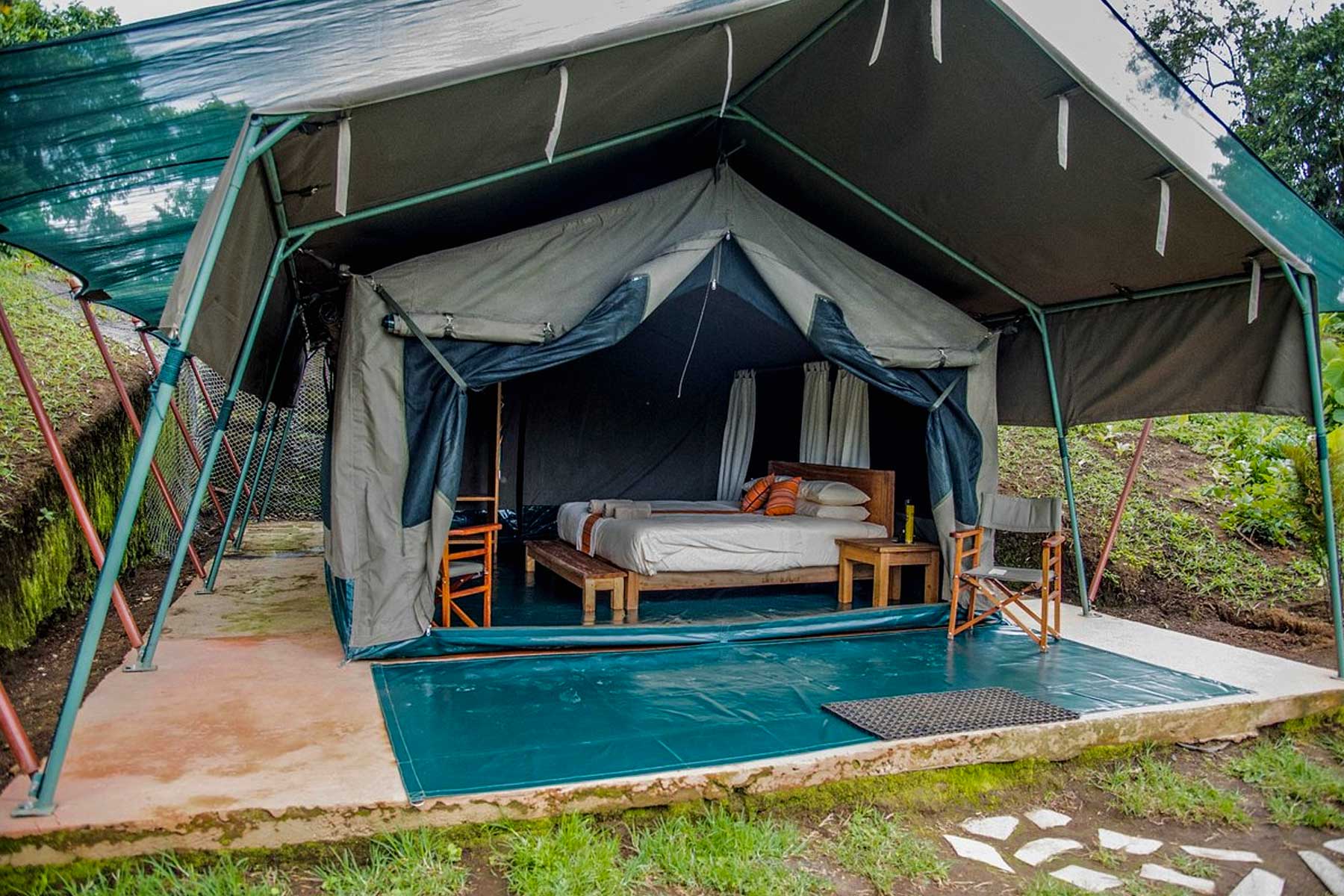
Tented camps operate on a fundamentally different principle. They are semi-permanent or mobile structures built with canvas, lightweight framing, and modular design systems.
Rather than resisting the environment, tented camps integrate with it. Temperature changes, forest sounds, and weather patterns are more directly perceptible inside the accommodation space.
This creates a high level of sensory immersion, where the boundary between interior comfort and external wilderness becomes intentionally thin.
Location Dynamics and Wildlife Proximity Advantage
Fixed Lodges and Strategic Positioning
Fixed lodges are often positioned for panoramic views, logistical access, or long-term infrastructure stability. They may be located near park entrances, elevated ridges, or designated tourism zones.
While this ensures convenience and safety, it often places a buffer between guests and direct wildlife proximity.
Tented Camps and Hyper-Local Placement
Tented camps are frequently positioned closer to active wildlife corridors or within deeper sections of safari ecosystems. In places like Queen Elizabeth National Park, this can mean proximity to grazing routes or water-adjacent zones.
The result is increased auditory and sometimes visual wildlife presence near accommodation areas, especially at night or early morning.
Comfort Systems: Controlled Luxury vs Environmental Luxury
Fixed Lodge Comfort Engineering
Fixed lodges offer full structural insulation. This includes sealed rooms, reinforced walls, consistent temperature control, and fully enclosed bathrooms.
The comfort experience is engineered to remain unchanged regardless of external weather conditions. This is particularly valuable during heavy rainfall periods or colder nights in higher-altitude regions.
Tented Camp Comfort Adaptation
Luxury tented camps maintain high-end comfort but with environmental responsiveness. Beds, en-suite bathrooms, and lounge areas are integrated into canvas-based structures that respond slightly to external temperature and sound.
Comfort is not reduced, but it is more context-sensitive. Night temperatures, forest humidity, and ambient wildlife sounds become part of the accommodation experience.
Sensory Experience: Insulated Stay vs Immersive Stay
Sound Environment in Fixed Lodges
Fixed lodges significantly reduce environmental sound intrusion. Wildlife calls, wind, and rain are often softened or fully blocked by structural materials.
This creates a quieter, more predictable sleep environment that prioritizes rest over ecological immersion.
Sound Environment in Tented Camps
Tented camps preserve a high level of natural sound transmission. In forest or savannah settings, this can include distant animal calls, insect cycles, wind movement, and rainfall patterns.
This auditory integration is one of the defining features of tented camp luxury and is often cited as a key reason guests choose this option.
Seasonal Performance Differences in Uganda Safari Context
Rainy Season Behavior of Fixed Lodges
During heavy rains, fixed lodges maintain operational stability with minimal disruption. Roads, interiors, and access routes remain unaffected by external weather conditions.
This makes them highly reliable during wet safari periods when mobility can be unpredictable.
Rainy Season Behavior of Tented Camps
Tented camps remain operational during rainy seasons but become more atmospherically intense. Rainfall becomes more audible and visually present, and ground conditions around the camp can become softer or more variable.
However, modern luxury tented camps are designed with elevated platforms and reinforced waterproof systems to maintain comfort standards.
Dry Season Behavior Across Both
During dry seasons, both accommodation types perform optimally. Fixed lodges offer maximum comfort efficiency, while tented camps maximize visibility of surrounding landscapes and wildlife activity.
Wildlife Interaction Potential from Accommodation Base
Fixed Lodge Wildlife Buffering
Fixed lodges often maintain defined boundaries between guest areas and wildlife zones. This reduces direct wildlife encounters within accommodation spaces but enhances controlled viewing experiences from designated platforms.
Tented Camp Wildlife Integration
Tented camps, depending on location, may experience closer proximity to wildlife movement corridors. In savannah ecosystems, this can include nocturnal animal movement near camp perimeters.
This does not increase risk but enhances perception of wilderness continuity.
Privacy, Exclusivity, and Guest Density
Fixed Lodge Guest Flow Structure
Fixed lodges typically accommodate higher guest volumes with structured dining areas, shared lounges, and defined communal spaces.
This creates a more social safari environment with predictable service patterns.
Tented Camp Spatial Distribution
Tented camps often operate with lower room density and greater spacing between units. This increases privacy and reduces visual or auditory overlap between guests.
The result is a more isolated and exclusive experience within the same ecosystem.
Mobility and Safari Logistics Integration
Fixed Lodge Accessibility Advantage
Fixed lodges generally offer easier access to park gates, road networks, and safari departure points. This reduces logistical friction for game drives and transfers.
Tented Camp Location Flexibility
Tented camps are often placed deeper within ecosystems, which can slightly increase transfer complexity but reduce travel time to wildlife zones once inside the park.
Psychological Framing of Luxury Experience
Fixed Lodge Predictability Psychology
Fixed lodges create a psychological sense of stability. Guests know exactly what to expect in terms of comfort, structure, and environmental control.
This is particularly appealing for travellers prioritizing relaxation and certainty.
Tented Camp Immersion Psychology
Tented camps create a psychological sense of proximity to nature. The reduced separation between interior and exterior environments enhances perception of wilderness immersion.
This often results in a more emotionally engaging safari memory profile.
Cost Positioning in Uganda Luxury Safari Market
Fixed Lodge Pricing Logic
Fixed lodges often price based on infrastructure investment, service standardization, and long-term operational stability.
Tented Camp Pricing Logic
Luxury tented camps price based on exclusivity, location proximity, and experiential immersion rather than structural permanence.
In many cases, both categories overlap in pricing tiers, but value perception differs significantly based on guest priorities.
Field Reality Comparison in Uganda Safari Ecosystems
Queen Elizabeth National Park Context
In Queen Elizabeth National Park, fixed lodges provide panoramic savannah stability, while tented camps offer closer ecological integration with wildlife movement corridors.
Murchison Falls National Park Context
In Murchison Falls National Park, fixed lodges enhance river-view stability and comfort, while tented camps increase proximity to riverine wildlife dynamics and nocturnal environmental soundscapes.
Bwindi Impenetrable Forest Context
In Bwindi Impenetrable National Park, fixed lodges provide structural comfort in steep terrain zones, while tented camps emphasize forest immersion and proximity to trekking preparation zones.
Decision Logic: Choosing Between Tented Camp and Fixed Lodge
Uganda tented camp vs lodge luxury ultimately depends on how a traveller defines “luxury” in a safari context. If luxury is interpreted as insulation, predictability, and structured comfort, fixed lodges align more closely with that definition.
If luxury is interpreted as immersion, proximity to wilderness systems, and sensory integration with the environment, tented camps offer a more aligned experience.
Both models operate at high-end levels in Uganda’s safari ecosystem, but they represent two fundamentally different interpretations of what it means to stay inside a functioning African wilderness environment.
Start Planning Your Next Trip To Africa
If you can picture yourself in one—or several—of these exceptional retreats, the next move is simple. We design fully tailored African safaris that bring these experiences together seamlessly, from private gorilla encounters to luxury lodges in the heart of the wild.
Every detail is carefully planned, so your journey feels effortless from start to finish. Reach out in whichever way suits you best, and let’s begin crafting your safari.
Start Planning