Serengeti Lodge vs Tented Camp: Which Is the Right Choice for a Luxury Safari?
Choosing between a lodge and a tented camp in the Serengeti National Park is one of the most important decisions you will make when planning a luxury safari. It is also one of the most misunderstood. Many travellers assume this is a simple comparison of comfort levels, with lodges being “luxury” and tented camps being “basic.” That assumption is outdated.
At the high end of the safari market in 2026, both lodges and tented camps deliver luxury. The real difference is not quality. It is experience design. One option separates you from the wilderness in a controlled environment. The other places you inside it while maintaining comfort. Understanding that distinction is what determines whether your safari feels immersive, relaxed, intense, or balanced.
The correct choice is not universal. It depends on your expectations, your tolerance for exposure to the natural environment, and how you want to engage with the rhythm of the African bush.
What Defines a Safari Lodge in the Serengeti
A safari lodge is a permanent structure, usually built with stone, timber, or other solid materials designed to withstand long-term environmental conditions. These properties function in many ways like remote luxury hotels placed strategically within wildlife areas.
Inside a lodge, you experience insulation from the elements. Temperatures are more stable, wind and wildlife sounds are reduced, and the overall atmosphere is controlled. Rooms are often larger, with fixed plumbing systems, consistent electricity, and expansive indoor spaces.
Lodges also tend to include a wider range of facilities. You will often find infinity pools overlooking waterholes, spas, fitness areas, multiple dining spaces, and structured lounge environments. The design prioritizes comfort, convenience, and predictability.
This makes lodges particularly appealing to travellers who want to combine wildlife experiences with a high degree of physical comfort. After long game drives, returning to a stable, quiet environment can be an important part of the overall safari rhythm.
What Defines a Luxury Tented Camp
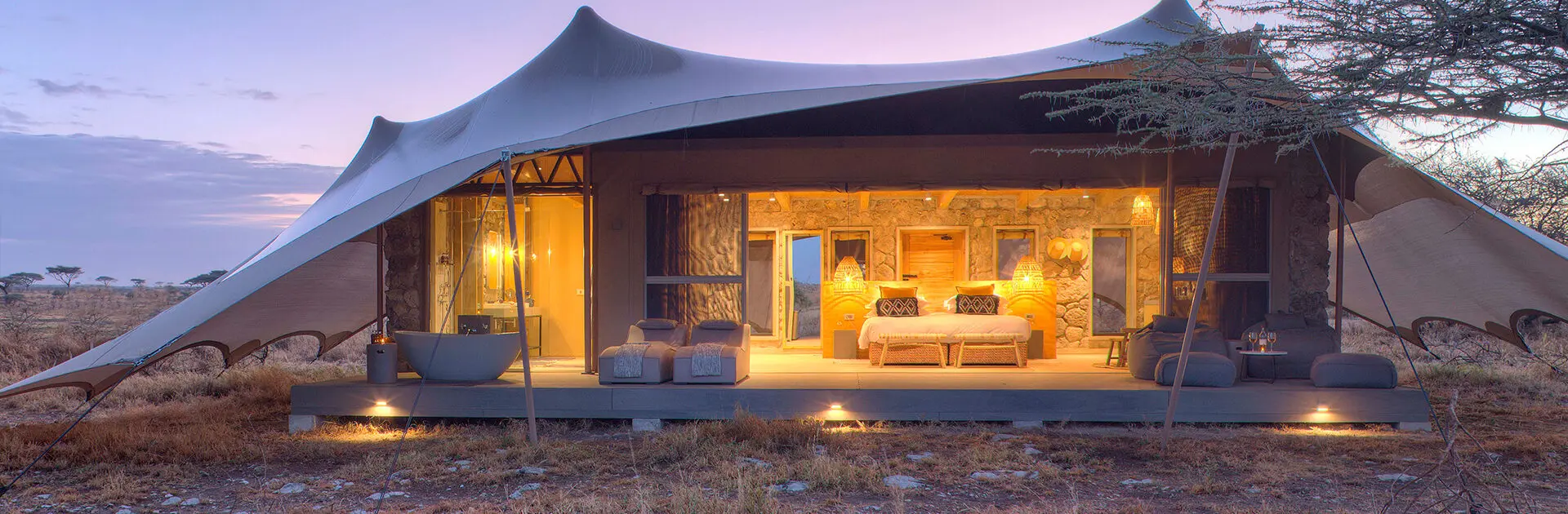
A tented camp is structurally different, but not inferior. Even at the highest luxury level, the defining feature remains the canvas construction. This is not about rough camping. It is about proximity to the environment.
Inside a luxury tented camp, you will still find king-size beds, en-suite bathrooms, hot water, and carefully designed interiors. Many camps include private decks, outdoor showers, and high-end furnishings. The comfort level can match or even exceed some lodges.
What changes is the sensory experience.
Canvas walls do not isolate sound in the same way solid walls do. At night, you hear lions calling across the plains, hyenas moving nearby, wind passing through grass, and insects creating a continuous background rhythm. During the day, the environment feels immediate and present rather than distant.
This is what defines the tented camp experience. You are not observing the wilderness from a protected space. You are living within it.
The Core Difference: Controlled Comfort vs Environmental Immersion
At a technical level, both lodges and tented camps provide luxury. At a psychological level, they deliver completely different experiences.
A lodge creates a boundary between you and the environment. It offers control, quiet, and a sense of separation from the unpredictability of the bush. This is ideal for travellers who want to observe wildlife without feeling fully exposed to it.
A tented camp removes that boundary. It introduces controlled exposure. You remain safe and comfortable, but the environment is no longer distant. It becomes part of your daily and nightly experience.
This difference is not about better or worse. It is about how close you want to feel to the ecosystem around you.
Wildlife Access: Why Location Matters More Than Structure
One of the most critical misunderstandings in safari planning is the assumption that tented camps always provide better wildlife access than lodges.
This is not structurally true.
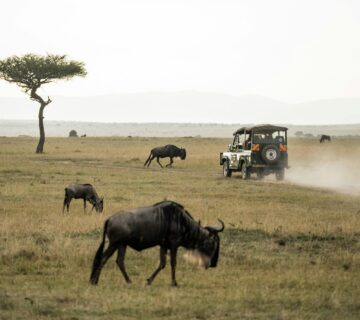
Wildlife access is determined by geographic positioning and timing, not accommodation type. A lodge in the correct migration zone during peak movement will provide exceptional sightings. A tented camp in the wrong location at the wrong time will not.
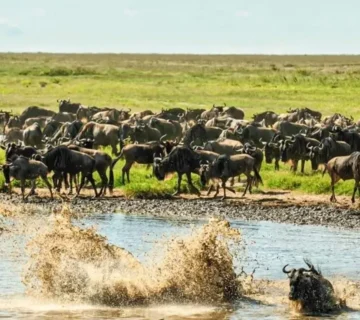
However, tented camps often have a positioning advantage. Because they are less permanent, they can be placed in more remote or ecologically sensitive areas. Some are even mobile, relocating throughout the year to follow the Great Migration.
This flexibility allows them to remain closer to wildlife movement corridors, especially during critical periods such as river crossings or calving season.
That said, there are also lodges in excellent positions, particularly in central Serengeti regions where wildlife is present year-round.
The key point is this: location overrides accommodation type every time.
Comfort and Infrastructure: Where Lodges Still Lead
While the gap in room-level luxury has largely disappeared, lodges still maintain an advantage in overall infrastructure.
Because they are permanent, lodges can support larger shared spaces, more complex facilities, and a broader range of services. This includes spa treatments, extensive wine selections, larger dining operations, and more elaborate architectural design.
For travellers who view the safari as both a wildlife experience and a luxury retreat, this added infrastructure can significantly enhance the trip.
Tented camps, by design, remain smaller and more focused. Their luxury is delivered through intimacy and experience rather than scale.
Privacy and Guest Experience
Tented camps tend to have fewer units, often between six and twelve tents. This naturally creates a more private and exclusive atmosphere. Fewer guests mean fewer vehicles on game drives and a more personalized guiding experience.
Lodges, especially larger ones, may host more guests. While high-end lodges still manage vehicle numbers carefully, the overall atmosphere can feel more social and less secluded.
This difference directly affects how your safari feels. A smaller camp often feels quieter and more connected to the environment, while a lodge can feel more structured and community-oriented.
Safety Perception and Reality
From an operational standpoint, both lodges and tented camps follow strict safety protocols. Guests are escorted at night, staff are trained in wildlife behavior, and camp layouts are designed with safety in mind.
The difference lies in perception.
Solid walls create a psychological sense of protection. Canvas walls feel more exposed, even though the safety standards are equally controlled.
For some travellers, that sense of exposure is part of the appeal. For others, especially first-time safari visitors, it can be a source of discomfort.
Understanding your own comfort threshold is important when making this decision.
Cost Structure at the Luxury Level
At entry-level safari pricing, tented camps can sometimes be more affordable due to lower construction costs. At the luxury level, this distinction disappears completely.
Pricing in high-end safari experiences is driven by location, exclusivity, guiding quality, and access to wildlife, not by whether the structure is a lodge or a tent.
In fact, some of the most expensive safari experiences in East Africa are luxury tented camps positioned directly along migration routes or in private concessions.
This reinforces the core principle that value is determined by positioning, not structure.
Who Should Choose a Safari Lodge
A lodge is the right choice if your priority is comfort, stability, and a more controlled environment. It is particularly well suited to travellers who want a balance between wildlife exploration and relaxation.
This includes first-time safari visitors, families, and those who prefer quieter sleeping conditions and more extensive facilities.
Lodges provide a softer introduction to the safari experience without reducing the quality of wildlife encounters, as long as they are correctly positioned.
Who Should Choose a Tented Camp
A tented camp is the right choice if your priority is immersion, atmosphere, and a deeper connection to the environment.
It is ideal for travellers who want to feel part of the landscape, hear the sounds of the bush at night, and stay in locations that are often closer to active wildlife zones.
Photographers, repeat safari travellers, and those specifically following the Great Migration often prefer tented camps because of their proximity and intimacy.
The Most Effective Strategy: Combining Both
The most effective luxury safari itinerary does not force a choice between lodge and tented camp. It combines both.
A common approach is to start in a lodge in central Serengeti for consistent wildlife viewing and comfort, then move to a tented or mobile camp in northern or southern regions depending on migration timing.
This creates a layered experience. You gain stability, comfort, and broad wildlife exposure from the lodge, while the tented camp provides immersion and proximity during peak migration phases.
This strategy reduces risk and maximizes overall safari quality.
There is no single correct choice between a lodge and a tented camp in the Serengeti National Park.
It is both, combined strategically based on timing and location.
In the end, the defining factor of a successful safari is not the material of your walls. It is whether you are positioned correctly within the movement of wildlife. That is what transforms a trip into a true Great Migration experience.
Start Planning Your Next Trip To Africa
If you can picture yourself in one—or several—of these exceptional retreats, the next move is simple. We design fully tailored African safaris that bring these experiences together seamlessly, from private gorilla encounters to luxury lodges in the heart of the wild.
Every detail is carefully planned, so your journey feels effortless from start to finish. Reach out in whichever way suits you best, and let’s begin crafting your safari.
Start Planning