Big Five Safari in Murchison Falls – Where Uganda’s Greatest Wildlife Encounters Begin
Most visitors arrive at Murchison Falls National Park drawn by one of two things: the thundering spectacle of the Nile forcing itself through a seven-metre gorge, or the promise of exceptional game viewing on the open northern bank savannah. What they find, almost invariably, is that the park exceeds both expectations simultaneously. Because Murchison Falls is not simply Uganda’s largest and oldest national park. It is the finest destination in the country for encountering four of Africa’s legendary Big Five in a single location, with the Nile as the dramatic thread running through every activity, every sunrise, and every moment of the safari.
Big Five Safari in Murchison Falls
Big Five Animals in Murchison Falls | Ziwa Rhino Sanctuary | Game Drive Experience
Murchison Falls National Park is Uganda’s largest and oldest national park, renowned for the dramatic Murchison Falls where the Nile squeezes through a seven-metre gorge, as well as outstanding wildlife viewing. It is the country’s best destination to see four of Africa’s Big Five, with lions, leopards, elephants, and Cape buffalo thriving across its savannahs, woodlands, and riverbanks. Although rhinos disappeared from the park due to poaching in the 1980s, visitors can complete the Big Five experience by tracking white rhinos at Ziwa Rhino Sanctuary on the way to the park. Together, the park’s spectacular scenery and abundant wildlife make it one of Uganda’s premier safari destinations.
This is the guide to experiencing the Big Five at Murchison Falls: where each species is found, the best strategies for encountering them, the game drive circuits that deliver the finest results, and everything you need to know to make the most of Uganda’s most storied national park.
The Northern Bank – Heart of the Big Five Experience
The Victoria Nile bisects Murchison Falls National Park from east to west, dividing it into two fundamentally different landscapes. The southern bank, denser and more heavily wooded, is where the falls themselves are accessed and where the park’s main lodges cluster around Paraa. The northern bank is where the Big Five game viewing happens.
Crossing to the northern bank is done via the Paraa Ferry, a motorised pontoon that crosses the Nile several times daily. The crossing itself is a small but memorable part of the experience: hippos surface alongside the pontoon, fish eagles circle above the river, and the vast open savannah of the north comes into view as the ferry moves across. What awaits on the other side is some of the finest game country in East Africa.
The northern bank’s open savannah and acacia woodland provide ideal conditions for viewing large mammals across wide, open sightlines. Unlike forested parks where animals must be found in dense vegetation, the Buligi game tracks and the surrounding plains of the northern bank offer visibility that rewards patient, attentive game drives with sightings of exceptional quality and duration. There is no rush here, no queue of vehicles around a single animal, no sense of competition for the best angle. Murchison Falls receives a fraction of the vehicle pressure of Kenya’s or Tanzania’s most popular parks, and the solitude of the game drive experience is one of its defining pleasures.
The Lion
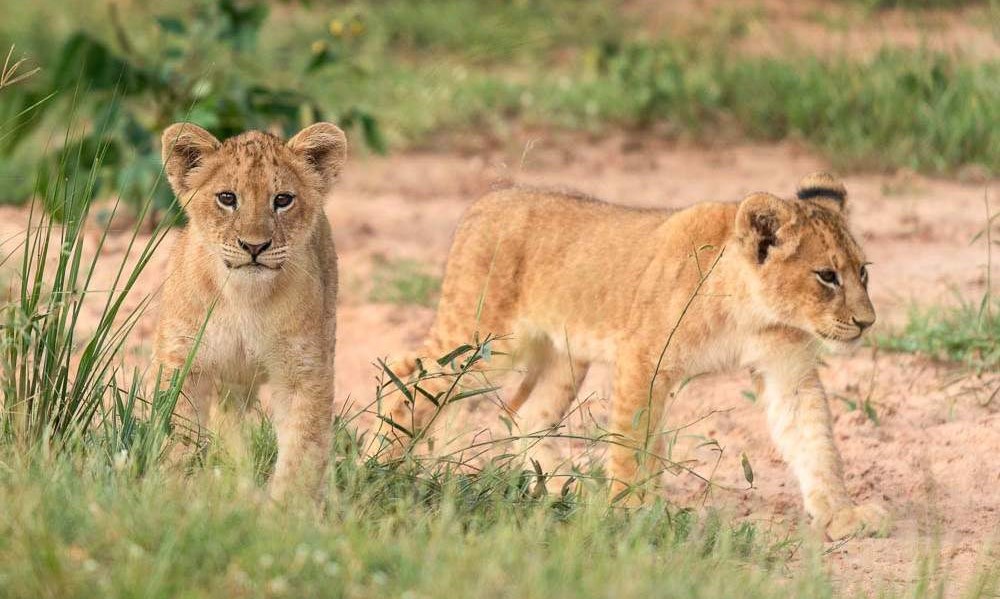
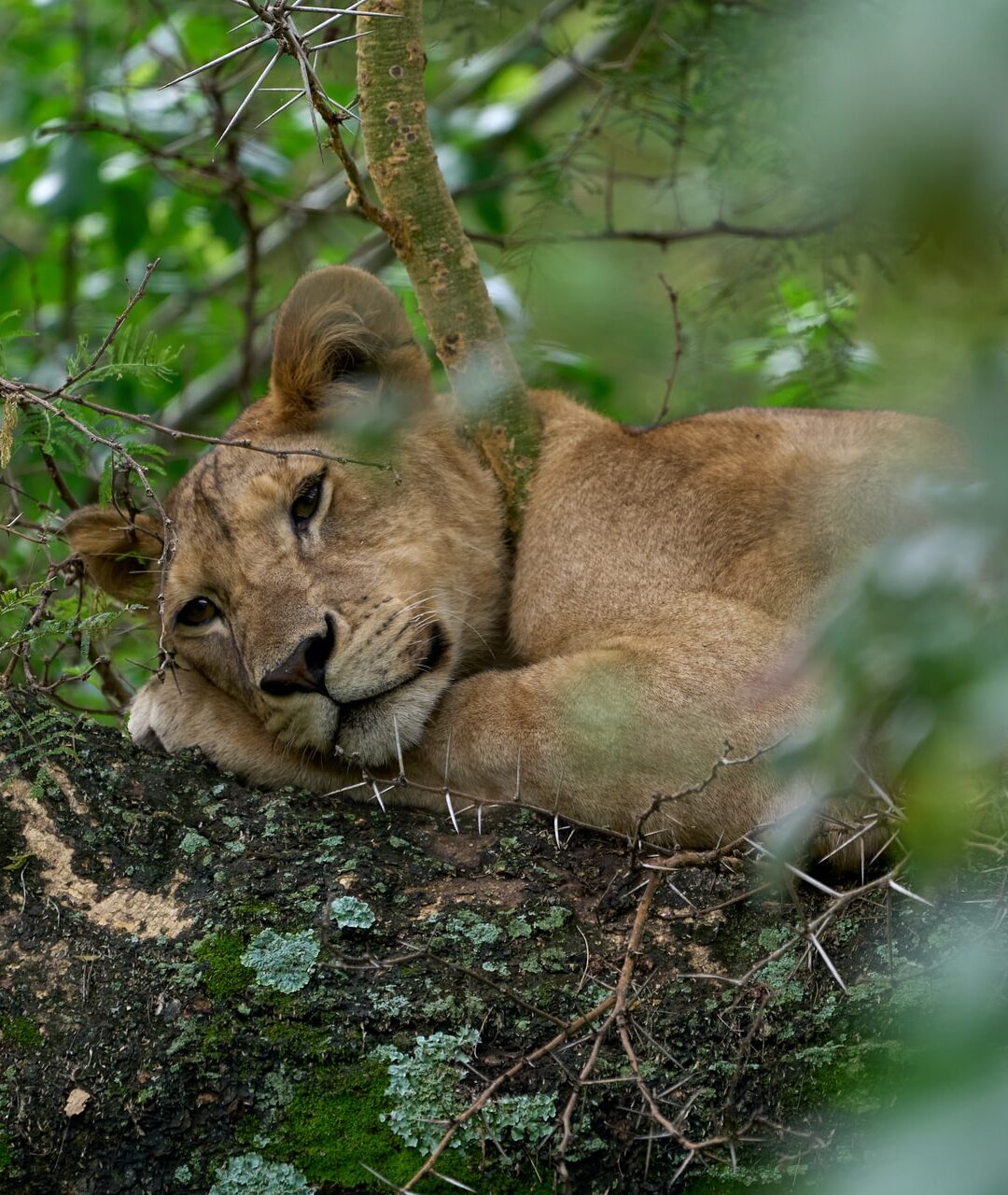
Murchison Falls is one of Uganda’s finest parks for lion sightings, with a population of over 70 individuals distributed across multiple prides that hunt and patrol the open northern bank savannah. The park’s open terrain and wide sightlines make lion encounters here more frequent and more easily observed than in Uganda’s more vegetated parks, and the abundance of prey across the Buligi plains supports prides that are reliably present and regularly seen.
The Buligi game tracks are the primary focus for lion sightings. These open grassland and acacia woodland circuits in the north of the northern bank run through territory where several resident prides hunt Uganda kob, Jackson’s hartebeest, and buffalo. The connection between prey and predator is visible and immediate on these plains: where large herds of Uganda kob graze, lions are rarely far away. Your guide will scan the herd behaviour as much as the horizon itself, because the alertness of a kob herd, the ears rotating toward a specific point in the grass, the collective tensing of hundreds of animals, is one of the most reliable indicators that a predator is close.
The Nile delta area, where the Victoria Nile enters Lake Albert at the park’s western boundary, is another outstanding lion location. Several prides use the open grassland and acacia scrub around the delta as both hunting ground and resting area, and morning game drives in this sector regularly produce encounters with lions moving from overnight hunting back toward their midday resting positions in the shade of acacia trees.
Morning game drives departing at first light, typically around 6:30 AM, are the most productive time for lion encounters. The cool morning air keeps the lions active longer than the heat of the day allows, and the golden light of the first hour after sunrise produces the finest conditions for photography of any moment in the game drive day. Afternoon drives, beginning around 4:00 PM as the temperature drops, are the second most reliable window, as prides that have rested through the heat begin to stir and move toward the evening hunt.
Night game drives, available through select lodges with special Uganda Wildlife Authority permits, are the most exciting strategy for watching lions in active hunting mode. After dark, the Buligi tracks come alive with predator activity, and following a lion pride by spotlight as they move purposefully through the grassland in the cool night air, the prey animals scattering ahead of them, is one of Murchison’s most thrilling and least-forgotten experiences.
The Leopard
Of all the Big Five, the leopard demands the most patience and the most trust in your guide. Solitary, largely nocturnal, and extraordinarily well camouflaged in the dappled light of the riverine woodland that makes up its preferred habitat in Murchison Falls, the leopard is an animal that reveals itself only when it chooses to. And yet Murchison Falls is consistently cited by experienced Uganda safari guides as the country’s finest park for leopard encounters, and guests who approach the search with the right strategy and the right attitude are regularly rewarded.
By day, leopards in Murchison use the riverine woodland and thicket along the southern bank of the Victoria Nile as their primary resting habitat. Sausage trees and tall figs along the river’s edge provide the branching structures that leopards favour for resting with a kill above the reach of scavenging hyenas, and scanning these trees carefully during morning drives along the southern bank frequently reveals the spotted pattern of a resting leopard that would be entirely invisible to anyone not looking specifically for it.
The Paraa area and the woodland around Sambiya on the southern bank are among the most frequently productive locations for leopard sightings during daylight hours. Early morning and late afternoon are the most reliable windows, when leopards emerge from dense cover and move more openly through the semi-shade of the tree line. Moving slowly through these areas, windows down, engine at minimum, your guide reading the signs in the vegetation, is fundamentally different from the faster-paced open savannah game drives of the northern bank. It requires a different kind of attention and produces a different quality of encounter.
Night game drives are, once again, the single most reliable strategy. After dark, leopards leave the dense cover of the riverine forest and move along the tracks and open woodland edges with a confidence and directness that makes them significantly more visible than during daylight. A spotlight encounter with a leopard in full movement, its spotted coat catching the beam as it covers ground in long, fluid strides, is among the most electrifying moments available anywhere on the Murchison Falls safari circuit.
The Elephant
If there is one member of the Big Five that Murchison Falls delivers without reservation, in extraordinary numbers and in encounters of remarkable intimacy, it is the African elephant. The park holds Uganda’s largest elephant population, estimated at over 1,200 individuals roaming across its varied habitats of savannah, riverine forest, and Nile floodplain. Encounters with these animals at Murchison are not incidental moments on a game drive. They are a defining and repeated feature of every day spent in the park.
On morning game drives along the northern bank, family groups of elephants are a near-constant presence. Matriarchs leading their families to the Nile at first light, the dust rising around them in the golden morning air. Enormous bulls standing alone in the shade of acacia trees, ears fanning slowly against the heat. Young calves navigating the uneven ground between their mothers’ legs, occasionally stumbling in ways that draw involuntary smiles from every vehicle in the area. The northern bank encounters are close, ground-level, and richly varied.
The Nile boat cruise delivers a completely different and equally extraordinary elephant experience. Approaching the river bank from the water, at the pace of the current rather than the engine of a vehicle, you watch elephants wade into the shallows to drink and bathe in a way that feels entirely undisturbed by your presence. Adult bulls submerge their trunks, draw up vast quantities of water, and spray themselves with a satisfaction and completeness that is deeply pleasing to observe. Family groups stand knee-deep in the river, the calves barely visible above the waterline. And from the boat, at water level and only metres from the bank, the true scale of an adult elephant becomes apparent in a way that a vehicle sighting, however close, does not quite replicate.
During the dry season months of December to February and June to September, elephant concentrations along the Nile reach their peak as animals from across the park converge on the river as other water sources diminish. The boat cruise during these months, when the banks are lined with elephants for kilometre after kilometre, produces some of the finest elephant photography available anywhere in Uganda.
The Cape Buffalo
The Cape buffalo is the most abundant and most reliably encountered of the Big Five in Murchison Falls, and it is an animal that rewards closer attention than casual safari guests sometimes give it. At first glance, a large herd of buffalo grazing across the open northern bank savannah might seem less dramatic than a lion pride or a leopard on a branch. After a few minutes of genuine observation, the impression changes entirely.
Adult Cape buffalo bulls are formidable animals, weighing up to 900 kilograms, with a massive boss of fused horn across the forehead that gives them an almost architectural solidity. Their reputation for unpredictability and aggression when cornered or wounded is well-founded, and the power implicit in a large herd of these animals moving across the open plain has a weight to it that is entirely different from the more elegant large herbivores of the savannah.
On the northern bank game drive circuits, large buffalo herds are a regular feature of morning drives through the Buligi area and along the Nile floodplain. Herds of 200 to 500 animals are not unusual during the dry season, when animals from across the northern bank concentrate along the river. The dust rising from a large moving buffalo herd, the sound of hundreds of hooves, and the red-billed oxpeckers swarming between the animals’ horns create an impression of abundance and wildness that is one of the most powerful wildlife spectacles the park offers.
Along the Victoria Nile shores, buffalo herds come to drink at the water’s edge during the afternoon hours, and the boat cruise frequently passes within metres of large groups standing knee-deep in the shallows. The combination of buffalo, hippos, crocodiles, and elephants visible simultaneously from the water in a single section of the Nile is one of those genuinely extraordinary scenes that only Murchison Falls consistently delivers.
The Rhinoceros – Completing the Five at Ziwa
The white rhino was a natural resident of Murchison Falls National Park until the political turmoil and rampant poaching of the 1970s and 1980s eliminated Uganda’s entire wild rhino population. The loss was total, and it was devastating. But it is not permanent.
The Ziwa Rhino Sanctuary, established in 2005 on a 7,000-hectare private ranch in Nakasongola District on the main highway between Kampala and Murchison Falls, is the cornerstone of Uganda’s rhino recovery programme. Six southern white rhinos translocated from Kenya and the United States formed the founding population. The herd has grown steadily under 24-hour armed ranger protection, and the sanctuary now holds over 30 individuals. The long-term goal, actively planned by Uganda Wildlife Authority and the sanctuary’s managing organisation Rhino Fund Uganda, is the eventual reintroduction of a self-sustaining white rhino population into Murchison Falls National Park itself.
For the Big Five safari guest, Ziwa provides something that no national park game drive can offer: the white rhino experienced on foot, at close range, in open grassland. Guided rhino tracking walks are led by experienced armed rangers who know each individual animal’s daily range and temperament. The walk across the sanctuary’s open grassland, following the trackers toward an animal that may weigh over two tonnes, has a physical quality of encounter that the vehicle-based game drive simply does not replicate. Standing fifteen or twenty metres from a white rhino grazing in the morning light, the sheer size of the animal visible in full, with nothing between you and it, is a moment of unusual intimacy and unusual significance.
The Ziwa visit is typically incorporated into the road journey from Kampala to Murchison Falls, stopping at the sanctuary for two to three hours of rhino tracking before continuing north to the park. Departing Kampala early allows for a comfortable Ziwa stop with time for a full rhino encounter before arriving at the lodge in the early afternoon, when a boat cruise on the Nile awaits as the perfect first Murchison activity.
Beyond rhinos, Ziwa offers a canoe safari through the Lugogo Swamp, one of the more reliable locations in northern Uganda for the shoebill stork, guided nature walks across the sanctuary grassland, and an impressive bird list of over 350 species recorded across the property.
The Full Game Drive Experience
Morning Game Drives
The morning game drive is the cornerstone of the Murchison Falls safari day, and it is where the northern bank delivers its finest performances. Departing at first light, typically around 6:30 AM after crossing on the Paraa Ferry, the morning drive enters the northern bank as the savannah emerges from darkness.
This is the hour when lions are most likely to still be active from overnight hunting. When leopards may be encountered moving back toward cover as the light builds. When elephants are making their way to the river in family groups through the cool morning air, the light on their grey skin warm and golden. And when the Uganda kob herds, dew still on the grass around them, begin their day’s grazing across the open plain.
The quality of the morning light in Murchison Falls, particularly in the dry season months when the air is clear and the sky transitions from deep blue to gold to white over the course of the first two hours, produces conditions for wildlife photography that are rarely matched elsewhere in Uganda. Every experienced nature photographer who visits Murchison rates the morning game drive on the northern bank among the finest photographic opportunities they have encountered in East Africa.
The morning drive typically runs for approximately three hours, returning to Paraa for the ferry crossing and breakfast by mid-morning before the heat of the day settles over the northern bank.
Afternoon Game Drives
Afternoon game drives depart at approximately 4:00 PM, as the heat begins to ease and the light starts its transition toward the golden hour before sunset. The afternoon drive on the northern bank catches the prey animals as they begin to move toward water again after the midday rest, and the predators that follow them.
Lions resting through the midday heat begin to stir and stretch as the temperature drops, and encounters with prides becoming active in the late afternoon often produce the most dramatic and best-lit sightings of any game drive. Elephants move toward the Nile in the afternoon hours for their evening drink, and the late afternoon boat cruise from Paraa jetty, if taken on the same day as an afternoon game drive, creates an extraordinarily full wildlife day.
The light in the final hour before sunset on the northern bank, when the savannah turns deep gold and the acacia silhouettes darken against an enormous orange sky, is one of the most photographically spectacular qualities of any park in Uganda.
Night Game Drives
Night game drives are offered through select Murchison Falls lodges, including Baker’s Lodge on the northern bank and Nile Safari Lodge on the southern bank, subject to Uganda Wildlife Authority special use permits. The drives last approximately two to three hours and use powerful spotlights to illuminate the tracks and woodland edges after dark.
Night drives in Murchison Falls produce a cast of wildlife entirely different from the daytime game drive circuit. Lions move openly across the northern bank tracks, hunting with the confidence of animals that know the darkness belongs to them.
Leopards become active and visible in ways that daylight never delivers. Spotted hyenas range across the savannah in noisy, energetic packs. African civets and genets cross the tracks at surprising speed. Bush babies leap between branches above the road, their enormous eyes reflecting the spotlight in the trees. And the night sky above the northern bank, completely free of light pollution, reveals a depth and density of stars that turns every night drive into an experience that goes beyond wildlife entirely.
Beyond the Big Five – Supporting Wildlife of Murchison Falls
The Big Five are the headline, but the northern bank’s supporting cast is exceptional in its own right and adds enormous richness to every game drive day.
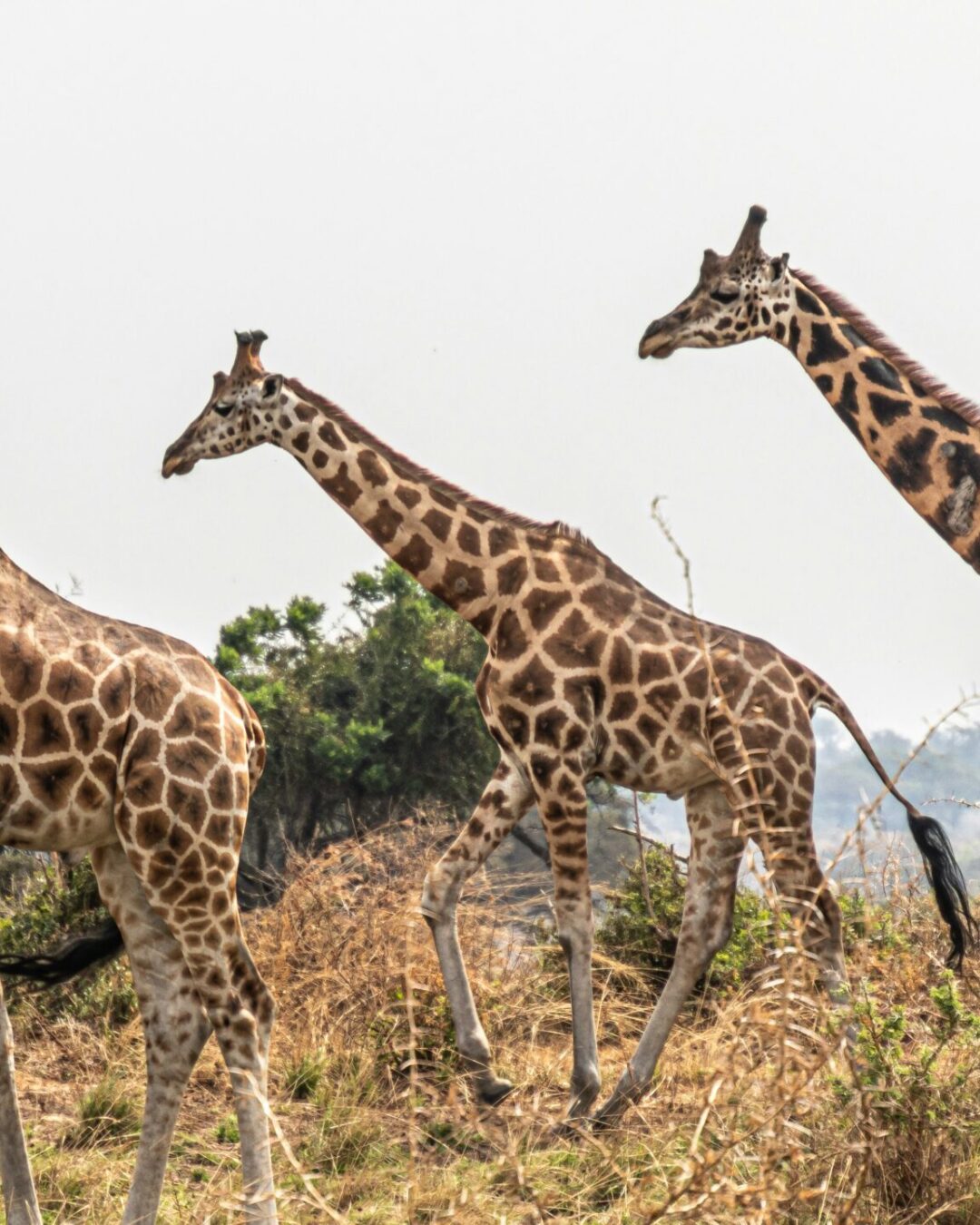
Rothschild’s Giraffe is one of Murchison’s greatest wildlife treasures. Critically endangered globally, the park holds 75 percent of the world’s remaining Rothschild’s giraffe population, making every sighting here of conservation significance as well as aesthetic delight. Their distinctive creamy-white lower legs and widely spaced orange-brown patches make them immediately identifiable, and groups of five to fifteen individuals moving through the acacia woodland in slow, silent procession are among the most beautiful sights the park offers.
Uganda Kob are ubiquitous on the northern bank, grazing across the open plains in herds of dozens to hundreds, their chestnut coats and curving horns catching the morning light beautifully. They are depicted on Uganda’s national coat of arms, and their abundance at Murchison gives the park an atmosphere of teeming prey-base richness that recalls the East African savannahs of earlier decades.
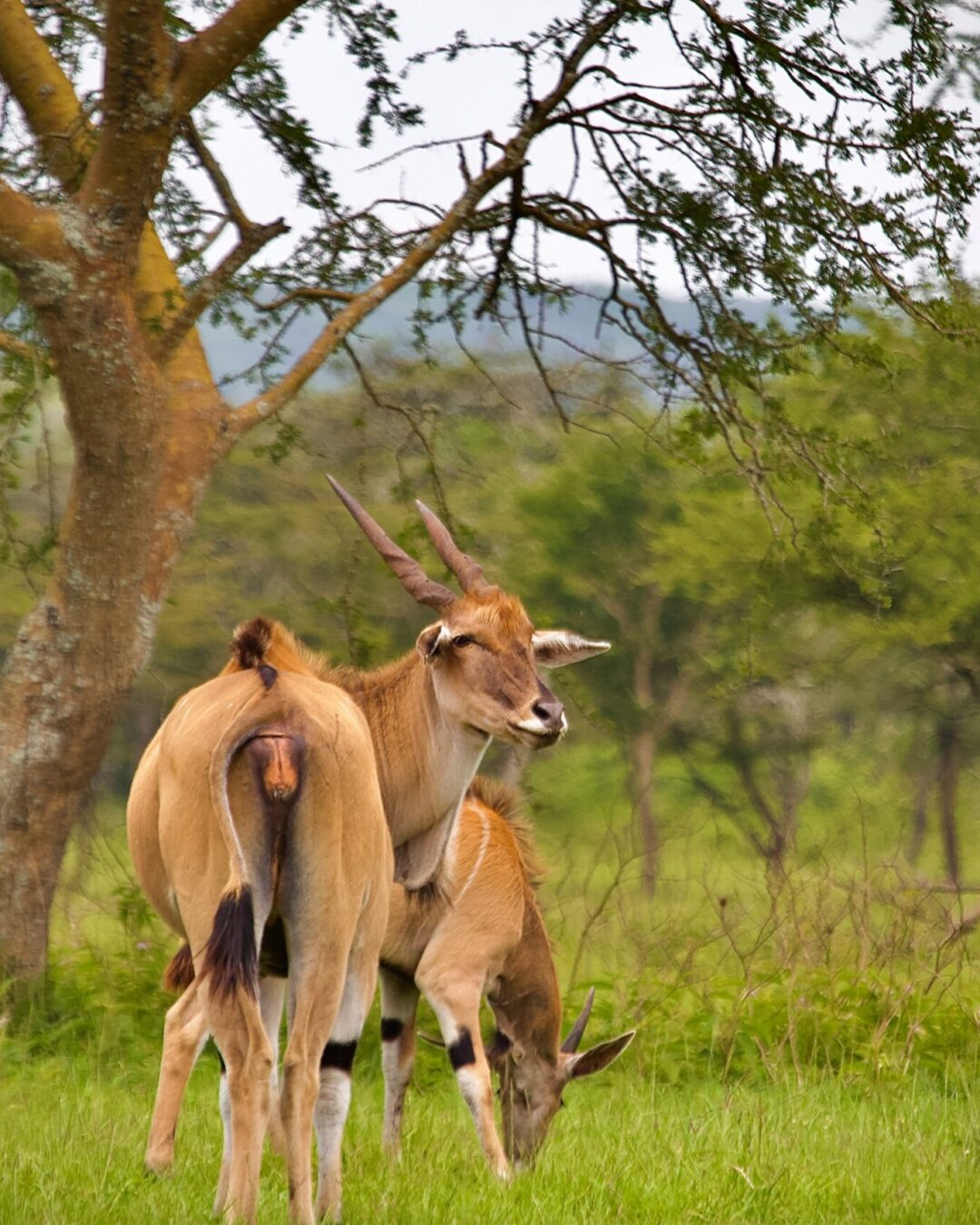
Jackson’s Hartebeest, Oribi, and Waterbuck add variety to the antelope sightings across the northern bank. Olive baboons and vervet monkeys are common in the woodland areas. Warthogs trot across the grassland with their tails raised in characteristic fashion. And the Nile Monitor lizard, sometimes reaching over two metres in length, is a regular and spectacular sight along the river banks during the boat cruise.
Hippos and Nile Crocodiles are present in remarkable numbers along the Victoria Nile, most impressively experienced from the boat rather than the game drive tracks. The estimated 5,000 hippos along the river represent one of the densest concentrations on the continent, and the Nile crocodiles – some of them exceeding five metres in length – basking on every sandbank and shaded inlet of the river are among the largest individuals remaining in East Africa.
Best Time for Big Five Game Viewing in Murchison Falls
Dry Season: December to February and June to September (Recommended)
The dry seasons deliver the finest Big Five game viewing conditions in Murchison Falls. As water sources away from the Victoria Nile diminish, wildlife concentrates along the river in spectacular numbers. Elephants and buffalo herds swell along the northern bank’s Nile floodplain. Lions become more visible on the open, thinning grassland. Leopard encounters along the southern bank woodland are marginally more frequent as dense vegetation reduces. Game drive tracks across the northern bank are in their best condition, and the Nile boat cruise reaches its peak wildlife productivity as animals crowd the river banks. The dry season months also produce the finest quality of light for photography, particularly in the early morning hours. June to September is peak season across Uganda: book lodges and arrange transport well in advance.
Green Season: March to May and October to November
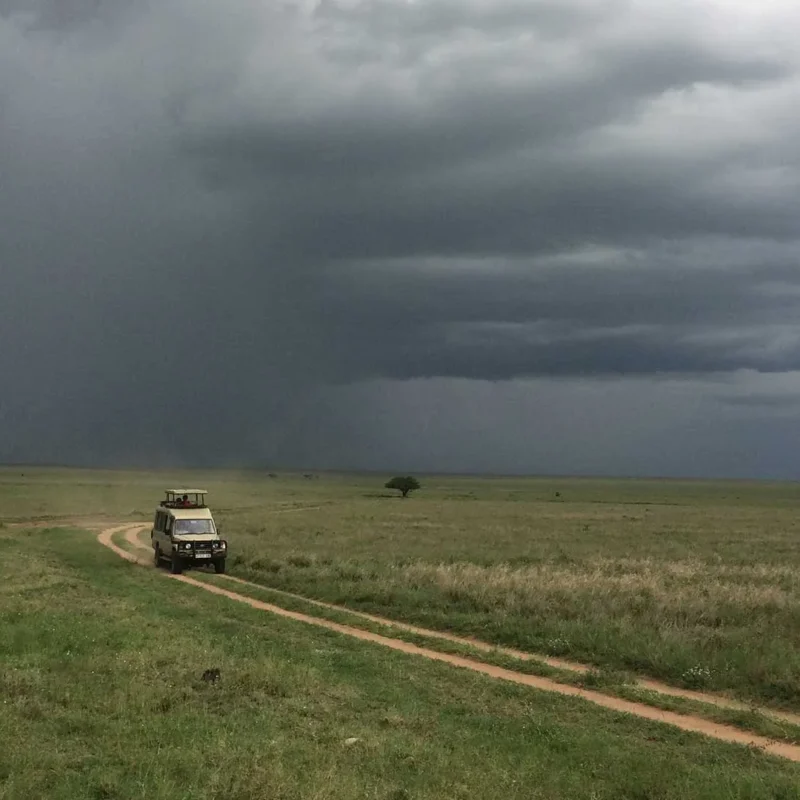
The rains transform Murchison into a lush, dramatically green version of itself. The northern bank grassland fills with new growth, the savannah thickens, and the wildlife disperses more widely across the park as water becomes available everywhere. Game viewing is slightly more challenging in the denser vegetation, but elephant herds, buffalo, and lion prides remain reliably encountered by guests with good guides. The birdwatching reaches its annual peak during the green season, with migratory species arriving from October and the total species count increasing significantly. Some tracks on the northern bank become temporarily impassable during heavy rain and a capable 4WD vehicle is essential. Lodge rates at some properties are lower in the green season, and the park receives fewer visitors.
Year-Round: The Nile boat cruise to the base of Murchison Falls is outstanding in every season. Night game drives are available year-round through relevant lodges. The Ziwa Rhino Sanctuary stop is entirely season-independent and equally rewarding in any month.
Getting to Murchison Falls for a Big Five Safari
By Road via Ziwa Rhino Sanctuary (Recommended)
The most rewarding and logistically satisfying route from Kampala to Murchison Falls for a Big Five safari runs north on the Gulu highway, stopping at Ziwa Rhino Sanctuary approximately two to two and a half hours from Kampala for rhino tracking on foot, before continuing north to the park’s southern entrance at Kichumbanyobo Gate. From the gate, it is a further 30 to 45 minutes to Paraa and the cluster of lodges around the main hub. The total journey from Kampala, including a two to three-hour Ziwa stop, takes approximately six to seven hours. Departing Kampala at 7:00 AM allows for comfortable Ziwa tracking, arrival at the lodge by mid-afternoon, and a late afternoon boat cruise or game drive on the day of arrival.
By Scheduled Domestic Flight
For guests who prefer to fly, scheduled flights operate from Entebbe International Airport to Pakuba Airstrip on the northern bank or Bugungu Airstrip near Paraa on the southern bank. Flight time from Entebbe is approximately one hour and fifteen minutes. Flying directly to Murchison allows for a game drive or boat cruise on the afternoon of arrival, and guests who fly in can incorporate the Ziwa Rhino Sanctuary visit as a road stop on their departure day, driving south from the park to Kampala via Ziwa rather than retracing the same route by air.
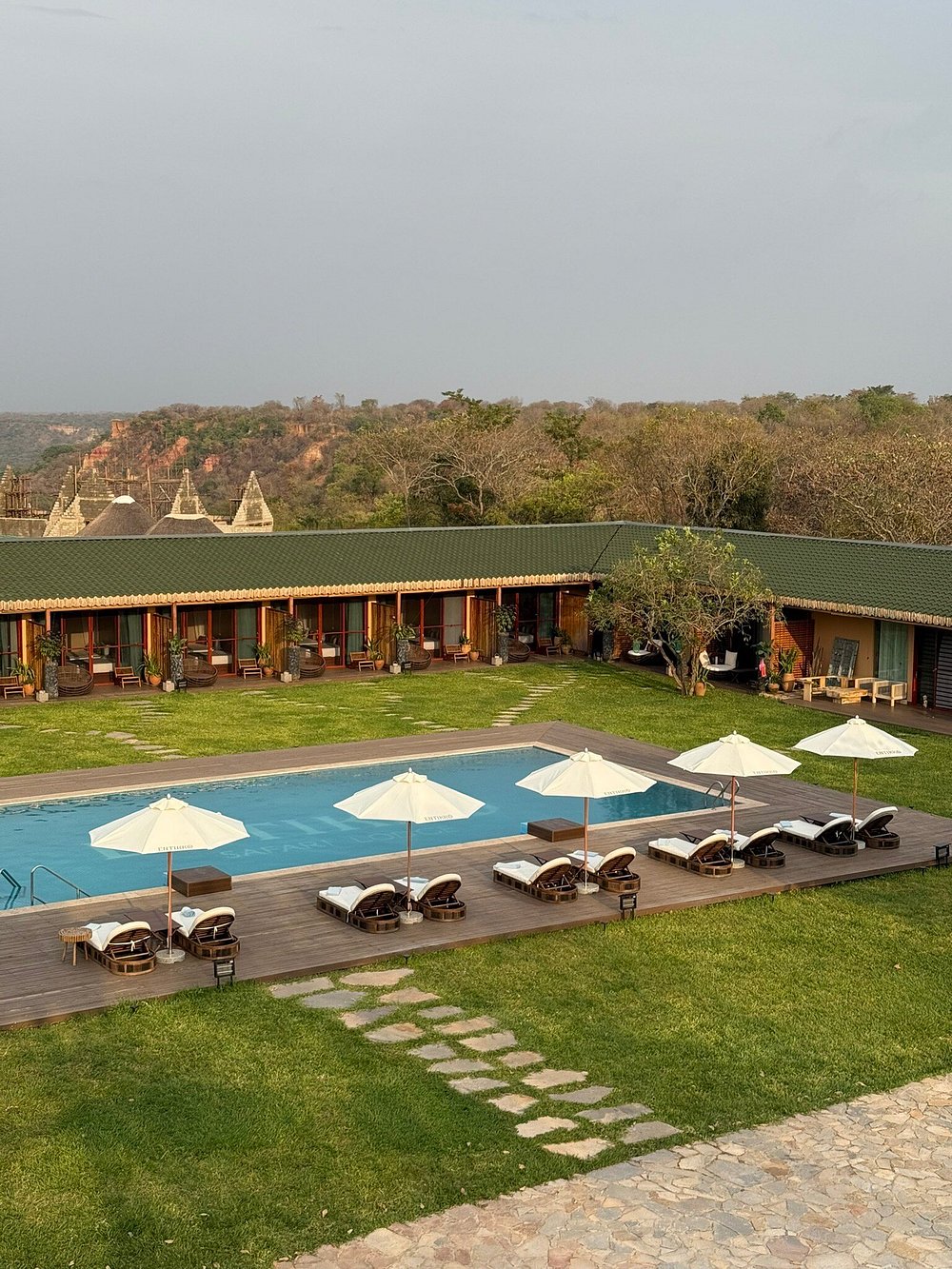
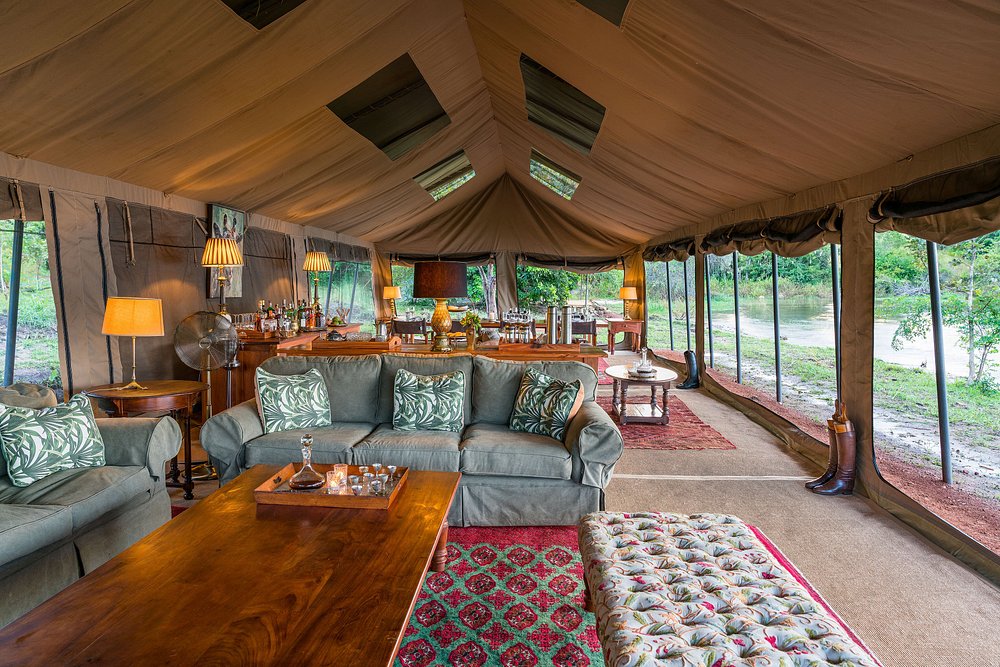
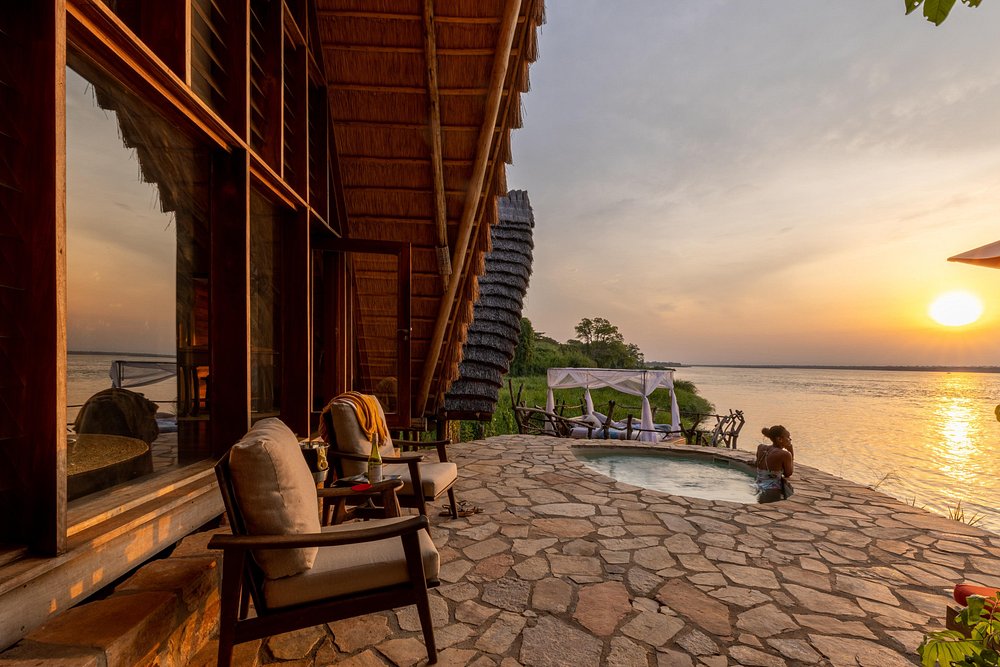
Where To Stay During This Experience
Uganda Travel Advice
How to Extend Your Uganda Safari with a Gorge Walk
How Much Does a Luxury Uganda Safari Cost?
Uganda’s Dry Season : What June to August Really Looks Like
Tracking Chimpanzees in Kyambura Gorge
Is It Worth Visiting Uganda in the Rainy Season?