The Tree-Climbing Lions of Ishasha – Where Uganda’s Lions Rule from the Treetops
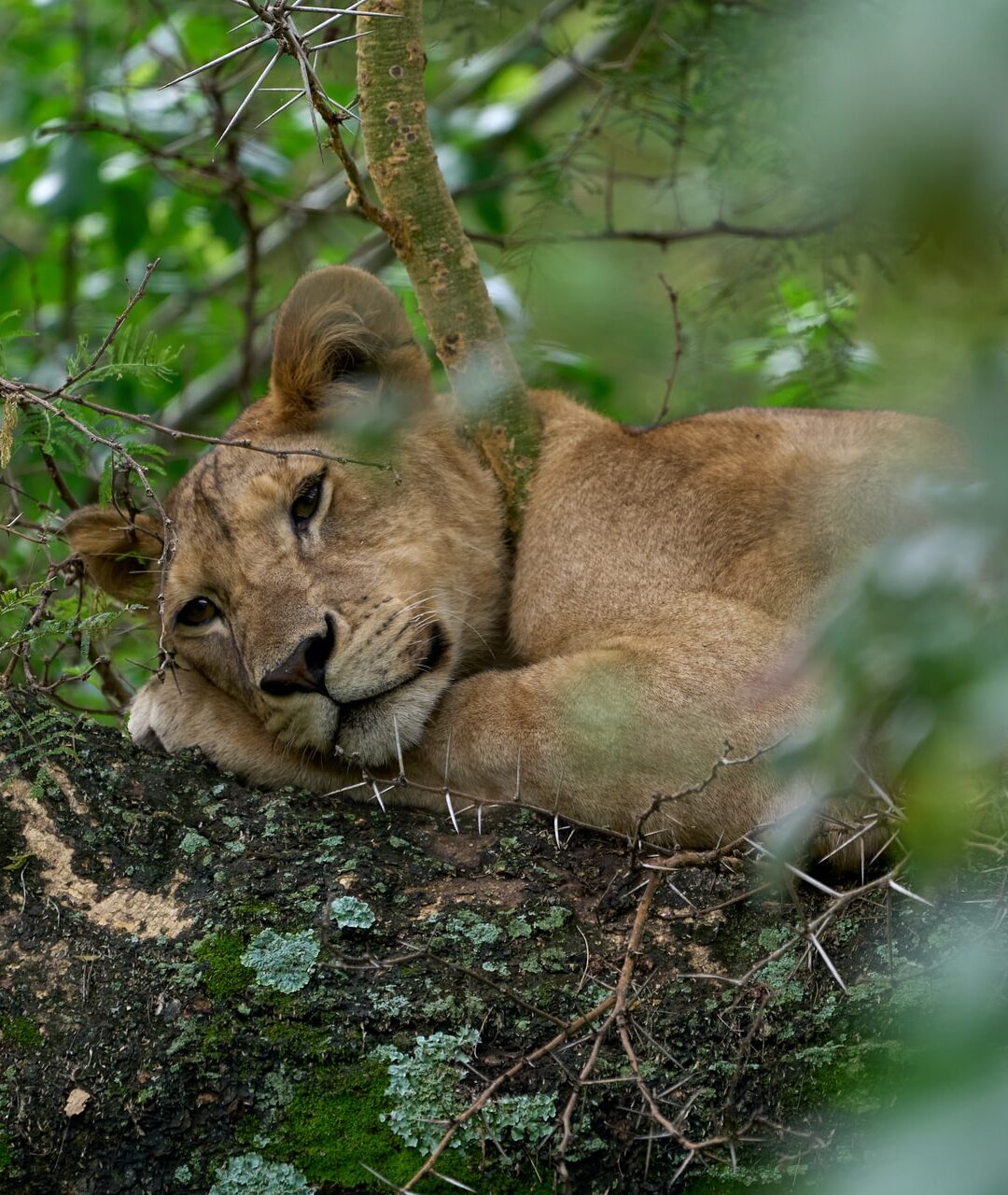
There, draped across the broad horizontal branches of an ancient sycamore fig tree, in a posture of supreme and unhurried ease, is a lion. Not a cub, not an adolescent, but a full-grown adult lion, laid out along a branch five metres above the ground with the open Ishasha plains spreading below and the hills of the Democratic Republic of Congo rising on the horizon beyond the river. Sometimes there are two. This is one of the most extraordinary and rare wildlife spectacles on the continent. And it is found, reliably and consistently, in only one place in East Africa.
Tree‑Climbing Lions of Ishasha
A Complete Guide to The Ishasha Sector: Tree-Climbing Lion Destination in Uganda
Why Ishasha is Unique
Tree-climbing lions are vanishingly rare in the natural world. Across the entirety of Africa, a continent that is home to an estimated 20,000 wild lions, there are only two populations known to climb trees with any regularity and consistency. One is in Lake Manyara National Park in Tanzania. The other is here, in the Ishasha sector of southern Queen Elizabeth National Park in Uganda. Every other lion population on the continent treats trees as obstacles rather than furniture.
This rarity is what makes Ishasha so significant for serious safari travellers. The tree-climbing lion of Ishasha is not simply an impressive predator in an impressive landscape. It is a behavioural phenomenon that has no equivalent anywhere else in East Africa, and that has attracted the attention of wildlife researchers, conservation biologists, and natural history filmmakers for decades. To see it in person is to witness something genuinely singular.
The Ishasha sector sits in the far south of Queen Elizabeth National Park, bordered to the west by the Democratic Republic of Congo and Virunga National Park, and separated from the park’s better-known northern circuit by approximately 110 kilometres of park road and community land. The landscape here is distinctly different from the Mweya Peninsula and Kasenyi Plains that most Queen Elizabeth visitors experience: wide open acacia grassland, lines of tall sycamore fig trees tracing the course of the Ntungwe River across the plains, and a remoteness and quietness that makes game drives in Ishasha feel fundamentally different from the busier northern circuit.
There are no other safari vehicles crowding around the same tree. No distant drone of other engines. Just the sound of the plains, the occasional call of a fish eagle, and a lion looking down at you from above.
Why Do the Ishasha Lions Climb Trees?
This is the question that every visitor asks, and the honest answer is that science has not yet settled on a single definitive explanation. Several compelling theories have been proposed, and it is likely that multiple factors combine to produce and reinforce the behaviour.
Thermal comfort is the most widely cited explanation. The open Ishasha plains can become intensely hot during the middle of the day, and the ground beneath the fig trees radiates heat that makes lying in the shade directly below them uncomfortable. At five or ten metres above the ground, a cooling breeze flows almost constantly, offering the lions a natural and energy-efficient way to regulate their body temperature through the long afternoon rest periods that lions spend up to 20 hours a day engaged in.
Insect avoidance offers a complementary explanation. The Ishasha plains are home to tsetse flies, which bite persistently at ground level but are significantly less active above the grass line. For a lion trying to sleep undisturbed through the hottest hours of the day, the elevation of a tree branch provides meaningful relief from the insects below.
Strategic vantage point is the third major theory, and in many ways the most intuitively satisfying. From five metres above the grassland, a lion in a fig tree has an unobstructed view across the Ishasha plains in every direction. Uganda kob, the primary prey species of the Ishasha prides, graze across these plains in large numbers, and a pride that can monitor their movements from above without being seen at ground level holds a tactical advantage in hunting.
Cultural transmission may be the most important factor of all. Research suggests strongly that tree-climbing in Ishasha is a learned behaviour rather than a genetic adaptation. Cubs observe their mothers climbing trees and copy the behaviour from a young age, meaning that the habit is passed from generation to generation as a cultural practice within these specific prides. This would explain why lions in other hot, insect-rich, prey-abundant environments across Africa do not climb trees: the behaviour simply never started in those populations, or was never transmitted successfully enough to become established.
The wildlife that results from this combination of factors is a pride of lions that genuinely prefer to be in the trees, that climb routinely rather than occasionally, and that can be reliably found on branches rather than on the ground for extended periods during daylight hours. It is, for the safari traveller, an extraordinary gift.
The Lion Population of Ishasha
Four established lion prides live and hunt within the Ishasha sector, with a total population estimated at between 40 and 60 individuals across the prides, including adult males and females, sub-adults, and cubs. The prides are well-known to the Uganda Wildlife Authority rangers and guides who monitor them, and their territories within the sector are understood well enough that experienced guides can locate them reliably even when they have moved since the previous day.
The lion population of Ishasha is a transboundary one. Male lions, excluded from their natal pride by the dominant male at around three to four years of age, have been recorded travelling freely between Uganda and the DRC in search of new territories or prides to join. Lions from Virunga National Park in the DRC have been documented crossing the Ntungwe River and assuming leadership of Ishasha prides, and Ishasha males have made the same journey in reverse. This cross-border movement means that the Ishasha lion population is genetically connected to the broader Virunga lion population, which has important conservation implications for the long-term health of both groups.
Conservation challenges are real and significant. Human-wildlife conflict between the Ishasha prides and cattle-keeping communities on the park boundary has resulted in retaliatory poisoning incidents that have killed multiple lions in recent years. The Wildlife Conservation Society operates an active lion monitoring and conflict mitigation programme in the Ishasha sector, and the revenue generated by tourism to see the tree-climbing lions is directly cited as a motivation for conservation investment in the area. Every visitor who comes to Ishasha to see these lions is contributing, in a concrete and practical way, to the system that is working to keep them alive.
The Game Drive Experience in Ishasha
Game drives in the Ishasha sector are conducted in the early morning and late afternoon, following the classic game drive structure of all Queen Elizabeth safari activities. But the experience in Ishasha has a quality that is entirely its own, shaped by the remoteness of the sector, the openness of the landscape, and the specific nature of what you are looking for.
The primary game drive focus in Ishasha is the Ntungwe River fig tree line, where the ancient sycamore figs that grow along the river course have become the preferred climbing trees of the resident prides. These trees, some of them enormous structures with trunks over a metre in diameter and canopies spreading ten to fifteen metres across, have the wide, low-angled branches that the lions require to climb and rest comfortably. Your guide will know which trees have been used most recently, and the game drive route is structured around finding the current location of the prides and following them through the morning or afternoon.
Finding the lions in the trees is a moment of pure, disproportionate delight that no amount of anticipation fully prepares you for. You are scanning the branches of a large fig tree, following your guide’s pointed finger, and then suddenly the shape resolves: a tail hanging down from a branch, a head resting on a limb, the slow blink of a large amber eye regarding you from above with complete, magnificent indifference. When the entire pride is in the tree, the scene is almost absurdly spectacular.
Morning game drives, departing around 6:30 AM, offer the best light for photography and the highest activity levels. Lions returning from a night of hunting may still be on the move in the early morning, and the golden light on the open plains as the sun rises over the Congolese hills is exceptional.
Afternoon game drives, departing around 4:00 PM, are the most reliable time to find the lions in the trees. After feeding, the prides typically climb to their preferred branches to digest and rest through the hottest hours, and this is when they are most consistently found at height and most relaxed in the presence of vehicles.
Beyond the lions, game drives in Ishasha produce a rewarding range of other wildlife encounters. Uganda kob are present in large, constantly moving herds across the open plains. African buffalo are abundant, sometimes in herds of several hundred. Elephants move through the sector regularly from the Maramagambo Forest to the east. Topi, a beautiful and fast-moving antelope with a distinctive dark saddle marking, is reliably seen across the grassland. Warthogs, bushbuck, waterbuck, and oribi complete a varied antelope list. And hyenas, jackals, and occasionally leopards are encountered by guests who are both patient and fortunate.
The Ishasha River itself, flowing along the park’s western boundary toward Lake Edward, offers excellent wildlife viewing along its banks, with hippos in the deeper pools, crocodiles on the sandbanks, and a variety of waterbirds in the vegetation fringing the water. A short drive to the river during a game circuit adds a riverside dimension to the open-plains experience of the main sector.
Birdwatching in Ishasha
While the tree-climbing lions are Ishasha’s headline attraction, the sector is also a rewarding birdwatching destination in its own right. The combination of open savannah grassland, riverine fig forest, and the forest fringes extending from Maramagambo to the east creates a diverse bird habitat that supports both savannah specialists and forest edge species.
The martial eagle, one of Africa’s largest and most powerful raptors, soars over the Ishasha plains regularly. The lappet-faced vulture, Africa’s largest vulture, is found here alongside white-backed and Rüppell’s griffon vultures that gather at kills. The secretary bird strides through the grassland with its extraordinary deliberate gait. African fish eagles call from the fig trees along the Ntungwe River.
For forest edge species, the Maramagambo forest fringe to the east produces outstanding birding including the African pitta, chocolate-backed kingfisher, and a variety of forest sunbirds and hornbills. The dusky blue flycatcher is a sought-after species along the Ishasha River vegetation. And the open Edward Flats area to the west of the sector provides passage habitat for millions of migratory songbirds, storks, and waders during the October to November migration period, producing some of the most spectacular large-scale bird movement in western Uganda.
The Ishasha Sector Compared to the Northern Queen Elizabeth Circuit
Guests visiting Queen Elizabeth National Park for the first time frequently ask whether they should prioritise the northern circuit around Mweya or the southern Ishasha sector. The honest answer is that they are different enough that ideally, a visit should include both.
The northern circuit, centred on the Mweya Peninsula and Kasenyi Plains, offers the Kazinga Channel boat cruise, higher overall wildlife density, better road infrastructure, and the widest range of luxury accommodation. The Kasenyi Plains produce the best lion sightings outside Ishasha, and the boat cruise is one of Uganda’s most exceptional wildlife experiences.
The Ishasha sector offers something the northern circuit cannot: the tree-climbing lions, the remoteness, the openness of the southern plains, and the visual drama of the Congolese hills across the river. The accommodation is more limited but excellent in character. The game drives are quieter and more private. And the landscape has a different quality from the northern circuit, closer to classical East African savannah, that many experienced safari travellers find deeply rewarding.
Most itineraries spend two nights in Ishasha and two to three nights in the northern circuit, either beginning in the south and driving north or arriving at Mweya and driving south to Ishasha before continuing to Bwindi. Both routes work equally well.
Best Time to See the Tree-Climbing Lions
The tree-climbing lions of Ishasha are present and observable year-round, and there is no month in which a sighting becomes genuinely unlikely. That said, season affects both the ease of finding them and the comfort of the experience in meaningful ways.
Dry Season: June to September and December to February (Recommended)
The dry seasons offer the best conditions for lion sightings in Ishasha. Vegetation on the open plains thins considerably during the dry months, removing the cover that can obscure ground-level wildlife and making it easier to spot lions both in the trees and moving across the grassland. The ground is firm and dry, making game drive tracks navigable across all areas of the sector including the more remote Edward Flats area. Lions tend to use the trees more consistently during the dry season, when ground temperatures are highest. The morning light in the dry season, falling on the tawny plains and the dark-green fig canopy, is outstanding for photography. June to September is peak season for all Uganda national parks – book accommodation and arrange transport well in advance.
Green Season: March to May and October to November
The rains transform the Ishasha plains into a lush, vivid green landscape of exceptional beauty. Uganda kob herds swell as grass quality improves, and the lions remain active and relatively reliably found, though the denser vegetation can make sightings more challenging. The green season is excellent for birding, with large numbers of migratory species passing through the Edward Flats area from October. Some tracks within the sector become difficult in heavy rain and a capable 4WD vehicle is essential. The park is quieter, accommodation is more available, and rates at some lodges are lower. The atmosphere of the misty, rain-softened plains is extraordinary for landscape photography, even if the wildlife photography is more challenging.
Time of Day: Afternoon game drives, between 4:00 PM and 6:30 PM, are the single most reliable time to find lions in the trees, as the prides typically climb after feeding to rest through the hottest part of the afternoon and remain in the branches until the temperature drops. Morning drives offer better light and the possibility of catching lions still active from a night hunt. Many guests who spend two nights in Ishasha do an afternoon drive on arrival day and a full morning drive on the following day, covering both the best photography light and the most reliable tree-climbing viewing window.
Getting to Ishasha
From Kampala and Entebbe
Ishasha is approximately 500 to 520 kilometres from Kampala and 420 kilometres from Entebbe by road, a drive of approximately six hours under good conditions via the main southwestern highway through Masaka, Mbarara, and Bushenyi before turning west toward the park’s southern boundary. The road is well-paved for the majority of the journey, with the final stretch to the Ishasha gate becoming a dirt track that requires a 4WD vehicle, particularly during the rainy season when it can be heavily muddy.
An alternative route from the northern part of Queen Elizabeth National Park crosses the Katunguru Bridge over the Kazinga Channel and follows the park road south through the central sector to Ishasha, approximately two to three hours from Mweya. This route passes through the open savannah of the park’s interior and offers excellent en-route wildlife sightings but is considerably less reliable in wet conditions and requires a knowledgeable guide.
Scheduled flight is available from Entebbe International Airport to Ishasha Airstrip, approximately one hour and fifteen minutes by air. Flights are operated by Aerolink Uganda as scheduled or private charters. Flying directly to Ishasha eliminates the long road journey and allows for an afternoon game drive on the day of arrival.
From Bwindi Impenetrable National Park
The most rewarding and most popular way to incorporate Ishasha into a Uganda itinerary is as a natural stop between gorilla trekking in Bwindi and the northern Queen Elizabeth circuit. The drive from Bwindi’s Rushaga or Nkuringo sectors to Ishasha takes approximately two to three hours on good roads, making it an entirely manageable same-day transfer that allows for an afternoon game drive on arrival. From Ishasha, the drive north to Mweya takes approximately two to three hours through the park interior or around the park boundary.
This Bwindi-Ishasha-Mweya routing is one of the most satisfying and logistically efficient itinerary structures in Uganda, combining three of the country’s most extraordinary wildlife experiences in a single flowing route across the southwest.
Where To Stay During This Experience
Where To See Tree-Climbing Lions
Uganda Travel Advice
Birding in Uganda
Uganda and Rwanda Combined Safari
Is Uganda Safe for International Tourists in 2026?
The Kazinga Channel Boat Safari