Dian Fossey’s Legacy in Rwanda: What Gorillas in the Mist Means for Today’s Travellers
Why Dian Fossey still matters in modern Rwanda safaris
A Rwanda gorilla safari today is highly structured, well protected, and globally famous. What many travellers do not realize is that this entire system exists because of the work of one primatologist: Dian Fossey.
Her research, protection efforts, and advocacy in the Virunga Mountains reshaped how the world understands mountain gorillas. Without her work, gorilla tourism in Rwanda would look very different today, and it is possible the species would have declined much further.
For modern travellers trekking in Volcanoes National Park, Fossey’s legacy is not just history. It is the foundation of every gorilla encounter.
Who Dian Fossey was and why her work was revolutionary
Dian Fossey was an American primatologist who dedicated her life to studying mountain gorillas in the Virunga region. She arrived in the late 1960s and spent years living in the mountains observing gorilla families in the wild.
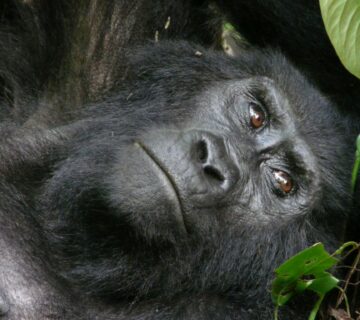
Her research revealed something important. Mountain gorillas were not aggressive, isolated animals as previously believed. They were social, intelligent, and structured family groups with complex behaviour.
This understanding changed global scientific perspectives on great apes.
Fossey also documented the severe threats gorillas faced. Poaching, habitat loss, and human encroachment were rapidly reducing their population. Her work shifted from observation to active protection.
The Karisoke Research Centre and conservation breakthrough
One of Fossey’s most important contributions was the creation of the Karisoke Research Centre in Rwanda’s Volcanoes region.
She established this base between Mount Karisimbi and Mount Bisoke, deep in gorilla territory. From there, she studied gorilla behaviour closely and tracked individual families over long periods.
This long-term research helped scientists understand gorilla social structure, reproduction, and communication.
More importantly, Karisoke became a conservation stronghold. It brought international attention to the survival crisis facing mountain gorillas.
How Gorillas in the Mist shaped global awareness
Fossey’s story reached a global audience through the book Gorillas in the Mist, and later the film adaptation of the same name.
The book documented her fieldwork, discoveries, and struggles to protect gorillas from poaching and habitat destruction. It also highlighted her intense commitment to conservation.
The film brought her story to a wider audience and showed the beauty and vulnerability of mountain gorillas in the Virunga Mountains.
For many travellers today, this book or film is their first introduction to Rwanda’s gorillas. It continues to influence how people imagine gorilla trekking before they arrive.
The transformation from research to tourism
At the time of Fossey’s work, gorilla protection was focused on research and anti-poaching enforcement. Tourism did not exist in the structured form it does today.
After her death in 1985, conservation efforts continued and gradually evolved. Rwanda began to develop controlled gorilla tourism as a way to fund conservation and support local communities.
This shift changed everything. Gorilla trekking became a regulated activity where limited permits are issued each day. Revenue from tourism now directly supports conservation programs and park protection.
What began as research-based protection became a sustainable tourism model.
Volcanoes National Park today: Fossey’s living legacy
Modern Volcanoes National Park is the direct result of decades of conservation work that began with Fossey’s research.
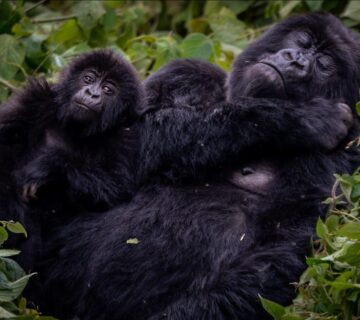
The park now protects multiple habituated gorilla families. Each group is monitored by trackers and conservation teams. Tourism is strictly controlled to minimize stress on the animals.
When travellers trek gorillas today, they are entering a system shaped by years of scientific research and conservation activism.
The park is no longer just a research site. It is a carefully managed ecosystem where tourism, science, and conservation operate together.
Visiting Dian Fossey’s tomb and research site
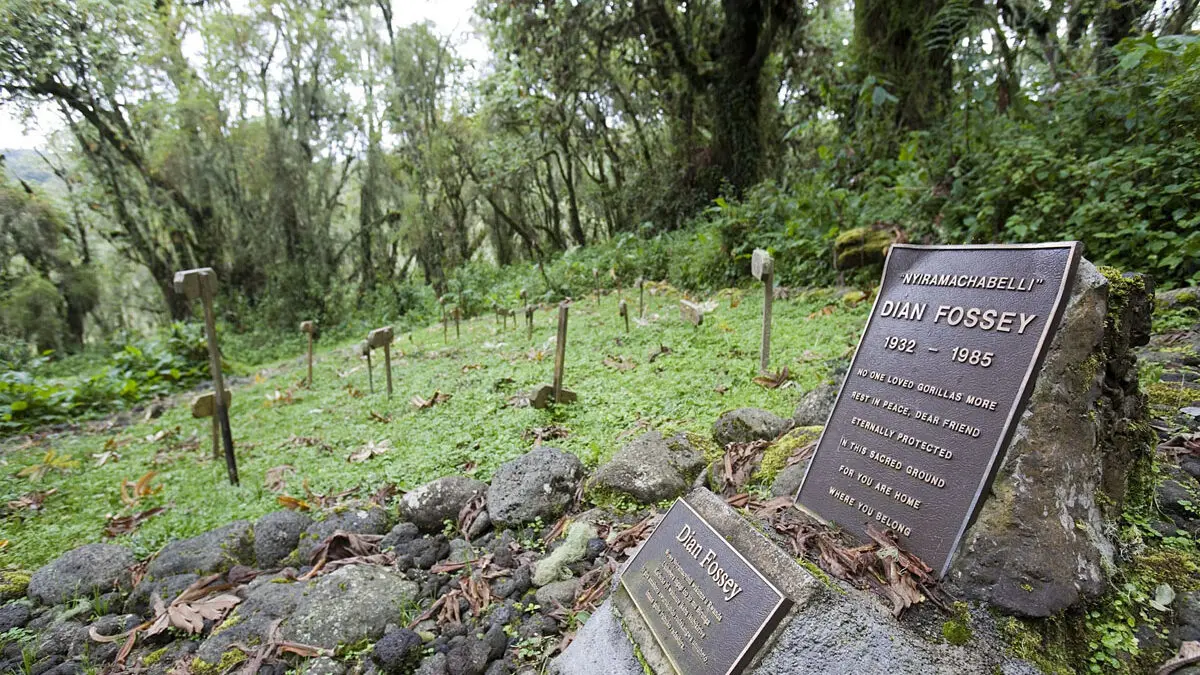
One of the most direct ways travellers connect with her legacy is by visiting her burial site near Volcanoes National Park.
Fossey was buried near her beloved gorillas, close to the research area where she spent much of her life. Her grave is located within the park boundaries.
Some trekking itineraries include a hike to the former Karisoke Research Centre site and Fossey’s grave. This experience adds historical depth to a gorilla safari.
The hike itself passes through forest terrain similar to gorilla trekking routes. It gives travellers a sense of the environment where Fossey lived and worked.
How her legacy shapes today’s gorilla trekking rules
Many rules that guide modern gorilla trekking reflect conservation principles that Fossey strongly advocated.
Limited visitor numbers per gorilla family reduce stress on the animals. Strict viewing distances protect natural behaviour. Time limits ensure minimal disruption.
Health regulations also play a major role. Visitors must maintain distance, avoid contact, and follow hygiene protocols to protect gorillas from human diseases.
These rules are not restrictions without purpose. They are conservation safeguards that preserve the species for future generations.
The connection between tourism revenue and conservation
One of the most important outcomes of Rwanda’s gorilla tourism model is financial sustainability for conservation.
Gorilla permits generate revenue that supports park rangers, anti-poaching patrols, community projects, and research programs.
This system helps ensure that gorilla populations remain protected while local communities benefit economically.
Fossey’s original mission focused on protection through direct intervention. Today, protection continues through a combination of science, tourism, and community involvement.
Why modern travellers should understand this history
Many travellers arrive in Rwanda focused only on the gorilla encounter itself. While the experience is powerful on its own, understanding Fossey’s legacy adds context.
It explains why the encounter is so structured. It explains why permits are expensive and limited. It explains why conservation rules are strict.
Without this background, gorilla trekking can feel like a luxury wildlife activity. With it, the experience becomes part of a larger conservation story.
Common misunderstanding: romanticizing gorilla conservation
Films and books often present gorilla conservation as a simple heroic story. In reality, it involved conflict, political challenges, and long-term institutional change.
Fossey’s work included both scientific discovery and aggressive anti-poaching efforts. The conservation landscape was complex and often dangerous.
Modern tourism systems are the result of decades of evolution, not a single breakthrough moment.
Understanding this helps travellers appreciate the structure behind today’s safaris.
How Fossey’s legacy connects to luxury safaris today
Luxury gorilla safaris in Rwanda are often associated with high-end lodges, private guides, and curated experiences. However, the foundation of this luxury ecosystem is conservation infrastructure.
Without strong protection systems, gorilla tourism would not exist at its current level.
Every luxury safari in Volcanoes National Park operates within boundaries established through decades of conservation work.
This means luxury travel and conservation are directly connected, not separate concepts.
The emotional dimension of gorilla trekking
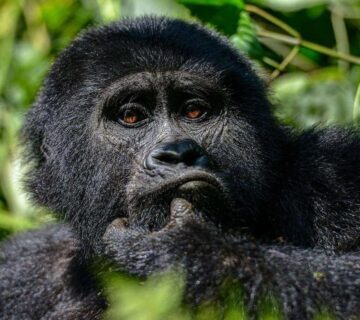
For many travellers, encountering mountain gorillas is an emotional experience. The physical closeness, human-like expressions, and family interactions create strong reactions.
Knowing Fossey’s story often intensifies this emotional response. Travellers recognize that what they are seeing survived because of long-term protection efforts.
The experience becomes more than wildlife viewing. It becomes a moment of connection between past conservation work and present survival.
what Fossey’s legacy means today
Dian Fossey’s legacy is not just historical background for Rwanda. It is the foundation of modern gorilla tourism in Volcanoes National Park.
Her research changed global understanding of mountain gorillas. Her conservation work helped bring international attention to their survival. Her legacy directly influenced the creation of structured, sustainable gorilla trekking.
For today’s travellers, especially those on luxury safaris, understanding this history adds depth to the experience.
Gorilla trekking is not just an exclusive wildlife activity. It is the result of decades of conservation effort, scientific research, and evolving tourism systems.
When you stand in front of a mountain gorilla in Rwanda, you are not only witnessing wildlife. You are also experiencing the outcome of a conservation story that began with Dian Fossey in the Virunga Mountains.
Start Planning Your Next Trip To Africa
If you can picture yourself in one—or several—of these exceptional retreats, the next move is simple. We design fully tailored African safaris that bring these experiences together seamlessly, from private gorilla encounters to luxury lodges in the heart of the wild.
Every detail is carefully planned, so your journey feels effortless from start to finish. Reach out in whichever way suits you best, and let’s begin crafting your safari.
Start Planning