How Tourism Funds Tanzania’s Conservation: The Economics Behind the Park Fees
Tanzania’s safari industry is often described in romantic terms: vast plains, migrating herds, and untouched wilderness. But behind the experience is a structured economic system where tourism is not just an activity—it is the financial backbone of conservation.
National parks like the Serengeti National Park are not self-sustaining landscapes. They are actively managed ecosystems funded largely through tourism revenue, especially park fees.
Understanding where your money goes changes how you see a safari. You are not just paying for access. You are directly contributing to the survival of the system you are visiting.
The Core Idea: Conservation Must Be Funded
Wildlife conservation at scale is expensive.
Protected areas require:
anti-poaching patrols
ranger salaries
vehicle fleets and fuel
air surveillance in large ecosystems
habitat monitoring and research
infrastructure maintenance (roads, gates, airstrips)
Without funding, these systems collapse quickly. Tourism fees exist to ensure they do not.
Tanzania has one of the most structured conservation funding models in Africa, where visitor fees are reinvested into park operations.
What Park Fees Actually Cover
When you pay entry fees into parks like Serengeti or Ngorongoro, the money does not disappear into a general government pool. It is allocated to specific conservation and operational needs.
A significant portion goes toward:
park ranger deployment and salaries
anti-poaching operations and intelligence systems
wildlife monitoring and ecological research
maintenance of park roads and infrastructure
administration of protected areas
In practical terms, your entry fee helps keep the ecosystem functioning every single day.
The Serengeti as a Funding Model
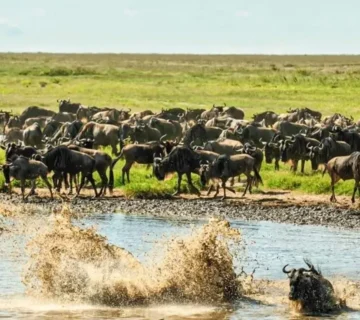
The Serengeti ecosystem is one of the most expensive landscapes in Africa to manage due to its size and ecological complexity.
Inside the Serengeti National Park, revenue generated from tourism plays a direct role in:
protecting migration corridors
monitoring predator populations
maintaining air and ground patrol systems
supporting scientific research into long-term ecosystem health
Without this funding, large-scale systems like the Great Migration would be far more vulnerable to illegal hunting, habitat pressure, and unmanaged human expansion.
Tourism as a Conservation Tool, Not Just an Industry
In Tanzania, tourism is intentionally designed as a conservation strategy.
Instead of relying solely on external aid or government funding, parks are structured so that:
visitors fund protection
protection preserves wildlife
wildlife attracts more visitors
This creates a self-reinforcing cycle where conservation and tourism are directly linked.
The system only works if tourism remains active and well-managed.
How Revenue Flows Through the System
Park fees are collected at entry points and distributed through national park authorities and conservation bodies.
This funding is then used to maintain operational capacity across multiple parks, not just the one where fees were collected.
This is important because ecosystems are interconnected. The Serengeti does not function in isolation from Ngorongoro or adjacent reserves.
Revenue distribution supports a broader ecological network rather than a single site.
Why Fees Are Higher in Iconic Parks
High-profile parks like Serengeti and Ngorongoro have higher entry fees because their operational demands are significantly greater.
These parks require:
larger ranger networks due to size
more intensive anti-poaching coverage
constant monitoring of high-value wildlife populations
infrastructure capable of supporting heavy tourist traffic
The pricing reflects the cost of maintaining globally significant ecosystems at scale.
The Role of Concessions and Lodges
Beyond park entry fees, tourism also funds conservation through concession agreements with lodges and camps.
Operators who run properties inside or near protected areas pay fees and agreements that contribute to conservation financing.
This means even luxury safari lodges are indirectly part of the funding system that supports wildlife protection.
Anti-Poaching: The Direct Impact of Tourism Money
One of the most critical uses of tourism revenue is anti-poaching enforcement.
This includes:
on-the-ground ranger patrols
surveillance systems across large ecosystems
intelligence networks to prevent illegal hunting
rapid response teams for wildlife protection
Without consistent funding, these systems cannot operate at the scale required for landscapes like the Serengeti.
Why Your Safari Has a Conservation Value
When you visit Tanzania, your presence has an economic impact beyond personal experience.
Every park fee contributes to:
keeping migration corridors protected
maintaining predator-prey balance
supporting endangered species monitoring
funding long-term ecological stability
This is why Tanzania’s tourism model is often described as “conservation through visitation.”
The Balance Between Tourism and Protection
There is an important balance in this system.
Too little tourism means insufficient funding for conservation.
Too much unmanaged tourism can stress ecosystems.
Tanzania’s approach focuses on regulated access—controlling visitor numbers, maintaining strict park rules, and ensuring revenue directly supports protection.
The goal is not maximum tourism. It is sustainable tourism.
Insight
Tourism in Tanzania is not separate from conservation—it is the financial engine that makes it possible.
Inside ecosystems like the Serengeti National Park, park fees directly support ranger operations, anti-poaching systems, ecological research, and infrastructure that keeps the entire system functioning.
What you pay at the gate is not just an entry fee. It is a contribution to the ongoing survival of one of the most important wildlife landscapes on Earth.
In simple terms: every safari visitor is not just observing conservation—they are helping fund it.
Start Planning Your Next Trip To Africa
If you can picture yourself in one—or several—of these exceptional retreats, the next move is simple. We design fully tailored African safaris that bring these experiences together seamlessly, from private gorilla encounters to luxury lodges in the heart of the wild.
Every detail is carefully planned, so your journey feels effortless from start to finish. Reach out in whichever way suits you best, and let’s begin crafting your safari.
Start Planning