How to Plan a Tanzania Safari Without Seeing Another Tourist: The Exclusive Circuit
A Tanzania safari does not have to mean queues of vehicles at sightings, crowded viewpoints, or competing for space around wildlife. While the northern circuit is famous and well-developed, it also concentrates most of the traffic. If your goal is privacy, space, and a more exclusive wilderness experience, you need to think differently about routing, timing, and park selection.
The key is not avoiding Tanzania—it is choosing the right parts of Tanzania.
The most effective strategy is combining remote parks like Ruaha National Park and Nyerere National Park with carefully timed visits to more popular ecosystems such as the Serengeti National Park during lower-density periods or less-visited sectors.
This is what creates a true “exclusive circuit.”
Understanding Why Crowds Form in Tanzania Safaris
Most safari congestion in Tanzania is not random. It is concentrated in a few predictable areas.
The northern circuit attracts the majority of travellers because it offers classic safari icons in a compact route: Serengeti, Ngorongoro Crater, and nearby parks. This combination is logistically efficient, which is exactly why it becomes busy.
Within these areas, crowds tend to form around:
- High-density predator sightings
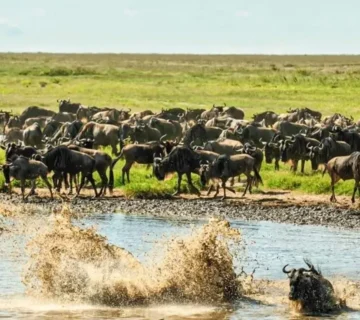
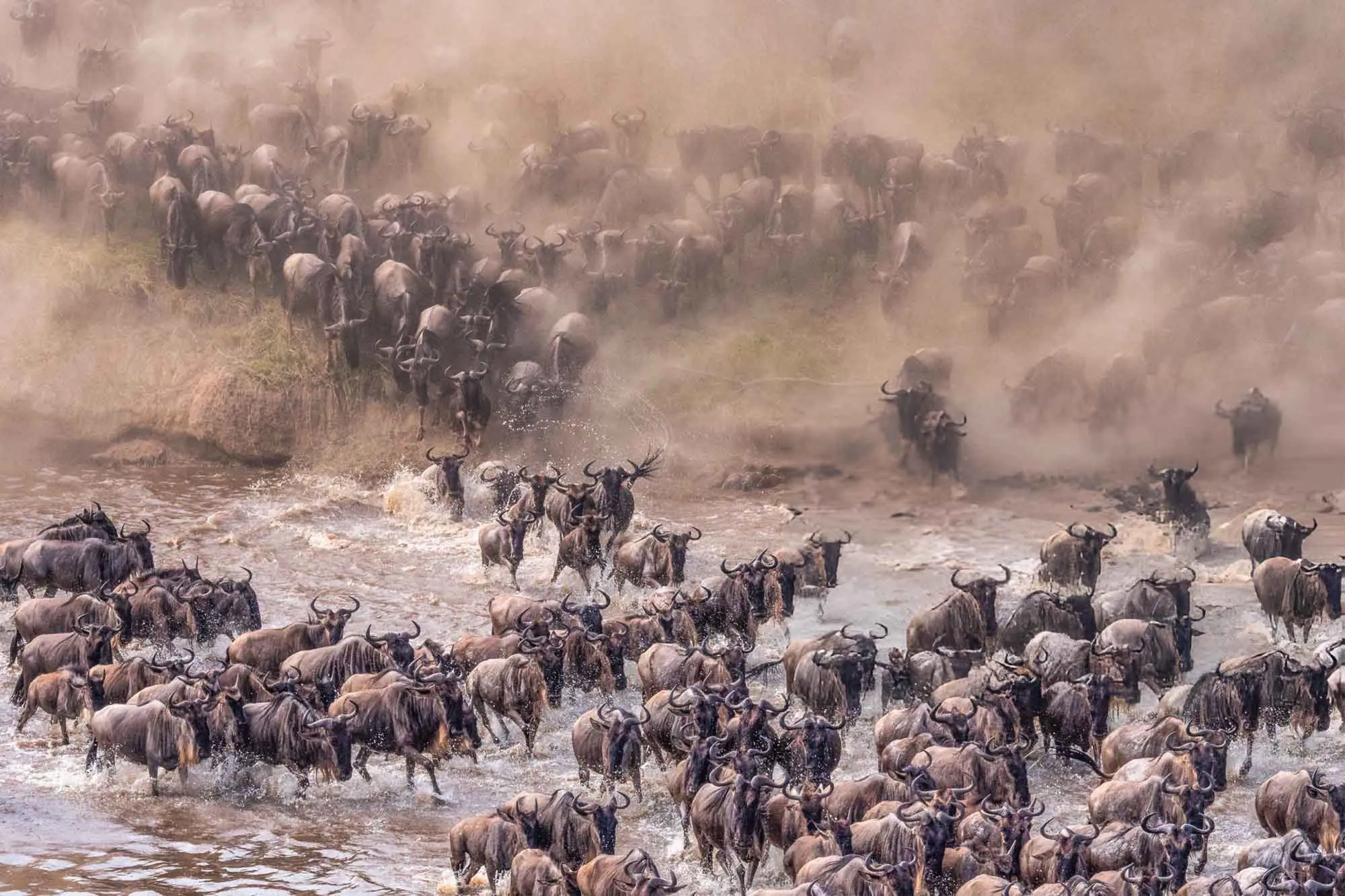
- Migration river crossings
- Crater floor game loops in Ngorongoro
The issue is not the country itself, but overlapping visitor patterns in the same locations at the same time.
Avoiding this requires shifting both geography and timing.
The First Principle: Go South or West for Space
If exclusivity is your priority, the biggest decision is moving away from the northern circuit entirely or reducing time spent there.
Southern Tanzania offers a completely different safari environment. Parks like Ruaha and Nyerere are vast, remote, and significantly less visited. In these ecosystems, you can drive for long periods without encountering another safari vehicle.
In Ruaha National Park, the landscape is rugged and expansive, with wildlife spread across large territories. The result is a safari experience defined by space rather than density.
In Nyerere National Park, river systems and floodplains create a different kind of isolation. Boat safaris and game drives often take place without seeing other visitors for hours or even days.
These two parks form the backbone of a low-crowd safari circuit.
The Second Principle: Avoid Peak Migration Pressure Points
The Serengeti is not always crowded—but certain zones and seasons are heavily visited.
The most congested periods typically occur around river crossings in the northern Serengeti and during peak migration movement windows when large numbers of operators converge in the same locations.
If you still want to include the Serengeti in an exclusive itinerary, the strategy is simple: avoid peak crossing zones or choose less-visited sectors.
The central Serengeti can offer a more balanced experience, especially outside peak migration pressure. While still popular, it is large enough to distribute vehicles more effectively than narrow river crossing corridors.
The Third Principle: Time Your Safari Away From Peak Season
Seasonality plays a major role in crowd levels.
The dry season, especially mid-year months, tends to attract the highest number of visitors because wildlife visibility is at its peak and migration events are most predictable.
The green season, by contrast, offers a naturally quieter experience. Fewer travellers, lower lodge occupancy, and more dispersed wildlife all contribute to reduced congestion.
Travel during shoulder or green periods does not reduce wildlife quality—it changes the experience to one of space and solitude.
The Fourth Principle: Choose Private or Low-Density Concessions
Within and around major parks, private concessions and low-density areas can dramatically change your safari experience.
These areas limit the number of vehicles allowed and often provide more flexible guiding rules. The result is more time at sightings and fewer interruptions from other vehicles.
While Tanzania has fewer private concession-style areas compared to countries like Kenya, certain regions and lodges still offer semi-exclusive access models, especially in southern circuits and remote parts of the Serengeti ecosystem.
The Fifth Principle: Stay Longer in Fewer Places
A major mistake that creates unnecessary exposure to other tourists is trying to cover too much ground in too little time.
Short stays force travellers into the same high-density areas at the same times as everyone else. Longer stays allow guides to move away from pressure zones and explore quieter regions.
For example, instead of one or two nights in multiple parks, a more exclusive itinerary might include:
- Several nights in Ruaha or Nyerere
- Extended time in a single Serengeti sector
- Reduced movement between lodges
This approach reduces overlap with peak vehicle clusters.
The Serengeti Reality: Exclusivity Exists, But Not Everywhere
The Serengeti National Park cannot be described as “empty,” but it is often misunderstood.
It is vast enough that exclusivity is possible, but only if you avoid predictable bottlenecks. Certain areas, especially near major migration events or central lodge hubs, will always have more vehicles.
However, in less-visited corners or during lower-density periods, it is entirely possible to experience long stretches of game drives with minimal or no other vehicles in sight.
The difference is not the park—it is where and when inside the park you are located.
Ngorongoro: High Density, Low Flexibility
The Ngorongoro Crater is one of the most wildlife-rich areas in Africa, but it is not compatible with a low-tourist safari strategy.
The crater floor is small, and all vehicles follow similar loops. This naturally creates concentration around key sightings.
If exclusivity is a priority, Ngorongoro is the least flexible part of the northern circuit and should either be visited briefly or replaced with more remote ecosystems.
The Ideal “Exclusive Circuit” Structure
A well-designed low-crowd itinerary typically shifts the geographic balance of the country.
Instead of focusing on the northern triangle alone, the structure prioritizes:
Southern parks for isolation and space
Selective northern exposure for iconic wildlife
Longer stays in fewer locations
Strategic seasonal timing
This combination creates a safari that feels private without sacrificing wildlife quality.
What True Exclusivity Actually Feels Like
An exclusive safari in Tanzania is not about luxury lodges alone. It is about environmental silence.
It means:
- Not sharing sightings with multiple vehicles
- Spending extended time alone with wildlife
- Driving for long periods without encountering other safari traffic
- Experiencing natural soundscapes without engine noise
This is most consistently achieved in southern Tanzania, not in heavily visited northern circuits.
Insight
Avoiding tourist crowds in Tanzania is not about avoiding the country—it is about understanding its structure.
The northern circuit offers density, predictability, and iconic experiences, but it also concentrates visitors. The southern and western regions offer space, privacy, and slower safari rhythms.
The most exclusive safaris are not the ones that try to see everything. They are the ones that choose where not to go just as carefully as where to go.
When planned correctly, Tanzania can shift from a high-traffic safari destination into one of Africa’s most private and immersive wilderness experiences.
Start Planning Your Next Trip To Africa
If you can picture yourself in one—or several—of these exceptional retreats, the next move is simple. We design fully tailored African safaris that bring these experiences together seamlessly, from private gorilla encounters to luxury lodges in the heart of the wild.
Every detail is carefully planned, so your journey feels effortless from start to finish. Reach out in whichever way suits you best, and let’s begin crafting your safari.
Start Planning