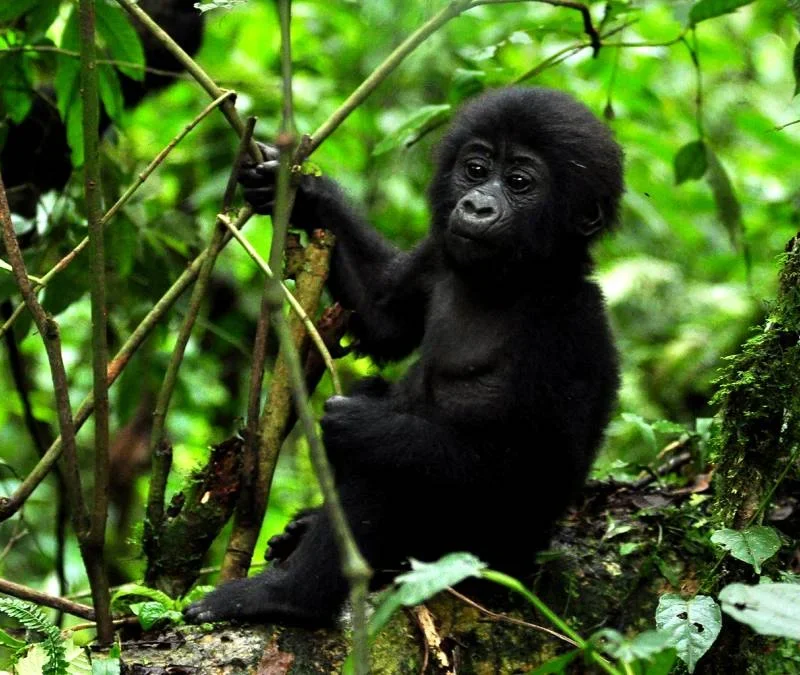
Murchison Falls National Park
Uganda’s Greatest Wildlife Wilderness
Location: Northwestern Uganda, where the Victoria Nile cuts through the northern rim of the Albertine Rift.
Murchison Falls is Uganda’s largest national park, covering approximately 3,893 square kilometres of open savannah, woodland and riverine forest along the banks of the Victoria Nile. It is named after one of the most dramatic and powerful waterfalls in the world: a point where the entire force of the Nile squeezes through a narrow 7-metre gorge and explodes downward in a roaring curtain of white water.
But Murchison is more than just a waterfall. The park’s northern bank is Big Five territory: lions, leopards, elephants, buffalos and giraffes roam these vast open plains in big numbers. Rhinos, once extinct in Uganda, are now being successfully reintroduced at the nearby Ziwa Rhino Sanctuary, which many guests combine with their Murchison visit. The boat cruise to the base of Murchison Falls is one of Uganda’s best experiences, a journey up the Nile where hippos laze in the shallows, Nile crocodiles bask on sandbanks and elephants wade at the water’s edge.
Murchison Falls National Park
Murchison Falls | Nile Boat Cruise | Game Drives & Big Game | Rothschild’s Giraffes & Wildlife of Murchison | Chimpanzee Trekking in Budongo Forest | Birdwatching in the Nile Delta | Ziwa Rhino Sanctuary
Murchison Falls is not just a national park. It is an experience that stays with you.
Located in northwestern Uganda, Murchison Falls is Uganda’s largest and oldest national park, covering approximately 3,840 square kilometres of spectacular and varied wilderness. First gazetted as a game reserve in 1926 and elevated to national park status in 1952, it is one of the oldest protected areas in East Africa. Together with the adjacent Bugungu Wildlife Reserve and Karuma Wildlife Reserve, it forms the vast Murchison Falls Conservation Area over 5,000 square kilometres of protected wilderness in total.
The Victoria Nile bisects the park from east to west for approximately 115 kilometres on its journey from Lake Victoria to Lake Albert, and this river is everything. It is the engine of the ecosystem, the engine of the landscape, and the setting for some of the most unforgettable safari experiences Uganda has to offer. Winston Churchill came here. Theodore Roosevelt came here. Ernest Hemingway survived two plane crashes in this park in 1954 and kept coming back. The wildlife that drew them lions, elephants, Rothschild’s giraffes, hippos, crocodiles, and the rare and magnificent shoebill stork is still here, and it is extraordinary.
About Murchison Falls National Park
The park is divided by the Victoria Nile into two fundamentally different landscapes, each with its own character and its own wildlife experience.
The northern bank is open, palm-studded savannah and acacia woodland wide horizons, golden grassland, and the kind of game viewing that defined the East African safari tradition. Lions patrol the grassland in prides. Rothschild’s giraffes move in silent, elegant processions through the acacia trees. Massive elephant herds browse at the river’s edge. Uganda kob, Jackson’s hartebeest, oribi, waterbuck, and buffalo graze across the open plains in their thousands. This is big game country in the truest sense and it is one of only a handful of destinations in Uganda where four of the Big Five can be encountered in a single game drive.
The southern bank is denser, more heavily wooded, and home to a completely different set of experiences access to the thundering falls themselves, chimpanzee trekking in the magnificent Budongo Forest Reserve, and the gentler, more contemplative landscapes of the Nile’s southern shore.
The park supports 144 mammal species and over 556 bird species including Uganda’s largest elephant population, more than 70 lions across several prides, large populations of Nile crocodiles and hippos, and 75% of the world’s remaining Rothschild’s giraffe. Rhinos were historically part of Murchison’s wildlife but were lost to poaching; their return is now underway at the Ziwa Rhino Sanctuary, a deeply important conservation story just south of the park.
Murchison Falls – The Waterfall
At the heart of the park, and at the heart of every visit to it, is the falls itself. The Victoria Nile, one of the world’s great rivers, draining the entire Lake Victoria basin is forced through a gap in the Rift Valley escarpment just seven metres wide, and the result is one of the most powerful and dramatic waterfalls on earth. The entire volume of the Nile, compressed into that narrow rocky gorge, explodes downward into the pool below known as the Devil’s Cauldron in a roar of white water and perpetual mist that hangs in the air and catches the light in a permanent rainbow.
The falls can be experienced in two ways, and the two are so different from each other that most guests do both.
From the base, reached by boat along the Nile from Paraa (see Nile Boat Cruise below), the approach is gradual the sound building slowly as you move upriver until the full spectacle comes into view and fills your entire field of vision. Standing at the base, looking up at the full force of the Nile falling toward you, is genuinely overwhelming.
From the top, reached by a short but steep hike up from the river to the rim of the gorge, you stand at the very edge of the falls and look down into the Devil’s Cauldron the full force of the river thundering past your feet, the mist rising around you, and a rainbow hanging permanently in the spray below. It is one of those moments where no photograph does justice to the sensation of being there. The hike takes approximately one hour and can be combined on the same day as the boat cruise.
Nile Boat Cruise to the Base of Murchison Falls
The boat cruise along the Victoria Nile to the base of Murchison Falls is one of Uganda’s most iconic wildlife experiences and one of the great boat safaris of Africa. Setting out from the Paraa jetty on the southern bank, the three-hour round trip takes you slowly upriver through some of the most wildlife-rich water on the continent.
Hippo pods are a near-constant presence lounging in the shallows, surfacing alongside the boat, bellowing across the river in the golden morning light. Enormous Nile crocodiles bask on every sandbank, occasionally sliding into the water as the boat passes. Elephants and Rothschild’s giraffes come to the water’s edge to drink. Buffalo herds cool themselves in the shallows. And the birdlife along the riverbanks is spectacular, African fish eagles calling from overhanging trees, Goliath herons standing motionless at the water’s edge, saddle-billed storks striding through the shallows, pied kingfishers hovering above the current, and dozens of other waterbird species lining every bend of the river.
As you approach the falls, the roar builds steadily felt as much as heard until the gorge comes into view and the full power of the Nile exploding through that seven-metre gap becomes completely, breathtakingly overwhelming.
Boat cruises depart from the Paraa jetty in the morning and afternoon. The morning departure catches the best wildlife activity and the finest light on the river. A half-day that combines the boat cruise with the hike to the top of the falls is one of the finest half-days in Uganda.
Game Drives & Big Game on the North Bank
Game drives in Murchison Falls are conducted on the park’s northern bank reached from the southern lodges via the Paraa Vehicle Ferry, a motorised pontoon that crosses the Nile every few hours. The crossing itself is a small adventure: scanning the banks for wildlife as you drift across the river, with hippos surfacing alongside and fish eagles circling overhead.
On the northern bank, the open savannah and acacia woodland of the Buligi area and the Victoria Nile delta provide some of the finest and most varied game viewing in Uganda. Game drives here can produce extraordinary encounters across a remarkable range of species, often within a single morning outing.
Lions are a reliable sighting on the northern bank, where several prides hunt across the open grassland and rest in the shade of acacia trees through the heat of the day. Murchison’s lion population over 70 individuals across multiple prides is one of Uganda’s largest, and this park gives consistently better lion sightings than almost anywhere else in the country.
Leopards, naturally more elusive, are encountered in the dappled woodland edges most reliably on early morning and evening drives, or during night game drives where available.
Elephants are present in exceptional numbers. Murchison Falls holds Uganda’s largest elephant population, and encounters on the northern bank frequently involve large herds, bulls sparring at the water’s edge, family groups moving through the acacia in slow, purposeful processions, young calves keeping close to their mothers in the dust and heat.
Buffalos are ubiquitous on the northern bank, often seen in enormous herds of several hundred animals, a spectacular sight on the open plain.
Uganda kob, Jackson’s hartebeest, oribi, and waterbuck graze across the grassland in large numbers, forming the prey base that sustains the park’s predator population and creating a landscape of constant, layered wildlife activity.
Game drives are best conducted at dawn when the light is golden, the air cool, and the animals at their most active and again in the late afternoon before dusk. A full day on the northern bank, combining a morning and afternoon game drive with lunch at a riverside picnic site, is one of the most rewarding ways to spend a day in Murchison Falls.
Rothschild’s Giraffes
Of all Murchison Falls’ extraordinary wildlife, the Rothschild’s giraffe holds a special place both for its visual magnificence and for the remarkable conservation story behind it.
The Rothschild’s giraffe is one of the most endangered giraffe subspecies in the world. Once widespread across East Africa, its range has contracted dramatically, and today a remarkable 75% of the world’s remaining Rothschild’s giraffe population lives in Murchison Falls National Park. The park has become, effectively, the global stronghold for this subspecies and seeing them here, moving in slow elegant processions through the acacia woodland against the backdrop of the northern plains, carries an added weight of significance.
Rothschild’s giraffes are distinguished from other subspecies by their creamy white lower legs appearing as though they are wearing stockings and by the orange-brown patches on their bodies that are slightly more defined and widely spaced than those of the more common Masai giraffe. They are magnificent animals, and in Murchison Falls they are commonly seen in groups of five to fifteen individuals, frequently near the river and along the tree lines of the Buligi area.
Beyond the Rothschild’s giraffe, Murchison’s northern bank supports one of Uganda’s most complete assemblages of savannah wildlife. Spotted hyenas are regularly encountered, particularly on dawn and dusk drives. Olive baboons and vervet monkeys are abundant in the woodland. Black-and-white colobus monkeys inhabit the riverine forest along the Nile. And warthogs seemingly indestructible, always busy, trotting across the savannah with their tails raised like aerials are everywhere.
Chimpanzee Trekking in Budongo Forest
On the park’s southern boundary, the Budongo Forest Reserve adds an entirely different and deeply rewarding dimension to a Murchison Falls visit. This magnificent forest dominated by towering mahogany trees with a high, dense canopy is home to over 800 chimpanzees, making it one of the largest chimpanzee populations in East Africa. Approximately 90 of these chimpanzees, in the Kaniyo-Pabidi section of the forest, have been habituated for tourism and research, and chimpanzee trekking here is an excellent and considerably less visited alternative to Kibale.
The experience follows a similar structure to Kibale, a morning briefing followed by a forest walk with ranger guides in search of the habituated community, and one hour in their company once found. But Budongo has its own distinctive character: the great mahogany trees give the forest a cathedral-like quality, the birding in the canopy is exceptional, and the relative quiet of a less-visited forest adds to the intimacy of the encounter.
Beyond chimpanzees, Budongo is home to black-and-white colobus monkeys, blue monkeys, olive baboons, red-tailed monkeys, and over 360 recorded bird species including a number of West African forest species at the eastern edge of their range that are found in very few other Uganda locations. For guests combining a Murchison Falls game drive circuit with a day or two in Budongo, the contrast between the open northern bank savannah and the dense forest of the south makes for an exceptionally well-rounded Uganda experience.
Birdwatching & the Nile Delta
With over 556 recorded bird species, Murchison Falls is one of Uganda’s premier birdwatching destinations and its diversity of habitats ensures that the birding is outstanding across every part of the park.
The undisputed highlight for birdwatchers is the Nile Delta where the Victoria Nile enters Lake Albert at the park’s western boundary. The delta wetlands and the papyrus-fringed shores of Lake Albert are one of the most reliable locations in Uganda for the shoebill stork one of Africa’s most extraordinary, prehistoric-looking, and deeply sought-after birds. The shoebill, standing up to 1.5 metres tall with its massive helmet-like bill, inhabits dense papyrus swamps and is notoriously difficult to find in many parts of its range. At the Nile Delta, it is a reliable target with an experienced guide.
The downstream boat safari travelling from Paraa toward the delta rather than upriver to the falls is a quieter, more contemplative experience than the falls cruise, and is specifically designed for birdwatchers. The papyrus banks along this stretch hold numerous specials: the African skimmer, the white-winged tern, the water thick-knee, and various papyrus-endemic species alongside the shoebill.
Beyond the delta, excellent birdwatching is found across the park:
The northern bank savannah produces impressive raptor sightings, martial eagles, bateleurs, long-crested eagles, and secretary birds are all regularly seen. The riverine forest along the Nile holds green-backed herons, various kingfisher species, Ross’s turaco, and the elusive African finfoot. The Budongo Forest adds its own exceptional list including the African pied hornbill, chocolate-backed kingfisher, and numerous West African forest species at the edge of their range.
For dedicated birders, three to four nights in Murchison Falls combining the delta boat safari, morning game drives on the northern bank for raptors and savannah species, and a day in Budongo for forest birds provides one of the most diverse birding experiences available anywhere in Uganda.
Before the savannah and the falls and the river, many guests visiting Murchison Falls make a stop that has become one of the most emotionally resonant experiences on the Uganda safari circuit: the Ziwa Rhino Sanctuary, located on the main road from Kampala, approximately two hours south of the park.
White rhinos were driven to extinction in Uganda by poaching in the 1980s, their loss a defining tragedy of that era’s wildlife crisis. The Ziwa Rhino Sanctuary is the story of their return. Carefully managed by Rhino Fund Uganda in partnership with the Uganda Wildlife Authority, the sanctuary currently holds a growing population of white rhinos being bred and prepared for eventual reintroduction into Murchison Falls National Park itself completing a conservation circle that began with near-total loss and is now, remarkably, moving toward restoration.
Guided rhino tracking walks on foot allow guests to approach these extraordinary animals at close range walking across open grassland with armed rangers to find and observe the rhinos in their natural surroundings. The experience is strikingly intimate: a white rhino at twenty metres on foot is a different encounter to any wildlife viewed from a vehicle, and the combination of physical closeness and conservation significance makes it deeply affecting.
A Ziwa visit adds approximately two to three hours to the Kampala–Murchison drive and is strongly recommended for all guests travelling by road. It is also an outstanding and meaningful experience for families travelling with children.
Best Time to Visit Murchison Falls National Park
Murchison Falls can be visited year-round, and the park’s scale and diversity mean that every season offers genuine rewards. That said, conditions and wildlife concentrations vary meaningfully across the calendar, and timing your visit well makes a significant difference.
Dry Season: December to February & June to September (Recommended)
These are the prime months for game viewing at Murchison Falls. Reduced vegetation opens up the northern bank savannah, making wildlife easier to spot across wider distances. Animals concentrate around the Victoria Nile as other water sources dry up creating extraordinary riverside game viewing, particularly for elephants, buffalo, and hippos. Lion activity on the open grassland is at its most visible, and Rothschild’s giraffe are easily found near the tree lines. The Nile boat cruise is outstanding in both seasons, but the dry season’s lower water levels often mean hippo and crocodile concentrations are even higher. Road conditions across the northern bank are at their best. Book lodges and activities well in advance during June to September, this is peak season.
Green Season: March to May & October to November
The rains transform Murchison into a lush, dramatically green version of itself, with the Nile running full and wide, the savannah thick with fresh growth, and the birdlife at its most abundant and active. Migratory species arrive from October onwards, significantly expanding the bird list.
The shoebill is present year-round at the delta, but the green season’s water levels can concentrate papyrus-edge species and make delta birding particularly rewarding. Some tracks on the northern bank become challenging in heavy rain, a capable 4WD vehicle is essential. Lodge rates at some properties are lower during the green season, and the park is noticeably quieter.
Year-Round Highlights: The Nile boat cruise to the falls is available and outstanding in every season. Chimpanzee trekking in Budongo Forest is available year-round. Ziwa Rhino Sanctuary visits can be incorporated into any Murchison itinerary regardless of season.
Temperature: Murchison Falls sits at lower elevation than Uganda’s southwestern parks, giving it a warmer climate. Daytime temperatures typically range from 25°C to 35°C. Early morning and evening are pleasant; midday can be hot on the open northern bank. Lightweight, breathable clothing is recommended, along with sun protection and a good hat.
Getting to Murchison Falls from Kampala
By Road
Murchison Falls National Park is approximately 300 kilometres from Kampala a drive of five to six hours under normal conditions. The route runs northwest from Kampala through Gulu Road, passing through Masindi and then descending into the park via the southern entrance at Kichumbanyobo Gate, or via the Karuma Gate in the east.
The majority of guests travelling by road incorporate a stop at the Ziwa Rhino Sanctuary approximately two hours north of Kampala which breaks the drive perfectly and adds one of Uganda’s most compelling conservation experiences to the journey.
Departing Kampala by 7:00 AM allows for a Ziwa rhino tracking walk by mid-morning and arrival at your Murchison lodge in time for an afternoon boat cruise or game drive.
The road through Masindi is well-maintained. The final stretch into the park crosses the Albertine Rift escarpment, a dramatic descent with sweeping views over the northern wilderness and serves as a fitting introduction to the landscape ahead.
By Scheduled Domestic Flight
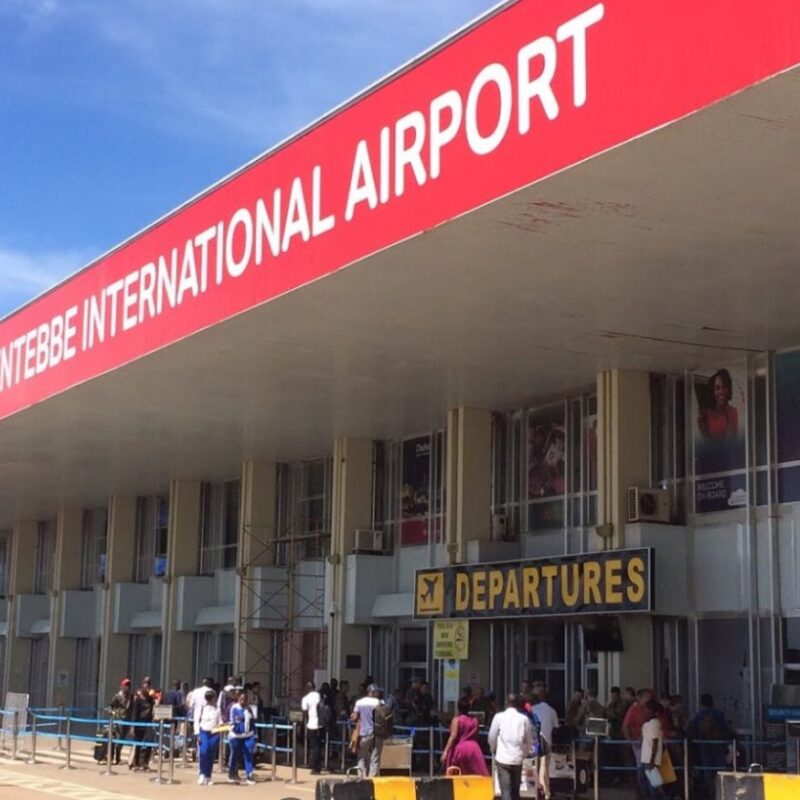
For guests who prefer to minimise road time, scheduled flights operate from Entebbe International Airport to two airstrips within the park:
Pakuba Airstrip — on the northern bank of the Nile, the most convenient option for lodges north of the river and for direct access to game drive areas. Flight time approximately 1 hour 15 minutes from Entebbe.
Bugungu Airstrip — on the southern bank near Paraa, close to the main lodge cluster and the Paraa jetty. Similar flight time from Entebbe.
Flights are operated by Aerolink Uganda and can be booked as scheduled or private charters. Flying in allows for an afternoon game drive or boat cruise on arrival day, a significant advantage on shorter itineraries. Note that flying also means the Ziwa Rhino Sanctuary visit is bypassed guests who wish to include Ziwa typically drive one direction and fly the other.
Combining Murchison Falls with Other Uganda Destinations
Murchison Falls sits in Uganda’s northwest and combines naturally with several other major destinations:
Kibale National Park – approximately 4 to 5 hours southeast of Murchison, via the scenic Fort Portal road. A classic northern Uganda circuit: big game and the falls at Murchison, chimpanzees and primates at Kibale.
Ziwa Rhino Sanctuary – on the main road between Kampala and the park, a natural en-route stop for all road travellers.
Budongo Forest Reserve – within the park’s southern boundary, easily incorporated into any Murchison itinerary as a one or two-day addition.
A seven to ten-night northern Uganda circuit combining Ziwa, Murchison Falls, Budongo Forest and Kibale National Park covers an exceptional breadth of Uganda’s wildlife offering rhinos on foot, big game on the savannah, the thundering falls, and chimpanzees in two different forests and represents one of the finest and most varied safari itineraries in East Africa.
Where To Find It
LOCATION
Uganda Travel Advice
Flying into Entebbe
Uganda and Rwanda Combined Safari
Bwindi Impenetrable vs Mgahinga
The Porter Question
The 4 Bwindi Sectors Compared