Gorilla Trekking with a Physical Limitation: What Uganda’s Parks Will (and Won’t) Accommodate
Gorilla trekking in Bwindi Impenetrable National Park is one of the most rewarding wildlife experiences in the world, but it is also physically demanding by design. The terrain is steep, the forest is dense, and the trails are not engineered for accessibility in the conventional sense. This immediately raises a critical question for many travelers: can you still do a gorilla trek if you have a physical limitation?
The answer is nuanced. Uganda’s parks and rangers make significant effort to accommodate visitors with mobility challenges, injuries, or reduced fitness. However, there are clear limits to what can realistically be adapted in a remote rainforest environment. Understanding both sides—the support available and the constraints you must accept—is essential before committing to the experience.
The Reality of Bwindi’s Terrain
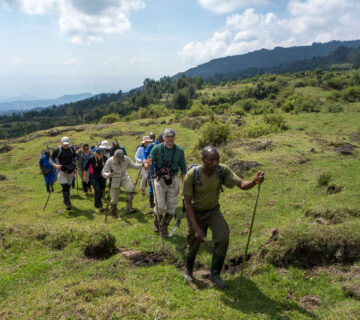
Bwindi is not a park with paved trails or structured walkways. It is a high-altitude, montane rainforest with rugged topography. Treks involve navigating steep slopes, muddy paths, thick vegetation, and uneven ground. There are no fixed routes; paths are created dynamically by rangers depending on where the gorillas are located that day.
This means that accessibility is not built into the landscape. Any accommodation for physical limitations relies on human support rather than infrastructure.
Even in the “easier” sectors, conditions can change quickly depending on weather and gorilla movement. A trek that starts gently can become physically demanding within minutes.
What Uganda’s Parks Will Accommodate
Despite the challenging environment, Uganda has developed practical and effective ways to assist visitors with physical limitations.
Allocation to Easier Gorilla Families
One of the most important accommodations is the assignment of gorilla families based on your physical ability. During the morning briefing, rangers assess fitness levels and allocate groups accordingly.
Visitors with limitations are typically assigned to gorilla families located closer to the starting point or in less steep terrain. While this cannot be guaranteed, it significantly increases the likelihood of a shorter and more manageable trek.
Use of Porters
Porters are a critical part of the trekking system. They are not only there to carry bags but also to provide physical assistance on difficult terrain.
They help with balance, offer support on steep sections, and reduce fatigue by carrying gear. For anyone with limited strength, joint issues, or mild mobility challenges, hiring a porter is not optional—it is essential.
The Gorilla Sedan Chair (Stretcher Service)
For visitors with more serious mobility limitations, Uganda offers a specialized service often referred to as the “gorilla sedan chair.” This is a stretcher-like seat carried by a team of porters.
This option allows individuals who cannot walk long distances or handle steep terrain to still participate in gorilla trekking. The team carries you through the forest, including uphill and downhill sections, until you reach the gorillas.
It is physically demanding for the porters and comes at an additional cost, but it is one of the most effective accessibility solutions available in any wildlife destination.
Flexible Trekking Pace
Rangers adjust the pace of the trek based on the group’s ability. There is no pressure to move quickly, and frequent stops are allowed.
This flexibility is particularly important for individuals with reduced stamina or medical conditions that require steady pacing.
Ranger Support and Safety Management
Rangers are trained to manage diverse groups, including those with physical limitations. They monitor conditions closely and can modify the route or approach strategy where possible.
Their primary focus is safety, both for visitors and gorillas, and they are experienced in handling a wide range of situations.
What Uganda’s Parks Will Not Accommodate
While there are significant support systems in place, there are clear limitations that cannot be overcome.
No Guaranteed Short Treks
Even with careful allocation, there is no absolute guarantee of a short or easy trek. Gorilla families move constantly, and their location on a given day determines the trekking distance.
A group assigned as “closer” may still require hours of walking if the gorillas have moved overnight.
No Wheelchair-Accessible Trails
There are no wheelchair-accessible paths in Bwindi. The terrain makes this impossible without fundamentally altering the environment, which would conflict with conservation goals.
Visitors who rely entirely on wheelchairs must use the sedan chair service if they wish to participate.
No Controlled Terrain Conditions
Weather plays a major role in trekking conditions. Rain can make trails extremely slippery, and steep sections can become more challenging.
These environmental factors cannot be controlled or modified, and all visitors must be prepared to deal with natural conditions.
Limited Medical Infrastructure in the Forest
While rangers carry basic first aid equipment, there are no advanced medical facilities inside the forest. Emergency evacuation is possible but not immediate.
Visitors with serious medical conditions must carefully assess risk before participating.
No Deviation from Core Rules
Regardless of physical limitation, all visitors must follow the same rules around gorilla interaction. This includes maintaining distance, avoiding sudden movement, and adhering to time limits.
There are no exceptions to these rules, as they are critical for conservation and safety.
Who Can Realistically Do Gorilla Trekking
Many people assume that gorilla trekking is only for highly fit individuals, but this is not entirely accurate.
Travelers with moderate fitness, older visitors, and those with manageable physical conditions can successfully complete a trek with proper support.
Even individuals with significant mobility challenges can participate through the sedan chair system.
However, honesty about your physical condition is essential. Overestimating your ability can lead to a difficult and potentially unsafe experience.
Conditions That Require Extra Consideration
Certain conditions require careful planning and consultation before booking a trek.
Knee problems, for example, can make steep descents particularly challenging. Asthma may be affected by altitude and exertion. Cardiovascular conditions require assessment due to the physical demands of trekking.
In all cases, discussing your condition with a medical professional and informing your tour operator in advance is critical.
Choosing the Right Sector
Not all sectors of Bwindi are equal in terms of difficulty. Some areas, such as Buhoma, are generally considered more accessible due to relatively moderate terrain.
Others, such as Nkuringo, are known for steep and demanding trails.
Selecting the right sector can significantly influence your experience and should be part of your planning process.
Mental Preparation and Expectations
Physical preparation is only part of the equation. Mental readiness is equally important.
Gorilla trekking is unpredictable. You may face unexpected challenges, changes in terrain, or longer-than-expected hikes.
Approaching the experience with flexibility and realistic expectations helps ensure that you can adapt and enjoy the journey, even if it becomes more demanding than anticipated.
The Role of Planning and Communication
The success of a trek with physical limitations depends heavily on communication.
You must inform your tour operator about your condition in advance. This allows them to request appropriate gorilla family allocation, arrange porters or sedan chairs, and plan logistics accordingly.
Last-minute disclosure limits the ability to provide effective support.
Possibility with Boundaries
Gorilla trekking in Bwindi Impenetrable National Park is not fully accessible in the conventional sense, but it is more inclusive than many people expect.
Uganda’s parks have developed practical solutions that allow a wide range of visitors to participate, from those with minor limitations to those requiring full assistance.
However, these accommodations operate within the constraints of a wild, mountainous rainforest. There are limits that cannot be removed without compromising the environment itself.
The key is understanding both what is possible and what is not. With the right preparation, honest assessment, and proper support, many travelers with physical limitations can still experience the extraordinary moment of standing face-to-face with mountain gorillas in the wild.
Start Planning Your Next Trip To Africa
If you can picture yourself in one—or several—of these exceptional retreats, the next move is simple. We design fully tailored African safaris that bring these experiences together seamlessly, from private gorilla encounters to luxury lodges in the heart of the wild.
Every detail is carefully planned, so your journey feels effortless from start to finish. Reach out in whichever way suits you best, and let’s begin crafting your safari.
Start Planning