
Yellow Fever and Uganda: Why the Certificate Is Non-Negotiable
Yellow fever requirements for Uganda are not a flexible travel guideline—they are an enforced entry health regulation that directly affects whether you are allowed into the country. For safari travelers heading into ecosystems such as Bwindi Impenetrable National Park or savannah regions like Queen Elizabeth National Park, the yellow fever vaccination certificate is treated as a mandatory health clearance document at immigration.
Unlike optional travel vaccinations, yellow fever is classified as an international public health control measure under global health regulations. This means the requirement is not based on personal health preference but on cross-border disease prevention policy.
Why Uganda Enforces Yellow Fever Certification
Uganda is classified as a yellow fever risk country due to the presence of the mosquito vector and historical transmission patterns in parts of East Africa. Because of this classification, the country enforces vaccination proof for incoming travelers as part of its border health screening process.
The goal is not only to protect individual travelers but also to reduce the risk of importing or exporting yellow fever across borders, especially within East Africa’s interconnected safari routes.
This is why the requirement applies consistently at Entebbe International Airport and land border crossings.
What the Certificate Actually Is
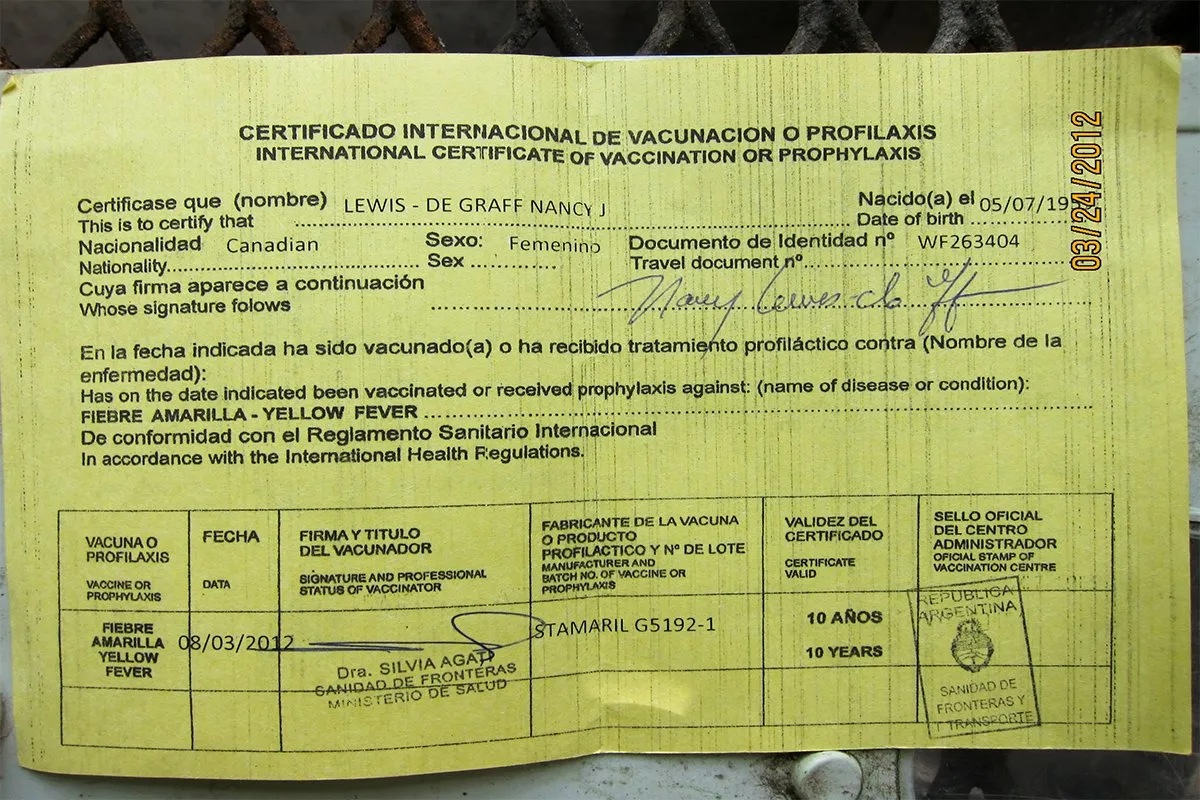
The yellow fever certificate is an internationally recognized vaccination record issued after receiving the yellow fever vaccine. It is typically documented in the International Certificate of Vaccination or Prophylaxis format and is valid for entry purposes once the vaccine has taken effect.
Once issued, the certificate becomes part of your official travel health documentation and is checked alongside your passport during immigration processing.
When You Will Be Asked for It
Entry at Entebbe International Airport
At Entebbe, immigration and health screening officers may request your yellow fever certificate upon arrival. Travelers without valid proof may face additional screening or refusal of entry depending on risk assessment and enforcement at the time.
The document is often checked before final entry clearance is granted.
Land Border Crossings
At land borders connecting Uganda with Rwanda, Kenya, or other neighboring countries, health documentation checks are also commonly conducted. This is especially relevant for overland safari circuits where travelers move across multiple countries.
Because Uganda is part of a regional safari network, border health enforcement is taken seriously to maintain consistency across East African entry points.
Why It Is Considered Non-Negotiable
Public Health Enforcement Structure
Yellow fever vaccination is not optional because it is part of international health regulation frameworks that countries agree to enforce collectively. Uganda applies this requirement uniformly to prevent potential outbreaks.
This makes it fundamentally different from discretionary travel vaccines or personal health recommendations.
Entry Control Authority
Immigration officers have the authority to deny entry or require additional health verification if the certificate is missing. In practice, this means your entire safari itinerary can be disrupted at the border if documentation is not in order.
For this reason, safari operators treat it as a critical pre-departure requirement.
Timing of Vaccination and Validity
When You Should Get Vaccinated
The vaccine must be administered at least 10 days before travel for the certificate to become valid for entry purposes. This waiting period allows the body to develop immunity and ensures compliance with international health regulations.
Long-Term Validity
Once issued, the yellow fever certificate is generally valid for life under current international health guidelines. This means frequent travelers within Africa usually do not need to repeat vaccination unless medically required.
Who Is Most Affected by This Requirement
First-Time Safari Travelers
Travelers visiting Uganda for the first time often encounter this requirement as part of their pre-travel preparation. It is especially important for those planning gorilla trekking or multi-park safaris.
Multi-Country Safari Travelers
Those combining Uganda with Rwanda or Kenya must ensure consistent compliance because regional border crossings often involve repeated document checks.
In itineraries that include both forest and savannah ecosystems, documentation is verified as part of integrated regional health controls.
Common Misunderstandings About the Certificate
Misconception About Low-Risk Travelers
Some travelers assume that because they are only staying in specific safari lodges or high-altitude areas, the requirement may not apply. This is incorrect. The certificate is based on national entry policy, not internal travel plans.
Misconception About Transit Exemptions
Even travelers transiting through Uganda may still be subject to health documentation checks depending on their route and length of stay.
What Happens If You Arrive Without It
Possible Airport Delays
If you arrive at Entebbe without a valid certificate, you may be directed to additional health screening procedures. This can delay entry processing and affect onward travel plans.
Risk of Denied Entry
In stricter enforcement scenarios, travelers without valid documentation may be denied entry or required to return to their point of origin. This is rare but remains a legal possibility under immigration regulations.
Impact on Safari Itineraries
Because gorilla trekking permits and safari bookings are time-sensitive, any entry delay can disrupt tightly scheduled itineraries, particularly in Bwindi Impenetrable National Park where trekking slots are pre-allocated.
Why Safari Operators Treat It as Critical
Tour operators in Uganda consistently treat yellow fever certification as a non-negotiable requirement because it directly affects itinerary execution. Unlike flexible travel preferences, this requirement is enforced at the border and cannot be bypassed through internal arrangements.
In practice, it is one of the few documents that can override even confirmed safari bookings if not properly prepared in advance.
Field Reality of the Requirement
From a safari operations perspective, yellow fever certification is not a theoretical health recommendation—it is a gateway control document that determines whether your safari begins smoothly or faces disruption at entry.
Because Uganda is part of a broader East African travel ecosystem, enforcement is consistent across land borders and airports, ensuring alignment with regional health protocols.
In practical terms, travelers who prepare this documentation in advance experience seamless entry, while those who do not risk delays that can affect entire safari schedules.
Start Planning Your Next Trip To Africa
If you can picture yourself in one—or several—of these exceptional retreats, the next move is simple. We design fully tailored African safaris that bring these experiences together seamlessly, from private gorilla encounters to luxury lodges in the heart of the wild.
Every detail is carefully planned, so your journey feels effortless from start to finish. Reach out in whichever way suits you best, and let’s begin crafting your safari.
Start Planning