Yellow Fever and Rwanda: Entry Requirements and What You Need to Know
Introduction: Why This Requirement Matters More Than It Looks
Planning a safari in Rwanda is usually associated with gorilla trekking in Volcanoes National Park, scenic lodges, and well-organized travel logistics. But before you get into the wildlife experience, there is a health entry requirement that often determines how smoothly your arrival goes: yellow fever compliance.
This is not a complicated system, but it is one that is strictly applied at borders and airports when it becomes relevant to your travel history. Many travelers underestimate it because they assume it only applies to people coming from specific countries, but in reality, it is based on routes, transit history, and regional movement.
Understanding this requirement properly is part of responsible safari planning. It prevents delays, avoids last-minute medical stress at entry points, and ensures your itinerary remains uninterrupted from arrival in Kigali to your first gorilla trek in Volcanoes National Park.
Understanding Yellow Fever in the Context of East Africa
Yellow fever is a mosquito-borne viral disease found in parts of tropical Africa and South America. It is not present in all countries, but international travel regulations treat it as a controlled disease because of its potential severity and outbreak risk.
Rwanda itself is not considered a high-risk transmission zone, but it follows international health protocols set by global health authorities. This means entry rules are designed not around internal risk, but around preventing imported cases from travelers arriving from affected regions.
This becomes especially important because Rwanda is part of a highly interconnected East African travel network. Tourists frequently move between Rwanda, Uganda, Kenya, and Tanzania, and this cross-border movement is the main reason yellow fever regulations are enforced consistently.
Do You Need a Yellow Fever Certificate for Rwanda
Whether you need a yellow fever vaccination certificate depends entirely on your travel route rather than your nationality.
If you are arriving in Rwanda from a country where yellow fever is present or endemic, you are expected to show proof of vaccination. This includes many countries in West and Central Africa, as well as certain travel routes that pass through these regions.
If you have had a transit stop in a yellow fever risk country, especially if the layover is long enough for potential exposure according to international health rules, you may also be required to present your certificate upon arrival in Rwanda.
If your journey is a direct flight from a low-risk country without any relevant transit stops, you may not always be asked for the certificate. However, immigration officers still retain the authority to request it based on your travel history, which means the requirement remains relevant even if it is not always enforced in every case.
Because of this uncertainty, most safari travelers treat the yellow fever vaccine as a standard travel requirement rather than a conditional one.
The Yellow Fever Certificate and How It Works
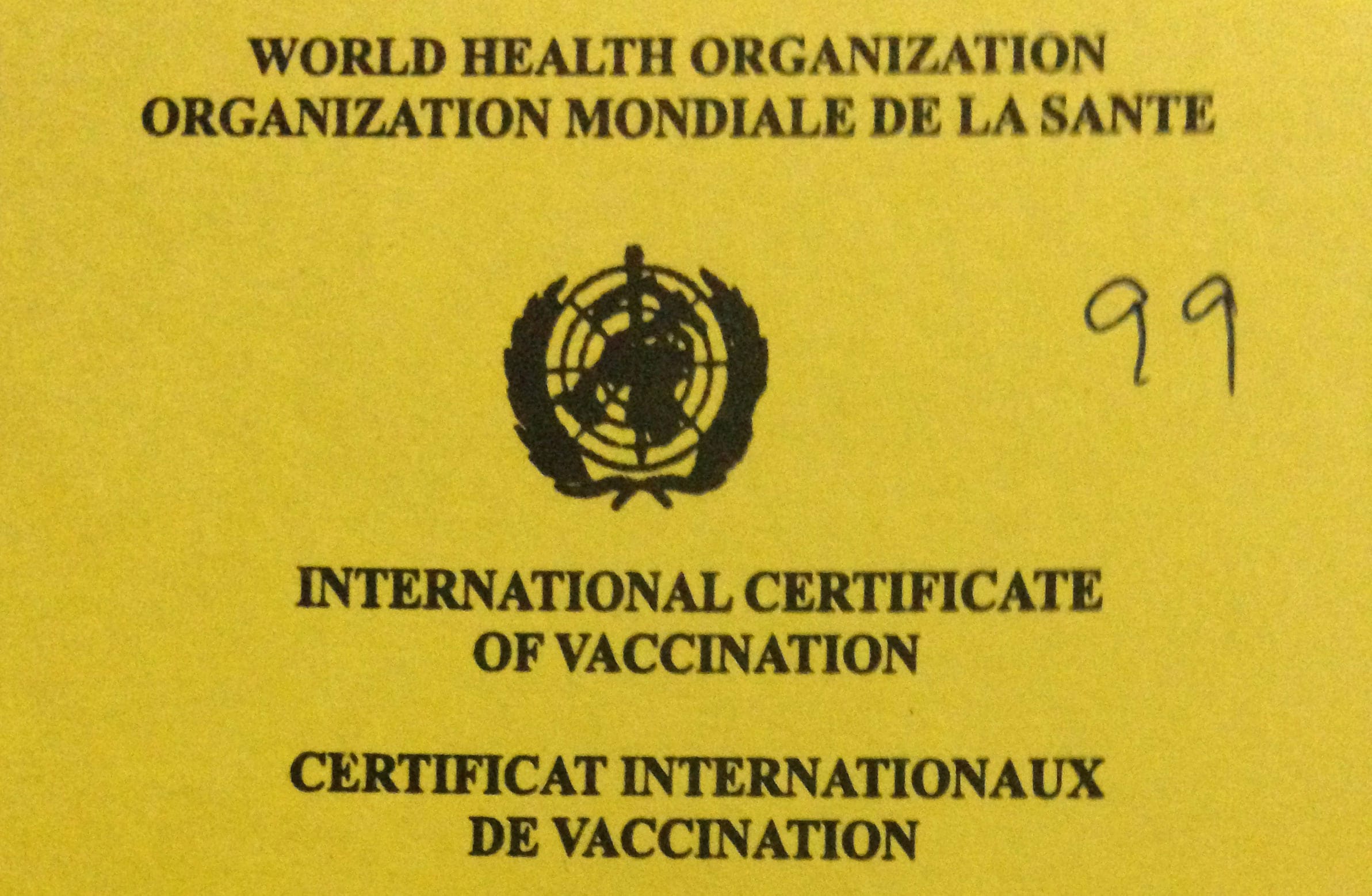
The document required for entry is the International Certificate of Vaccination or Prophylaxis, commonly referred to as the yellow card. This is an official internationally recognized health document issued after vaccination at an approved medical center.
It includes your personal identification details, the date the vaccine was administered, and official certification stamps confirming validity. Once issued, the certificate becomes your proof of compliance with international health regulations.
Under current global health guidelines, a single yellow fever vaccination provides lifelong protection, meaning the certificate does not expire for most travelers. This makes it a one-time requirement rather than a recurring travel obligation.
When entering Rwanda, immigration officials may request this document at Kigali International Airport or at land border crossings depending on your route and travel history.
When the Certificate Is Checked in Practice
In real travel situations, the certificate is most commonly checked when your itinerary involves higher-risk travel routes or multiple countries.
If you are arriving from or transiting through a yellow fever endemic region, officials will typically request proof upon entry. This is standard procedure and is part of routine immigration health screening.
If you are undertaking a multi-country safari that includes both Rwanda and neighboring countries such as Uganda or Kenya, the certificate may be checked more than once depending on border crossings and direction of travel.
Even in cases where it is not physically requested, the requirement still applies if your travel history falls under regulated categories. This is why experienced safari planners treat it as a mandatory document rather than an optional precaution.
What Happens If You Do Not Have It
If you are required to present a yellow fever certificate and do not have one, the consequences depend on the specific circumstances of your entry.
In some cases, immigration authorities may allow you to receive vaccination upon arrival at your own expense before entry is granted. This can cause delays, especially if multiple travelers are being processed at the same time.
In other situations, entry may be delayed while officials verify your eligibility or travel route. This can be particularly disruptive if you have scheduled transfers to safari regions or timed gorilla trekking permits in Volcanoes National Park.
In stricter enforcement scenarios, entry can be denied if compliance requirements are not met and no acceptable alternative is available.
While serious enforcement cases are not the norm for all travelers, the risk exists enough that it should be taken seriously during travel preparation.
When You Should Get Vaccinated
The yellow fever vaccine must be administered at least ten days before travel in order for the certificate to become valid for entry purposes. This waiting period is important because the vaccine requires time to take effect in the body.
If you receive the vaccine too close to your departure date, you may technically be vaccinated but still not meet entry documentation requirements at immigration checkpoints.
For this reason, travelers planning safaris in Rwanda are strongly encouraged to complete vaccination early in the planning process, ideally at the same time they begin booking flights, permits, and accommodation.
This ensures that the certificate is valid well before departure and removes any uncertainty when entering the country.
Yellow Fever in Multi-Country Safari Itineraries
Yellow fever requirements become even more important when your safari includes more than one country.
Many travelers combine Rwanda with Uganda as part of a regional gorilla trekking itinerary. Others extend their trip into Kenya or Tanzania for savannah safaris after visiting Volcanoes National Park.
In these cases, the yellow fever certificate may be checked at multiple border points, depending on the direction of travel and entry history into each country.
This makes the certificate not just a single-entry requirement for Rwanda but a regional travel document that supports movement across East Africa.
For example, a traveler moving from Kigali into Uganda for Bwindi Impenetrable Forest trekking will often need to present the certificate again at the border depending on entry conditions at the time of travel.
Why the Rule Exists and Why It Is Strictly Applied
The purpose of yellow fever entry requirements is not administrative complexity. It is public health protection.
Countries like Rwanda enforce these rules to reduce the risk of imported disease transmission, especially given the high volume of international tourists entering for gorilla trekking and wildlife tourism.
Because Rwanda has positioned itself as a high-end, conservation-focused tourism destination, maintaining strict health protocols is part of protecting both visitors and local communities.
This is particularly important in regions like Volcanoes National Park, where tourism is closely managed and environmental conditions require careful regulation.
A Small Requirement That Prevents Major Problems
Yellow fever entry requirements for Rwanda are straightforward, but they are not optional when they apply.
For most travelers, especially those visiting gorilla trekking destinations or combining regional East African itineraries, having the vaccination certificate is a simple step that prevents unnecessary complications at immigration.
In practical terms, it is not a barrier to travel but part of standard safari preparation. Once completed, it removes uncertainty and allows you to focus fully on the experience of traveling through Rwanda’s landscapes, wildlife regions, and conservation areas.
The key takeaway is simple. If there is any chance your route falls under yellow fever regulations, it is far better to be prepared in advance than to deal with it at the border.
Start Planning Your Next Trip To Africa
If you can picture yourself in one—or several—of these exceptional retreats, the next move is simple. We design fully tailored African safaris that bring these experiences together seamlessly, from private gorilla encounters to luxury lodges in the heart of the wild.
Every detail is carefully planned, so your journey feels effortless from start to finish. Reach out in whichever way suits you best, and let’s begin crafting your safari.
Start Planning