Uganda’s Tree-Climbing Lions of Ishasha: Where, When and How to See Them
Uganda’s tree-climbing lions are one of the most unusual and sought-after wildlife sightings in Africa, and the best place to see them is the Ishasha sector of Queen Elizabeth National Park. Unlike typical lion behavior observed across savannah ecosystems, these lions regularly rest and lounge in fig and acacia trees, creating a distinctive safari experience that draws photographers, researchers, and wildlife enthusiasts from around the world.
This behavior is not universal across Africa, which is why Ishasha holds such a strong reputation. Understanding where to find these lions, when sightings are most likely, and how to approach the experience in practical safari conditions makes a significant difference in success rates.
Where Exactly to Find the Tree-Climbing Lions
The Ishasha Sector Within Queen Elizabeth National Park
The tree-climbing lions are concentrated in the southern Ishasha sector of Queen Elizabeth National Park, a remote and less crowded area compared to the northern regions of the park.
Ishasha is characterized by open savannah plains dotted with large fig trees, acacia woodlands, and seasonal river systems. These fig trees are the primary locations where lions are most frequently spotted resting in branches.
The sector lies near the border with the Democratic Republic of Congo, which adds to its isolation and lower tourist density.
Why Ishasha Is the Right Habitat
The presence of large, horizontal fig tree branches makes Ishasha uniquely suited for this behavior. These trees provide stable platforms that can support the weight of adult lions, something not all tree species can offer.
Additionally, the open plains allow lions to hunt effectively, while the trees provide elevated resting spots during the heat of the day.
Why Do Lions Climb Trees in Ishasha?
The exact reason for this behavior is not fully understood, but several field observations provide strong explanations.
One widely accepted theory is temperature regulation. Climbing trees allows lions to escape the heat of the ground and benefit from cooler air and light breezes above.
Another explanation is insect avoidance. Elevated positions reduce exposure to biting insects such as tsetse flies, which are common in savannah environments.
There is also a behavioral component. Over generations, specific lion prides in Ishasha have developed this habit, and it has been passed down within the group.
It is important to note that not all lions in Africa climb trees regularly. This behavior is localized and not guaranteed in every sighting.
When Is the Best Time to See Tree-Climbing Lions
Time of Day Matters More Than Season
The most reliable time to see tree-climbing lions is during the late morning to early afternoon period.
During these hours, temperatures rise, and lions are more likely to climb into trees to rest. Early morning game drives often show lions on the ground, while midday increases the chances of seeing them in branches.
Seasonal Influence on Sightings
Tree-climbing behavior can occur year-round, but visibility may vary slightly depending on seasonal conditions.
In drier months, vegetation is less dense, making it easier to spot lions in trees from a distance.
During wetter periods, thicker foliage can make sightings more challenging, even when lions are present in trees.
However, the behavior itself does not stop seasonally, which means sightings are possible throughout the year.
How to Maximize Your Chances of Seeing Them
Work With Experienced Guides
The single most important factor in finding tree-climbing lions is the skill of your guide. Experienced guides know the territories of specific prides and track movement patterns across the Ishasha plains.
They also communicate with other guides in the area, increasing the likelihood of locating active sightings.
Focus on Fig Trees
Scanning large fig trees is a key strategy. Lions often rest along thick horizontal branches, sometimes partially hidden by leaves.
It is common to initially miss a lion in a tree because the shape blends with the branches. A trained eye is essential for spotting them.
Be Patient and Systematic
Unlike open savannah sightings where animals are easily visible, tree-climbing lions require slower, more deliberate searching.
Game drives in Ishasha are less about covering large distances quickly and more about scanning specific habitats carefully.
What the Sightings Actually Look Like
Seeing a lion in a tree is a visually striking experience because it contrasts sharply with typical expectations of lion behavior.
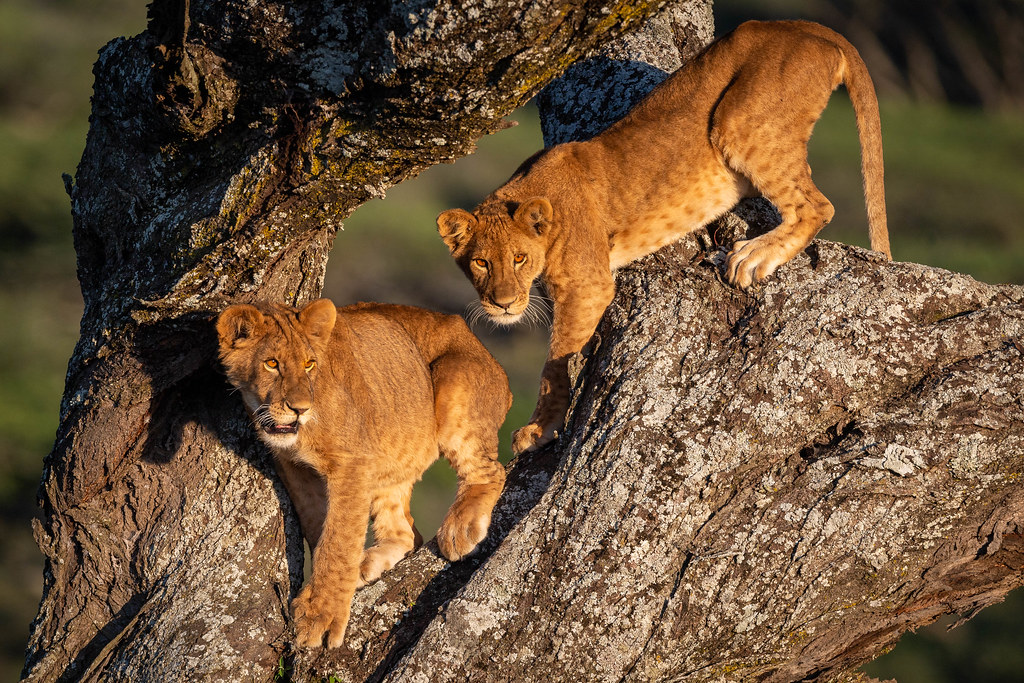
Lions are often seen draped across branches, with legs hanging loosely, appearing relaxed and almost weightless despite their size.
Sometimes multiple individuals from the same pride occupy a single tree, creating layered compositions that are particularly appealing for photography.
In other cases, only one or two lions may be present, resting quietly and occasionally shifting position.
Photography Considerations
Tree-climbing lion photography requires a slightly different approach compared to ground-based wildlife photography.
Angles are upward rather than horizontal, which affects framing and lighting. Midday light can be harsh, but it also illuminates lions clearly in open branches.
Because lions are stationary when resting, there is often time to adjust camera settings and compose shots carefully.
Zoom lenses are useful for capturing detail without disturbing the animals.
Combining Ishasha With a Wider Safari
The Ishasha sector is often included as part of a broader Uganda safari route, particularly when traveling between Bwindi Impenetrable National Park and the northern sections of Queen Elizabeth National Park.
This makes it a natural stop for travelers combining gorilla trekking with classic savannah wildlife experiences.
Because Ishasha is less crowded than other safari regions, it offers a quieter and more exclusive wildlife viewing environment.
Accommodation and Access Considerations
Accommodation in Ishasha is more limited compared to other parts of Queen Elizabeth National Park, but it includes a mix of mid-range and luxury lodges.
Staying within or near the Ishasha sector increases the likelihood of successful sightings because it allows for extended game drive time within the lion territory.
Access to Ishasha is typically by road, and travel times depend on your starting point, often ranging from several hours depending on the route.
Why Tree-Climbing Lions Are Not Guaranteed
Despite their reputation, tree-climbing lions are not guaranteed sightings. Wildlife movement, weather conditions, and daily activity patterns all influence where lions choose to rest.
Some days, lions may remain on the ground or move into areas where they are less visible.
This unpredictability is part of the authentic safari experience and is consistent with all wildlife viewing in natural environments.
Field Reality of the Ishasha Experience
In practical safari conditions, seeing tree-climbing lions is a combination of timing, guide expertise, and patience.
The experience is less about chasing a guaranteed sighting and more about understanding the ecosystem and behavior patterns that make such sightings possible.
When successful, the sighting is one of the most distinctive wildlife moments in Uganda, offering a rare look at a behavior that exists in only a few locations in Africa.
In the broader context of a Uganda safari, Ishasha adds a unique dimension that complements primate trekking in Bwindi and wildlife viewing across Queen Elizabeth National Park.
Start Planning Your Next Trip To Africa
If you can picture yourself in one—or several—of these exceptional retreats, the next move is simple. We design fully tailored African safaris that bring these experiences together seamlessly, from private gorilla encounters to luxury lodges in the heart of the wild.
Every detail is carefully planned, so your journey feels effortless from start to finish. Reach out in whichever way suits you best, and let’s begin crafting your safari.
Start Planning