Kenya and Rwanda Combined Safari: Masai Mara and Mountain Gorillas in One Trip
A combined Kenya and Rwanda safari is one of the most powerful wildlife journeys in Africa because it connects two completely different ecosystems in a single itinerary. On one side, you have the open savannahs of the Masai Mara with high-density big game viewing. On the other, you have the mist-covered volcanic forests of Rwanda where mountain gorillas live in small, tightly protected family groups. The contrast is extreme, and that is exactly what makes this combination so compelling in 2026.
This is not a safari built around similarity. It is built around contrast: predator-rich plains versus forest primates, game drives versus trekking, vehicle-based viewing versus walking immersion. When structured correctly, it becomes one of the most emotionally and visually complete safari experiences available.
Why Kenya and Rwanda work so well together
The connection between Kenya and Rwanda is not ecological but experiential. These are two completely different safari systems that complement each other.
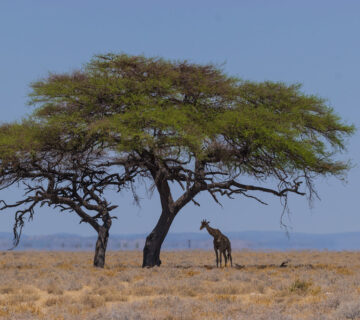
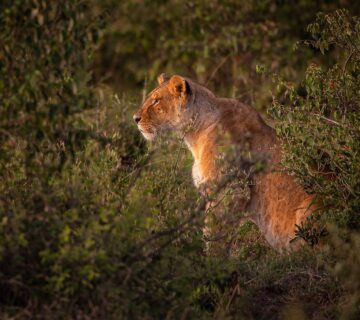
Kenya, particularly the Masai Mara National Reserve, offers classic safari landscapes with lions, elephants, cheetahs, giraffes, and large herbivore herds. Wildlife is visible, abundant, and often dramatic.
Rwanda, centered around the Volcanoes National Park, offers a completely different experience. Here, the focus shifts from game drives to trekking through dense forest in search of mountain gorillas.
Together, they create a journey that moves from open visibility to intimate encounter, from wide landscapes to close human-wildlife interaction.
The structure of a typical Kenya and Rwanda safari
Most combined itineraries follow a simple two-stage structure.
The first stage is Kenya, where travellers spend time in the Masai Mara ecosystem. This is where the safari begins with traditional game drives, predator sightings, and potentially the Great Migration depending on timing.
The second stage is Rwanda, where the experience shifts into trekking mode. Travellers fly into Kigali and transfer to the volcanic region for gorilla trekking experiences.
This structure ensures that the safari builds gradually from high-energy wildlife viewing to more focused, immersive encounters.
The Masai Mara experience: scale and intensity
The Kenyan portion of the journey is typically anchored in the Masai Mara ecosystem, one of Africa’s most important wildlife areas.
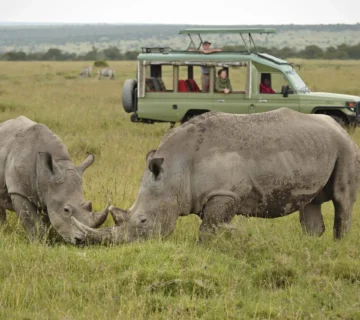
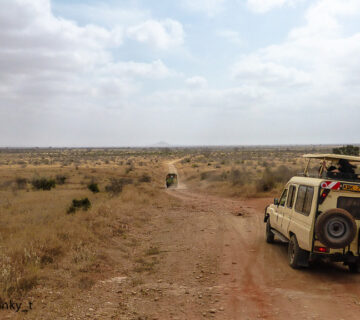
In this region, game drives deliver frequent sightings of large predators and herbivores. The landscape is open, making wildlife easy to locate and observe for extended periods.
During migration season, the experience becomes even more dynamic as herds move across the plains and river systems. Predator interactions are common, and sightings can be highly active.
In conservancy areas surrounding the reserve, wildlife viewing becomes more exclusive. Camps such as Mara Plains Camp offer low vehicle density and flexible safari activities, including off-road driving.
This stage of the safari is about breadth and visibility. You see a wide range of species across open terrain in relatively short timeframes.
The Rwanda experience: forest immersion and gorilla trekking
After the savannah, the journey shifts dramatically to Rwanda.
In Volcanoes National Park, the focus is not on quantity of wildlife but on a single, deeply immersive experience: mountain gorilla trekking.
Trekkers hike through dense forest terrain guided by expert trackers to locate habituated gorilla families. Once found, visitors spend a limited but highly impactful time observing the group.
The experience is quiet, controlled, and deeply personal. Unlike game drives, there are no vehicles or open landscapes. Instead, the encounter happens at close range in a forest environment.
This creates a completely different emotional tone compared to the Masai Mara.
Why the contrast is the core value of this safari
The strength of a Kenya and Rwanda combination lies in contrast rather than similarity.
In Kenya, wildlife is abundant and visible across vast landscapes. You observe behavior from a distance, often within a dynamic ecosystem filled with multiple species interacting simultaneously.
In Rwanda, the focus narrows to a single species interaction. You are no longer observing ecosystems at scale but engaging with individual gorilla families in their natural habitat.
This shift from macro to micro perspective is what makes the combination so powerful.
Travel logistics between Kenya and Rwanda
The connection between Kenya and Rwanda is relatively straightforward in luxury safari planning.
Most itineraries use a direct flight from Nairobi to Kigali, which acts as the gateway to Rwanda’s gorilla trekking region. From Kigali, travellers transfer by road to Volcanoes National Park.
This transition is smooth but requires careful timing. Gorilla trekking permits are scheduled in advance and operate on fixed daily quotas, meaning itinerary planning must align with permit availability.
Because of these constraints, Rwanda often dictates the timing of the entire safari.
Time required for a combined itinerary
A Kenya and Rwanda safari requires careful time allocation to avoid rushing either experience.
A minimum of 7 to 8 days is required for a very compressed itinerary, typically split between the Masai Mara and Rwanda.
However, a more realistic and comfortable structure is 9 to 12 days. This allows for multiple nights in Kenya and sufficient time in Rwanda for trekking preparation and potential second gorilla trek experiences.
Longer itineraries may also include golden monkey trekking or additional forest activities in Rwanda.
Accommodation differences between Kenya and Rwanda
Accommodation in Kenya and Rwanda reflects the difference in ecosystems.
In Kenya, luxury camps are typically located in open landscapes or conservancies. Properties such as Angama Mara focus on panoramic views and safari-driven design.
In Rwanda, lodges are located near forest edges and are designed for comfort after physically demanding trekking days. The focus is on warmth, relaxation, and proximity to trekking start points.
The contrast in accommodation style mirrors the contrast in wildlife experience.
Physical demands and preparation
One of the most important differences in this combined safari is physical activity level.
The Masai Mara portion involves vehicle-based game drives with minimal physical exertion. Days are structured around morning and evening drives.
Rwanda introduces a more physically demanding component. Gorilla trekking can involve several hours of hiking through steep, muddy, and uneven terrain depending on gorilla location.
This requires basic fitness and proper preparation, including appropriate footwear and layering for changing weather conditions.
Wildlife diversity versus focused encounters
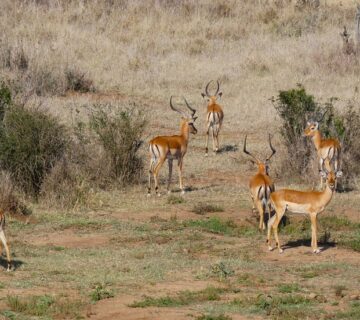
Kenya offers high biodiversity. In a single day in the Masai Mara, travellers may encounter lions, elephants, buffalo, giraffes, zebras, and numerous bird species.
Rwanda offers low biodiversity but extremely focused encounters. The experience centers almost entirely on mountain gorillas, with occasional sightings of other primates.
This difference is intentional. The safari moves from ecosystem diversity to species-specific immersion.
Cost structure of a combined Kenya and Rwanda safari
A Kenya and Rwanda combination is typically more expensive than a single-country safari due to gorilla trekking permits, which are among the highest-priced wildlife experiences in Africa.
Gorilla permits alone form a significant portion of the Rwanda cost structure. Combined with luxury accommodation and internal flights, this increases overall pricing.
Kenya contributes additional costs through conservancy fees, luxury camp rates, and internal flights between safari regions.
The result is a high-value but high-cost itinerary designed for immersive, multi-layered wildlife experiences.
Who this safari is best suited for
This combination is ideal for travellers seeking both classic safari experiences and rare wildlife encounters.
It is particularly well suited for those who want to experience both the traditional African savannah and one of the most unique primate encounters in the world.
Photographers benefit from the diversity of environments, while experienced safari travellers often choose this combination to expand beyond traditional game drive formats.
It is less suitable for travellers seeking purely relaxed or vehicle-only safaris due to the physical demands of gorilla trekking.
Emotional structure of the journey
What makes this combination distinct is its emotional progression.
The Masai Mara builds excitement through constant wildlife activity, movement, and visual diversity. It is expansive and energetic.
Rwanda shifts the experience into quiet focus. The emotional intensity becomes concentrated in a single encounter with gorillas, creating a sense of connection rather than observation.
This progression from scale to intimacy is what defines the journey.
Why this combination stands out in 2026
In 2026, safari travel is increasingly about experience depth rather than destination count. The Kenya and Rwanda combination reflects this shift perfectly.
It reduces unnecessary movement while maximizing contrast between ecosystems. It also combines two of Africa’s most iconic wildlife experiences into a single structured journey.
Rather than being a checklist itinerary, it becomes a curated transition between two very different ways of experiencing wildlife.
Start Planning Your Next Trip To Africa
If you can picture yourself in one—or several—of these exceptional retreats, the next move is simple. We design fully tailored African safaris that bring these experiences together seamlessly, from private gorilla encounters to luxury lodges in the heart of the wild.
Every detail is carefully planned, so your journey feels effortless from start to finish. Reach out in whichever way suits you best, and let’s begin crafting your safari.
Start Planning