Kenya and Tanzania Combined Safari: The Classic East Africa Grand Tour
A combined Kenya and Tanzania safari is one of the most complete wildlife journeys in Africa. It connects two of the continent’s most iconic ecosystems into a single itinerary, offering unmatched diversity in landscapes, wildlife behavior, and safari experiences. In 2026, this “East Africa Grand Tour” has become increasingly popular among luxury travellers who want both the intensity of Kenya and the scale of Tanzania in one seamless journey.
Unlike single-country safaris, a combined itinerary is not just about visiting more places. It is about understanding how two connected ecosystems operate differently, how logistics shape experience, and how timing influences wildlife movement across borders.
Why Kenya and Tanzania work so well together
Kenya and Tanzania share a continuous wildlife corridor, especially across the greater Serengeti–Mara ecosystem. Animals move freely between both countries, particularly during the Great Migration. This natural connection makes it possible to design itineraries that follow wildlife across borders without disrupting ecological continuity.
In Kenya, the focus is often on concentrated wildlife viewing and high-action encounters. In Tanzania, the experience expands into vast landscapes and longer migration cycles. When combined, these two approaches create a balanced safari that blends intensity with scale.
The result is not redundancy but contrast. Each country enhances the other rather than competing with it.
The core ecosystems in a combined itinerary
A well-designed Kenya and Tanzania safari typically includes three major ecosystems, sometimes four depending on duration.
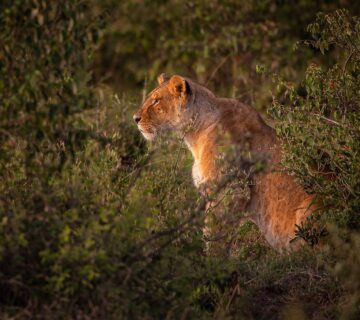
In Kenya, the central focus is the Masai Mara National Reserve and surrounding conservancies. This region is known for high predator density, frequent sightings, and dramatic migration river crossings.
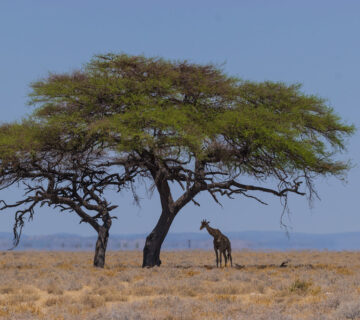
In Tanzania, the primary destination is the Serengeti National Park, which forms the southern continuation of the same ecosystem. It offers vast plains, large herds, and a more expansive sense of wilderness.
Many itineraries also include the Ngorongoro Conservation Area, which adds crater-based wildlife viewing and a dramatically different geological environment.
Together, these regions create a layered safari experience that moves from concentrated action to expansive wilderness.
The Great Migration across two countries
The Great Migration is the most important wildlife movement in this combined itinerary. It is not a single event but a continuous cycle of movement driven by rainfall and grazing patterns.
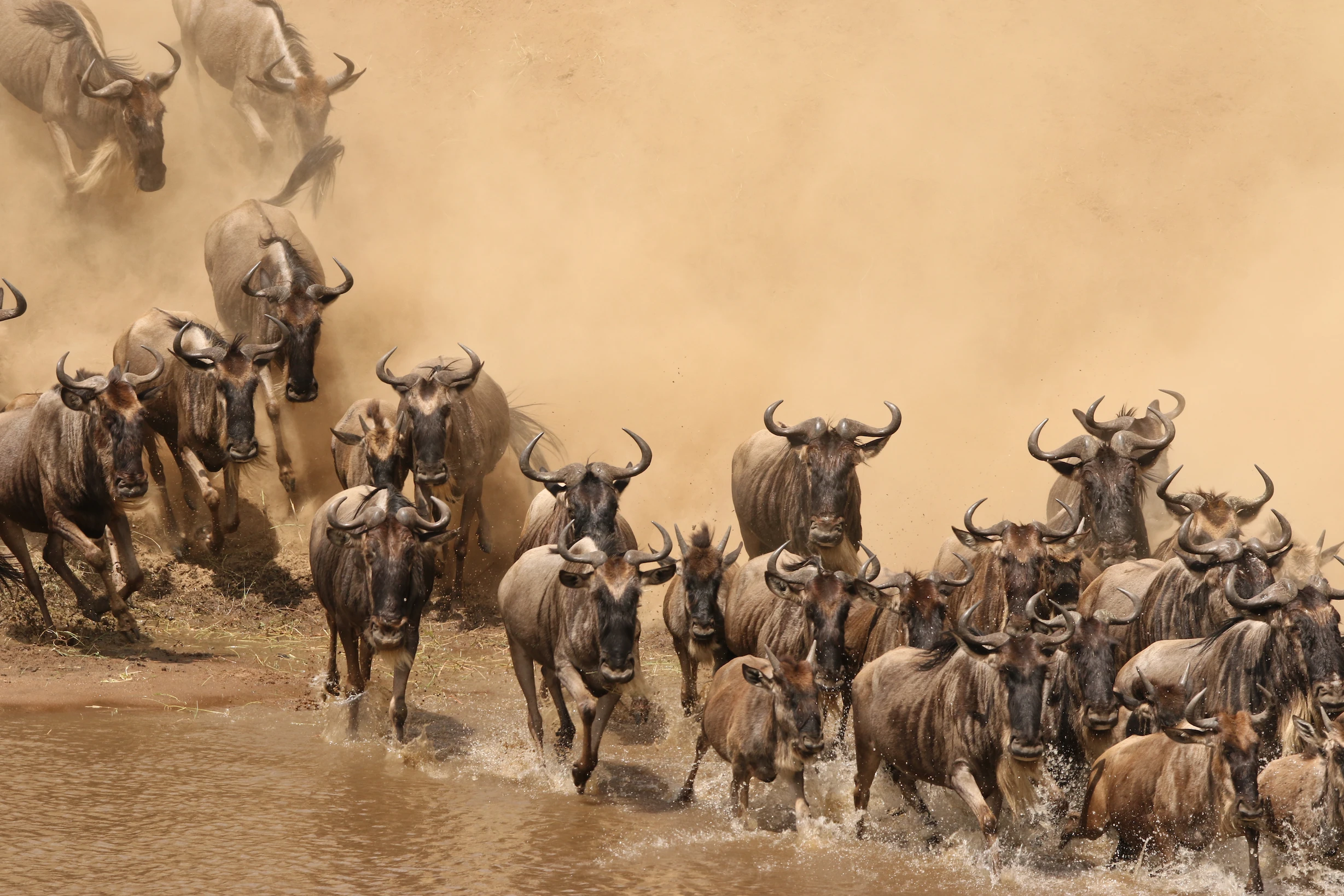
In Kenya, the migration is most dramatic when herds cross into the Masai Mara between July and October. River crossings at the Mara River are intense, unpredictable, and highly sought after by travellers.
In Tanzania, the migration begins earlier and lasts longer. Herds move through the southern Serengeti during calving season, then gradually shift northward toward Kenya.
A combined safari allows travellers to follow this movement rather than witnessing only one phase of it. This creates a more complete understanding of the ecosystem’s rhythm.
How travel logistics shape the experience
One of the most important differences in a combined safari is logistics.
Kenya and Tanzania require separate international entry points, border crossings, or connecting flights. These transitions must be carefully managed to avoid losing valuable safari time.
Most luxury itineraries use internal flights to minimize travel time between regions. Flights between the Masai Mara and northern Tanzania are typically short but require coordination.
Ground crossings are also possible in some itineraries, but they add travel time and complexity.
Because of these logistics, combined safaris are usually longer in duration, often starting from 10 days and extending to 14 days or more for a comfortable pace.
Contrasting safari styles between Kenya and Tanzania
The safari experience in Kenya and Tanzania differs in subtle but important ways.
Kenya focuses on high-density wildlife viewing. In the Masai Mara, sightings are frequent, and predator interactions are common. Conservancies add exclusivity and flexibility through off-road driving and night safaris.
Tanzania emphasizes scale and continuity. In the Serengeti, landscapes are vast, and wildlife movements feel more dispersed. Game drives often cover larger distances, but the sense of wilderness is more expansive.
This contrast is one of the main reasons travellers choose to combine both countries. It creates a dynamic shift in rhythm throughout the journey.
Accommodation differences across both countries
Accommodation style varies significantly between Kenya and Tanzania, especially at the luxury level.
In Kenya, camps in conservancies are often small and highly exclusive. Properties such as Mara Plains Camp and Angama Mara focus on privacy, design, and controlled access to wildlife.
In Tanzania, luxury lodges and mobile camps are more varied in scale. Some properties follow the migration seasonally, while others remain permanently in key regions like the Serengeti.
This creates a different accommodation rhythm. Kenya emphasizes intimacy and exclusivity, while Tanzania emphasizes mobility and landscape immersion.
Wildlife density versus wilderness scale
One of the most important experiential differences lies in how wildlife is encountered.
Kenya offers high wildlife density, especially in predator-rich areas of the Mara. Sightings often occur within shorter distances, allowing for more concentrated viewing.
Tanzania offers broader dispersion of wildlife across larger areas. While sightings may require longer drives, the scale of the environment adds a sense of untouched wilderness.
Together, these experiences complement each other. One provides intensity, the other provides space.
Ideal duration for a combined safari
A combined Kenya and Tanzania safari requires careful time planning.
A 10-day itinerary is the minimum for a fast-paced version, typically focusing on one region in each country. However, this can feel rushed if not carefully structured.
A 12 to 14-day itinerary is more balanced, allowing for 5 to 7 nights in Tanzania and 5 to 7 nights in Kenya. This structure provides enough time to settle into each ecosystem without constant movement.
Longer itineraries allow for deeper exploration, including additional regions such as Ngorongoro or northern Serengeti extensions.
Who this type of safari is best suited for
A combined East Africa safari is best suited for travellers who want a complete wildlife narrative rather than a single ecosystem experience.
It is particularly well-suited for repeat safari travellers who have already visited one of the countries and want broader context.
Photographers benefit from the diversity of landscapes and wildlife behavior. First-time visitors can also benefit, but only if the itinerary is well-paced and not overly compressed.
Cost implications of combining both countries
A combined safari is typically more expensive than a single-country itinerary due to increased logistics, cross-border coordination, and additional internal flights.
Costs increase not because the experience is duplicated, but because infrastructure must support movement across two national systems.
However, the value proposition is strong for travellers seeking variety, as it reduces the need for future separate trips.
Timing and seasonal considerations
Timing plays a critical role in combined safaris.
To maximize the Great Migration experience, itineraries are often structured between July and October. However, Tanzania offers strong wildlife viewing year-round, making it flexible for different travel windows.
Seasonal planning determines whether travellers see migration crossings in Kenya or calving and early movement phases in Tanzania.
The best itineraries align both countries to complement each other rather than overlap identical migration stages.
How the combined experience feels in practice
In practice, a Kenya and Tanzania safari feels like two distinct journeys connected by a single ecological thread.
Kenya delivers intensity, close encounters, and high-action wildlife moments. Tanzania delivers scale, movement, and expansive landscapes.
The transition between the two creates a rhythm that keeps the experience dynamic rather than repetitive.
Each stage of the journey builds on the last, creating a layered understanding of East Africa’s ecosystems.
Why the Grand Tour remains a benchmark safari experience
The Kenya and Tanzania combined safari remains one of the most complete wildlife journeys in the world because it does not limit itself to a single perspective.
It captures both ends of the safari spectrum: concentrated predator-rich encounters and vast migratory landscapes.
For luxury travellers, it represents not just a trip, but a structured exploration of one of the most important wildlife corridors on the planet.
Start Planning Your Next Trip To Africa
If you can picture yourself in one—or several—of these exceptional retreats, the next move is simple. We design fully tailored African safaris that bring these experiences together seamlessly, from private gorilla encounters to luxury lodges in the heart of the wild.
Every detail is carefully planned, so your journey feels effortless from start to finish. Reach out in whichever way suits you best, and let’s begin crafting your safari.
Start Planning