Crossing the Border: Combining Rwanda and Uganda in One Gorilla Safari
Introduction: Two Countries, One Mountain Gorilla Ecosystem
A gorilla safari in East Africa does not belong to a single country. The mountain gorilla population lives in a shared transboundary ecosystem across Rwanda, Uganda, and the Democratic Republic of Congo. This is part of the greater Virunga Conservation Area, where forests and volcanic landscapes extend seamlessly across political borders.
For travelers planning a serious primate-focused itinerary, combining Rwanda and Uganda in one trip is not only possible, it is often the most rewarding way to experience gorilla trekking at scale.
You can track gorillas in Volcanoes National Park in Rwanda and then continue into Uganda’s Bwindi Impenetrable Forest or Mgahinga Gorilla National Park without repeating the same landscape or trekking experience. But while the concept sounds simple, the logistics, permit rules, and travel planning require careful understanding.
The Core Idea: One Species, Different Experiences
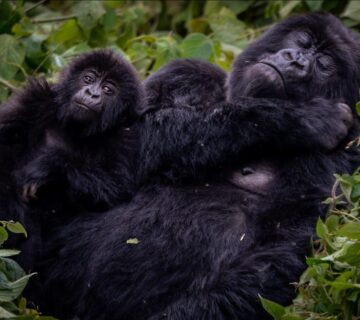
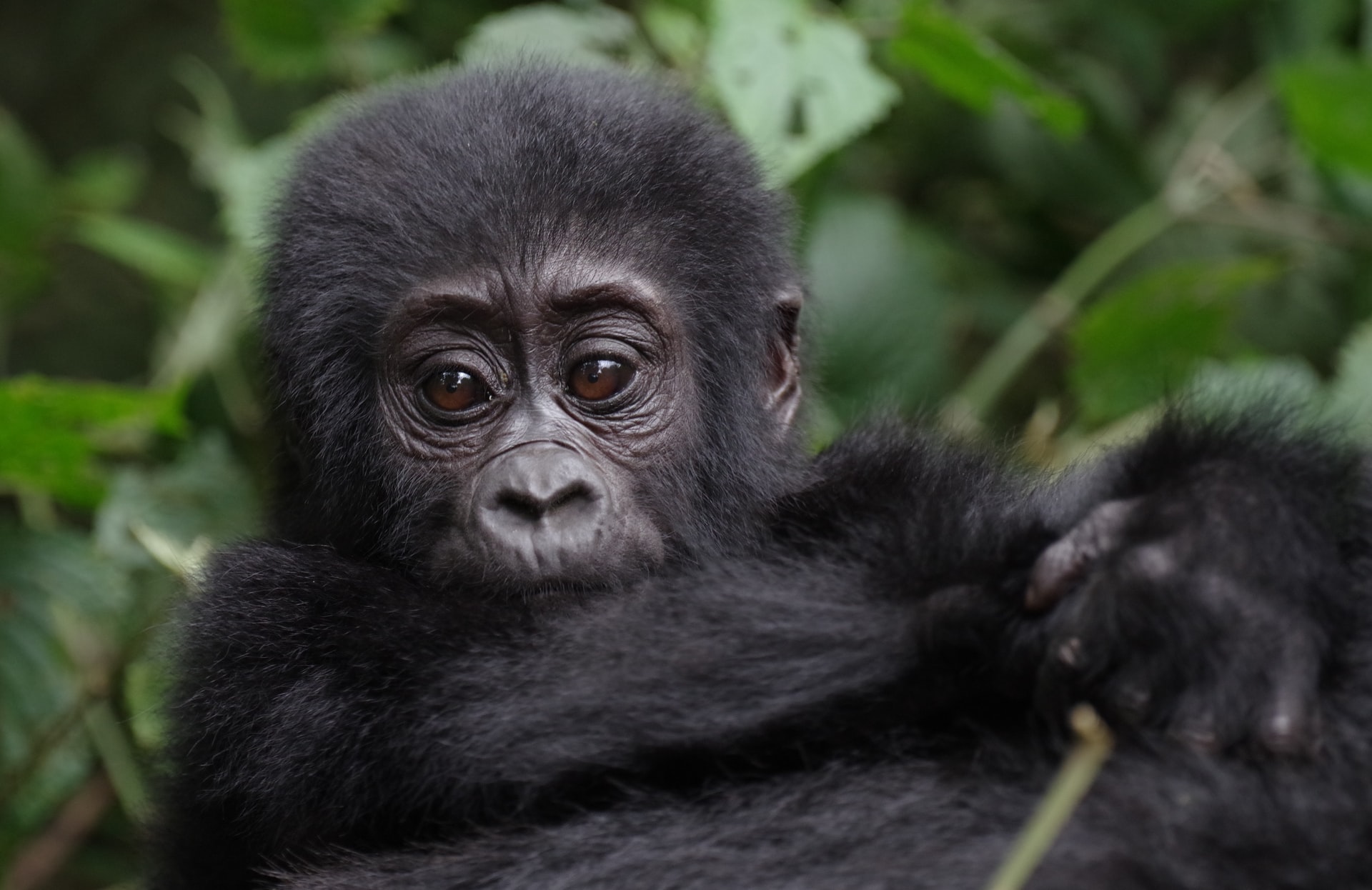
The most important thing to understand is that Rwanda and Uganda are tracking the same species of mountain gorilla, but in different ecological and logistical contexts.
In Rwanda, gorilla trekking is centered in Volcanoes National Park, a high-altitude volcanic forest with relatively open terrain and shorter trek durations on average.
In Uganda, gorilla trekking takes place primarily in Bwindi Impenetrable Forest, which is denser, more complex, and often involves longer hikes through thick jungle terrain.
This means that combining both countries is not about seeing different animals. It is about experiencing different environments, trekking styles, and safari atmospheres around the same species.
Border Crossing Routes: How Rwanda and Uganda Connect
The most commonly used land border between the two countries for safari travel is the Cyanika or Katuna border posts in southwestern Uganda and northern Rwanda.
Travelers typically move overland between Kigali and southwestern Uganda. The drive from Kigali to the border is relatively short, and from there, it continues into Bwindi or Mgahinga depending on the trekking sector.
Another common route involves starting in Uganda and ending in Rwanda, or vice versa, depending on flight logistics and itinerary design.
Air travel is also possible but less common for this specific combination, as most gorilla trekking circuits are designed around road-based logistics for flexibility and accessibility.
Permit Systems: The Most Important Planning Difference
One of the biggest differences between the two countries is the gorilla trekking permit system.
In Rwanda, permits are issued for trekking in Volcanoes National Park and are known for being highly regulated with a fixed pricing structure and limited daily availability.
In Uganda, permits are issued for Bwindi Impenetrable Forest and Mgahinga Gorilla National Park, and are generally priced lower, with slightly different booking dynamics depending on season and sector.
When combining both countries, travelers must secure separate permits for each destination. These cannot be transferred or shared, and they must be booked in advance due to high demand in both regions.
Why Combine Rwanda and Uganda in One Safari
The main reason travelers combine both countries is to diversify the gorilla trekking experience.
Rwanda offers a more structured, high-end safari environment. Lodges near Volcanoes National Park tend to be luxury-focused, logistics are highly streamlined, and trekking experiences are often shorter and more predictable.
Uganda offers a more rugged, immersive rainforest experience. Trekking in Bwindi can be more physically demanding, but also more varied in terrain and atmosphere.
By combining both, travelers get a complete spectrum of gorilla trekking experiences, from refined luxury to deep rainforest immersion.
Sample Safari Flow: Rwanda to Uganda Route
A common itinerary begins in Kigali, where travelers spend a night before transferring to Volcanoes National Park for gorilla trekking in Rwanda.
After completing trekking, the journey continues by road across the southwestern border into Uganda. This transition takes you through changing landscapes, from volcanic terrain into dense equatorial rainforest.
In Uganda, travelers typically stay in lodges near Bwindi Impenetrable Forest or Mgahinga Gorilla National Park, completing a second gorilla trekking experience in a different environment.
The itinerary then usually ends with departure either from Entebbe in Uganda or a return to Kigali, depending on flight routing.
Travel Time and Logistics Reality
While the distances may look short on a map, road travel between Rwanda and Uganda involves mountainous terrain and border procedures, which add time to the journey.
Transfers between Volcanoes National Park and Bwindi can take several hours depending on border processing and lodge location. However, the journey itself is part of the experience, offering scenic views of the Virunga range and rural highland communities.
Well-planned itineraries usually include buffer time to avoid rushing between trekking days.
Accommodation Differences Between the Two Countries
Accommodation style is one of the most noticeable contrasts when combining Rwanda and Uganda.
In Rwanda, properties such as Bisate Lodge or Singita Kwitonda Lodge focus on ultra-luxury design, strong architectural identity, and highly curated service experiences.
In Uganda, lodges near Bwindi range from mid-range eco-lodges to high-end forest retreats, often with a stronger emphasis on immersion in dense rainforest rather than architectural statement.
This contrast enhances the combined itinerary, giving travelers two distinct interpretations of gorilla trekking hospitality.
Physical Demands: Rwanda vs Uganda Trekking Intensity
Another key difference is trekking difficulty.
Rwanda’s Volcanoes National Park is generally known for shorter and more accessible treks, although conditions still vary depending on gorilla movement and weather.
Uganda’s Bwindi Impenetrable Forest can involve longer and more physically demanding hikes due to steeper terrain and denser vegetation.
For many travelers, combining both experiences provides a realistic understanding of the full range of gorilla trekking conditions in East Africa.
Border Formalities and Travel Requirements
Crossing between Rwanda and Uganda requires standard immigration procedures at official border posts.
Travelers must ensure they have valid visas for both countries if required, along with yellow fever vaccination documentation depending on entry regulations.
Most safari operators handle border coordination as part of the itinerary, ensuring smooth transitions between parks and countries.
Who Should Combine Rwanda and Uganda
This type of itinerary is best suited for travelers who are highly interested in primates and want a deeper comparative safari experience.
It works particularly well for repeat safari visitors, wildlife photographers, and travelers who want to understand the ecological and logistical diversity of gorilla trekking across East Africa.
It is less suited for short trips, as combining both countries requires more time, planning, and travel coordination.
Is It Worth Crossing the Border?
Combining Rwanda and Uganda in one gorilla safari creates one of the most complete primate experiences available anywhere in the world.
Rwanda offers structure, luxury, and efficiency around Volcanoes National Park. Uganda offers depth, challenge, and rainforest immersion in Bwindi. Together, they form a full spectrum view of mountain gorilla trekking.
For travelers with enough time and interest in comparative safari experiences, crossing the border is not just worth it. It is one of the most rewarding ways to understand the true range of East Africa’s gorilla landscapes.
Start Planning Your Next Trip To Africa
If you can picture yourself in one—or several—of these exceptional retreats, the next move is simple. We design fully tailored African safaris that bring these experiences together seamlessly, from private gorilla encounters to luxury lodges in the heart of the wild.
Every detail is carefully planned, so your journey feels effortless from start to finish. Reach out in whichever way suits you best, and let’s begin crafting your safari.
Start Planning