What’s Included in a Kenya Luxury Safari Package? Reading the Fine Print
A Kenya luxury safari package in 2026 often appears simple on the surface. A nightly rate is quoted, described as “all-inclusive,” and positioned as covering everything you need. In reality, safari pricing is layered, and what is included varies significantly between camps, regions, and operators. For luxury travellers, understanding exactly what is included—and what is not—is essential to avoid unexpected costs and to properly evaluate value.
The phrase “all-inclusive” in the safari industry does not have a universal definition. It can range from comprehensive coverage of almost every expense to a more limited structure that still requires additional payments for key elements such as park fees, flights, or premium experiences.
Reading the fine print is not about being cautious. It is about understanding how safari pricing is constructed and what each component contributes to the overall experience.
What “all-inclusive” usually means in Kenya
In most high-end camps, “all-inclusive” covers accommodation, meals, standard drinks, shared game drives, and guiding services. This forms the operational base of the safari experience.
Guests can expect full-board dining, including breakfast, lunch, dinner, and snacks. Drinks typically include soft beverages, house wines, and standard spirits, although premium alcohol may be excluded depending on the camp.
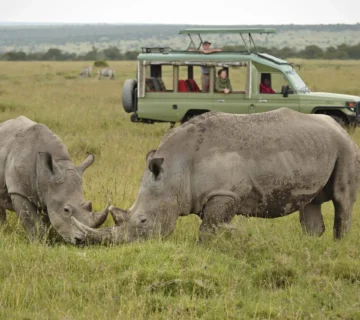
Game drives are conducted in shared vehicles unless otherwise specified. These drives are led by professional guides and usually take place in the early morning and late afternoon, which are the most active wildlife periods.
This core package represents the foundation of most luxury safari pricing, but it is only one part of the full cost structure.
Park fees and whether they are included
One of the most important details in any safari package is whether park fees are included.
Entry to protected areas such as the Masai Mara National Reserve requires daily fees that can be substantial, particularly in high season. These fees are mandatory and are charged per person per day.
Some luxury packages include park fees within the quoted price, while others list them separately. This difference can significantly affect how you compare itineraries.
If park fees are excluded, they can add hundreds of dollars per person over the course of a safari. For this reason, it is critical to confirm their status early in the booking process.
Conservancy fees and their impact on pricing
If your safari includes stays in private conservancies, conservancy fees become a major cost component.
These fees are often higher than standard park levies because they fund land leases, community agreements, and conservation programs. In return, conservancies offer lower guest density, flexible safari activities, and a more exclusive experience.
In most luxury conservancy camps, these fees are included in the nightly rate. However, this is not always the case, and clarification is necessary when reviewing an itinerary.
Understanding whether these costs are bundled or separate is essential for accurate pricing comparisons.
Internal flights and transfers
Transport within Kenya is rarely included in base accommodation rates, even in luxury packages.
Flights between Nairobi and safari destinations such as the Masai Mara or Laikipia are typically priced separately. These flights are a standard part of luxury safaris, as they reduce travel time and improve overall comfort.
Transfers between airstrips and camps are usually included once you arrive at your destination. However, the flights themselves are often an additional cost unless the itinerary is marketed as fully packaged.
Private charter flights, when used, are always priced separately due to their high cost.
Game drives and guiding structure
Game drives are a central part of any safari package, but the structure can vary.
Most camps include shared game drives as part of their standard offering. These are conducted in camp vehicles with other guests and follow a general schedule.
Private vehicles are often available at an additional cost. This upgrade provides complete flexibility in timing, duration, and focus of game drives.
For luxury travellers, private vehicles are often preferred, especially for families or photographers. However, they can significantly increase the total cost of the safari.
Guiding quality is typically included in the package, but the level of expertise can vary between camps. High-end properties often employ highly experienced guides, which enhances the overall experience.
Meals, drinks, and dining experiences
Dining is a key component of luxury safari packages and is usually included in full.
Meals are typically prepared using high-quality ingredients and are served in a variety of settings, from dining tents to outdoor bush locations. Some camps offer private dining experiences or special setups such as bush breakfasts and sundowners.
Standard drinks are generally included, but premium wines, champagne, and top-shelf spirits may be excluded or available at an additional cost.
It is important to clarify what level of beverage service is included, particularly in higher-end camps where expectations may differ.
Laundry and personal services
Many luxury camps include laundry services as part of the package. This is particularly useful for longer safaris, as luggage restrictions on small aircraft limit the amount of clothing you can bring.
Personal services such as housekeeping, turn-down service, and concierge assistance are also included in most high-end camps.
These elements contribute to the overall comfort of the experience but are often taken for granted because they are embedded in the package price.
Activities beyond standard game drives
Additional activities can vary significantly between camps and locations.
In conservancies, activities such as night game drives and walking safaris are often included. These experiences add depth to the safari and provide opportunities to explore the ecosystem beyond daytime game drives.
In national parks, activities are usually limited to standard game drives due to regulations.
Some camps include cultural visits or conservation experiences, while others treat these as optional add-ons.
Understanding what activities are included helps determine how varied your daily experience will be.
Premium experiences that are usually excluded
Certain high-end experiences are almost always excluded from standard packages.
Hot air balloon safaris in the Masai Mara are one of the most common examples. These experiences are priced separately and can add several hundred dollars per person.
Spa treatments, private dining setups, and specialized excursions may also carry additional charges depending on the camp.
These optional extras can significantly increase the overall cost if included in your itinerary.
Gratuities and tipping expectations
Tipping is not usually included in safari packages and should be budgeted separately.
In Kenya, tipping is customary for guides, drivers, and camp staff. While there is no fixed rule, guidelines are often provided by operators to help guests determine appropriate amounts.
For luxury travellers, gratuities can add a noticeable amount to the total cost, particularly on longer safaris.
Travel insurance and international flights
International flights to Kenya are almost never included in safari packages.
Travel insurance is also typically excluded but strongly recommended. Given the value of a luxury safari and the involvement of internal flights, insurance provides important protection.
These costs are external to the safari package but must be factored into the overall budget.
How to read a safari quote correctly
Reading a safari quote requires attention to detail.
The most important step is identifying what is included and what is excluded. This includes park fees, conservancy fees, flights, private vehicles, and premium experiences.
A lower quoted price may exclude key components, making it appear more affordable than it actually is. A higher price may include everything, providing better overall value.
Comparing itineraries requires looking beyond the headline number and understanding the full cost structure.
Why safari packages are structured this way
Safari pricing reflects the complexity of operating in remote environments.
Camps must manage logistics such as food supply, fuel, and staffing in areas with limited infrastructure. Conservation fees support wildlife protection and community partnerships.
Low guest density in luxury camps increases per-person costs while maintaining exclusivity.
These factors combine to create a pricing model that is different from traditional travel products.
What luxury travellers are really paying for
A luxury safari package is not just a collection of services. It is a coordinated system that provides access to protected environments, expert guiding, and seamless logistics.
Travellers are paying for time efficiency, privacy, and the ability to experience wildlife without disruption.
Understanding what is included in a package allows you to evaluate whether the price reflects the experience you expect.
Start Planning Your Next Trip To Africa
If you can picture yourself in one—or several—of these exceptional retreats, the next move is simple. We design fully tailored African safaris that bring these experiences together seamlessly, from private gorilla encounters to luxury lodges in the heart of the wild.
Every detail is carefully planned, so your journey feels effortless from start to finish. Reach out in whichever way suits you best, and let’s begin crafting your safari.
Start Planning