Tracking Chimpanzees in Kyambura Gorge: Queen Elizabeth’s Hidden Primate Experience
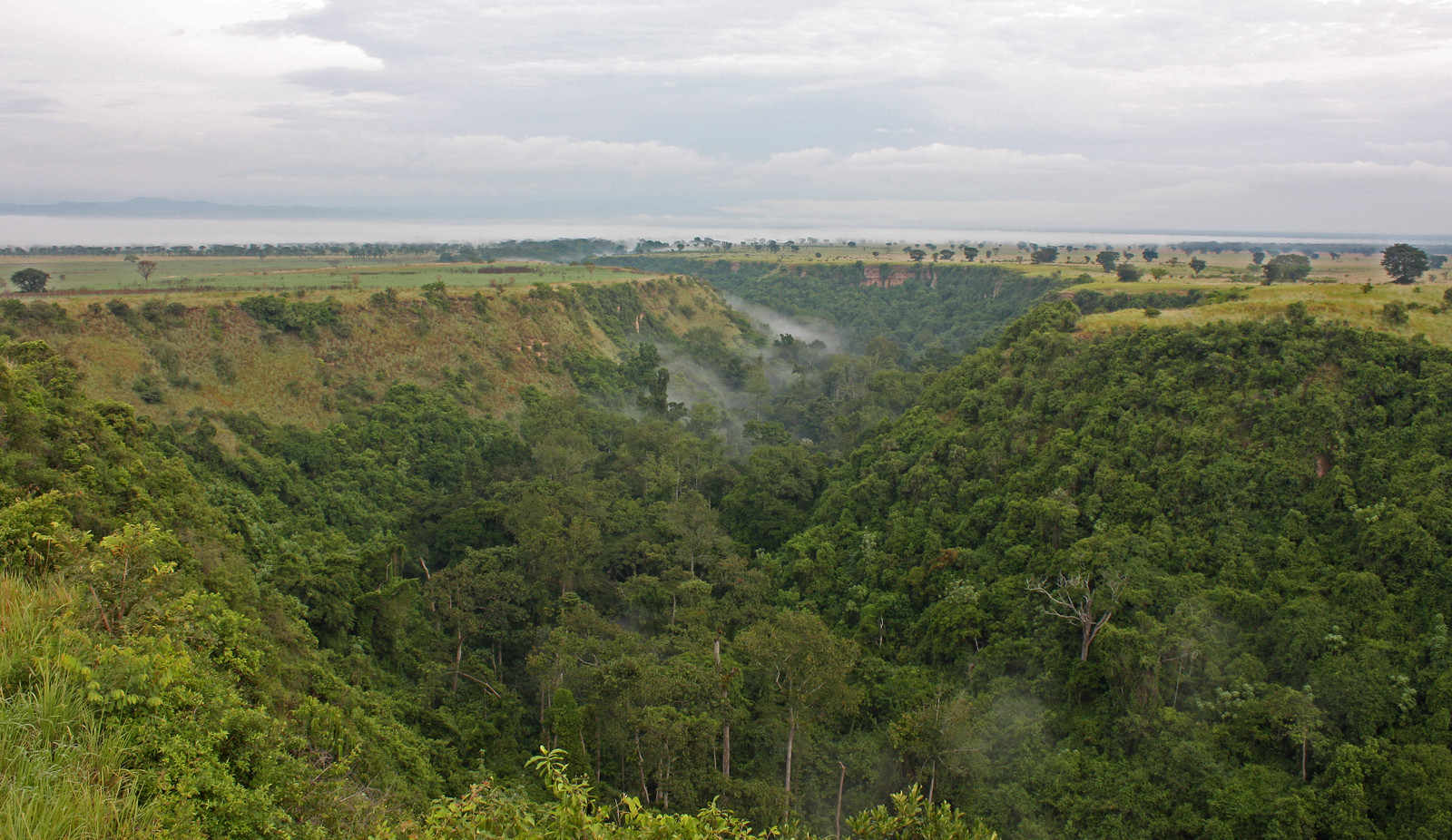
Chimpanzee tracking in Kyambura Gorge is one of Uganda’s most underrated wildlife experiences, offering a rare contrast to the more widely known primate encounters in Kibale National Park. Located within Queen Elizabeth National Park, Kyambura Gorge presents a unique ecological setting where a dense tropical forest cuts dramatically through open savannah, creating an isolated habitat often referred to as the “Valley of Apes.”
This experience is not defined by high success rates or guaranteed sightings. Instead, its value lies in the setting, the challenge, and the rarity of tracking chimpanzees in a geographically constrained forest ecosystem surrounded by grassland.
Understanding how Kyambura Gorge differs from other chimpanzee tracking destinations in Uganda is essential for evaluating whether it fits into a well-structured safari itinerary.
The Unique Geography of Kyambura Gorge
A Forest Hidden Inside the Savannah
Kyambura Gorge is essentially a deep, forested ravine carved into the landscape of Queen Elizabeth National Park. From above, the terrain appears as open savannah, but descending into the gorge reveals a completely different ecosystem.
The gorge features thick vegetation, tall trees, and a humid microclimate that contrasts sharply with the dry plains above. This creates a natural island of forest habitat surrounded by grassland.
This isolation plays a major role in shaping both the chimpanzee population and the tracking experience.
Limited Habitat and Its Implications
Unlike Kibale National Park, which offers expansive forest cover, Kyambura Gorge is relatively small and self-contained. The chimpanzee community here is therefore limited in size and range.
This makes tracking more unpredictable, as chimpanzees can move quickly through the confined space or retreat into dense sections of the gorge where visibility is low.
At the same time, the limited habitat means that when sightings occur, they can feel highly concentrated and intimate.
The Nature of Chimpanzee Tracking in Kyambura
Lower Success Rate Compared to Kibale
One of the defining characteristics of chimpanzee tracking in Kyambura Gorge is its lower success rate compared to Kibale National Park.
In Kibale, chimpanzee tracking success is consistently high due to well-established tracking systems and larger chimp populations.
In Kyambura, sightings are not guaranteed. The smaller population and dense forest conditions mean that tracking can sometimes result in hearing chimpanzees without seeing them clearly.
This unpredictability is a key factor in understanding the experience.
Tracking Based on Movement and Sound
Tracking in Kyambura relies heavily on listening for vocalizations and following fresh signs such as nests or feeding activity.
Chimpanzees move quickly through the forest, often traveling in small sub-groups. This requires guides to make rapid decisions about direction and pace.
The experience is dynamic and requires active participation rather than passive observation.
Physical Experience of the Gorge Trek
Steep Descent and Ascent
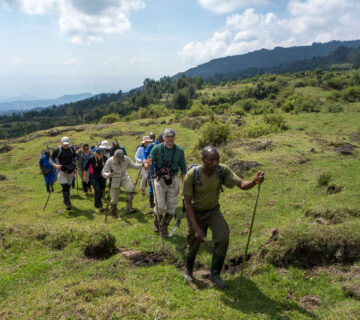
Tracking chimpanzees in Kyambura Gorge involves a steep descent into the ravine at the start of the trek and a corresponding climb back out at the end.
This adds a physical challenge that differs from the more gradual terrain found in some other forest environments.
The descent can be slippery, especially in wet conditions, and requires careful footing.
Dense Vegetation and Limited Visibility
Once inside the gorge, visibility is often restricted by thick vegetation. This makes sightings more fleeting and requires patience and attentiveness.
Unlike open forest systems, where animals may be visible at a distance, Kyambura requires close-range detection.
This creates a more immersive but also more demanding tracking environment.
What You Actually See During the Experience
Chimpanzee Behavior in Kyambura
When chimpanzees are located, sightings can include feeding, movement through the canopy, and vocal communication between individuals.
Because the group is smaller, interactions may feel more focused, with fewer individuals but more concentrated activity.
However, due to the nature of the environment, viewing time and clarity can vary significantly.
Other Wildlife in the Gorge
Kyambura Gorge is not only about chimpanzees. The forest supports other primates such as monkeys, as well as birdlife adapted to forest habitats.
The transition between savannah and forest also creates opportunities to observe different ecological zones within a single activity.
Why Include Kyambura in a Uganda Safari
Complementary Experience to Game Drives
One of the main reasons to include Kyambura Gorge in a safari is its location within Queen Elizabeth National Park.
This allows travelers to combine primate tracking with traditional game drives without traveling to a separate destination.
It adds depth to the safari by introducing a forest-based activity within a predominantly savannah itinerary.
Alternative for Travelers Not Visiting Kibale
For travelers who are not including Kibale National Park in their itinerary, Kyambura offers an opportunity to experience chimpanzee tracking without significant additional travel.
While it does not replace the reliability of Kibale, it provides access to primate tracking within an already planned route.
When Kyambura Works Best in an Itinerary
Kyambura Gorge is most effective when positioned as a secondary or supplementary experience rather than the primary primate activity.
It works particularly well for:
Travelers already visiting Queen Elizabeth National Park
Safari itineraries combining Ishasha and Bwindi Impenetrable National Park
Visitors interested in diverse ecosystems within a short timeframe
When approached with the right expectations, Kyambura adds variety rather than acting as a substitute for more established chimp tracking locations.
Luxury Considerations for the Experience
Private Guiding and Flexible Timing
Luxury safari setups can improve the Kyambura experience through private guiding arrangements and flexible scheduling.
This allows for better pacing, more focused tracking, and the ability to adapt to conditions on the ground.
Lodge Proximity and Access
Staying at lodges near Queen Elizabeth National Park reduces travel time to the gorge and allows for better alignment with tracking schedules.
This is particularly important given the physical demands of the trek.
The Reality of Success vs Experience Value
Kyambura Gorge is often evaluated based on success rates, but this overlooks the broader value of the experience.
The combination of dramatic landscape, ecological contrast, and active tracking creates a distinctive wildlife encounter that differs from more predictable environments.
Even when chimpanzees are not clearly seen, the process of tracking, listening, and navigating the gorge provides insight into primate behavior and forest ecology.
Kyambura Gorge
In practical safari terms, Kyambura Gorge is not designed to guarantee sightings. It is designed to offer a different type of primate experience within a savannah-dominated landscape.
Its value lies in contrast, challenge, and the uniqueness of tracking chimpanzees in an isolated forest system.
For travelers who understand this positioning, Kyambura becomes a strategic addition to a Uganda safari rather than a risk.
The experience stands out not because it replaces Kibale National Park, but because it delivers a fundamentally different perspective on chimpanzee tracking within the broader context of Queen Elizabeth National Park.
Start Planning Your Next Trip To Africa
If you can picture yourself in one—or several—of these exceptional retreats, the next move is simple. We design fully tailored African safaris that bring these experiences together seamlessly, from private gorilla encounters to luxury lodges in the heart of the wild.
Every detail is carefully planned, so your journey feels effortless from start to finish. Reach out in whichever way suits you best, and let’s begin crafting your safari.
Start Planning