Chimpanzee Tracking in Kibale: How It Compares to Gorilla Trekking
Chimpanzee tracking in Uganda is often positioned as a complementary experience to gorilla trekking, but in reality, it is a fundamentally different wildlife encounter with its own pace, energy, and behavioral dynamics. For travelers planning safaris that include both Kibale National Park and Bwindi Impenetrable National Park, understanding these differences is critical for setting expectations and maximizing the value of each experience.
While both involve trekking through tropical forest to observe primates in their natural habitat, chimpanzee tracking and gorilla trekking differ in movement patterns, viewing conditions, physical demands, and the type of interaction you have with the animals.
The Core Difference: Behavior and Movement
The most important distinction between chimpanzees and gorillas lies in how they behave in the wild.
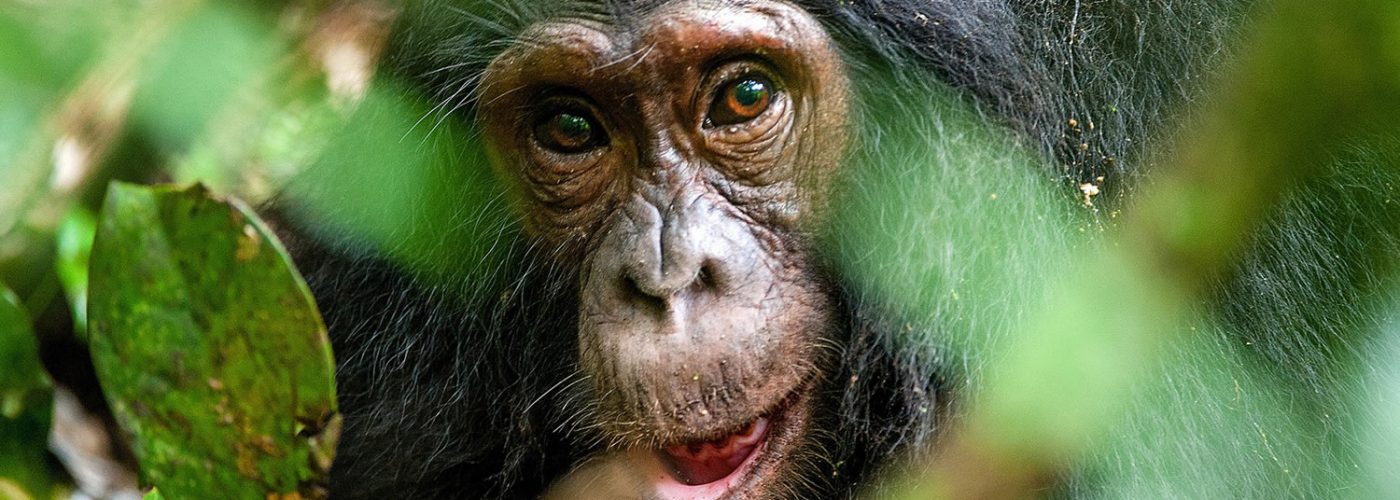
Chimpanzees are highly active, fast-moving primates. They travel continuously through the forest, often covering large distances in a short time. Their social structure is dynamic, with individuals splitting and regrouping throughout the day. This means tracking chimpanzees is often a moving experience, where sightings can shift quickly from one location to another.
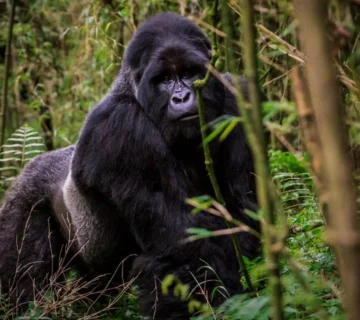
Gorillas, by contrast, are more stable and predictable. Once located, a gorilla family tends to remain in a relatively fixed area while feeding, resting, or interacting. This creates a more stationary viewing experience.
This difference in movement defines the entire structure of each activity.
Trekking Experience in Kibale vs Bwindi
Chimpanzee Tracking in Kibale National Park
Chimpanzee tracking in Kibale National Park typically begins early in the morning when the chimps are most active. Rangers and trackers locate the group based on vocalizations, nesting sites, and movement patterns.
The forest in Kibale is comparatively more open than Bwindi, with established trails and less dense undergrowth in many sections. This makes walking easier in terms of navigation, but the challenge comes from keeping up with the chimpanzees once they are found.
Tracking often involves quick directional changes, listening for calls, and moving at a faster pace than in gorilla trekking. Sightings can happen both on the ground and in the forest canopy.
Gorilla Trekking in Bwindi Impenetrable National Park
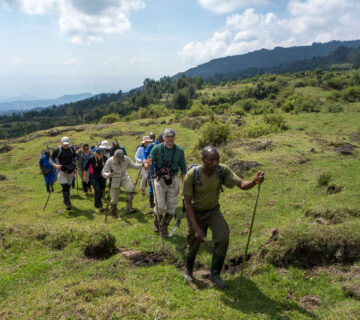
Gorilla trekking in Bwindi is slower and more methodical. The forest is denser, terrain steeper, and movement more physically demanding due to thick vegetation and uneven ground.
However, once the gorilla family is located, the pace slows dramatically. Visitors spend a full hour observing a largely stationary group at close range.
This creates a more immersive and uninterrupted viewing experience compared to the dynamic nature of chimp tracking.
Viewing Conditions and Visibility
Chimpanzee Viewing: Fast and Elevated
Chimpanzees are often seen in trees, sometimes high in the canopy. This means viewing angles can be challenging, especially for photography.
Because they move quickly, sightings may be brief and require constant repositioning. You may hear them before you see them, and you often follow vocal cues rather than visual tracking.
The experience is energetic and unpredictable.
Gorilla Viewing: Close and Ground-Level
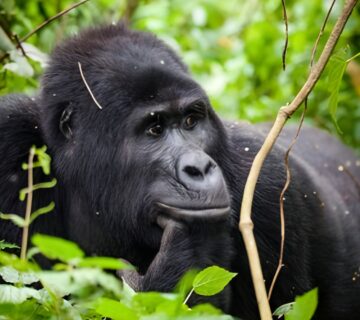
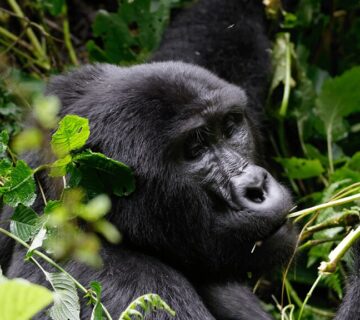
Gorilla viewing is typically at ground level, with clear visibility once the group is located. The proximity is controlled but often close enough to observe facial expressions, social interactions, and detailed behavior.
Because gorillas move slowly, you have time to observe and absorb the experience without rushing.
This difference in viewing style is one of the most defining contrasts between the two activities.
Physical Demands and Effort
Chimpanzee Tracking Effort
Chimpanzee tracking can feel physically demanding in a different way compared to gorilla trekking. While the terrain in Kibale is generally easier, the pace can be faster and less predictable.
You may need to move quickly to keep up with the group, especially if they are traveling through the canopy or across forest sections.
The effort is more about agility and responsiveness rather than sustained uphill hiking.
Gorilla Trekking Effort
Gorilla trekking is typically more physically demanding in terms of terrain. Bwindi’s steep slopes, dense vegetation, and uneven ground require endurance and steady movement.
However, the pace is slower and more controlled, allowing for gradual progression through the forest.
The effort is more consistent and endurance-based rather than fast-paced.
Duration and Time Structure
Chimpanzee tracking sessions are usually shorter in terms of structured viewing time. Once the chimps are located, viewing may last around one hour, but actual continuous observation can vary due to movement.
Gorilla trekking offers a guaranteed one-hour viewing period once the group is found. This hour is strictly regulated and provides a stable window for observation.
The difference is not just in time, but in how that time feels. Gorilla viewing feels concentrated and immersive, while chimp tracking feels fluid and dynamic.
Sound and Atmosphere
Chimpanzee tracking is often defined by sound. Loud calls, screams, and forest echoes create a highly sensory experience. The forest feels alive with movement and communication.
Gorilla trekking, on the other hand, is quieter and more observational. The atmosphere is calmer, with subtle sounds like chewing, movement through vegetation, and occasional vocalizations.
These contrasting atmospheres create very different emotional experiences.
Photography Experience
Photography conditions differ significantly between the two.
Chimpanzee tracking presents challenges due to movement speed, lighting conditions in the canopy, and limited stable viewing time. Capturing clear images requires quick reactions and often higher camera settings.
Gorilla trekking provides more stable conditions. With slower movement and ground-level visibility, photographers have more time to frame shots and adjust settings.
This makes gorilla trekking generally more accessible for photography.
Cost Comparison
Chimpanzee tracking permits in Kibale National Park are significantly less expensive than gorilla permits in Bwindi Impenetrable National Park.
This makes chimp tracking a more accessible entry point into primate experiences, while gorilla trekking remains a premium wildlife encounter due to its rarity and conservation structure.
Because of this price difference, many itineraries combine both activities to provide a balanced primate experience.
Behavioral Intelligence and Interaction
Chimpanzees exhibit highly dynamic and sometimes dramatic behavior. Their social interactions include vocal communication, movement coordination, and occasional displays of dominance or play.
Gorillas display more relaxed and stable social structures. Observing a gorilla family reveals bonding, grooming, and hierarchical organization in a calm setting.
Both experiences offer deep insight into primate intelligence, but they present it in very different ways.
Why Many Safaris Include Both
For travelers visiting Uganda, combining chimpanzee tracking in Kibale National Park with gorilla trekking in Bwindi Impenetrable National Park provides a complete primate experience.
Chimp tracking introduces energy, sound, and movement. Gorilla trekking offers stillness, proximity, and extended observation.
Together, they provide a more comprehensive understanding of primate behavior across different ecological and social systems.
Field Reality of the Two Experiences
In practical safari terms, chimpanzee tracking and gorilla trekking are not interchangeable experiences. They complement each other but serve different expectations.
Chimpanzee tracking is dynamic, fast-paced, and driven by movement and sound.
Gorilla trekking is slower, immersive, and focused on sustained observation.
Understanding this distinction ensures that travelers approach each experience with the right expectations and appreciate the unique qualities of both encounters.
Start Planning Your Next Trip To Africa
If you can picture yourself in one—or several—of these exceptional retreats, the next move is simple. We design fully tailored African safaris that bring these experiences together seamlessly, from private gorilla encounters to luxury lodges in the heart of the wild.
Every detail is carefully planned, so your journey feels effortless from start to finish. Reach out in whichever way suits you best, and let’s begin crafting your safari.
Start Planning