The Kazinga Channel Boat Safari – Africa on the WaterGorilla Trekking in Uganda
There is a unique stillness that settles over the Kazinga Channel in the late afternoon. As the boat slows near the shoreline, the wildlife seems to reveal itself all at once. A buffalo stands knee-deep in the water while hundreds more graze behind it. An elephant wades into the channel, hippos surface nearby, and a Goliath heron remains perfectly still on a half-submerged log as a fish eagle’s unmistakable call echoes across the water.
This is not a staged wildlife encounter. It is everyday life along the Kazinga Channel, where the water draws animals together in remarkable numbers. Just a short drive from the lodges of Queen Elizabeth National Park, this boat safari offers one of the most immersive and rewarding wildlife experiences in Africa.
Kazinga Channel Boat Safari
Wildlife on the Kazinga Channel | Birdwatching on the Kazinga Channel | Morning vs Afternoon Boat Cruise | UWA Boat Safari Costs | Combining the Kazinga Cruise with Game Drives & Ishasha
The Channel – Understanding What You Are On
The Kazinga Channel is a 32-kilometre natural waterway connecting Lake George to the east and Lake Edward to the west, threading through the heart of Queen Elizabeth National Park in a broad, unhurried curve that has shaped the ecology of the surrounding landscape for thousands of years. It is not a river in the conventional sense. It has no single source and no fixed direction of flow, responding instead to the relative water levels of the two great Rift Valley lakes it connects, moving gently east or west depending on seasonal pressure from either end.
This hydrological character has a profound consequence for the wildlife the channel supports. Because it connects two major lakes rather than flowing from a fixed point, the channel’s water levels remain relatively stable year-round, maintaining a permanent water resource in a landscape that experiences significant seasonal variation in rainfall. Animals from across the park’s 1,978 square kilometres converge on the channel’s banks in extraordinary concentrations, particularly during the dry season months when other water sources diminish. The result is a waterway that carries more visible wildlife per kilometre of bank than almost any other in Africa, and a boat safari that consistently ranks among the most productive wildlife experiences in East Africa regardless of the season in which it is conducted.
Wildlife on the Kazinga Channel – Hippos, Elephants and Crocodiles
The Hippo
No other animal defines the Kazinga Channel experience as completely as the hippopotamus. The channel holds one of the largest hippo concentrations in the world, with the Queen Elizabeth National Park population estimated at well over 5,000 individuals distributed along the waterway and in the lakes it connects. On the cruise, hippos are not occasional sightings. They are a constant, overwhelming, and endlessly varied presence from the first minutes of the journey to the last.
Groups of five to thirty individuals occupy every shallow section of the channel, their barrel-shaped bodies submerged to the nostrils, their eyes and ears just visible above the waterline as the boat passes. Some pods are settled and calm, barely registering the approach of the vessel. Others are in the middle of active social interaction: a large male opens his mouth in a wide territorial yawn that exposes canines the length of a forearm, a display aimed at a rival male crowding his space that feels, from the boat, entirely and thrillingly personal. Young hippos press against their mothers in the shallower sections of bank. Older bulls spar in the water with a force and noise that sends spray across the surface.
What most guests do not anticipate is how much the hippos move. Between resting phases they shift position along the banks and through the shallows with surprising energy, and the sound of several hundred kilograms of animal moving through water, combined with the deep resonant bellowing that carries between individuals across the channel, creates an acoustic environment that is utterly unlike anything encountered on a game drive. The boat, being on the water with them rather than above them on a bank, places you inside that sound. This is one of the Kazinga Channel’s most distinctive and most immersive qualities.
The Elephant
If the hippo is the channel’s most abundant presence, the elephant is its most affecting. Murchison Falls holds Uganda’s largest elephant population, but it is along the Kazinga Channel that elephant encounters reach their greatest intimacy, and it is the Kazinga boat cruise that consistently delivers the finest elephant experiences in all of Queen Elizabeth National Park.
Family groups visit the channel throughout the day, but they concentrate in greatest numbers in the early morning before the heat builds and again in the late afternoon as the temperature drops. Watching a family wade into the channel from the bank, the matriarch leading, younger animals picking their way carefully through the shallowing water before suddenly submerging to their chests, trunks raised above the surface, is one of the most moving and most photographically rich moments the entire Uganda safari experience offers.
From the water, at the same level as the animals rather than elevated in a game drive vehicle looking down, the true scale of an adult elephant becomes apparent in a way that ground-level viewing does not quite replicate. A large bull wading chest-deep into the channel, ears spread, eyes half-closed in what appears to be uncomplicated physical pleasure, viewed from a boat ten metres away at water level, is an image that stays with guests in a different and more visceral way than almost any other encounter in the park.
During dry season months when the northern bank savannah thins and other water sources dry, elephant concentrations along the channel reach their annual peak. The boat cruise during these months, when family groups are visible along the banks for kilometre after kilometre, produces some of the finest elephant photography available anywhere in Uganda.
The Nile Crocodile
Nile crocodiles occupy every sandbank and sun-exposed section of shore along the Kazinga Channel, some of them enormous animals that have been growing in these warm equatorial waters for forty years or more. Their stillness on the bank is absolute until it suddenly is not: a lunge into the water as the boat drifts close to a resting position, or a sharp sideways movement toward a hippo that has encroached too near. The negotiation between hippos and crocodiles along the channel banks is one of the most fascinating and most continuously available wildlife dramas the cruise offers.
Adult Nile crocodiles in the Kazinga can exceed five metres in length, and the largest individuals on the primary sandbanks are genuinely impressive animals. The way they bask with their mouths wide open, a thermoregulatory behaviour that dissipates heat through the mouth’s membranes rather than the scaled skin, makes them look permanently aggressive. They are simply cooling down, but the effect is dramatic and they are reliably present in numbers throughout every cruise throughout the year.
Buffalo, Waterbuck, Warthog and the Wider Cast
Cape buffalo are present in large herds on the Kazinga’s southern bank throughout the year, with the dry season concentrations swelling to several hundred animals at a time coming to the water’s edge in long processions from the savannah behind. From the boat at water level, the size and density of a large buffalo herd is viscerally impressive in a way that a vehicle-based game drive sighting, however close, does not fully capture.
Waterbuck stand in small groups on the bank with the characteristic white ring marking that makes them immediately identifiable from a distance. Uganda kob move along the higher sections of the bank above the waterline. Warthogs root in the mud at the channel’s edge. Monitor lizards bask on exposed roots and overhanging branches in positions that mirror the crocodiles so precisely that distinguishing one from the other at distance requires a second look. And the occasional leopard, spotted by a sharp-eyed guide in the vegetation of the southern bank tree line, provides the kind of unexpected encounter that makes every channel cruise feel unrepeatable.
Birdwatching on the Kazinga Channel – Over 100 Species
For birdwatchers, the Kazinga Channel is not simply a complement to the broader birding experience of Queen Elizabeth. It is the centrepiece of it. With Queen Elizabeth recording over 600 bird species across its varied habitats and the channel corridor alone accounting for more than 100 of them, the two-hour boat cruise covers more species and produces more sustained, close-range birdwatching opportunities than any game drive equivalent.
The diversity of habitat along the channel banks, open water, papyrus beds, mudflats, sandy shoreline, riverine forest fringe, and open savannah edge, means that species from completely different ecological categories appear within the same two-hour window. A serious birding list from a single afternoon cruise in Queen Elizabeth regularly exceeds 50 species, and for guests with a dedicated birding guide it can go significantly higher.
The Headline Species
The African fish eagle is the sonic signature of the channel, its liquid, cascading call carrying across the water from the tall palms and Borassus figs that line both banks. Watching one drop from its perch in a controlled plunge and take a fish from the surface in a single fluid movement, wings back, talons forward, is one of those moments that the entire wildlife photography community has chased and that the Kazinga Channel delivers with satisfying regularity.
The Goliath heron, standing at over 140 centimetres and weighing up to five kilograms, is Africa’s largest heron. It is present along the channel in some of the highest densities found anywhere in Uganda, standing in the shallows in a stillness so complete that the boat is often within five metres before it moves. When the strike comes, the speed and precision is startling given the bird’s enormous size.
Pink-backed pelicans work the open water in cooperative fishing groups, driving fish toward shallower areas before scooping with their great pouched bills. Pied kingfishers hover above the water’s surface in their distinctive suspended posture, wings beating in rapid, blurring arcs, before dropping in a near-vertical plunge toward the fish below.
Malachite kingfishers, a fraction of the pied’s size but even more vivid in their electric blue and orange colouring, perch on papyrus stems at the water’s edge and are one of the most reliably and enthusiastically photographed species on any Kazinga cruise.
African skimmers work the channel surface at dusk in long, low-altitude passes, their extended lower mandible cutting the water in search of fish. The skimmer’s flight pattern, that long, tilted, surface-grazing arc across the channel at speed, is one of the most distinctive and most watched behaviours on the evening cruise.
Saddle-billed storks, one of Africa’s most visually spectacular wading birds, stand in the shallows on their long red and black legs with a composure that belies the extraordinary colouring of their bills: red, black, and yellow bands that look almost artificially vivid against the natural palette of the channel banks. Open-billed storks, yellow-billed storks, and African spoonbills congregate in the productive mudflat areas where fish concentrations are highest.
In the papyrus-fringed sections of the channel, particularly toward the western approach near Lake Edward, the papyrus gonolek and the African purple swamphen inhabit the reed beds at the water’s margin. The shoebill stork, one of the most sought-after birds in all of East Africa, occasionally appears in the dense papyrus areas at the channel’s edges, most reliably on early morning cruises when this solitary, prehistoric-looking bird hunts the shallow water before the boat traffic increases.
The Wider Bird List
Beyond the headline species, the Kazinga Channel cruise reliably produces great, long-tailed, and pied cormorants drying their wings on exposed logs. African darters perch with wings outstretched in the same posture. Grey herons, purple herons, and squacco herons work different sections of the bank simultaneously. Reed cormorants dive repeatedly in the shallower reaches. Hammerkops move methodically along the water’s edge. African jacanas walk across floating vegetation with implausible lightness. And overhead, martial eagles and bateleurs soar above the channel corridor in the thermals that build over the warm water through the middle of the day.
For birdwatchers with specific target species, a dedicated private cruise with a specialist birding guide, allowing the boat to stop and position carefully at productive papyrus sections in the search for shoebill, is one of the finest targeted birding experiences available in western Uganda.
Morning vs Afternoon Boat Cruise – Which is Better?
This is the question most guests ask before booking, and the honest answer is that morning and afternoon cruises offer genuinely different experiences rather than better or worse versions of the same thing. Understanding the difference helps you choose the departure that matches your priorities, and many guests who spend two or more nights at Queen Elizabeth choose to do both.
The Morning Cruise (9:00 AM and 11:00 AM)
The morning cruise departs into a channel that is often quieter and more settled than the afternoon. The light is soft and diffuse in the early morning, building from the pale gold of the first hour after dawn to the stronger, flatter light of mid-morning by the time the 11:00 AM boat returns.
The morning’s strongest suit is elephants. Family groups visit the channel in their greatest concentration in the early hours, coming to drink and bathe before the heat of the day builds. If your priority is extended, close-range elephant encounters and the opportunity to watch family groups interacting in the water, the morning cruise is the better choice. Hippo activity is also high in the early morning as pods that fed on land overnight return to the water and reassemble.
The morning is also the most productive time for certain bird species. Early morning is when forest and woodland birds are most vocal and most active along the southern bank tree line. The shoebill, if present, is most likely to be encountered in the shallower sections of the channel in the cooler morning hours before it retreats to deeper cover.
The Afternoon Cruise (3:00 PM and 5:00 PM) – Recommended
The afternoon departures, particularly the 3:00 PM and 5:00 PM slots, are the most consistently recommended by experienced guides and by guests who have done both. The reasons are specific and compelling.
The light changes everything. As the sun drops toward the Congolese hills on the western horizon above Lake Edward, the quality of light on the channel surface transitions from the flat brightness of midday to a warm, deep gold that transforms every animal, every bird, and every ripple of water into something that looks lit by intention rather than accident. Buffalo herds on the bank turn from grey to ochre. Hippos in the water reflect the orange sky below their chins. Fish eagles in the tall palms catch the horizontal light on their white chests. And the Virunga volcanoes, visible on clear days rising above the southern horizon, turn from green to purple to silhouette against a sky that moves through five distinct colour phases in the final thirty minutes before the boat returns to the Mweya jetty.
Wildlife concentrations are also at their highest in the afternoon. As the temperature drops from the midday peak, buffalo herds move from the midday shade back toward the water. Elephants resume their afternoon drinking and bathing visits. Hippos that have been resting through the heat become more active and more vocal. And the combination of golden light and concentrated wildlife on both banks simultaneously produces the conditions for the finest photography of any departure time.
The 5:00 PM departure, the last cruise of the day, delivers the most dramatic light of all and finishes on the water at dusk. It is the most atmospheric version of the cruise and the one most consistently described by guests as the definitive Kazinga experience. Book this slot first and work backward from there.
Boat Safari Costs and How to Book in 2027
Current Pricing
Uganda Wildlife Authority Scheduled Cruise:
USD $35 per person for foreign non-residents
USD $30 per person for foreign residents
UGX 30,000 for East African citizens
Park entrance fees apply separately at USD $45 per person per day and are not included in the cruise cost. For guests already in the park on a multi-day visit, entrance fees are typically arranged through your tour operator as part of the overall itinerary.
Mweya Safari Lodge Private Boat:
Approximately USD $250 for a 6-seat private boat
Approximately USD $350 for a 12-seat private boat
Community Boat Operators at Katunguru:
Available at negotiable rates for guests approaching from the Katunguru gate side of the park, these community-operated cruises offer a more informal and locally-guided version of the channel experience at lower cost than the main Mweya departures.
How to Book
Through your tour operator: The most straightforward approach for guests on a full itinerary. Your operator books the cruise slot as part of the broader Queen Elizabeth visit, ensuring it is timed correctly alongside game drives and other activities. Engabi Tours and Travel handles all Kazinga Channel bookings as part of tailored Queen Elizabeth safari packages.
Through your lodge: Mweya Safari Lodge, Kyambura Gorge Lodge, and other Queen Elizabeth properties can arrange both UWA and private boat bookings for their guests. Contact the lodge directly before arrival to reserve your preferred departure slot.
On arrival at Mweya: Walk-up bookings for UWA scheduled cruises are available at the Mweya jetty office, subject to availability. During peak season months of June to September and December to February, the 3:00 PM and 5:00 PM slots fill quickly and should not be left to chance. During the green season, same-day booking is generally possible.
Advance booking for peak season: The afternoon departures, particularly 3:00 PM and 5:00 PM, should be booked in advance for any travel between June and September. These slots are the first to fill and the most in demand of any activity in Queen Elizabeth National Park.
Private Boat vs UWA Boat – Which Should You Choose?
This is a genuinely important choice, and the right answer depends on your group size, your priorities, and your budget.
The UWA Scheduled Boat
The UWA boat is a large double-decker vessel capable of carrying up to 40 passengers, with an upper deck that provides elevated sightlines across the channel and a lower deck for guests who prefer shade and stability. It departs on a fixed schedule regardless of group composition, which means you will share the cruise with other visitors.
The upper deck of the UWA boat is the better position for both wildlife viewing and photography. The elevation gives wider sightlines across both banks simultaneously, and the open railing allows cameras to be positioned freely. On busy departures during peak season, the upper deck can become crowded at popular sightings, which requires some patience in positioning. On quieter departures, particularly during the green season or on the early morning slots, the UWA boat can feel pleasantly spacious even when shared.
The UWA boat’s naturalist guide uses a microphone to address the whole group simultaneously, which works well for general wildlife narration and species identification. For guests who want extended discussion of specific birds or behaviours, a private cruise with a dedicated guide is more suitable.
At USD $35 per person, the UWA cruise is outstanding value. The wildlife encounter is identical regardless of which vessel you are on: the channel’s animals do not distinguish between a large UWA boat and a small private one. The experience is genuine, the guiding is professional, and for most guests it is exactly sufficient.
The Private Boat
Private boat charters, available through Mweya Safari Lodge and a small number of other operators, are smaller vessels of 6 to 12 seats that can be used exclusively by your group. The advantages are specific and significant for the right kind of guest.
Flexibility is the primary benefit. On a private charter, the boat can slow, stop, or reposition at any point along the channel that you or your guide identifies as productive. At a papyrus section where the shoebill has been reported, you can hold position for thirty minutes while the group watches and photographs without the constraint of a shared cruise schedule moving you along. At an elephant bathing sequence on the bank, you can drift at exactly the right angle and distance for however long the encounter lasts.
For photographers with specific objectives, the private boat changes the quality of the opportunity fundamentally. The ability to position the boat for the best light angle, to hold position at a key sighting, and to move the group to one side of the boat simultaneously for a specific shot is simply not available on the shared UWA vessel.
For couples or small families who want the channel entirely to themselves, the private boat delivers an intimacy and a sense of personal discovery that the shared cruise, however enjoyable, cannot replicate.
The private charter costs significantly more than the UWA fare, but for guests who have invested in a luxury Uganda safari, the incremental cost of a private channel cruise is modest relative to the quality of experience it produces. If your group is four or more people, the per-person cost of a private charter becomes considerably more competitive with the UWA fare, and the experiential upgrade is substantial.
The recommendation: For solo travellers and couples who want a cost-effective, excellent experience, the UWA afternoon departure is the right choice. For families, small groups, photographers with specific aims, or any guest for whom the Kazinga Channel is a particular priority, the private boat is worth every dollar.
How to Combine the Kazinga Cruise with Game Drives and Ishasha
The Kazinga Channel cruise works best as part of a structured Queen Elizabeth itinerary that combines it with game drives across the park’s different zones and, for guests with the time and the inclination, an Ishasha sector visit for the tree-climbing lions. Here is how experienced guides typically structure the combination.
The Single-Day Queen Elizabeth Experience
For guests with only one day in Queen Elizabeth, the classic structure is a morning game drive on the Kasenyi Plains followed by a 3:00 PM or 5:00 PM afternoon channel cruise. The morning drive covers lions on the open savannah, Rothschild’s giraffe in the acacia woodland, buffalo herds, and the supporting cast of the northern plains. The afternoon cruise delivers hippos, elephants, crocodiles, and the full birdlife of the channel in the finest light of the day. Between the two activities, a stop at the Mweya Safari Lodge for lunch on the terrace above the channel junction is a natural and very pleasant break. This single-day combination is one of the most concentrated and satisfying wildlife days available anywhere on the Uganda safari circuit.
The Two-Night Queen Elizabeth Stay
Two nights in Queen Elizabeth allows the itinerary to breathe and the activities to be separated across their best time windows. A typical structure runs:
Afternoon of arrival: 3:00 PM or 5:00 PM channel cruise, taking advantage of the afternoon light on the first day.
Day two morning: Game drive on the Kasenyi Plains, focusing on predators and the wider savannah wildlife in the finest photography light of the entire visit.
Day two afternoon: Either a second channel cruise, ideally as a private charter to experience the difference from the shared UWA boat, or a drive to the Katunguru area for the community birding experience along the channel’s eastern reach.
This structure covers the channel at both its time windows, delivers a full game drive circuit on the Kasenyi Plains, and leaves room for a naturalist walk or birding session near the lodge if birdwatching is a priority.
Adding Ishasha
The most complete Queen Elizabeth experience adds an Ishasha sector night or two to the Mweya-centred itinerary, creating a three to four-night stay that covers the full range of the park’s exceptional wildlife.
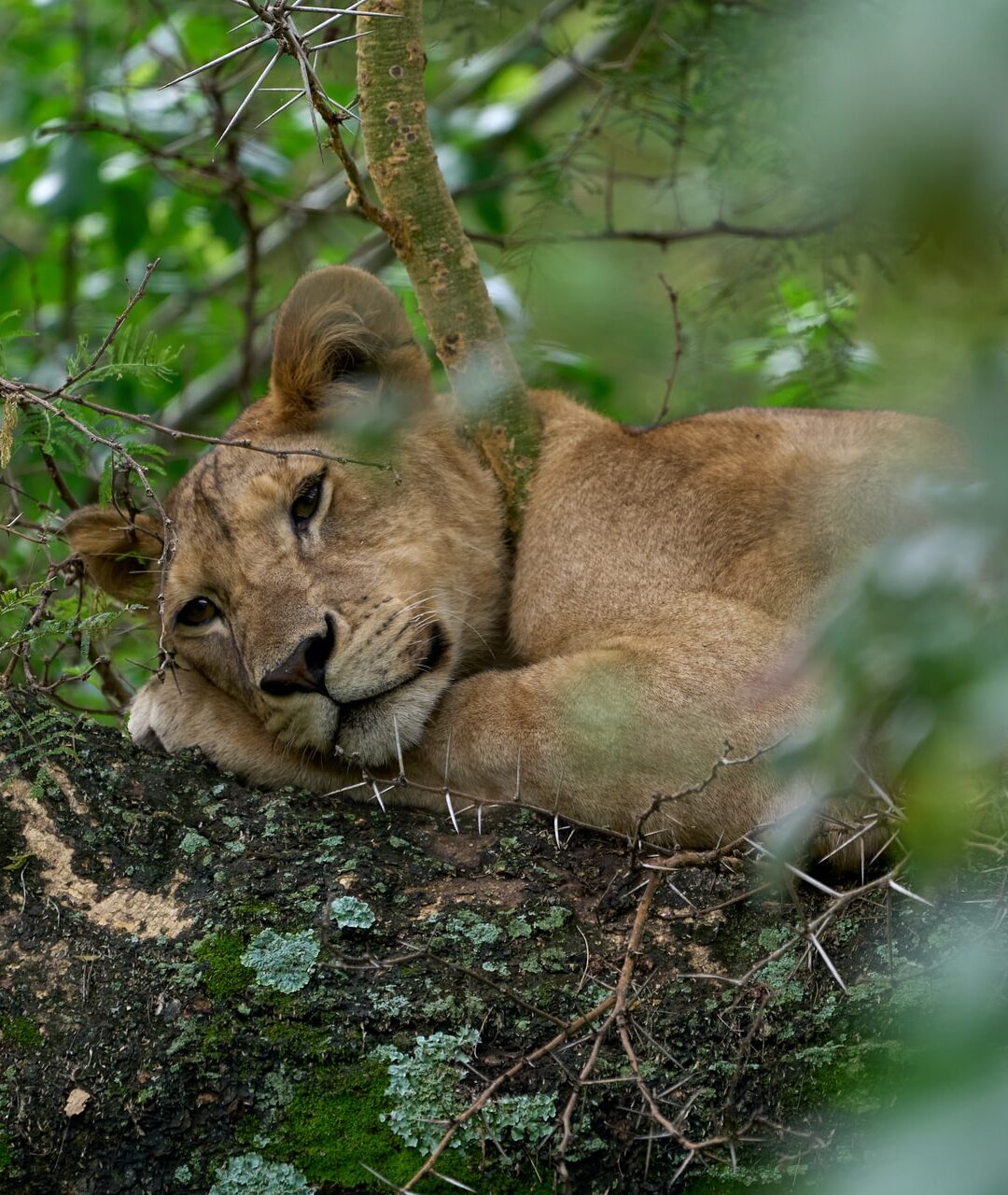
The most logistically satisfying sequencing for guests arriving from Kampala or Bwindi is to enter the park from the south via the Ishasha gate, spend one or two nights at Ishasha for tree-climbing lions, then transfer north through the park to the Mweya area for game drives and the channel cruise. This south-to-north routing allows guests to experience the dramatic visual contrast between the open, remote savannah of the Ishasha sector and the channel-focused wildlife theatre of the Mweya Peninsula in a natural geographic progression.
For guests coming from the north, entering via Kasese and Katunguru gate, the sequence simply reverses: Mweya game drives and channel cruise first, then the drive south to Ishasha for the final nights before exiting toward Bwindi or Kampala.
Adding Kyambura Gorge
For guests with chimpanzee trekking on their priority list, the Kyambura Gorge chimpanzee experience is located approximately 30 minutes from the Mweya area and slots naturally into a two-night Queen Elizabeth itinerary as a morning activity.
Combining a Kyambura Gorge chimpanzee trek on the morning of day two with a 3:00 PM channel cruise on the same afternoon creates a wildlife day of extraordinary breadth: primates in the sunken forest in the morning and hippos, elephants, and crocodiles on the water in the afternoon.
Getting to the Kazinga Channel
From Kampala by Road
Queen Elizabeth National Park is approximately five to six hours from Kampala by road, travelling southwest via Masaka and Mbarara before continuing into the Rift Valley escarpment toward Kasese. The park’s main Katunguru gate is accessed from the Mbarara-Kasese highway, and from the gate the Mweya Peninsula is approximately 20 kilometres west along a well-maintained park road. This final stretch of the drive, descending into the Rift Valley with the channel visible below and the Rwenzori Mountains rising to the north, is one of the most dramatic arrival approaches of any national park in Uganda.
Most guests travelling by road depart Kampala in the early morning and arrive at their Queen Elizabeth lodge by mid to late afternoon, in time for the 5:00 PM channel cruise on the day of arrival. This is one of the smoothest and most rewarding first-day structures on the Uganda road safari circuit.
From Kampala by Scheduled Flight
Domestic flights operate from Entebbe International Airport to Mweya Airstrip, located approximately five minutes from the main lodge cluster on the Mweya Peninsula, and to Kasese Airstrip, approximately 30 to 45 minutes from the Mweya area by road.
Flight time from Entebbe is approximately 45 minutes to Mweya and slightly less to Kasese. Flying in allows guests to arrive in the park by mid-morning and fit a game drive and a channel cruise into the same first day.
For guests combining Queen Elizabeth with Bwindi Impenetrable National Park for gorilla trekking, charter flights can be arranged between Kasese and Kisoro Airstrip, making the Bwindi-Queen Elizabeth combination entirely manageable by air without any long road transfers. Your tour operator can arrange all inter-park flight connections as part of a joined-up Uganda circuit.
From Bwindi and Ishasha
Guests travelling to Queen Elizabeth from Bwindi typically route via the Ishasha sector, entering the park from the south after a two to three-hour drive from Bwindi’s Rushaga or Nkuringo sectors. From Ishasha, the drive north through the park to Mweya takes approximately two to three hours on the park road through the central corridor, or slightly longer via the external Kasese road route. Most itineraries spend one or two nights at Ishasha before continuing north to Mweya, making the tree-climbing lions the transition experience between gorilla country and the channel.
From Kibale National Park
Kibale National Park is approximately two hours north of Queen Elizabeth, making it the most natural and most popular northern Uganda combination with the channel. Guests typically spend two nights at Kibale for chimpanzee trekking before driving south to Queen Elizabeth for game drives and the Kazinga cruise. The drive from Kibale to Queen Elizabeth is scenic and comfortable, passing through the tea estates and foothills around Fort Portal before descending into the Rift Valley.
Where To Stay During This Experience
Where To Do A Kazinga Channel Boat Safari
Uganda Travel Advice
First-Time Uganda Safari
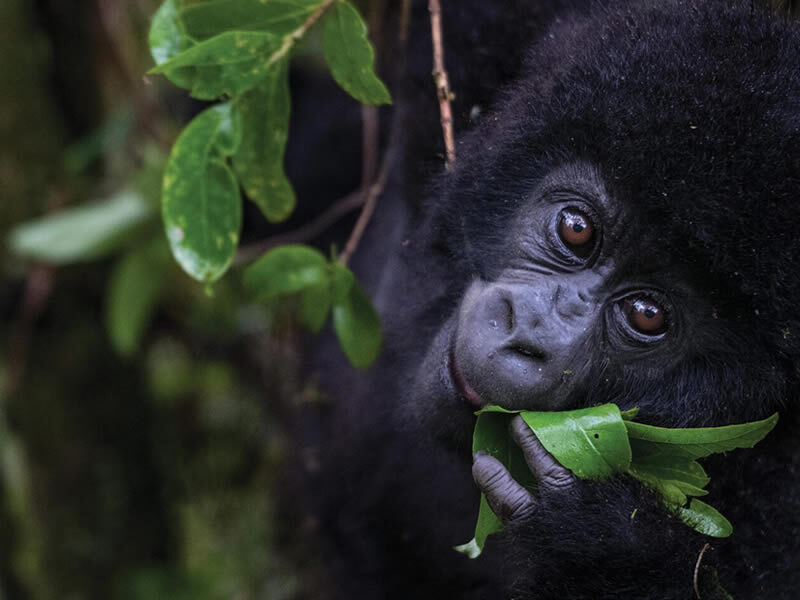
Bwindi Impenetrable vs Mgahinga
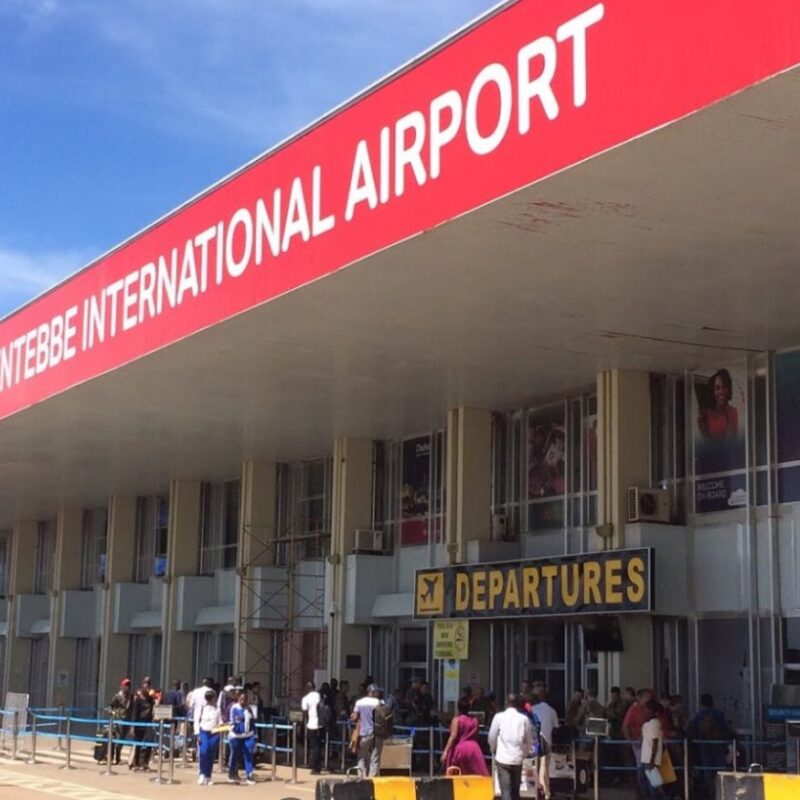
Flying into Entebbe
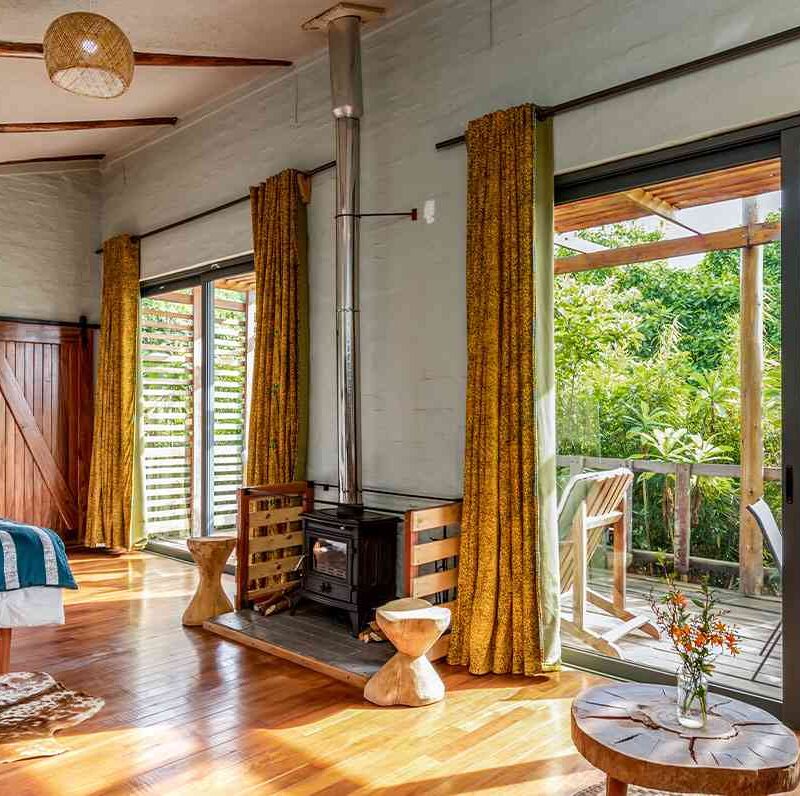
The Best Lodges for a Uganda Gorilla and Chimpanzee
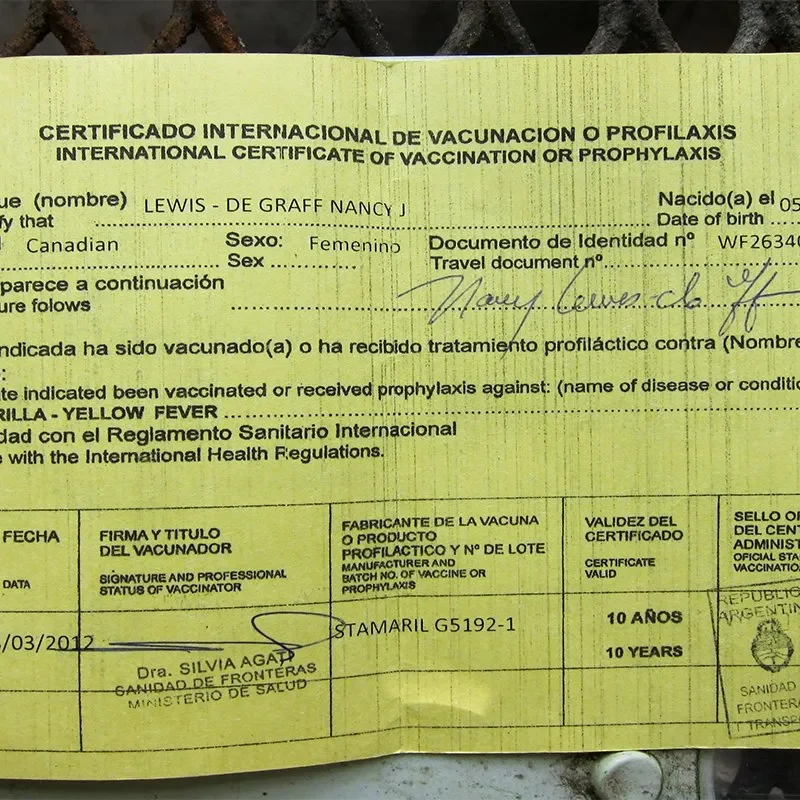
Yellow Fever and Uganda