The Best Luxury Lodges in Laikipia: Kenya’s Most Exclusive Safari Region Explained
Laikipia is one of Kenya’s most exclusive safari regions, not because it delivers the highest density of wildlife sightings, but because it offers something far more rare in modern African travel: vast private conservation landscapes with extremely low tourist pressure, highly personalized guiding, and year-round wildlife access across privately managed ecosystems. In 2026, Laikipia has firmly positioned itself as the destination for travelers who want privacy, depth, and conservation-driven luxury rather than mass safari spectacle.
Unlike the Masai Mara or Amboseli, which are shaped by seasonal migration cycles and high-volume game viewing corridors, Laikipia operates on a completely different model. It is a patchwork of private ranches, community conservancies, and protected wildlife areas that function together as a single ecological system. This structure allows luxury lodges in Laikipia to deliver highly controlled safari experiences where vehicle density is low, wildlife encounters feel uninterrupted, and guests often feel as though they have entire landscapes to themselves.
What follows is a structured breakdown of the best luxury lodges in Laikipia and what makes each one significant in Kenya’s high-end safari market.
Angama Lewa: luxury safari inside a premier rhino conservation landscape
Angama Lewa is located within Lewa Wildlife Conservancy, one of the most important rhino conservation areas in Africa. This conservancy is globally recognized for its successful black rhino and Grevy’s zebra protection programs, making it one of the most ecologically significant safari regions in Kenya.
The lodge is positioned to maximize open views across the Laikipia plains with Mount Kenya forming a dramatic backdrop. The design is modern, open, and light-filled, emphasizing landscape immersion rather than enclosed luxury. Large glass fronts and elevated positioning allow guests to experience the conservancy as a continuous visual environment.
Wildlife viewing in Lewa is strongly conservation-oriented. Rhino tracking is one of the core safari experiences, and sightings are often accompanied by interpretive guiding that explains monitoring systems, population trends, and conservation strategies. This creates a safari experience that is both educational and visually engaging.
Angama Lewa is especially suited to travelers who want structured luxury combined with active conservation storytelling and consistent wildlife access in a controlled ecosystem.
Ol Lentille: ultra-private villas in a community conservancy setting
Ol Lentille Conservancy is one of the most exclusive private-use safari experiences in Laikipia. Located on a remote hilltop within a community conservancy, it operates on an extremely low guest density model where villas are often booked exclusively for private groups or families.
The location is defined by elevation. From its hilltop position, the lodge offers panoramic views stretching across Laikipia’s conservancies and into the Samburu landscape. This creates a layered safari environment where guests experience both highland terrain and semi-arid plains within a single visual field.
What makes Ol Lentille distinctive is its strong integration with local communities. The conservancy is co-managed with pastoralist groups, meaning tourism revenue directly supports education, healthcare, and land preservation. This gives the safari experience a strong conservation and community development dimension.
Game drives and activities are highly personalized and flexible. Walking safaris, cultural visits, and private game drives are structured entirely around guest preference, creating one of the most tailored safari experiences in Kenya.
Loisaba Tented Camp: dramatic landscapes and wide-open predator territory
Loisaba Tented Camp is located within the Loisaba Conservancy, a large and visually striking wilderness area known for its rolling escarpments, open plains, and strong predator presence.
The camp is designed with elevated tented suites that open directly toward vast landscapes. This positioning creates uninterrupted views across the conservancy, making the environment feel expansive and cinematic. The architecture is modern but intentionally minimal, ensuring that the landscape remains the dominant visual element.
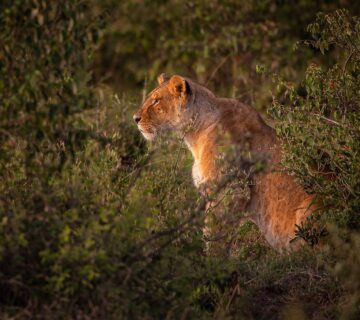
Loisaba is known for its healthy populations of elephants, lions, cheetahs, and African wild dogs. Because of the size of the conservancy, wildlife moves freely across large territories, which makes game drives feel exploratory rather than predictable.
A unique aspect of Loisaba is the diversity of safari experiences available. In addition to traditional game drives, guests can participate in camel safaris and guided walking experiences. This adds variety to the safari structure and creates a multi-layered engagement with the landscape.
Segera Retreat: art, sustainability, and regenerative safari design
Segera Retreat is one of the most conceptually unique luxury properties in Laikipia because it combines high-end safari accommodation with a large-scale regenerative conservation project.
The property sits on a former cattle ranch that has been transformed into a functioning wildlife conservancy. This restoration process is central to the guest experience, as visitors witness the transition of degraded land into a thriving ecological system.
Segera is also known for its extensive contemporary African art collection. Sculptures, installations, and curated artworks are integrated throughout the property, creating a strong cultural layer that distinguishes it from traditional safari lodges.
Game drives here focus heavily on ecological storytelling. Instead of purely tracking wildlife, guides explain land regeneration processes, species reintroduction efforts, and ecosystem recovery. This makes Segera particularly appealing to travelers interested in conservation impact rather than only wildlife sightings.
Solio Lodge: one of Africa’s most reliable rhino viewing destinations
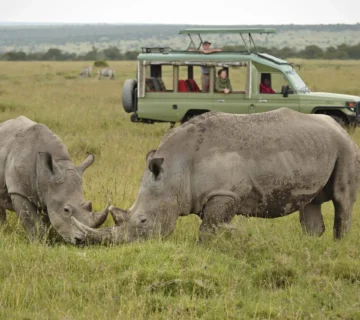
Solio Lodge is located within Solio Conservancy, one of the most successful rhino breeding sanctuaries in East Africa. The conservancy plays a critical role in protecting both black and white rhino populations, making it one of the most dependable places in Kenya to observe rhinos in a controlled environment.
The lodge is small and intimate, designed to maximize privacy and direct access to surrounding grassland ecosystems. The accommodation consists of private cottages positioned to overlook open plains where rhinos frequently move.
Unlike larger conservancies, Solio offers highly concentrated wildlife viewing, particularly for rhinos. This makes it especially valuable for travelers who prioritize specific species encounters over broader ecosystem diversity.
Game drives are structured, quiet, and conservation-focused, with strict emphasis on ethical wildlife viewing practices and minimal disturbance to animal behavior.
Why Laikipia is different from other safari regions in Kenya
Laikipia operates on a fundamentally different safari model compared to Kenya’s more famous destinations like the Masai Mara. While the Mara is driven by seasonal migration events and high-density predator-prey interactions, Laikipia is defined by stability, privacy, and conservation-managed land use.
The entire region is built on privately owned or community-managed conservancies, which creates extremely low visitor density. This means that safari experiences are rarely crowded, and wildlife encounters often feel uninterrupted and personal.
Another key difference is ecological diversity without seasonal dependency. Wildlife is present year-round, but not concentrated into dramatic migration events. Instead, guests experience continuous but quieter wildlife movement patterns across large private landscapes.
What defines luxury in Laikipia’s safari lodges
Luxury in Laikipia is not defined by large-scale infrastructure or hotel-style amenities. Instead, it is defined by four core factors that consistently shape guest experience across all top lodges.
The first is land exclusivity. Most lodges control large private conservancies, which limits vehicle numbers and ensures low-density safari experiences. The second is conservation integration, where tourism revenue directly supports wildlife protection and habitat restoration programs. The third is guiding depth, where experienced trackers and naturalists provide interpretive, long-form wildlife education. The fourth is privacy, where guest numbers remain intentionally low to preserve exclusivity.
This combination creates a safari environment that is more reflective, quieter, and more conservation-focused than many other African safari regions.
Laikipia in Kenya’s luxury safari landscape
Laikipia occupies a unique position in Kenya’s safari hierarchy. It does not compete with the Masai Mara on spectacle or migration drama. Instead, it offers an alternative model built on exclusivity, conservation depth, and long-form ecological engagement.
For travelers seeking privacy, controlled wildlife access, and a more intellectual safari experience, Laikipia remains one of the most compelling luxury regions in Africa.
Start Planning Your Next Trip To Africa
If you can picture yourself in one—or several—of these exceptional retreats, the next move is simple. We design fully tailored African safaris that bring these experiences together seamlessly, from private gorilla encounters to luxury lodges in the heart of the wild.
Every detail is carefully planned, so your journey feels effortless from start to finish. Reach out in whichever way suits you best, and let’s begin crafting your safari.
Start Planning