Cottar’s 1920s Camp: Is Kenya’s Most Historic Safari Camp Worth the Premium?
Cottar’s 1920s Safari Camp sits in a very specific category within the Masai Mara luxury ecosystem: it is not competing on modern architectural innovation or ultra-branded hospitality, but on heritage depth, conservancy exclusivity, guiding lineage, and a deliberately nostalgic interpretation of safari history. Located in the private Olderkesi Conservancy bordering the southeastern edge of the Masai Mara ecosystem, it represents one of the few remaining camps that still builds its entire identity around the “golden era” safari aesthetic while simultaneously operating as a high-end conservation-driven lodge.
The key question around its premium pricing is not whether it is luxurious—because it clearly is—but whether that luxury is meaningfully different from newer, more modern conservancy camps in the region that often offer similar wildlife access at comparable or lower cost structures. To answer that properly, it is necessary to break down what you are actually paying for when booking Cottar’s in 2026: heritage immersion, ecological exclusivity, guiding pedigree, and experiential programming that goes beyond standard game drives.
The historical identity: safari as a curated time capsule
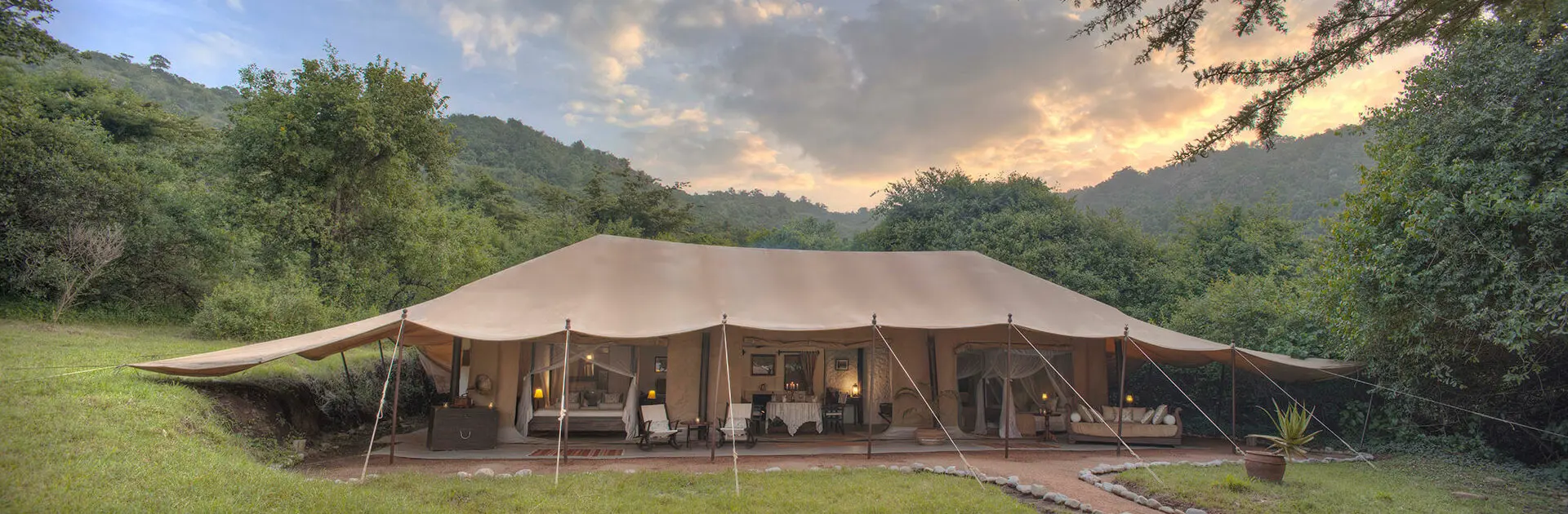
Cottar’s 1920s Safari Camp is built on a concept that very few camps attempt at this level of commitment: full immersion into early 20th-century safari aesthetics. The camp’s design language intentionally references expedition-era travel, with canvas tents, antique furnishings, leather trunks, brass details, and sepia-toned visual storytelling integrated into every public and private space.
This is not a superficial theme applied to a modern lodge. It is a fully developed narrative environment where guests are placed into a reconstructed version of historical safari life, albeit with modern comfort standards. According to long-form reviews and historical descriptions of the property, this design approach is meant to evoke “a forgotten era of African exploration” rather than contemporary safari minimalism .
That distinction matters because it defines the emotional experience. Where newer luxury camps emphasize sleekness, architectural blending, and modern restraint, Cottar’s leans into atmosphere, storytelling, and tactile nostalgia. The premium here is partly intellectual and psychological: you are paying for immersion into a curated historical narrative layered over a functioning conservancy lodge.
Location advantage: private conservancy access vs crowded reserve dynamics
Cottar’s is positioned within the Olderkesi Conservancy, a privately managed wildlife area that borders the southeastern section of the Masai Mara National Reserve. This positioning creates one of its strongest value propositions: controlled access wildlife viewing with reduced vehicle density.
Private conservancies in the Mara ecosystem operate under strict limits on tourism density and allow more flexible safari activity structures compared to the main reserve. This includes walking safaris, night drives, and off-road tracking in designated zones. Cottar’s benefits from this system, offering a more fluid and less congested safari experience compared to reserve-based camps.
Guest reviews and conservation documentation consistently highlight the low-density nature of this conservancy experience, noting that wildlife encounters often occur without the multi-vehicle congestion common in the national reserve during peak season .
However, there is a nuance here. While conservancy wildlife experiences are often more exclusive, they can sometimes be less concentrated in terms of mass migration visibility compared to river-heavy zones of the Mara Triangle. This means the experience is less about spectacle density and more about controlled, extended wildlife interaction.
Wildlife experience: depth over spectacle
Cottar’s safari model is intentionally designed around engagement rather than rapid-fire sightings. Instead of focusing purely on ticking off species lists, the guiding philosophy emphasizes ecological interpretation, behavioral tracking, and conservation education.
This includes a wider range of structured experiences than most luxury camps in the Mara ecosystem. These can involve predator research discussions, community-led conservation visits, walking safaris with Maasai guides, and ecological interpretation activities that extend beyond standard game drives .
In practical terms, this means guests spend more time understanding why wildlife behaves in certain ways rather than simply moving between sightings. For example, instead of quickly leaving after a predator sighting, guides often remain for extended observation periods to document interaction patterns, hunting behavior, or territorial movement.
This approach appeals strongly to repeat safari travelers or photographers, but it may feel slower for first-time visitors expecting constant high-intensity action.
Guiding pedigree: one of the strongest assets in the Mara system
One of the most consistently praised elements of Cottar’s is its guiding lineage. The camp is family-owned and has been operating across generations, which creates continuity in ecological knowledge and guiding methodology.
Guides at Cottar’s are often described as deeply embedded in the ecosystem, with strong interpretive skills that go beyond basic wildlife identification. This includes understanding predator lineage, territorial mapping, seasonal movement prediction, and historical ecological change across the conservancy landscape.
This level of guiding is one of the core reasons the camp justifies its premium positioning. In the Masai Mara, guiding quality often has a greater impact on safari satisfaction than room category or dining quality, and Cottar’s consistently ranks high in this dimension.
Accommodation and comfort: classic luxury, not modern minimalism
The accommodation at Cottar’s is deliberately styled to reflect expedition-era luxury rather than contemporary boutique design. Suites are large, canvas-based, and decorated with period antiques and handcrafted furnishings.
Comfort levels are high, but the aesthetic is intentionally non-modern. This can be polarizing depending on traveler expectations. Guests seeking glass-walled infinity suites, ultra-modern architecture, or minimalist luxury design will likely find other camps in the Mara ecosystem more aligned with their preferences.
However, the trade-off is atmosphere. The sensory experience at Cottar’s is built around warmth, texture, and narrative immersion rather than architectural spectacle.
Experiential programming: where the premium becomes more visible
A key differentiator that supports the premium pricing is the depth of non-game-drive experiences available at the camp. These go beyond typical safari add-ons and are integrated into the broader conservation and community framework of the Olderkesi Conservancy.
Activities can include conservation talks, wildlife rehabilitation exposure, Maasai cultural engagement, foraging experiences, ecological walks, and sustainability-focused bush learning sessions. This creates a multi-layered safari experience where guests are not only observing wildlife but also interacting with conservation systems and local communities in structured formats.
This type of programming is increasingly rare in high-end safari camps, many of which focus almost exclusively on game drives and lodge-based relaxation.
The premium question: what you are actually paying for
Cottar’s pricing sits at the upper end of Masai Mara luxury camps, and the justification for this premium is not based on physical opulence alone. Instead, it is distributed across four main value layers.
The first is exclusivity of land access within a private conservancy that significantly reduces tourism congestion. The second is guiding quality and interpretive depth, which consistently ranks among the strongest in the region. The third is heritage immersion, which creates a distinctive experiential identity that no modern lodge replicates convincingly. The fourth is conservation integration, where a portion of operational structure is tied directly to ecological and community initiatives.
What you are not paying for is modern architectural innovation or large-scale resort infrastructure. This is an important distinction because it shapes expectations significantly.
Competitive positioning within the Masai Mara luxury ecosystem
In comparison to newer ultra-luxury conservancy camps in the Mara system, Cottar’s occupies a more narrative-driven niche. Many newer properties emphasize architectural modernity, ultra-low guest density, or highly stylized minimalism.
Cottar’s instead emphasizes continuity, heritage, and interpretive depth. It is closer in philosophy to classic expedition camps than to contemporary luxury safari lodges.
This makes it particularly strong for travelers who value storytelling, conservation history, and guiding depth over design minimalism or architectural novelty.
Positioning insight
The value of Cottar’s 1920s Safari Camp is not universal. It is highly dependent on traveler intent. For guests seeking modern luxury aesthetics or high-frequency wildlife spectacle, other conservancy camps in the Masai Mara may deliver better alignment with expectations.
However, for travelers who prioritize historical immersion, interpretive guiding, controlled conservancy access, and a safari experience that feels intentionally narrative rather than purely observational, Cottar’s remains one of the most distinctive and justified premium options in Kenya’s luxury safari landscape.
Start Planning Your Next Trip To Africa
If you can picture yourself in one—or several—of these exceptional retreats, the next move is simple. We design fully tailored African safaris that bring these experiences together seamlessly, from private gorilla encounters to luxury lodges in the heart of the wild.
Every detail is carefully planned, so your journey feels effortless from start to finish. Reach out in whichever way suits you best, and let’s begin crafting your safari.
Start Planning