How Far in Advance Do You Need to Book a Masai Mara Safari? An Honest Answer
A safari in Masai Mara National Reserve is not something you casually “pick last minute” during migration season and expect to get the best experience. It is one of the most capacity-sensitive wildlife destinations in Africa, especially during the Great Migration months when demand spikes, the best camps fill early, and riverfront locations are often secured long before most travelers even start planning.
The honest answer is simple but uncomfortable for many first-time safari planners: the earlier you book, the better your experience, especially if you are targeting the migration window between July and October.
But the real nuance lies in how early is necessary depending on your travel season, budget level, and lodge expectations.
Why Masai Mara Requires Early Booking
Limited Space in High-Value Wildlife Zones
The Masai Mara is not an unlimited landscape when it comes to accommodation. Even though the ecosystem is large, the most desirable safari experiences happen in very specific zones near the Mara River corridors and prime predator territories.
The highest-demand camps in these areas are small by design, often with limited tents or rooms to preserve exclusivity and minimize environmental impact. Once these fill, availability does not magically expand—it simply disappears for those dates.
During peak migration season, this scarcity becomes even more pronounced because everyone is trying to be in the same few high-activity areas at the same time.
Migration Season Compresses Demand Into a Short Window
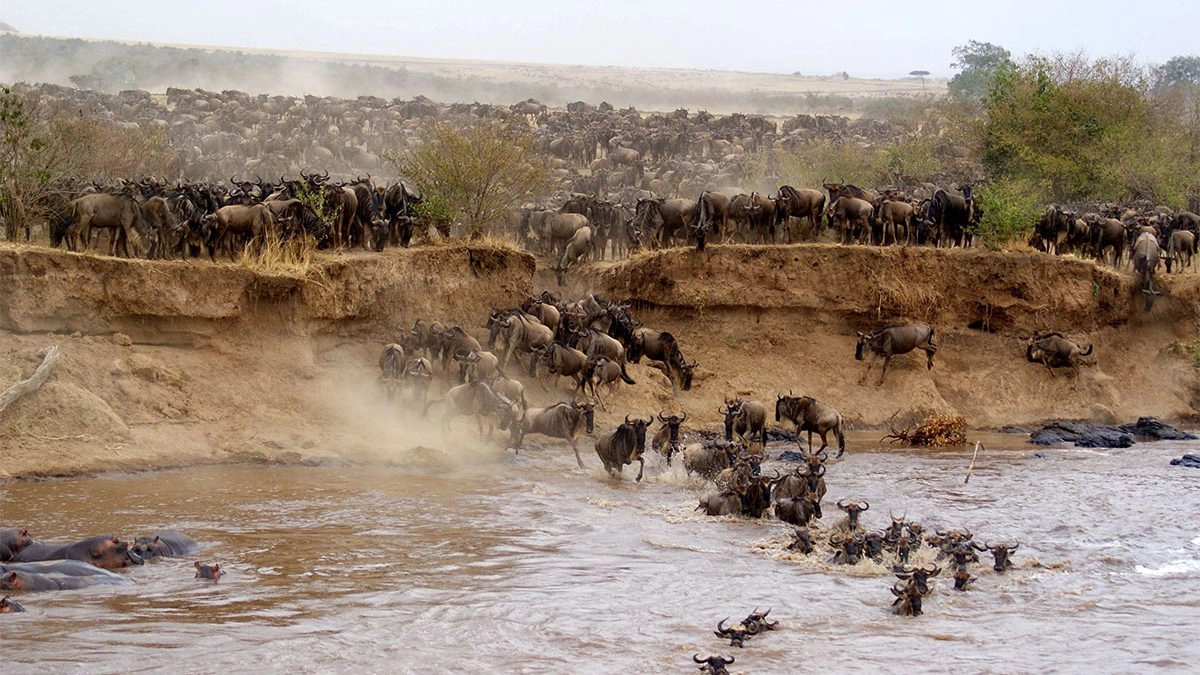
The Great Migration in Kenya typically peaks between July and October, when millions of wildebeest and zebras concentrate in the Masai Mara ecosystem.
This is the most competitive booking period of the year. Research and operator experience consistently show that peak camps can fill 12 to 18 months in advance, especially those positioned near river crossing points where sightings are most likely to occur.
This is not marketing exaggeration. It reflects real capacity limits and predictable seasonal demand.
Real Booking Timelines Based on Safari Type
12 to 18 Months in Advance: Peak Migration and Luxury Camps
If your goal is a high-end safari during July, August, or September, especially near river crossing zones, you are in the longest booking cycle category.
At this level, you are competing for:
Prime riverfront tented camps
Boutique luxury lodges with very limited rooms
Private conservancy properties bordering the main reserve
These properties are often reserved by repeat travelers, photographers, and long-planned international trips.
At this stage, booking is not about convenience—it is about securing availability at all.
9 to 12 Months in Advance: Strong Availability Window
This is the most realistic “sweet spot” for many travelers who want good options without extreme advance planning.
At this stage, you can still access:
Quality mid-range safari lodges
Some migration-viewing camps (though not always front-row river positions)
Better flight and itinerary flexibility
This is the timeframe most experienced safari operators consider the “safe planning zone” for a well-structured Masai Mara trip.
It is still early planning, but not overly restrictive.
6 to 9 Months in Advance: Still Possible, But Choices Narrow
At this stage, availability becomes noticeably more limited, especially for peak months.
You may still find good options, but:
Prime locations are often already gone
Prices may increase due to reduced availability
Itineraries may require flexibility on dates or camp selection
This is where planning becomes reactive rather than strategic.
3 to 6 Months in Advance: Shoulder Season Territory
Booking within this window works best if you are traveling outside peak migration months or are flexible with experience type.
You are more likely to find availability during:
January to March (green season with fewer crowds)
November to early December (transition periods)
These periods still offer strong wildlife viewing but without migration-level pressure.
Less Than 3 Months: Last-Minute Reality
It is still possible to go on safari, but expectations must shift.
You are likely to encounter:
Limited lodge availability
Less optimal locations within the reserve
Higher prices for remaining rooms
Reduced flexibility in itinerary design
Last-minute safaris in Masai Mara are rarely about “best experience optimization” and more about “whatever is still open.”
Why Early Booking Changes the Quality of Your Safari
Location Determines Experience More Than Luxury Level
One of the biggest misunderstandings about Masai Mara safaris is that luxury equals experience quality. In reality, location relative to wildlife movement is often more important than how expensive the lodge is.
A well-located mid-range camp near active migration corridors can outperform a luxury lodge far from animal movement.
Early booking gives you access to better positioning, especially near river systems where migration drama unfolds.
Better Camps Also Mean Better Guides and Logistics
High-demand camps are not just about rooms. They often come with:
More experienced guiding teams
Better vehicle positioning strategies
Stronger wildlife tracking systems
These operational advantages matter during unpredictable events like river crossings, where timing and positioning determine what you actually see.
Flexibility in Itinerary Design
Early planners have the advantage of shaping their safari rather than adapting to leftovers.
This includes:
Choosing exact travel dates within peak windows
Combining Masai Mara with other ecosystems in Kenya or Tanzania
Securing internal flights at better times and rates
The Migration Factor: Why Everyone Books at the Same Time
July to October Is a Global Demand Spike
During migration season, the Masai Mara becomes one of the most visited wildlife destinations in Africa.
This is not just regional demand—it is global. Photographers, filmmakers, researchers, and safari travelers all concentrate their trips within the same narrow seasonal window.
This creates predictable annual pressure on availability.
River Crossing Camps Sell Out First
Properties near key crossing points along the Mara River are the first to disappear.
This is because they offer:
Direct access to migration action zones
Short driving distances to key viewing points
Higher probability of witnessing dramatic crossings
Once these camps are full, there is no substitute location with the same consistency of experience.
What Happens If You Book Late
Late booking does not mean you cannot go on safari, but it does reshape the experience in subtle ways:
You may stay farther from core migration corridors
You may spend more time driving to reach wildlife action
You may share key viewing points with more vehicles
You may pay premium rates for remaining availability
In other words, the safari still happens—but the efficiency of experience drops.
Honest Planning Recommendation for 2026
If you are planning a Masai Mara safari in 2026, the safest planning strategy is:
For migration season (July–October), start planning 12–18 months ahead
For strong availability and flexibility, aim for 9–12 months ahead
For shoulder season travel, 3–6 months may still work
Anything shorter than that becomes a compromise between timing, location, and budget.
Masai Mara Booking
In real safari operations, booking timelines are less about theory and more about capacity economics. The Masai Mara does not scale during peak season. Roads, camps, and wildlife zones remain fixed, while global demand increases every year.
This is why early planning is not just recommended—it is what separates a well-positioned migration safari from a logistical compromise.
The travelers who understand this early consistently end up in better locations, with better wildlife access, and more time actually observing behavior rather than chasing availability.
Start Planning Your Next Trip To Africa
If you can picture yourself in one—or several—of these exceptional retreats, the next move is simple. We design fully tailored African safaris that bring these experiences together seamlessly, from private gorilla encounters to luxury lodges in the heart of the wild.
Every detail is carefully planned, so your journey feels effortless from start to finish. Reach out in whichever way suits you best, and let’s begin crafting your safari.
Start Planning