Ol Pejeta Conservancy

Ol Pejeta Conservancy

Ol Pejeta Conservancy: The Rhino Sanctuary That Changed How Kenya Thinks About Conservation

Ol Pejeta Conservancy is one of the most influential conservation landscapes in Africa because it represents a shift in how wildlife protection actually works on the ground. Located in central Kenya on the Laikipia plateau, it is not a national park in the traditional sense, but a privately managed conservancy that has become a global benchmark for rhino conservation, community integration, and modern wildlife protection systems.

In a country known for iconic safari destinations like the Masai Mara National Reserve, Ol Pejeta stands out because it proves that conservation success does not depend solely on government-protected parks. Instead, it depends on land use design, funding structures, and long-term ecological management.

What makes Ol Pejeta different from a national park

Ol Pejeta is a private conservancy, meaning it is managed by a non-governmental conservation trust rather than a state wildlife authority.

However, this does not make it less protected. In many ways, it allows for more flexible and adaptive conservation strategies than traditional park systems.

National parks operate under fixed legal frameworks with standardized rules. Conservancies like Ol Pejeta can implement targeted conservation interventions, respond quickly to ecological challenges, and integrate wildlife protection with community development programs.

This flexibility is one of the reasons it has become a model for modern conservation thinking.

The rhino sanctuary at the heart of Ol Pejeta

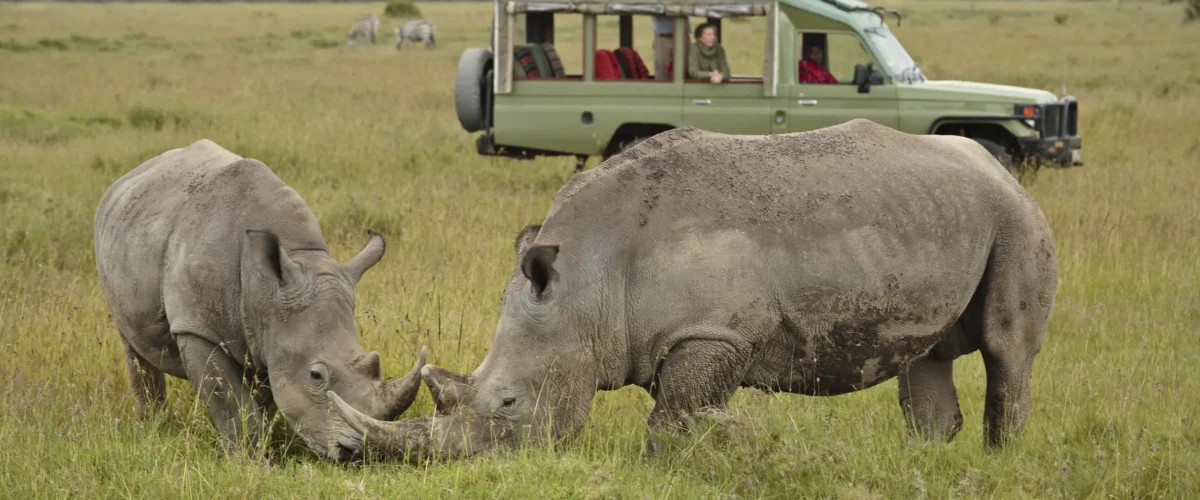
Ol Pejeta is most famous for its rhino conservation program. It hosts one of the largest black rhino populations in East Africa and is also home to the world’s last two remaining northern white rhinos.

These animals are under 24-hour protection, representing one of the most intensive wildlife security operations anywhere in the world.

The sanctuary operates with highly controlled monitoring systems, including armed ranger patrols, surveillance, and veterinary support teams.

Rhino conservation here is not passive—it is active, continuous, and highly resource-intensive.

Why rhino conservation became the priority

Rhinos are among the most heavily poached large mammals in the world due to demand for their horns.

By the late 20th century, population declines had reached critical levels across Africa.

Ol Pejeta became a focal point for rhino conservation because it combined suitable habitat with strong security infrastructure and financial backing for long-term protection.

This allowed it to build one of the most successful rhino breeding and protection programs in East Africa.

The role of wildlife security systems

One of the defining features of Ol Pejeta is its advanced security system for wildlife protection.

Unlike open national parks, conservancies can implement layered security strategies that include patrol units, monitoring technology, and coordinated response teams.

This is especially important for rhinos, which are high-value targets for illegal wildlife trade networks.

The security model used here has influenced conservation approaches in other parts of Africa.

Community integration and land use model

Ol Pejeta is not isolated from human activity. It operates within a broader landscape that includes surrounding communities and pastoral land use systems.

A key part of its model is integrating local communities into conservation economics.

This includes employment opportunities, education support programs, and revenue-sharing mechanisms that link conservation success to community benefit.

This structure reduces land-use conflict and increases long-term sustainability of conservation efforts.

Wildlife diversity beyond rhinos

Although rhinos are the flagship species, Ol Pejeta supports a wide range of wildlife.

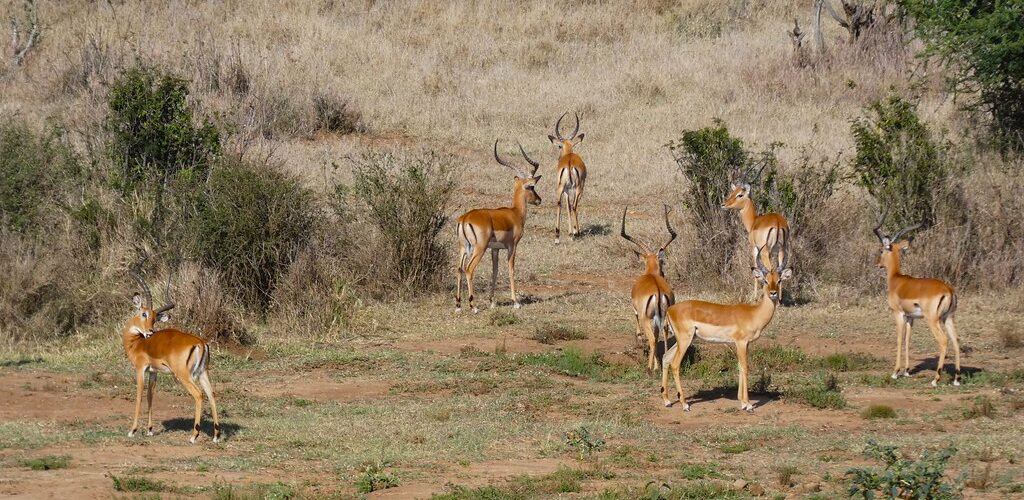
Elephants, lions, giraffes, buffalo, zebras, and numerous antelope species all inhabit the conservancy.

Because it is not a fenced zoological environment, wildlife movement is still influenced by ecological conditions and seasonal patterns.

The conservancy acts as both a protected habitat and part of a wider Laikipia ecosystem corridor.

The chimpanzee sanctuary: a unique conservation layer

One of the lesser-known but important components of Ol Pejeta is its chimpanzee sanctuary.

Chimpanzees are not native to Kenya, so the sanctuary focuses on rescued and rehabilitated individuals that cannot be returned to the wild.

This facility adds a primate conservation dimension to an otherwise savannah-focused ecosystem.

It also highlights the conservancy’s broader commitment to wildlife welfare beyond flagship African species.

How Ol Pejeta changed conservation economics

Traditional conservation in Africa has often relied on government funding and donor support.

Ol Pejeta introduced a stronger commercial conservation model where tourism revenue directly funds wildlife protection operations.

Visitor fees, tourism partnerships, and safari lodge operations all contribute to maintaining security, habitat management, and community programs.

This reduces dependency on external funding and creates a self-sustaining conservation ecosystem.

Tourism experience in Ol Pejeta

From a safari perspective, Ol Pejeta offers a different experience compared to more famous destinations.

It is less crowded than major parks, and game drives often feel more controlled and research-oriented.

Guiding is highly structured, and wildlife viewing is combined with conservation education.

Visitors are not just observing animals—they are engaging with an active conservation landscape.

Why Ol Pejeta is important for the future of conservation

The significance of Ol Pejeta goes beyond its boundaries.

It demonstrates that conservation can work when land, wildlife, and human communities are integrated into a single system rather than separated into rigid categories.

It also shows that private conservancies can play a central role in protecting endangered species at scale.

This model is increasingly relevant in a world where protected areas alone are not large enough to sustain wide-ranging wildlife populations.

The Laikipia ecosystem connection

Ol Pejeta is part of the broader Laikipia ecosystem, which includes multiple conservancies and ranches that collectively support wildlife movement across a large landscape.

This connectivity is essential for species like elephants that require extensive ranges.

In this sense, Ol Pejeta is not an isolated sanctuary but a node in a larger ecological network.

Challenges facing the conservancy model

Despite its success, Ol Pejeta operates within a complex environment.

Land pressure, climate variability, and regional development trends all influence long-term conservation planning.

Maintaining financial sustainability while expanding conservation impact is an ongoing balancing act.

Additionally, ensuring that community benefits remain equitable is central to maintaining long-term support.

The global conservation influence of Ol Pejeta

Ol Pejeta is frequently referenced in global conservation discussions because it demonstrates how private land management can achieve large-scale ecological outcomes.

Its rhino program, in particular, has influenced international approaches to endangered species protection.

It is often used as a case study in conservation economics, wildlife security, and community-based land management.

Final perspective

Ol Pejeta Conservancy represents a shift in conservation philosophy from static protection to active ecosystem management.

It shows that wildlife conservation is not just about setting land aside, but about continuously managing relationships between species, landscapes, and human communities.

In doing so, it has redefined what a modern conservation landscape can look like in Kenya and beyond.
The Maasai and Kenya's Safari Industry

The Maasai and Kenya’s Safari Industry

The Maasai and Kenya’s Safari Industry: A Complex, Evolving Relationship

The relationship between the Maasai people and Kenya’s safari industry is one of the most important, complex, and often misunderstood dimensions of East African tourism. It sits at the intersection of culture, land use, conservation economics, and global tourism demand. In regions surrounding the Masai Mara National Reserve, this relationship is not historical only—it is actively evolving in real time as conservation models, land ownership structures, and tourism revenue systems continue to change.

Understanding this relationship requires moving beyond romanticized imagery and looking at how land, wildlife, and livelihoods are actually shared.

The Maasai as long-term custodians of rangeland ecosystems

The Maasai are semi-nomadic pastoralists who have historically managed large grazing landscapes across southern Kenya and northern Tanzania. Their livelihood system is based on cattle herding, seasonal movement, and deep ecological knowledge of rangeland conditions.

Before modern conservation systems existed, Maasai communities were already managing land in ways that unintentionally supported wildlife coexistence. Large areas of open savannah were maintained through grazing patterns that prevented dense vegetation encroachment, helping sustain herbivore populations that depend on open grasslands.

This long-standing land use pattern is one reason why some of East Africa’s most important wildlife ecosystems still exist today.

How colonial and post-colonial conservation changed land access

The modern safari industry developed during and after the colonial period, when large tracts of land were designated as protected areas and game reserves.

This process often involved restricting or relocating indigenous communities, including Maasai groups, from areas that later became national parks or reserves.

Over time, conservation policy shifted toward creating formal protected zones with stricter boundaries, while surrounding community lands were placed under different legal and economic frameworks.

This historical shift created a structural separation between wildlife protection areas and human land use zones, even though wildlife itself continued to move freely across both.

The emergence of Maasai-owned conservancies

In recent decades, a new model has emerged that reconnects Maasai communities directly to conservation and tourism: community and group ranch conservancies.

Instead of excluding people from wildlife areas, this model integrates Maasai landowners into conservation systems through leasing agreements, tourism partnerships, and shared revenue structures.

In areas around the Masai Mara ecosystem, large portions of land are now managed as conservancies where Maasai communities lease grazing land for wildlife conservation and tourism use.

This has fundamentally changed the relationship between local communities and safari tourism from exclusion to participation.

How tourism revenue flows into Maasai communities

One of the most significant changes introduced by conservancies is direct financial benefit from tourism.

Landowners or community groups receive lease payments for setting aside land for wildlife use. In addition, employment opportunities are created through guiding, hospitality, security, and conservation roles.

Tourism revenue also supports community development projects such as schools, healthcare facilities, and infrastructure improvements.

This creates a direct link between wildlife presence and economic benefit, which is central to modern conservation models in Kenya.

Wildlife conservation and traditional grazing systems

Contrary to outdated assumptions, Maasai pastoralism and wildlife conservation are not inherently in conflict.

In many conservancy systems, controlled livestock grazing is integrated into land management strategies. This helps maintain open grasslands, reduce bush encroachment, and support biodiversity.

However, this balance requires careful regulation to avoid overgrazing or habitat degradation.

In well-managed conservancies, livestock, wildlife, and tourism coexist under structured guidelines rather than competing directly for space.

The tourism industry’s dependence on Maasai land

A large portion of Kenya’s safari experience depends on land that is not formally part of national parks.

Many wildlife viewing areas, particularly in the Mara ecosystem, are located in conservancies or community lands owned or managed by Maasai groups.

This means that the safari industry is structurally dependent on land-use decisions made at the community level.

Without Maasai participation in conservation agreements, many of the wildlife corridors and buffer zones that support tourism would not exist in their current form.

Cultural representation and tourism expectations

The Maasai have become one of the most visible cultural symbols of African safari tourism. Their image is often used in marketing, photography, and global travel narratives.

However, this visibility has sometimes created simplified or stereotyped representations that do not reflect the full complexity of modern Maasai life.

Today, Maasai communities are engaged in a wide range of activities beyond traditional pastoralism, including education, conservation leadership, business, and tourism management.

This diversity is often overlooked in mainstream safari storytelling.

The tension between conservation and land pressure

As Kenya’s population grows, land pressure in wildlife-adjacent areas continues to increase.

This creates competing demands between agriculture, settlement expansion, livestock grazing, and wildlife conservation.

For Maasai communities, decisions about land use are not only cultural—they are economic and survival-based.

Conservancy agreements help address this by offering financial compensation for conservation land use, but long-term sustainability depends on maintaining a balance between ecological protection and community needs.

The role of education and generational change

Younger generations within Maasai communities are increasingly involved in formal education and diversified livelihoods.

This is gradually changing how land use decisions are made and how conservation participation is structured.

Some younger Maasai are entering roles in guiding, wildlife management, and conservation science, creating a new generation that bridges traditional ecological knowledge with formal conservation systems.

This generational shift is influencing the future direction of both community development and tourism models.

Tourism pressure and ethical considerations

The safari industry brings both benefits and challenges.

While tourism generates income and supports conservation, it also introduces pressure on land use, cultural representation, and resource allocation.

Managing visitor numbers, ensuring fair revenue distribution, and maintaining cultural integrity are ongoing challenges in Maasai-dominated tourism landscapes.

Well-managed conservancies attempt to address these issues through controlled tourism density and community-led governance structures.

Why conservancies changed the power dynamic

Before conservancy models became widespread, wildlife tourism largely operated in designated parks where surrounding communities had limited direct financial involvement.

The conservancy system has shifted this dynamic by giving landowners a direct stake in tourism success.

This has turned conservation into a shared economic system rather than a separate protected zone.

It is one of the most important structural changes in East African safari history.

The Masai Mara as a shared ecosystem

The Masai Mara is not just a single protected area—it is part of a wider ecosystem that includes national reserve land, private conservancies, and community-owned rangelands.

Wildlife moves freely across these zones, meaning that conservation success depends on coordination between multiple land governance systems.

Maasai landowners play a central role in maintaining this connectivity through land-use agreements and conservation partnerships.

The real nature of the relationship today

The relationship between the Maasai and the safari industry is not static or one-dimensional.

It is a negotiated system that continues to evolve based on economic pressures, conservation science, tourism demand, and community priorities.

At its core, it is a shared landscape model where wildlife conservation and human livelihoods are increasingly interdependent.

Final perspective

Modern safari tourism in Kenya cannot be understood without the Maasai communities who live within and around key wildlife ecosystems.

Their land, decisions, and participation shape how conservation areas function, how wildlife moves, and how tourism operates at scale.

The result is not a simple partnership or conflict, but an evolving system where culture, conservation, and commerce are continuously renegotiated within the same landscape.

How Kenya's Private Conservancies Are Saving Wildlife

How Kenya’s Private Conservancies Are Saving Wildlife

How Kenya’s Private Conservancies Are Saving Wildlife That the National Parks Cannot

Kenya’s conservation story is no longer driven by national parks alone. While iconic protected areas still matter, a quieter but more effective system has reshaped wildlife protection over the past two decades: private and community conservancies. These landscapes are now central to how Kenya manages wildlife outside formal park boundaries, especially around high-value ecosystems like the Masai Mara National Reserve.

What makes conservancies important is not that they replace national parks, but that they solve problems national parks were never designed to handle: land pressure, livestock competition, human-wildlife conflict, and fragmented migration corridors.

The limitation of national parks in modern conservation

National parks in Kenya were designed under a “fortress conservation” model. Boundaries were drawn, human activity was restricted, and wildlife was protected inside fixed zones.

This approach worked for early conservation goals, but it has structural limitations today.

Wildlife does not stay inside park borders. Species such as elephants, lions, and wildebeest migrate across vast landscapes that extend far beyond protected reserves. When movement corridors cross community or privately owned land, conservation pressure shifts outside park boundaries.

National parks also face increasing pressure from tourism density, fixed infrastructure limits, and ecological crowding in peak seasons.

This is where conservancies become critical.

What private conservancies actually are

Private conservancies are large areas of land where local landowners, communities, or private groups agree to set aside land primarily for wildlife conservation and low-impact tourism.

Instead of fencing wildlife inside, conservancies protect ecosystems by integrating wildlife, livestock, and human land use under controlled agreements.

In many cases, landowners receive lease payments or tourism revenue in exchange for keeping land open for wildlife movement and limiting activities such as agriculture or high-density settlement.

Why conservancies work where parks struggle

The biggest advantage conservancies have is flexibility.

Unlike national parks, they are not rigidly governed by fixed tourism and wildlife zones. They can adapt management strategies based on seasonal movement, species behavior, and local land use patterns.

This flexibility allows conservancies to function as buffer zones and wildlife corridors, especially around major ecosystems like the Masai Mara.

They also reduce pressure on core protected areas by distributing tourism more evenly across the landscape.

The Masai Mara ecosystem and conservancy success

Nowhere is the conservancy model more visible than around the Masai Mara ecosystem.

While the main reserve is heavily visited during peak migration months, surrounding conservancies absorb much of the tourism load and provide additional habitat for wildlife movement.

These conservancies allow animals to move freely between grazing areas without being confined to the main reserve boundaries.

They also reduce vehicle congestion in high-density wildlife zones by distributing safari activity across multiple controlled areas.

This system has fundamentally changed how safari tourism operates in Kenya.

How conservancies improve wildlife protection

One of the most important contributions of conservancies is the reduction of habitat fragmentation.

Instead of dividing land into competing uses, conservancies align conservation goals with local economic incentives.

This creates a situation where wildlife protection becomes financially beneficial for landowners.

As a result, habitats remain open, migration routes are preserved, and wildlife populations can expand beyond traditional park limits.

This is especially important for species that require large territories, such as lions, cheetahs, and elephants.

Reducing human-wildlife conflict

In many regions, conservation challenges are not caused by wildlife itself but by conflict between wildlife and human land use.

Conservancies help reduce this tension by providing structured compensation systems and community involvement in wildlife management.

When landowners benefit directly from conservation, tolerance for wildlife presence increases significantly.

This reduces retaliatory killing, illegal fencing, and habitat conversion.

Tourism model differences: parks vs conservancies

National parks operate under government-managed tourism systems with fixed entry rules and standardized visitor movement.

Conservancies operate under more controlled tourism models with lower visitor density and stricter limits on vehicle numbers.

This creates a fundamentally different safari experience.

In conservancies, sightings are often less crowded, guiding is more flexible, and off-road driving may be permitted under controlled conditions depending on management rules.

Why conservancies support better ecological balance

One of the most important ecological benefits of conservancies is that they allow mixed land use.

Wildlife can coexist with controlled livestock grazing in some areas, which helps maintain open rangelands instead of converting them into fenced agricultural zones.

This prevents habitat loss and maintains connectivity between ecosystems.

Over time, this creates more resilient landscapes that support both biodiversity and local livelihoods.

The economic model behind conservancies

Conservancies are not purely conservation projects—they are also economic systems.

Tourism revenue is often shared with landowners or communities based on agreements tied to land size or conservation contribution.

This creates a direct financial incentive to maintain wildlife-friendly land use.

In contrast to national parks, where local communities may not always see direct benefits, conservancies integrate conservation economics at the ground level.

Wildlife behavior differences in conservancies

Wildlife in conservancies often behaves differently than inside high-density park zones.

Because there are fewer vehicles and lower disturbance levels, animals may show more natural behavior patterns.

Predators can hunt without constant tourist presence, and herbivores can graze in less crowded conditions.

This can lead to more authentic ecological interactions compared to heavily trafficked areas.

Why conservancies are critical for migration systems

Large-scale movements such as wildebeest migrations depend on open landscapes rather than fixed boundaries.

Conservancies surrounding key ecosystems act as essential corridors that allow herds to move freely between grazing areas.

Without these corridors, migration systems would become fragmented, reducing ecological resilience and long-term sustainability.

This is one of the key reasons conservancies are now considered essential to East Africa’s conservation model.

The role of private investment in conservation

Private conservancies often involve partnerships between landowners, conservation organizations, and tourism operators.

This introduces additional funding sources for wildlife protection, anti-poaching efforts, and habitat management.

Private investment allows for faster response times and more adaptive management compared to government-only systems.

It also enables more targeted conservation strategies for specific species or ecosystems.

Challenges facing conservancies

Despite their success, conservancies are not without challenges.

Land pressure remains a long-term issue, especially as human populations grow.

Maintaining long-term agreements with landowners requires continuous financial sustainability.

There is also a need to balance tourism development with ecological limits to prevent overuse of sensitive areas.

These challenges require ongoing coordination between communities, operators, and conservation organizations.

The real conservation shift in Kenya

The most important shift in Kenyan conservation is not the expansion of national parks, but the integration of surrounding landscapes into conservation systems.

Conservancies have effectively expanded the functional size of protected ecosystems without changing formal park boundaries.

This means wildlife protection now operates at a landscape scale rather than a fixed boundary scale.

What this means for safari travellers

For travellers, conservancies change the safari experience in several ways.

Wildlife encounters are often less crowded
Guiding is more flexible and personalized
Vehicle density is lower
Access to certain activities may be more varied depending on management rules

In many cases, conservancies offer a more immersive version of the safari experience compared to national parks alone.

Private and community conservancies have not replaced national parks in Kenya—they have extended them.

They fill the ecological and economic gaps that fixed boundaries cannot solve, especially in dynamic ecosystems where wildlife movement crosses human land use.

In practical terms, they are one of the most important reasons Kenya continues to support large, stable wildlife populations in a changing landscape.

How Many Days on the Kenyan Coast After a Safari?

How Many Days on the Kenyan Coast After a Safari?

How Many Days on the Kenyan Coast After a Safari? Getting the Balance Right

Deciding how many days to spend on the Kenyan coast after a safari is one of those planning details that looks simple but has a big impact on the overall experience. After days of early wake-ups, game drives, bush flights, and constant movement through places like the Masai Mara National Reserve, the coast is meant to do two things: decompress your body and reset your travel rhythm.

The mistake many travellers make is either underestimating how tired they are after safari, or overextending their beach stay and losing momentum in the trip.

The right answer depends on your safari length, travel style, and what you want the coastal part of the journey to feel like.

Why the coast matters after safari

A Kenya safari is not a passive holiday. Even when you are not actively moving, your day is structured around early mornings, long drives, and constant wildlife observation.

By the time you reach the coast, your body and mind are operating on safari rhythm. The beach phase is where that rhythm is supposed to slow down.

The coast is not just a destination. It is a transition phase between high-intensity travel and normal life.

The ideal minimum: 3 nights on the coast

For most travellers, three nights is the practical minimum for a meaningful coastal extension.

Anything shorter tends to feel rushed. You arrive, settle, and almost immediately prepare to leave again.

With three nights, you typically get:

One full recovery day after safari
One full beach day without travel fatigue
One flexible day for optional activities or relaxation

This is enough to reset physically without overstaying a short safari itinerary.

The balanced standard: 4 to 5 nights

Four to five nights is widely considered the “balanced” option for a Kenya safari and beach combination.

This duration works well because it allows your body to fully decompress from safari intensity while still keeping the trip dynamic.

By this stage, you have moved past safari adrenaline and into a slower travel rhythm where the beach becomes genuinely enjoyable rather than just an add-on.

This is especially effective after longer safaris involving multiple parks or regions.

The extended stay: 6 to 7 nights

A six to seven night coastal stay shifts the trip into a dual-holiday structure rather than a safari-plus-extension model.

This works best if:

Your safari was relatively short (3–5 days)
You are combining beach relaxation with marine activities
You prefer slow travel without frequent movement

At this length, destinations like Diani Beach or Watamu feel less like a post-safari stop and more like a full coastal holiday in their own right.

When longer stays start to lose value

Beyond seven nights, the coastal experience begins to plateau for most safari travellers.

The initial contrast between safari and coast is strongest in the first few days. After that, the experience becomes repetitive unless you are actively engaging in marine activities or exploring multiple coastal areas.

For many travellers, very long beach stays dilute the impact of the safari that came before it.

How safari length affects coastal duration

The length of your safari is the biggest factor in deciding how long to stay on the coast.

Short safaris (3–4 days) pair well with 5–7 nights on the coast
Mid-length safaris (5–7 days) pair well with 4–6 nights
Long safaris (8–12 days) usually only need 3–5 nights

The more intense and varied your safari is, the more recovery time you need—but not necessarily more beach time.

Travel fatigue and the hidden recovery factor

One of the most overlooked elements in safari planning is cumulative travel fatigue.

Safari itineraries often include:

Early morning game drives
Dusty road transfers
Bush flights between camps
Multiple lodge check-ins
Weather variation and altitude changes

By the time you reach the coast, you are not just tired from sightseeing—you are recovering from a layered travel system.

This is why the first day on the coast is rarely a “beach day” in the true sense. It is a reset day.

Why arrival day is not a full beach day

Even if you arrive at a coastal destination early in the day, your body is still transitioning from safari mode.

Flights, transfers, and time zone fatigue all affect energy levels.

Most travellers only fully settle into coastal rhythm after the first night.

This is why counting nights, not days, gives a more accurate picture of experience quality.

The psychological shift from safari to coast

Safari days are structured around anticipation: wake-up calls, sightings, movement, and constant attention to the environment.

Coastal days are structured around absence of structure: no schedules, no wildlife tracking, no urgency.

This psychological shift takes time. It does not happen instantly upon arrival.

A minimum of three nights is usually required for that mental transition to fully complete.

Choosing the right coast destination also affects duration

Where you go on the coast influences how long you should stay.

Structured destinations like Diani Beach typically require slightly shorter stays because everything is easily accessible and activity options are concentrated.

Slower destinations like Lamu often feel more immersive and benefit from longer stays due to their relaxed pace.

So the destination itself affects how time is experienced.

Diani Beach and optimal duration

Diani works best with 3 to 5 nights for most safari travellers.

The infrastructure is efficient, activities are easy to arrange, and relaxation happens quickly.

Longer stays are still enjoyable, but the experience does not change dramatically after the initial few days unless you are actively engaging in water sports or excursions.

Lamu and optimal duration

Lamu often feels better with 4 to 6 nights because the pace is intentionally slower.

Time stretches differently in Lamu. There is less structure and more atmosphere, which takes longer to fully appreciate.

Short stays can feel rushed because the destination is not designed for fast engagement.

Matching coast duration to travel style

Your personal travel style matters as much as safari length.

If you prefer active travel, shorter coastal stays may be enough.

If you prefer slow immersion, longer stays make more sense.

The key is aligning coast time with how you naturally decompress.

The most common planning mistake

The most frequent mistake is treating the coast as an optional add-on rather than a structured recovery phase.

Travellers often either:

Cut it too short and feel they did not unwind
Or extend it too long and lose the contrast effect of safari

The balance sits in the middle range of 4–5 nights for most itineraries.

The real purpose of the coast after safari

The coast is not meant to compete with safari. It is meant to complete it.

Safari provides intensity, focus, and movement through wild environments.

The coast provides stillness, recovery, and sensory reset.

The correct number of nights is the one that allows that transition to fully happen without overstaying the contrast.

Diani Beach vs Lamu

Diani Beach vs Lamu

Diani Beach vs Lamu: Which Part of the Kenyan Coast Is Right for Your Safari Extension?

After a Kenya safari in places like the Masai Mara National Reserve, most travellers face the same decision: where do you go next on the coast? The two strongest options are Diani Beach and Lamu, but they deliver completely different versions of “coastal Kenya.” Choosing between them is not about which is better in general—it is about what kind of transition you want after safari.

One is structured, polished, and easy to integrate into tight itineraries. The other is slow, cultural, and deliberately removed from modern travel speed.

The core difference between Diani and Lamu

The simplest way to understand the contrast is this:

Diani Beach is designed for comfort, resort living, and seamless safari-to-beach logistics.
Lamu is designed for atmosphere, heritage immersion, and slow travel isolation.

Both sit on Kenya’s Indian Ocean coastline, but they serve very different traveller expectations.

Diani Beach: the classic safari extension coastline

Diani Beach is located south of Mombasa and is Kenya’s most developed coastal tourism zone. It is the default choice for many safari itineraries because it integrates smoothly with bush flight networks and domestic airport connections.

After a safari, especially one involving multiple camps and flights, Diani feels familiar in a practical sense: good roads, reliable hotels, structured transfers, and consistent services.

It is also one of the easiest coastal destinations to access from safari regions via Nairobi or coastal flight routes.

What Diani feels like after safari

Diani is a transition into comfort.

After early morning game drives, dust, and remote conservancy stays, you arrive into long white beaches, calm turquoise water, and resort-style living.

The rhythm changes immediately. There are no game drive schedules or early wake-up calls. Days become flexible, and the environment is built around relaxation rather than movement.

This makes Diani especially popular for travellers who want a predictable and restful ending to their safari.

Accommodation and infrastructure in Diani

Diani offers a wide range of accommodation styles, from large beachfront resorts to boutique luxury properties.

The infrastructure is well developed, meaning transport, dining, and activities are easy to arrange.

This reliability is one of the main reasons safari operators frequently recommend Diani for first-time Kenya safari combinations.

It reduces logistical complexity after a multi-day safari circuit.

Activities in Diani Beach

Diani is not just passive beach time. It offers structured coastal activities that are easy to add after safari.

These include snorkeling, diving, dhow sailing, kite surfing, and marine excursions into coral reef areas.

The experience is activity-friendly but not demanding, which makes it ideal after physically active safari days.

Lamu: the cultural coastline experience

Lamu sits far to the north of Kenya’s coast and feels like a different world compared to Diani.

It is part of a historic Swahili coastal civilization and is known for its preserved old town, narrow alleyways, and traditional architecture.

There are no cars on the main island, and movement is done on foot or by boat.

This immediately changes the pace of travel from modern resort comfort to cultural immersion.

What Lamu feels like after safari

Lamu is not a continuation of safari luxury—it is a complete reset in tempo.

After the structured intensity of safari life, Lamu feels quiet, slow, and atmospheric.

There is no rush, no scheduling pressure, and very little modern noise. The environment encourages stillness rather than activity.

This makes it ideal for travellers who want a psychological break after high-energy wildlife experiences rather than a simple beach holiday.

Accommodation style in Lamu

Accommodation in Lamu is often boutique, historic, and integrated into the old town or beachfront Swahili architecture.

Many properties are smaller, more intimate, and designed around cultural character rather than large-scale resort infrastructure.

This contributes to the slower rhythm of the destination.

Unlike Diani, where resorts are a major feature, Lamu focuses on atmosphere and authenticity.

Accessibility differences between Diani and Lamu

Diani is significantly easier to access from safari circuits.

Travellers typically fly from safari airstrips to Nairobi, then connect to coastal airports followed by a short road transfer.

Lamu requires a slightly more complex route, often involving flights to Manda Airport and then boat transfers depending on accommodation location.

This extra layer of logistics naturally filters the type of traveller who chooses Lamu.

Diani is streamlined. Lamu is intentionally indirect.

Energy level comparison

The energy difference between the two destinations is one of the most important decision factors.

Diani maintains a moderate, resort-driven energy. There are activities available, but the default state is relaxation within a structured environment.

Lamu operates at a very low energy level. It is not activity-based in the same way. Time is less structured, and daily rhythm is shaped by tides, walking pace, and local life rather than schedules.

Who Diani is best suited for

Diani works best for travellers who want:

A smooth transition after multi-camp safaris
Reliable infrastructure and easy logistics
Comfortable resorts with predictable services
A mix of beach relaxation and optional activities
A straightforward end to a structured itinerary

It is especially suitable for first-time safari travellers or those combining multiple parks in one trip.

Who Lamu is best suited for

Lamu works best for travellers who want:

A cultural and atmospheric coastal experience
Slower travel pace after safari intensity
Boutique accommodation and historic environments
A sense of isolation from mainstream tourism patterns
A reflective or immersive end to their journey

It suits travellers who value experience depth over convenience.

Climate and environment differences

Both destinations sit on Kenya’s coast but feel different in micro-environment.

Diani is more resort-developed, with long open beaches and consistent tourism infrastructure.

Lamu is more influenced by historic settlement patterns, tidal movement, and traditional coastal life.

Both are warm year-round, but the environmental feeling is shaped more by development style than weather alone.

Combining safari with each destination

Diani integrates more naturally into tight safari itineraries because of its predictable travel connections and wide accommodation range.

Lamu works better in itineraries where there is more time flexibility and where the goal is to slow down significantly after safari travel.

In both cases, the transition from safari to coast creates a contrast effect, but the type of contrast differs:

Diani contrasts activity with relaxation.
Lamu contrasts intensity with stillness.

The real decision point most travellers overlook

The choice is not just about beaches. It is about how you want your safari journey to end.

If your safari is fast-paced, multi-region, and logistically complex, Diani provides balance and comfort.

If your safari is immersive and you want a deeper emotional slowdown afterwards, Lamu provides space and atmosphere.

Diani Beach and Lamu are not competing versions of the same destination. They are two different interpretations of Kenya’s coastline.

One is structured and accessible. The other is cultural and slow.

The right choice depends entirely on how you want the final chapter of your safari experience to feel once the wildlife drives, bush flights, and savannah landscapes are behind you.

Kenya Safari and Beach

Kenya Safari and Beach

Kenya Safari and Beach: The Best Coastal Destinations to Add to Your Safari

A Kenya safari and beach combination works so well because it connects two completely different landscapes within a single trip: the wildlife-filled savannahs of the interior and the warm, relaxed coastline of the Indian Ocean. After days of game drives, bush flights, and early morning wildlife tracking, the coast becomes a natural contrast rather than just an add-on.

The key to getting this combination right is understanding which coastal destinations actually match safari pacing, travel logistics, and overall experience flow.

Why Kenya works so well for safari-to-beach travel

Kenya is uniquely positioned because its safari circuit and coastline are relatively close in aviation terms. You can move from the Masai Mara ecosystem to the coast in a single day through connecting flights via Nairobi.

After experiencing regions like the Masai Mara National Reserve, travellers often use Nairobi as the transfer hub before continuing to the coast.

This creates a natural travel rhythm: intensity first, relaxation second.

The safari builds energy and engagement, while the coast provides recovery and stillness.

Diani Beach: Kenya’s most refined safari-to-beach transition

Diani Beach is the most popular coastal extension for safari travellers because it offers both accessibility and a polished beach experience.

It sits south of Mombasa and is known for long stretches of white sand, calm turquoise waters, and well-developed luxury resorts.

The travel flow is straightforward: bush flight from safari regions to Nairobi, then a short domestic flight to the coast followed by a road transfer to Diani.

What makes Diani work so well after safari is its pace. It is not chaotic or overly commercial, but it still has enough infrastructure to support comfort and convenience after remote travel.

Watamu: quieter coastal contrast with marine focus

Watamu offers a more laid-back and marine-oriented experience compared to Diani.

It is known for coral reefs, protected marine parks, and a slower tourism rhythm.

For travellers coming from high-energy safari environments, Watamu provides a softer landing with more emphasis on ocean activities such as snorkeling, diving, and boat excursions.

The atmosphere is less developed than Diani in parts, which appeals to travellers who want nature-focused coastal time rather than resort-heavy stays.

Malindi: cultural and coastal blend

Malindi sits near Watamu but has a slightly different character due to its blend of Italian influence, coastal Swahili culture, and tourism development.

It offers a mix of beach resorts, historical sites, and a more urban coastal feel compared to quieter beach towns.

For safari travellers, Malindi can act as a mid-point between fully remote beach environments and more structured resort stays.

Lamu: heritage coastline and slow travel experience

Lamu is one of the most distinctive coastal destinations in Kenya and feels very different from both safari regions and mainstream beach resorts.

It is a UNESCO-listed Swahili town with narrow streets, traditional architecture, and a strong cultural identity.

There are no cars on the island, and movement is primarily on foot or by boat, which creates a very different travel rhythm.

Lamu is not about convenience or speed. It is about immersion in a historic coastal environment that contrasts sharply with the open plains of safari regions.

Mombasa: urban coastal gateway

Mombasa functions as Kenya’s main coastal hub and is often used as an entry or exit point for beach extensions.

It has a mix of urban infrastructure, historical old town areas, and nearby beach resorts.

While not as secluded as other coastal destinations, it is practical for travellers who want flexibility in flights, transfers, and accommodation options.

Mombasa is also strategically located for accessing both northern and southern coastal regions.

How safari and beach logistics actually connect

Most safari-to-beach itineraries follow a similar logistical pattern:

Safari camps or conservancies
Bush flights to Nairobi or regional hubs
Domestic flight to the coast (Mombasa or nearby airports)
Road transfer to beach destination

The aviation system is designed so that you can move between ecosystems efficiently without long overland travel.

This is particularly important after multi-day safaris involving remote conservancies and light aircraft travel.

Why timing matters in safari-to-beach combinations

The order of travel affects the experience significantly.

Most travellers prefer safari first and beach second because safari involves early mornings, active game drives, and higher physical engagement.

The beach then acts as a decompression phase where there are no fixed schedules or early wake-ups.

Reversing this order is possible, but it changes the psychological flow of the trip.

Choosing the right beach based on safari intensity

Not all coastal destinations match all safari styles equally.

High-intensity safaris with multiple parks and bush flights pair best with structured beach destinations like Diani or Watamu, where services are reliable and transitions are smooth.

More relaxed safaris or longer stays in one park can pair well with quieter destinations like Lamu, where the pace is slower and less structured.

The key is matching energy levels between safari and coast.

Climate and seasonal considerations

Kenya’s coastline has a different climate pattern from inland safari regions.

The coast is warmer and more humid year-round, with occasional rainy seasons that differ from inland safari rainfall patterns.

This means it is possible to experience dry safari conditions and coastal green seasons within the same trip depending on timing.

Understanding this helps manage expectations around sea conditions, humidity, and outdoor comfort.

Marine activities as a contrast to safari

One of the biggest differences between safari and beach is activity type.

Safari is observational and movement-based, focused on tracking wildlife and interpreting ecosystems.

The coast shifts into water-based activities such as snorkeling, diving, dhow sailing, and reef exploration.

This contrast is part of what makes the combination so effective psychologically—it changes not just scenery, but interaction style.

The role of Nairobi in safari-to-beach flow

Nairobi often acts as the transition point between safari and coast.

Even when flying directly from safari regions, many itineraries route through Nairobi for connecting flights to coastal airports.

This makes Nairobi a logistical hinge in almost all Kenya travel circuits.

It is the point where inland wilderness transitions into coastal relaxation.

What makes Kenya’s combination unique

Not all safari destinations offer easy beach extensions, but Kenya does because of its integrated aviation system and relatively compact geography.

You can move from high-density wildlife environments to ocean coastline within hours of flight time.

This creates one of the most efficient safari-to-beach circuits in Africa.

The real travel logic behind combining safari and beach

The combination works because it balances intensity and recovery.

Safari days are structured, active, and early-start driven.

Beach days are unstructured, slow, and restorative.

Together, they create a complete travel arc rather than a single environment experience.

This is why Kenya remains one of the strongest destinations globally for dual-environment travel.

Travel Insurance for a Kenya Safari

Travel Insurance for a Kenya Safari

Travel Insurance for a Kenya Safari: What Your Policy Must Cover

Travel insurance for a Kenya safari is not just a formality. It is a structural part of how safaris operate in remote environments where access to hospitals, evacuation routes, and logistical support is not immediate. Unlike standard city travel, safari insurance needs to account for wildlife environments, bush flights, remote conservancies, and limited infrastructure.

A well-designed policy is less about ticking a box and more about ensuring that, if something goes wrong, you can be stabilized, evacuated, and treated without delays that could become critical.

Why safari insurance is different from normal travel insurance

Most standard travel insurance policies are built for urban tourism: flights, hotels, and basic medical coverage in cities. A Kenya safari introduces entirely different conditions.

You are often in remote ecosystems like the Masai Mara National Reserve, where the nearest advanced medical facility may be hours away by road or require evacuation by air.

This changes the insurance requirement from “general coverage” to “remote medical and evacuation readiness.”

The most important coverage: emergency medical evacuation

The single most critical component of safari insurance is emergency medical evacuation.

If an accident, illness, or wildlife-related incident occurs in a remote area, you may need to be airlifted from a bush airstrip to a hospital in Nairobi or another major medical centre.

Without proper coverage, evacuation costs can be extremely high because they involve specialized aircraft, coordination teams, and medical support during transport.

Good safari insurance explicitly covers:

Air ambulance evacuation from remote areas
Coordination between lodge, airstrip, and hospital
Stabilization before transport if required

This is not optional in a properly structured safari policy—it is essential.

Medical treatment coverage in Kenya

Once evacuated, medical treatment coverage becomes the next layer of protection.

Your policy should cover:

Emergency hospital admission
Surgery or urgent treatment if required
Medication and follow-up care
Physician consultations

While major safari injuries are rare, illnesses such as infections, dehydration, or unexpected medical conditions can occur in remote travel environments.

The key issue is not likelihood, but accessibility.

Coverage for bush flights and air transfers

Safari travel in Kenya often involves light aircraft transfers between Nairobi and remote destinations.

These flights are generally safe and well-regulated, but they operate in different conditions compared to commercial aviation.

A strong insurance policy should include coverage for:

Light aircraft flights
Scheduled bush flights
Emergency diversion or rerouting if needed

Some policies exclude small aircraft unless specifically added, which is why this detail matters.

Trip cancellation and interruption coverage

Safari itineraries are often booked months in advance and involve multiple camps, flights, and deposits.

Trip cancellation coverage protects you if you are unable to travel due to illness, family emergencies, or other covered reasons before departure.

Trip interruption coverage applies if your safari is cut short once it has already started.

This is particularly important for multi-destination itineraries where delays can affect multiple bookings across Kenya or East Africa.

Lost luggage and delayed baggage protection

Because safari travel often involves connecting flights and bush aviation, luggage delays can occasionally happen.

Insurance should cover:

Delayed baggage arrival
Essential item replacement
Lost luggage reimbursement

This is especially important because safari packing is specialized—missing key items like medication, clothing layers, or equipment can affect your entire experience.

Coverage for adventure and wildlife environments

A safari is not extreme sport travel, but it does take place in wildlife environments where risk is different from standard tourism.

Some insurance policies exclude activities that involve proximity to wildlife unless explicitly included.

You should ensure your policy covers:

Game drives in open safari vehicles
Walking safaris (if included in your itinerary)
Transfers in remote wilderness areas

This ensures you are protected during the actual core safari experience, not just in hotels.

COVID and infectious disease coverage (where applicable)

Although global restrictions have eased, some policies still include infectious disease clauses.

This may cover:

Medical treatment if illness occurs during travel
Trip disruption due to illness
Quarantine-related expenses if required

Coverage varies significantly between insurers, so this should be checked carefully rather than assumed.

What safari operators typically require

Many safari operators do not just recommend insurance—they strongly require it, especially for high-end or multi-camp itineraries.

Operators often expect travellers to have:

Emergency evacuation coverage
Valid medical insurance for international travel
Proof of insurance details before arrival in camp

This is because remote lodges rely on external coordination systems in case of emergencies.

Why evacuation coverage is the real priority

In safari environments, the biggest risk factor is not minor illness—it is access.

Even in well-managed regions, you may be several hours away from a fully equipped hospital.

This is why air evacuation is the most important component of any policy.

Once a traveller is stabilized and transported, medical care in Nairobi or other major cities is generally high quality and accessible.

The insurance system exists to bridge the gap between remote location and medical infrastructure.

Common gaps in travel insurance policies

Many travellers assume they are fully covered when they are not.

Common gaps include:

No coverage for light aircraft flights
Low evacuation limits that do not match real-world costs
Exclusion of adventure or wildlife-related environments
Limited medical evacuation geography
No coverage for pre-existing conditions without declaration

These gaps are often only discovered during emergencies, which is why reading policy structure matters more than price alone.

How safari logistics influence insurance needs

Kenya safaris are structured around movement between multiple environments.

A typical itinerary may include Nairobi, bush flights, conservancies, and remote lodges.

Each transition adds a layer of dependency on logistics systems such as aircraft availability, weather conditions, and airstrip access.

Insurance ensures that if any part of this chain is disrupted due to medical or travel emergencies, you are not financially or logistically stranded.

What a strong safari insurance policy looks like in practice

A well-structured policy for Kenya safari travel typically includes:

High-limit emergency medical coverage
Full air evacuation from remote areas
Coverage for bush flights and light aircraft
Trip cancellation and interruption protection
Lost luggage and baggage delay coverage
Coverage for safari activities and wildlife environments

The key is not just inclusion, but adequacy of coverage limits for remote evacuation scenarios.

The role of altitude, remoteness, and infrastructure

Kenya’s safari regions vary in accessibility.

Some areas are relatively close to airstrips and medical evacuation routes, while others are more remote and require longer coordination times.

This is especially relevant in regions like conservancies surrounding the Masai Mara, where access is primarily through small aircraft rather than road networks.

Insurance exists to reduce the risk created by this geographic separation.

The simple decision framework

When choosing safari insurance, the correct question is not “do I have insurance?”

It is:

Does my policy cover evacuation from remote wilderness areas by air, and does it include safari-specific travel conditions?

If the answer is yes, you are properly covered for Kenya safari travel.

If not, the policy is incomplete for this type of journey.

Travel insurance for Kenya safaris is fundamentally about mobility under pressure. It is designed to move you from remote wilderness to medical care quickly and safely if something unexpected happens.

When structured correctly, it is invisible during your trip—but essential in the background of every flight, game drive, and lodge stay.

Malaria in Kenya

Malaria in Kenya

Malaria in Kenya: Which Safari Areas Are High Risk and What Do Operators Recommend?

Malaria is one of the most commonly misunderstood health topics for Kenya safaris. Many travellers either overestimate the risk and worry excessively, or underestimate it and assume it is irrelevant. The reality sits in the middle: malaria exists in Kenya, but risk varies significantly by region, altitude, season, and even the type of safari accommodation you choose.

Understanding where risk is higher, where it is very low, and what safari operators actually recommend in practice is more useful than general fear-based advice.

How malaria risk actually works in Kenya

Malaria is transmitted by mosquitoes, but not all parts of Kenya provide suitable conditions for mosquito populations that carry the parasite.

Risk is influenced by:

Altitude (higher areas generally have lower risk)
Temperature and humidity
Proximity to lakes, rivers, and wetlands
Seasonal rainfall patterns
Local mosquito control measures in camps and lodges

This means malaria risk is not uniform across safari destinations. It is highly geographic and seasonal.

High-risk safari areas in Kenya

In general terms, malaria risk is higher in low-altitude, warmer, and wetter regions.

This includes coastal and lake-adjacent areas, such as parts of the Kenyan coast and regions near Lake Victoria. These environments support mosquito breeding due to humidity and standing water.

Some safari zones near large water systems may also have moderate risk depending on the season, especially during or after rainfall periods.

However, even within these regions, risk is not constant year-round. It fluctuates based on environmental conditions.

Low-risk and lower-risk safari regions

Many of Kenya’s most famous safari destinations are located at higher altitudes or in drier ecosystems, which naturally reduces malaria transmission risk.

The Masai Mara National Reserve is often considered lower risk compared to coastal or lake regions, especially in drier months when mosquito activity is reduced.

Other highland or semi-arid safari areas such as Laikipia and Samburu are also generally considered lower risk due to elevation and drier conditions.

In these regions, mosquito populations are less stable, and transmission conditions are less favourable compared to humid lowland environments.

Why safari lodges reduce malaria exposure risk

One of the most important factors that travellers often overlook is how safari infrastructure manages mosquito exposure.

Most reputable safari camps and lodges operate with strong prevention systems, including:

Mosquito netting around beds
Screened or enclosed sleeping areas
Regular spraying and environmental control
Limited standing water near guest areas
Guided awareness of peak mosquito activity times

Many camps are designed specifically to reduce exposure during evening and night hours when mosquitoes are most active.

This means that even in regions where malaria exists, actual guest exposure can be significantly reduced through controlled accommodation design.

Seasonality and malaria risk

Malaria risk is not static throughout the year.

During dry seasons, mosquito populations generally decline due to reduced breeding conditions. This is one reason why peak safari seasons, such as July to October, often coincide with lower mosquito activity in many inland safari regions.

During rainy seasons, mosquito populations can increase in certain areas, particularly where standing water becomes more common.

This is why timing can influence perceived risk, even within the same location.

What safari operators actually recommend

Most safari operators do not give blanket statements about malaria risk because they understand how location-specific it is. Instead, they provide tailored advice based on itinerary structure.

The most common recommendations include:

Use malaria prophylaxis medication if advised by a travel clinic
Apply insect repellent during dawn and dusk
Wear long sleeves and trousers in the evenings
Use bed nets where provided
Avoid exposed skin during peak mosquito hours

Operators typically emphasize prevention rather than avoidance, because most safari routes pass through mixed-risk zones depending on itinerary design.

Medication: the most important decision travellers make

For most safari travellers, malaria prevention comes down to medical prophylaxis prescribed before travel.

Common preventive medications are typically recommended by travel health professionals depending on the traveller’s medical profile and itinerary.

These medications are taken before, during, and after travel according to prescribed schedules.

Safari operators strongly advise consulting a travel clinic well before departure rather than relying on last-minute decisions.

Misconceptions about malaria in Kenya safaris

One of the biggest misconceptions is that malaria is everywhere in Kenya at all times. This is not accurate.

High-end safari circuits often operate in environments where risk is low or manageable, especially in elevated or dry ecosystems.

Another misconception is that malaria risk is determined by national boundaries. In reality, risk is hyper-local and can change within relatively short distances depending on altitude and vegetation.

A third misconception is that lodges themselves are unsafe environments. In practice, safari accommodation is often more controlled than many urban environments when it comes to mosquito prevention.

Evening exposure and why timing matters

Mosquito activity is highest during evening and early night hours.

This is why safari camps emphasize protection during sunset and nighttime, when guests are typically in communal dining areas or returning from game drives.

During daytime game drives, exposure risk is generally lower due to heat, wind, and movement.

This time-based pattern is more important than location alone in understanding actual risk exposure.

Coastal Kenya vs inland safari comparison

Coastal regions such as Mombasa and surrounding areas tend to have higher malaria risk due to humidity and warm coastal climate conditions.

In contrast, inland safari regions at higher elevation or in drier climates tend to have lower transmission potential.

This is why safari-only itineraries and beach extensions are often treated as different risk environments within the same trip.

Practical safety mindset rather than fear

The most accurate way to approach malaria in Kenya is not through fear or avoidance, but through structured prevention.

Millions of travellers visit Kenya every year and complete safaris safely using standard precautions and medical guidance.

The key is understanding that risk exists, but it is manageable and geographically specific rather than universal.

What a well-prepared traveller actually does

A well-prepared safari traveller typically:

Consults a travel clinic before departure
Uses recommended prophylaxis when appropriate
Carries insect repellent for field use
Follows lodge guidance in evenings
Understands which parts of the itinerary have higher exposure potential

This creates a layered prevention approach rather than relying on a single measure.

The real takeaway about malaria in Kenya

Malaria in Kenya is not a single national risk profile. It is a patchwork of environments with different exposure levels.

Safari regions are often designed around controlled guest environments, which significantly reduces practical exposure risk when combined with standard precautions.

The most important factor is not avoiding Kenya—it is preparing correctly for the specific regions you will visit.

Yellow Fever and Kenya

Yellow Fever and Kenya

Yellow Fever and Kenya: Who Needs a Certificate and When It’s Required

Yellow fever rules for Kenya are not random, and they are not the same for every traveller. They are based on where you are coming from, not just where you are going. This is why some visitors are asked for a certificate at immigration while others pass through without any health documentation checks.

Understanding this properly matters because it affects boarding, airport clearance, and sometimes even entry at Jomo Kenyatta International Airport in Nairobi.

What yellow fever certification actually is

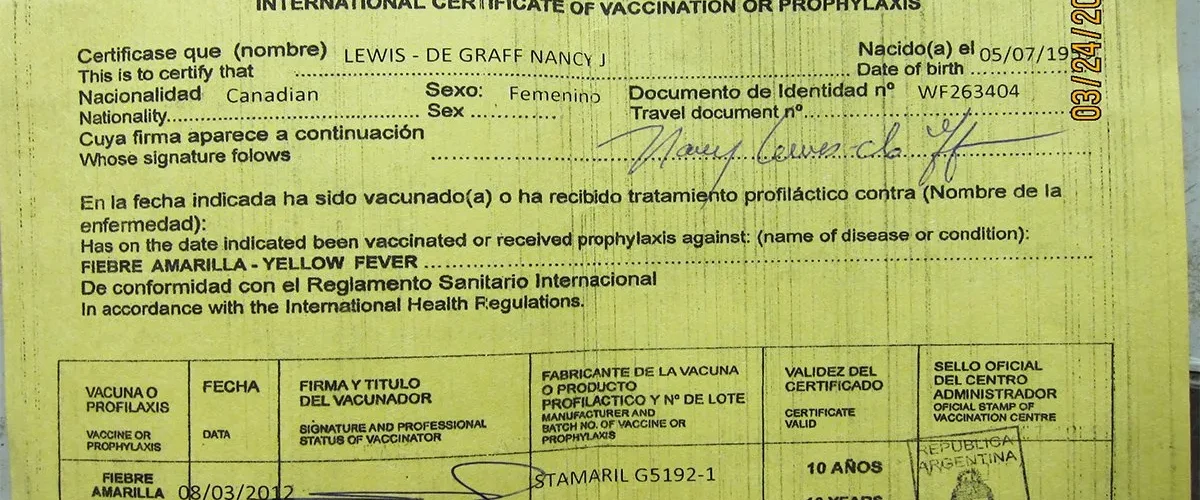
The yellow fever certificate is an official international vaccination record that proves you have been vaccinated against yellow fever. It is recorded on a standardized document often referred to as the International Certificate of Vaccination or Prophylaxis (ICVP).

This certificate is not a general travel document. It is only required for specific travel routes where there is a risk of yellow fever transmission or where a country enforces strict entry health controls.

In Kenya’s case, the rule is based primarily on your travel history in the days or weeks before arrival.

When Kenya requires the yellow fever certificate

Kenya requires proof of yellow fever vaccination if you are arriving from, or have recently transited through, a country where yellow fever is present or considered a risk.

This includes many countries in sub-Saharan Africa and parts of South America.

The key rule is not nationality—it is exposure history.

If you have been in a yellow fever risk country within a defined period before entering Kenya, you may be asked to show proof of vaccination at entry.

This applies even if Kenya is not your first destination in a multi-country itinerary.

Who does NOT need the certificate

If you are travelling directly from countries that are not classified as yellow fever risk zones, you are generally not required to show the certificate.

This includes most travellers arriving from Europe, North America, the Middle East, and parts of Asia.

In these cases, immigration officers at Nairobi typically do not request any yellow fever documentation unless your travel route suggests exposure risk.

Transit rules that often confuse travellers

One of the most misunderstood parts of yellow fever regulations is transit.

Even if you do not leave the airport, transiting through a high-risk country can sometimes trigger a requirement for vaccination proof.

However, enforcement depends on duration of transit and whether you technically “entered” the country during layover.

Short airside transits (remaining in the international terminal without clearing immigration) are often treated differently from full entry into the country.

This is why routing matters when planning flights into Kenya.

Why Kenya enforces these rules

Kenya’s health screening policies are based on preventing importation of yellow fever into regions where outbreaks could spread.

Yellow fever is a mosquito-borne viral disease, and while Kenya is not currently classified as a high-risk transmission zone for widespread urban outbreaks, the government maintains strict border controls to prevent reintroduction.

This is part of broader public health policy across East Africa.

Where the certificate is checked

The yellow fever certificate can be checked at multiple points:

Airline check-in counters before departure
Immigration control upon arrival in Kenya
Occasionally at health desks in airports

Airlines may refuse boarding if you are required to have the certificate but do not present it. This is why the rule is enforced before you even arrive in Kenya.

At Jomo Kenyatta International Airport, health screening officers can request documentation if your travel history indicates risk exposure.

What happens if you don’t have it when required

If you are required to have the certificate but do not present it, you may be:

Denied boarding at your departure airport
Given vaccination on arrival in some cases (depending on facilities and policy at the time)
Subject to additional screening or delays

In most real-world cases, airlines are stricter than immigration because they are responsible for ensuring compliance before travel begins.

Validity of the yellow fever certificate

Once issued, the yellow fever vaccination certificate is generally considered valid for life under current international health regulations.

This means you do not need to re-vaccinate for each trip if you already have a valid certificate recorded.

However, travellers should always carry the physical or digital copy when travelling, as it may be requested during entry procedures.

How this applies to safari travellers

For most safari travellers flying directly into Kenya from non-risk countries, the yellow fever certificate is not required.

This applies to common safari routes such as:

Europe to Nairobi direct flights
Middle East hub connections into Kenya
North America to Nairobi via one-stop routes in non-risk zones

However, it becomes relevant if your itinerary includes multiple African countries before entering Kenya.

For example, combining Uganda, Rwanda, Tanzania, or other regional destinations may trigger documentation requirements depending on travel sequence.

Common safari itinerary scenarios

Many East Africa safaris combine multiple countries, which is where confusion often arises.

If you travel from a yellow fever risk country into Kenya, even for tourism purposes, you may need proof of vaccination.

If Kenya is your first entry point into the region and you have not been in a risk country recently, you are typically not required to present it.

This is why travel order matters more than passport nationality.

The role of airlines in enforcement

Airlines play a critical role in enforcing yellow fever rules.

Before boarding, airline staff check whether your itinerary includes travel through risk countries.

If your documents suggest exposure risk and you do not have certification, they can refuse boarding regardless of your final destination rules.

This makes compliance an airline-level requirement, not just a border issue.

Why rules differ between travellers

Yellow fever policy is risk-based, not nationality-based.

Two travellers with identical passports may have different requirements depending on their recent travel history.

This is why safari operators often ask for full itinerary details before confirming logistics, especially for multi-country East Africa circuits.

Practical guidance for safari planning

From a planning perspective, the safest approach is to:

Check your full travel route, not just your destination
Confirm whether any transit or prior countries are classified as yellow fever risk zones
Ensure vaccination is done at least 10 days before travel if required
Carry the certificate with your travel documents at all times

This removes uncertainty at airports and prevents last-minute complications.

The real takeaway most travellers miss

The yellow fever requirement for Kenya is not about Kenya itself—it is about where you have been before you arrive.

If your route is direct or from non-risk regions, the process is simple and often invisible.

If your route includes parts of Africa or South America where yellow fever is present, the certificate becomes a mandatory travel condition.

It is a transit-based rule, not a destination-based one.

Is Kenya Safe for Safari Tourists in 2026?

Is Kenya Safe for Safari Tourists in 2026?

Is Kenya Safe for Safari Tourists in 2026? An Honest, Nuanced Assessment

Kenya is one of those destinations where the word “safe” depends heavily on context. A safari in the Masai Mara feels completely different from an evening walk in a busy city neighbourhood, and both experiences get unfairly merged in online debates. The reality is more layered: Kenya is generally safe for safari tourists when travel is structured properly, but it is not a risk-free destination, and it should not be treated as one.

Millions of travellers visit Kenya every year, and the vast majority complete their safaris without incident, especially in established wildlife areas and conservancies. However, like many global tourism destinations, there are specific risks that exist outside safari circuits that require awareness rather than fear.

The key distinction most travellers miss

The most important safety concept in Kenya is the separation between safari ecosystems and urban environments.

Safari regions such as the Masai Mara, Amboseli, Samburu, Laikipia, and private conservancies operate very differently from cities like Nairobi or Mombasa.

Inside safari zones, tourism is structured, controlled, and highly dependent on professional guiding systems. Wildlife areas are managed with strict protocols, trained guides, and established visitor routes. These environments are designed around tourism safety because wildlife encounters are inherently part of the experience.

In contrast, urban areas behave like any large developing global city. That means normal city risks exist: petty theft, opportunistic crime, and traffic-related safety challenges, especially in crowded or poorly lit areas.

This separation is the foundation of understanding safety in Kenya.

Safety in Kenya’s safari regions

Safari areas are generally the safest environments a traveller will experience in the country.

In the Masai Mara National Reserve and surrounding conservancies, tourism is tightly managed. Vehicles follow designated routes, guides are trained in wildlife behaviour, and camps operate with established security procedures.

Wild animals themselves are not a major safety threat when proper guidelines are followed. Most incidents in safari environments occur only when visitors ignore instructions or leave vehicles in unsafe areas.

In structured safaris, your guide is effectively your safety system. Their decisions are based on decades of wildlife behaviour knowledge, terrain awareness, and communication with other guides in the field.

This is why guided safaris are consistently safer than self-directed exploration in wildlife areas.

Urban safety reality: Nairobi and major towns

Outside safari environments, safety becomes more variable.

In Nairobi, as in many large cities globally, petty crime can occur in crowded areas, transport hubs, and busy streets. These are typically opportunistic incidents rather than targeted threats against tourists, but they are still part of the urban reality.

Most visitors who stay in well-known districts, use arranged transfers, and avoid high-risk zones experience no issues. Problems tend to arise when travellers move without local guidance, especially at night or in unfamiliar neighbourhoods.

The key principle is not avoidance of cities, but structured movement within them.

Regional risk variation across the country

Kenya is not uniform in safety conditions. Risk levels vary significantly depending on geography.

Border regions near Somalia and certain northeastern areas have higher security advisories due to historical instability and cross-border risks. These regions are far from major safari circuits and are not part of standard tourist routes.

Most safari destinations, coastal tourism areas, and central highland regions operate under stable tourism infrastructure and are regularly visited by international travellers.

This geographic separation is important because it means safari tourism functions independently from areas of higher risk.

Terrorism and security presence

Kenya has experienced security challenges in the past, particularly in specific border regions. As a result, security presence is visible in airports, major transport hubs, and public spaces.

This includes screening at entry points and patrols in high-traffic areas.

For travellers, this translates into structured entry procedures rather than direct exposure to risk.

In practical terms, safari travellers moving through established routes rarely interact with high-risk zones, as tourism infrastructure is concentrated in stable regions.

Health and environmental safety factors

Beyond security, health considerations are part of safari safety planning.

Malaria risk exists in some regions, particularly in lowland and coastal areas, although it is manageable with preventative medication and mosquito protection measures.

Basic precautions such as insect repellent, long clothing in evenings, and awareness of sleeping conditions in camps are standard practice.

Food hygiene in reputable safari camps is generally high, with professional catering systems in place.

Environmental factors such as dust, heat, and sun exposure are often more relevant to day-to-day comfort than security risks.

Transport and road safety considerations

One of the more practical safety aspects in Kenya is road travel.

Long-distance road journeys can involve variable road conditions, especially outside major highways. This is one reason many safari itineraries use bush flights instead of long overland transfers.

Road safety risks are reduced significantly when using professional drivers and established safari operators who understand terrain conditions and driving patterns.

Why safari tourism is structurally safer than general travel

Safari tourism in Kenya is a controlled ecosystem.

Travellers move between defined points: airports, lodges, airstrips, and game drive routes. Each of these elements is managed by professionals whose primary responsibility is guest safety.

This system reduces uncertainty and removes many of the variables that exist in independent travel environments.

Even wildlife encounters are structured through distance rules, vehicle protocols, and guide oversight.

The role of guides in safety

Safari guides are not just wildlife interpreters—they are the core safety mechanism of the entire experience.

They are trained in animal behaviour, emergency response, terrain navigation, and communication with lodge networks.

In real terms, your safety on safari depends far more on guide expertise than on external conditions.

This is why reputable operators matter significantly more than the destination itself.

Crowds, infrastructure, and tourism stability

Kenya’s tourism industry is long-established, and infrastructure in major safari regions is designed to handle international visitors.

Camps, lodges, and conservancies operate with consistent safety standards and professional staff.

Even during peak periods such as migration season, operations are structured to manage visitor flow and wildlife interaction safely.

This stability is one of the reasons Kenya remains one of Africa’s most visited safari destinations.

Honest risk summary without exaggeration

A realistic safety assessment of Kenya in 2026 looks like this:

Safari regions are highly structured and generally very safe when using reputable operators
Urban areas require normal city awareness and caution in certain districts
Border regions near high-risk zones should be avoided unless specifically necessary
Health precautions are important but manageable with preparation
Transport safety improves significantly when using professional services

There is no single “yes or no” answer. Safety in Kenya is situational rather than absolute.

The real decision framework travellers should use

Instead of asking whether Kenya is safe overall, the more accurate question is:

Are you staying within structured safari systems and guided environments?

If the answer is yes, then safety levels are comparable to many major global wildlife tourism destinations.

If the answer involves independent movement in unfamiliar urban or border regions, then risk awareness becomes more important.

Kenya’s safari industry is built on controlled access to wilderness environments. That structure is what makes it both accessible and relatively safe for international travellers.

The real advantage of Kenya is not the absence of risk, but the presence of systems that manage it effectively inside tourism zones.

When travellers operate within those systems—guided safaris, established camps, and structured transfers—the experience remains consistently safe and professionally managed.