Kenya in October and November: What Happens to the Mara After the Migration Leaves?
October and November in Kenya are often overlooked because they sit in the “transition zone” between the famous Great Migration peak and the green season. Many travellers assume the Masai Mara becomes empty once the wildebeest herds move back toward the Serengeti, but that is not what actually happens.
What changes is not the presence of wildlife, but the structure of the ecosystem. The Mara shifts from a high-density migration arena into a resident predator ecosystem with dispersed herbivores, evolving vegetation, and early rainfall patterns beginning to reshape movement.
This is a quieter but more complex phase of the safari calendar.
The actual movement of the migration in October and November
By late September and early October, most of the large wildebeest herds begin moving south from the Masai Mara National Reserve back into the Serengeti ecosystem in Tanzania.
This movement is not abrupt. It is gradual and responsive to grazing pressure and rainfall patterns. As grass in the Mara becomes shorter and less nutritious after months of feeding, herds naturally follow greener zones southward.
By November, the majority of the migration has left Kenya entirely, although small groups may still pass through depending on rainfall timing.
What remains behind is not emptiness, but a rebalanced ecosystem.
What the Mara looks like immediately after the migration
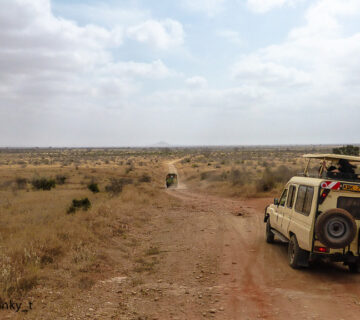
Once the migration pressure reduces, the landscape begins to open up visually.
With fewer massive herds on the plains, visibility improves significantly. Grass remains short due to months of grazing, which makes it easier to spot resident wildlife.
However, the atmosphere changes:
Fewer continuous moving herds
Less dust and large-scale movement
More isolated sightings of individual species
It becomes a different kind of safari experience—less about mass movement and more about tracking resident behavior.
Predator dynamics after the migration
One of the most important shifts during this period is how predators adjust.
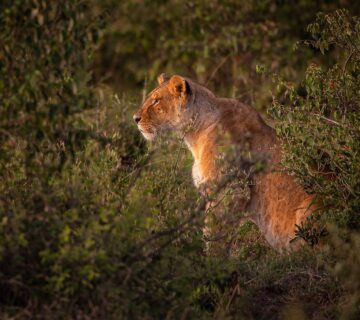
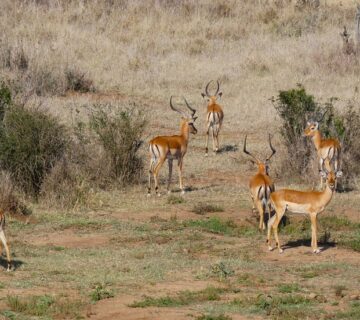
Lions, in particular, do not leave the ecosystem when the migration moves. Instead, they switch focus to resident prey populations such as topi, gazelles, buffalo, and smaller antelope species.
In many cases, prides that were highly active during migration remain visible but shift their hunting strategies to more dispersed targets.
Hyenas continue to play a major role, often scavenging or following remaining prey movements.
Cheetahs remain present but operate more independently due to reduced herd density.
The overall effect is a transition from mass predator-prey interactions to more localized, individual hunting behavior.
Wildlife visibility: less density, more clarity
After the migration leaves, wildlife becomes less concentrated but often easier to observe in a different way.
You are no longer scanning large herds. Instead, you are focusing on individual animals or smaller groups spread across open plains.
This creates a different kind of safari rhythm:
More time spent tracking individual species
More predictable resident animal territories
Fewer distractions from large-scale movement
For experienced safari travellers, this phase often feels more “readable,” even if it lacks the dramatic density of peak season.
October: the transitional dry-to-green phase
October is still largely dry in most of Kenya’s safari regions, but subtle environmental changes begin to appear.
Grass remains short, but early signs of the short rains may start in some areas. Dust levels are still present, and game drives remain highly accessible.
This is a strong month for:
Clear visibility across plains
Balanced predator and herbivore activity
Lower vehicle density compared to peak season
In the Masai Mara ecosystem, October often feels like a reset period after months of intense wildlife concentration.
November: the arrival of short rains and ecological renewal
November marks the beginning of the short rains in Kenya.
These rains are typically light, irregular, and short-lived, but they are ecologically significant.
They trigger:
Rapid vegetation growth
Increased water availability
Gradual dispersal of resident wildlife
In the Mara, this is when the landscape begins to shift from dry plains toward early green season conditions.
Animals respond quickly. Herbivores start spreading out as food becomes more widely available. Birdlife increases noticeably due to seasonal migration patterns.
The ecosystem begins to expand spatially rather than contract.
Resident wildlife becomes the focus
Once migration herds leave, the safari focus naturally shifts to resident species that remain year-round.
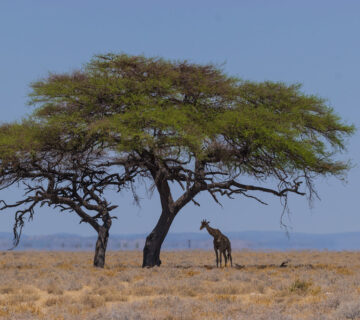
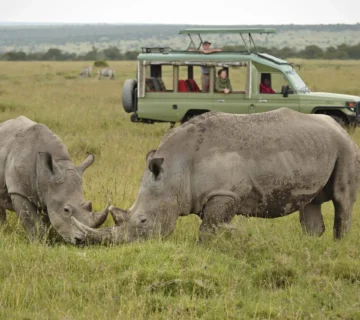
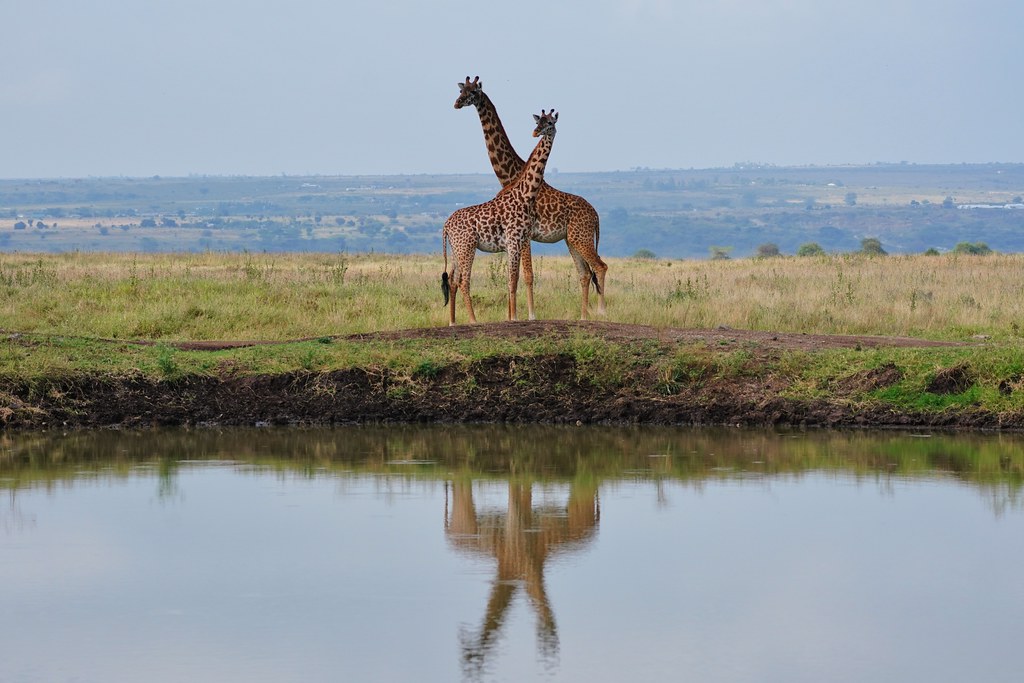
Elephants, buffalo, giraffes, topi, zebras, and various antelope species continue to occupy the ecosystem in stable populations.
The absence of massive migration herds makes these animals more individually visible and easier to follow over longer periods.
Predator interactions also become more localized, often centered around permanent territories rather than moving herd dynamics.
Predator behavior becomes more territorial
Without the migration pressure, predators become more territory-focused.
Lion prides maintain fixed hunting zones and rely more heavily on resident prey populations.
Leopards, which are already solitary and territorial, become more consistently observable along river systems and wooded areas.
Hyenas continue to operate in clans but shift from migration-following behavior to scavenging and opportunistic hunting within established territories.
This phase provides a clearer view of predator hierarchy within the ecosystem.
Crowd levels and safari experience quality
One of the biggest advantages of October and November is the reduction in tourist density.
As peak migration crowds leave, safari circuits become noticeably quieter.
Game drives feel less congested, especially in key viewing areas that were previously crowded during river crossings.
This creates more flexibility for guides and a more relaxed overall pace.
For many travellers, this is when the Mara feels more personal again.
Landscape transformation after peak grazing
Months of migration grazing leave the plains visibly altered.
By October, grass is short and uniform, which improves visibility for game viewing.
As November progresses and rains begin, the first green shoots appear, slowly changing the visual character of the landscape.
This transition creates a layered environment:
Dry, open plains in early October
Mixed transitional vegetation in mid-November
Early green growth by late November
It is a visually evolving safari window.
Weather conditions and travel practicality
Weather during this period is generally favorable for travel.
October remains dry and stable, with clear skies and excellent road conditions.
November introduces variability due to short rains, but these are typically brief and do not disrupt safari operations significantly.
Game drives continue as normal, although occasional muddy patches may appear later in the month.
The upside is improved air quality and reduced dust as rainfall increases.
Why this period is often misunderstood
The biggest misconception about October and November is that wildlife “leaves” the Mara.
In reality, only the migration herds move. The ecosystem itself remains active and fully functional.
What changes is intensity, not presence.
You lose mass movement but gain ecological stability and clearer observation conditions.
This nuance is often missed in simplified safari marketing narratives.
Who this season is best suited for
October and November are ideal for travellers who want:
Lower crowd levels after peak season
Good wildlife visibility without migration congestion
More relaxed game drive experiences
Better pricing compared to July–September
A transition into green season landscapes
It is less ideal for travellers who want:
Guaranteed river crossings or migration drama
Maximum wildlife density at all times
Highly predictable large herd movement
The real identity of the post-migration Mara
Once the migration leaves, the Masai Mara does not become inactive—it becomes structurally different.
Instead of being defined by movement, it is defined by residence.
Instead of mass herds, it is defined by individual territories.
Instead of spectacle, it is defined by continuity.
This is the phase where the ecosystem resets and prepares for the next cycle of rainfall and movement.
Start Planning Your Next Trip To Africa
If you can picture yourself in one—or several—of these exceptional retreats, the next move is simple. We design fully tailored African safaris that bring these experiences together seamlessly, from private gorilla encounters to luxury lodges in the heart of the wild.
Every detail is carefully planned, so your journey feels effortless from start to finish. Reach out in whichever way suits you best, and let’s begin crafting your safari.
Start Planning