Kenya in the Green Season: The Honest Case for Visiting January to March
The period between January and March in Kenya is often misunderstood because it sits outside the famous “migration peak” narrative. Many travellers automatically assume it is a low-value safari window, but in reality it is one of the most visually rich, behaviorally active, and strategically underrated times to visit.
This is the green season—when landscapes recover after short rains, wildlife disperses across fertile plains, and predator dynamics shift into a highly intense calving phase in key ecosystems like the Masai Mara.
Unlike peak season, this period is not defined by crowd density or dramatic river crossings. It is defined by detail, behavior, and space.
What the green season actually looks like on the ground
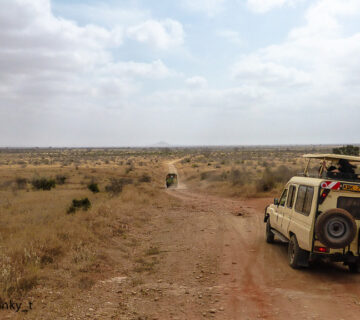
From January to March, Kenya’s major safari ecosystems transition into a lush, green landscape. Grasslands are taller, water is more widely available, and the visual contrast of the environment changes completely compared to the dry season.
In places like the Masai Mara National Reserve, this means wide open plains turn into softer, greener terrain with scattered wildlife movement instead of dense clustering.
The atmosphere is quieter, but not less active. Instead of large-scale migrations, you see more localized behavior—births, hunting cycles, territorial interactions, and predator movements tied to newborn prey.
It feels less like a spectacle and more like observing the ecosystem functioning at a micro level.
The most important event: calving season
The defining wildlife event during this period is the wildebeest calving season, especially in the southern Serengeti ecosystem that feeds into the Mara system later in the year.
Hundreds of thousands of wildebeest give birth within a short window. This creates one of the highest concentrations of newborn animals in Africa.
The effect is immediate and dramatic:
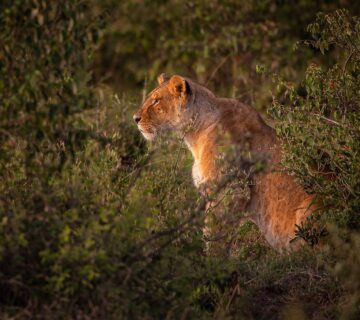
Predators such as lions, cheetahs, and hyenas become highly active
Hunting success rates increase due to vulnerable prey
Short bursts of intense predator-prey interactions dominate game drives
Unlike the migration crossings, which are about movement, this season is about vulnerability and survival at birth.
It is one of the most emotionally intense safari periods, even if it is less visually “spectacular” in the traditional sense.
Predator behavior during green season
Predator dynamics shift significantly during this period.
Instead of following large migrating herds, predators concentrate around calving zones and resident prey populations.
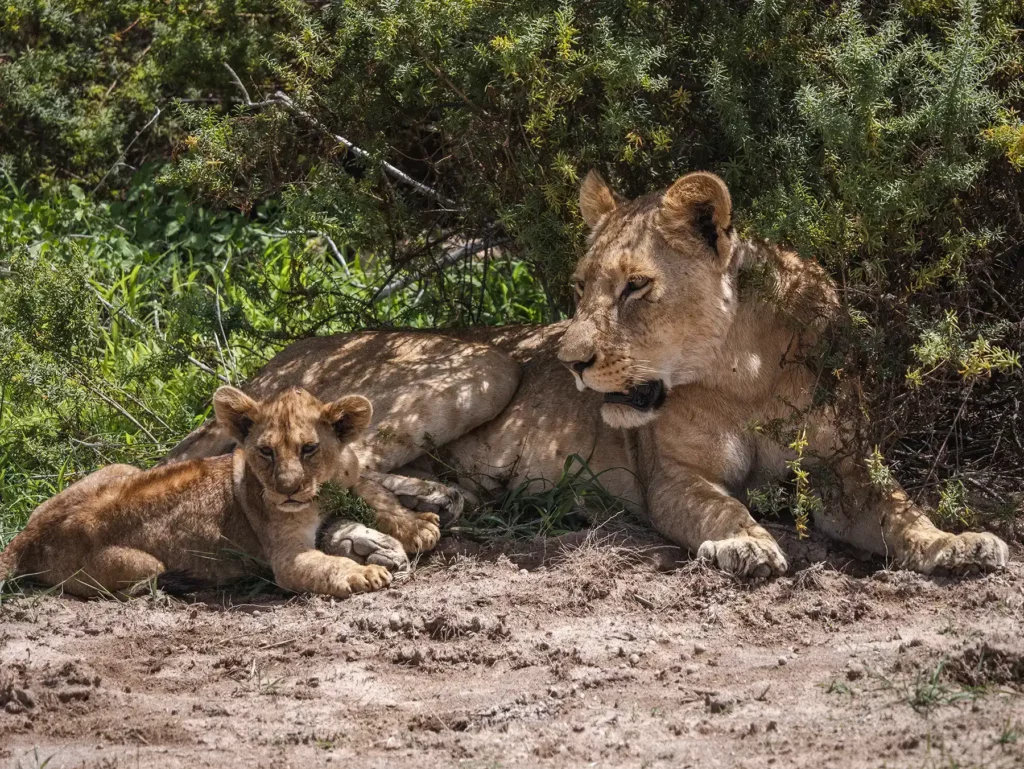
In the Mara ecosystem, lion prides often adjust their territory usage to remain close to areas where newborn wildebeest and zebras are present.
Cheetahs benefit even more during this period because open grasslands and inexperienced calves increase hunting opportunities.
Hyenas become more visible and opportunistic, often following predator kills or targeting isolated young animals.
What makes this season special is not just frequency of hunts, but the educational visibility of predator strategy.
You see decision-making more clearly—stalking, hesitation, coordination, and failure as often as success.
Landscape quality: why green season looks completely different
One of the most immediate differences travellers notice is the transformation of the landscape.
Dry, golden plains become lush and saturated with vegetation. The contrast is especially strong in ecosystems like the Masai Mara, where previous dry-season dust is replaced by green grass and seasonal flowers.
This changes not just aesthetics but behavior:
Animals spread out more due to wider food availability
Visibility becomes slightly reduced due to taller grass
Birdlife increases significantly due to seasonal abundance
For photographers, this is one of the most visually dynamic periods of the year. Skies are often dramatic, with fast-moving clouds and strong light variation.
Crowds and safari experience: the biggest hidden advantage
One of the strongest arguments for visiting between January and March is the reduction in tourist density.
Unlike July to September, where high demand concentrates vehicles in key areas, the green season offers significantly more space in the field.
Game drives feel more personal. You are less likely to encounter multiple vehicles at sightings, and guides have more flexibility in movement.
This changes the emotional quality of the safari. Instead of shared anticipation with many vehicles, you often experience sightings in relative isolation.
For many travellers, this alone is a major upgrade in experience quality.
Pricing and value: why this is one of the best-value safari windows
From a cost perspective, the green season is structurally more accessible than peak migration months.
Accommodation rates are generally lower, especially in mid-range and luxury camps. Some high-end properties offer seasonal incentives or reduced rates due to lower demand.
This does not mean the quality drops. In many cases, lodges maintain the same service standards but operate at lower occupancy.
The result is a rare combination in safari travel:
High-quality guiding
Excellent wildlife viewing potential
Lower pricing pressure
Better availability in preferred camps
For travellers who prioritize value without sacrificing experience, this is one of the most efficient periods to travel.
Wildlife visibility: the trade-off reality
The main trade-off in green season safaris is not wildlife absence—it is dispersion.
Because water and grazing are more widely available, animals are not forced into tight clusters like they are in the dry season.
This means:
You may drive longer distances between major sightings
Wildlife can appear more spread out across landscapes
Certain migration-focused drama is absent
However, this is offset by behavior richness. Instead of mass movement, you observe individual and small-group interactions more clearly.
It is a shift from scale to detail.
Birdlife and ecological richness
One of the most overlooked advantages of this season is bird activity.
Migratory bird species are present in high numbers, and resident species are highly active due to favorable conditions.
Wet areas and river systems support breeding activity, making this one of the best times for bird diversity in Kenya.
For ecosystems like the Mara, this adds an additional layer of biodiversity that is often less noticeable during dry peak months.
Weather conditions: what travellers actually experience
The green season is not defined by constant rain. It is a transitional period with intermittent showers, often short and localized.
Mornings are typically clear, with rainfall occurring in the afternoon or evening in short bursts.
This creates a mix of conditions:
Fresh, cool mornings
Dramatic skies for photography
Occasional muddy tracks in some areas
Rapid vegetation recovery after rain
Game drives remain fully operational, although some areas may be less accessible depending on rainfall intensity.
Who this season is best suited for
This period is not a secondary version of peak season—it is a different type of safari entirely.
It suits travellers who want:
Lower crowds and quieter game drives
Better pricing without sacrificing lodge quality
Strong predator activity during calving season
Photography opportunities with dramatic landscapes
A more relaxed, less congested safari rhythm
It is less suitable for travellers who prioritize:
Guaranteed river crossings and migration density
Extremely predictable wildlife concentrations
Dry, uniform landscapes with maximum visibility
The real character of January to March safaris
The most important thing to understand is that this season is not about absence—it is about variation.
You are not missing wildlife. You are seeing a different phase of the same ecosystem.
Instead of migration movement, you observe reproduction cycles.
Instead of mass crossings, you see predator strategy.
Instead of crowded sightings, you experience space.
This creates a safari that feels more observational and less theatrical, but often more intimate and nuanced.
Final perspective: why this season is underrated
The green season is often overshadowed by migration marketing, but in practical safari terms it offers one of the best balance points in Kenya’s annual cycle.
It combines:
Strong wildlife presence
High behavioral activity
Lower crowd pressure
Better pricing efficiency
Rich visual landscapes
For travellers willing to step outside the peak-season narrative, January to March offers a more grounded, less congested, and highly rewarding safari experience.
Start Planning Your Next Trip To Africa
If you can picture yourself in one—or several—of these exceptional retreats, the next move is simple. We design fully tailored African safaris that bring these experiences together seamlessly, from private gorilla encounters to luxury lodges in the heart of the wild.
Every detail is carefully planned, so your journey feels effortless from start to finish. Reach out in whichever way suits you best, and let’s begin crafting your safari.
Start Planning