Kenya in July, August and September: Migration Peak, Peak Prices and Whether It’s Worth It
Visiting Kenya between July and September is one of those safari decisions that sounds simple on paper but feels very different in reality. This is the period when the Masai Mara ecosystem becomes one of the most concentrated wildlife stages in the world, driven by the arrival of the Great Migration. At the same time, it is also when Kenya becomes its most expensive, most crowded, and most competitive in terms of safari availability.
There is no neutral version of this season. It is either exactly what you imagined a safari should feel like, or slightly overwhelming depending on expectations.
What actually makes July to September special in Kenya
During these months, Kenya’s southern safari circuit enters its peak dry season. Rainfall is minimal, grass is short, and animals are forced into predictable movement patterns around water sources.
The defining ecological event is the arrival of massive herds of wildebeest and zebras from Tanzania into the Masai Mara ecosystem. This is not a small migration shift—it is a movement of over a million animals entering Kenya in waves.
The result is a landscape that feels alive in a very direct, visible way. You are not searching for wildlife in scattered pockets. You are watching entire ecosystems move.
By July, the first large herds begin arriving. August becomes the peak of movement and tension. September still holds strong numbers, but the energy starts to spread out slightly as herds stabilize and begin gradual repositioning.
The migration reality: it is not a show, it is a survival system
A common misunderstanding is that the migration is a predictable spectacle. In reality, it is a survival-driven movement shaped by rainfall, grazing conditions, and predator pressure.
The most famous moments are river crossings, especially along the Mara River. These crossings are not scheduled. Herds gather, hesitate for hours or days, and then suddenly move when internal group pressure builds.
When they do cross, the scene becomes intense. Crocodiles are positioned in the water, waiting for movement. Lions and hyenas patrol the banks. The herds themselves are in constant motion, reacting to fear and momentum rather than coordination.
What makes this powerful is not just the number of animals, but the unpredictability. You can be in position for hours and see nothing, then suddenly witness a full crossing unfold in minutes.
That uncertainty is the core of the experience.
What safari days actually feel like during this period
A typical game drive in this season feels different from other times of year.
You are not “looking for wildlife” in the traditional sense. You are following movement patterns—dust trails on the horizon, clusters of vehicles in the distance, radio calls from guides tracking herd direction.
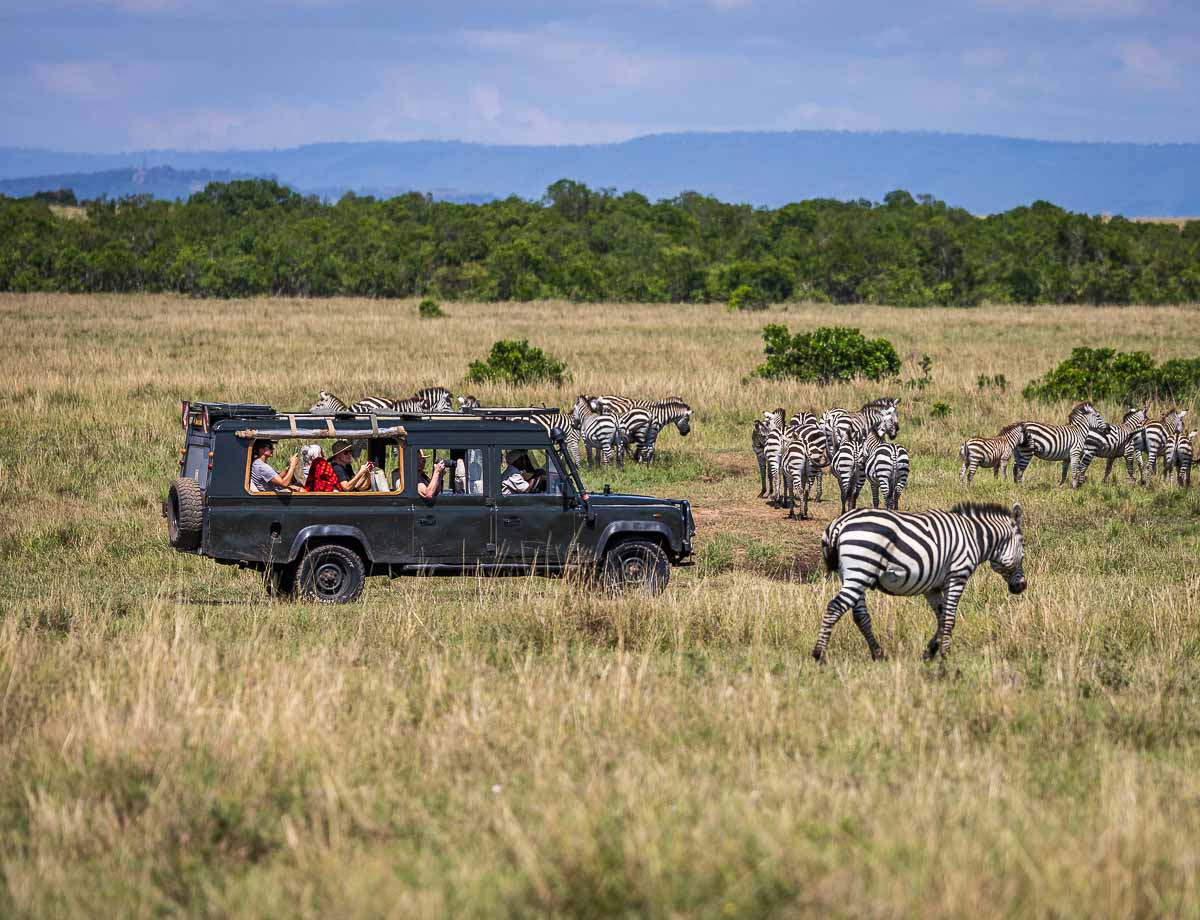
When migration herds are nearby, the plains are rarely empty. You will see continuous movement: wildebeest streaming across valleys, zebras breaking off in smaller groups, predators shadowing the edges.
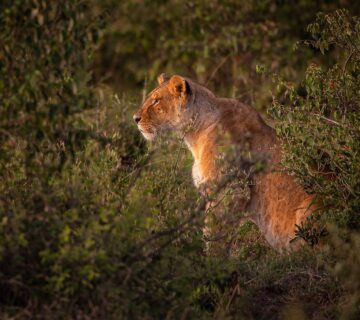
Lions are often positioned near movement corridors, not because they are actively hunting at every moment, but because they understand where opportunity will appear.
Hyenas are more visible than usual because they follow the herd pressure closely.
Even when there are no dramatic kills or crossings, the density of life itself becomes the attraction.
Why this season is expensive (and why it feels that way on the ground)
Prices during July to September rise sharply across Kenya’s safari circuit, but the reason is not just “peak demand” in a simple sense.
It is a combination of three structural factors:
First, there are very few camps positioned directly inside high-probability migration zones. Those that exist are limited in number and sell out far in advance.
Second, logistics become more expensive. Flights into the Mara increase in demand, fuel and vehicle usage rises, and guiding services are at maximum capacity.
Third, exclusivity becomes a selling point. The closer a camp is to river systems or migration corridors, the more it can charge, because location directly influences wildlife access.
What this means in practice is that two travellers in the same national park can have completely different price experiences depending on where they stay.
The crowd factor nobody talks about enough
One of the biggest surprises for first-time visitors is how busy certain areas can become.
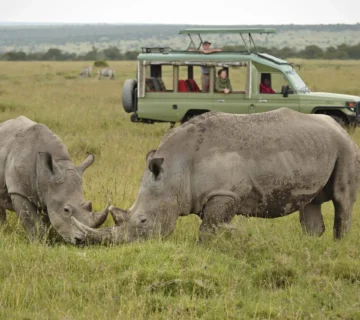
At major river crossing points, you may see dozens of safari vehicles waiting in position. Guides communicate constantly to anticipate movement, and when something happens, vehicles reposition quickly.
This does not ruin the experience, but it does change the atmosphere. Instead of solitude, you sometimes experience a kind of coordinated anticipation shared among many vehicles.
It feels more like a gathering than a quiet observation.
However, this crowding is not uniform. Private conservancies around the Masai Mara operate differently. Vehicle numbers are controlled, off-road driving is sometimes allowed, and sightings feel more controlled and less congested.
So the experience depends heavily on where you are inside the ecosystem.
Weather and visibility: one of the strongest advantages of this season
From a practical safari perspective, this is one of the easiest times of year to travel.
Skies are generally clear. Rain is minimal. Roads are dry and accessible. Game drives are rarely disrupted by weather.
This matters more than it sounds, because visibility and access directly affect how much wildlife you can realistically see in a day.
Short grass also plays a major role. Animals cannot easily hide, which means predator-prey interactions become more visible and tracking becomes easier for guides.
What you actually gain by choosing this season
If you strip away the marketing language, the real value of July to September is concentration.
You are not traveling through scattered wildlife zones. You are entering one of the highest-density animal ecosystems on the planet at a specific moment in its annual cycle.
That means:
You see more animals per hour of driving
You observe more predator interaction patterns
You experience larger group movements rather than isolated sightings
You are present during one of nature’s largest migrations
There is a sense of scale that is hard to replicate at any other time of year.
What you sacrifice by choosing this season
The trade-offs are equally real.
You sacrifice flexibility because camps book out early.
You sacrifice cost efficiency because pricing is at its highest point.
You sacrifice solitude because certain areas become busy and highly concentrated with vehicles.
And you sacrifice unpredictability in a different way—the experience becomes more structured around known migration zones rather than exploratory safaris.
Who this season is actually best for
This is not a “general recommendation” season. It suits a very specific type of traveller.
It works best for people who want:
A high-intensity wildlife experience
A chance to witness river crossings or mass herd movement
A classic East African safari in its most iconic form
Strong photographic opportunities with predictable animal density
It is less suited for travellers who prioritize:
Privacy and low-traffic safari environments
Lower overall travel costs
Slow, immersive wilderness experiences without vehicle clusters
Flexible or last-minute planning
The real decision most people miss
The mistake many travellers make is comparing this season to other times of year using a simple “best vs worst” mindset.
That is not how Kenya works.
July to September is not better than January or April. It is simply more concentrated, more dramatic, and more expensive.
It is the difference between watching wildlife as a background presence and watching it as a high-density event unfolding in real time.
If that is what you want, the timing is exactly right. If not, Kenya has quieter seasons that offer a completely different but equally meaningful experience.
Start Planning Your Next Trip To Africa
If you can picture yourself in one—or several—of these exceptional retreats, the next move is simple. We design fully tailored African safaris that bring these experiences together seamlessly, from private gorilla encounters to luxury lodges in the heart of the wild.
Every detail is carefully planned, so your journey feels effortless from start to finish. Reach out in whichever way suits you best, and let’s begin crafting your safari.
Start Planning