How Tourism Revenue Funds Kenya’s Wildlife: The Economics Behind the Conservancy Model
Kenya’s wildlife economy is no longer powered by government funding alone or by traditional national parks operating in isolation. A growing share of conservation finance now comes from tourism revenue that flows directly into private and community-managed conservancies. This shift has fundamentally changed how wildlife is protected, especially in key ecosystems surrounding areas like the Masai Mara National Reserve.
What makes the system important is not just that tourists pay for experiences, but that those payments are structured in a way that directly funds land protection, anti-poaching operations, community income, and habitat conservation.
The basic economic logic of conservancy funding
At its core, the conservancy model is built on a simple exchange: landowners or communities lease land for wildlife conservation and tourism use, and in return they receive regular income.
This income replaces or supplements other land-use options such as livestock grazing or agriculture.
Tourism operators then pay for exclusive or limited access to these conservancies, and those payments become the primary funding source for conservation activities.
This creates a direct economic link between visitor demand and wildlife protection.
How tourism money enters the conservation system
Tourism revenue flows into conservancies through several channels:
Bed-night fees from safari camps and lodges
Conservation or access fees per visitor
Lease payments to landowners or communities
Employment income for local staff and guides
Service contracts for logistics, security, and operations
Each of these streams contributes to maintaining the land in a wildlife-friendly state rather than converting it into alternative land use.
Why exclusivity is economically important
One of the defining features of many conservancies is limited visitor density.
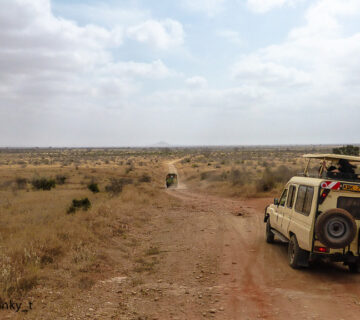
Unlike national parks that can experience high vehicle concentrations during peak seasons, conservancies often restrict the number of camps, beds, or vehicles allowed in a given area.
This exclusivity increases the value of each visitor stay, which in turn increases the revenue available for conservation and community payments.
It is a volume-limited, value-intensified model.
The Masai Mara ecosystem as a funding network
Around the Masai Mara ecosystem, conservancies form a financial buffer zone around the main reserve.
While the reserve itself generates tourism revenue through entry fees, surrounding conservancies generate direct income through land leases and high-value safari experiences.
This dual system spreads tourism pressure while increasing total conservation funding across a wider landscape.
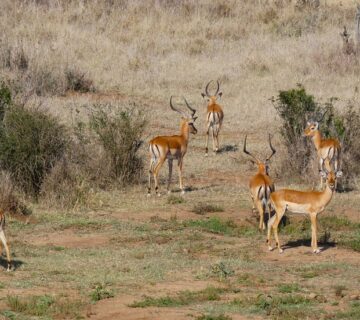
The presence of the wildebeest migration and resident wildlife populations makes this one of the most economically important safari regions in Africa.
Landowners as conservation stakeholders
In the conservancy model, landowners are not passive landholders—they are active stakeholders in wildlife management.
They receive consistent income for keeping land open for wildlife movement and for restricting certain types of development.
This changes the incentive structure fundamentally. Instead of converting land for short-term agricultural gain, there is long-term financial value in maintaining ecological integrity.
This alignment between conservation and income is one of the strongest drivers of habitat protection in Kenya today.
Employment as a secondary funding mechanism
Tourism revenue does not only fund land leases and conservation operations. It also supports employment at multiple levels.
Jobs created through conservancies include wildlife rangers, camp staff, drivers, guides, cooks, mechanics, and administrative roles.
These positions provide steady income streams in rural areas where economic opportunities may otherwise be limited.
Employment also strengthens local support for conservation because wildlife becomes directly linked to livelihoods.
Anti-poaching and security financing
A significant portion of conservancy revenue is allocated to wildlife protection and anti-poaching operations.
This includes ranger salaries, surveillance systems, patrol logistics, and coordination with national wildlife authorities.
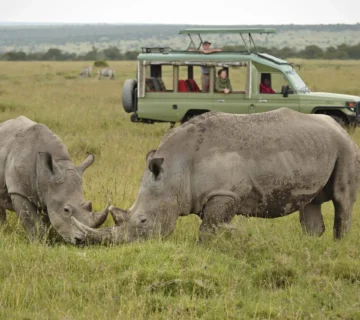
In high-value ecosystems, particularly those with species such as rhinos and elephants, security operations are a major cost center.
Without tourism funding, maintaining these security systems at scale would be extremely difficult.
Why conservancies outperform traditional funding models
Traditional conservation funding often relies on government budgets or external donor support.
These sources can be inconsistent and vulnerable to political or economic shifts.
The conservancy model, by contrast, ties funding directly to tourism demand, which is more resilient in regions with strong safari markets.
This creates a more stable financial base for long-term conservation planning.
The role of private investment in conservation infrastructure
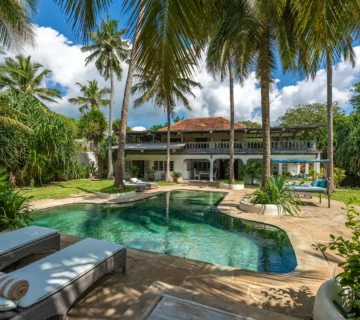
Many conservancies also attract private investment into infrastructure such as safari camps, airstrips, and operational facilities.
These investments are often structured as long-term leases, meaning capital is committed over extended periods.
This encourages sustainable development rather than short-term exploitation, because investors depend on the long-term health of the ecosystem.
How conservation and tourism pricing interact
Pricing in conservancy tourism is significantly higher than in many national park settings.
This is not accidental. Higher prices reflect lower visitor density, more exclusive experiences, and direct contributions to conservation funding.
A portion of what travellers pay is effectively a conservation levy embedded within the safari experience.
This makes each visitor financially contribute to land protection and wildlife management.
Community development funding mechanisms
Beyond conservation operations, tourism revenue also supports community development programs.
These can include education funding, healthcare access, water infrastructure, and local enterprise development.
The structure varies by conservancy, but the underlying principle is consistent: wildlife must generate tangible local benefits to remain viable in shared landscapes.
Economic trade-offs in land use decisions
For landowners, especially in community conservancies, the decision to lease land for conservation involves comparing wildlife income against alternative uses.
Without tourism revenue, land might be used for grazing expansion or agricultural conversion.
With tourism revenue, keeping land open for wildlife becomes economically competitive or even preferable.
This is the economic foundation of conservation success in conservancy systems.
Why tourism demand is a conservation driver
Conservation outcomes in Kenya are directly linked to global tourism demand.
When safari demand increases, conservancy revenue increases, which strengthens conservation capacity.
When demand decreases, funding pressure increases and conservation systems become more vulnerable.
This makes global travel behavior a direct factor in wildlife protection outcomes.
The role of ecosystem scale in financial sustainability
Conservancies are most effective when they operate at ecosystem scale rather than isolated land parcels.
Larger connected landscapes allow for better wildlife movement, which improves safari value and increases tourism attractiveness.
This creates a feedback loop where ecological health supports tourism revenue, and tourism revenue supports ecological health.
Challenges in the conservancy funding model
Despite its strengths, the model is not without challenges.
Revenue dependency on tourism makes conservancies vulnerable to global shocks such as travel disruptions or economic downturns.
Land pressure from competing land uses continues to increase in some regions.
Maintaining equitable distribution of income between stakeholders requires ongoing governance and transparency.
These challenges require adaptive management rather than fixed solutions.
The real transformation in conservation economics
The most important change introduced by conservancies is not just financial—it is structural.
Wildlife conservation is no longer funded primarily as a cost center supported by governments or donors. It is increasingly funded as a revenue-generating ecosystem tied to global tourism markets.
This shifts conservation from dependency to partial self-sufficiency in many regions.
The conservancy model in Kenya demonstrates that wildlife protection and economic development do not have to be opposing forces.
By linking tourism revenue directly to land use decisions, security operations, and community benefits, conservancies create a financial system where maintaining wildlife is economically rational.
This is why conservancies have become one of the most important drivers of long-term conservation success in Kenya’s safari landscapes.
Start Planning Your Next Trip To Africa
If you can picture yourself in one—or several—of these exceptional retreats, the next move is simple. We design fully tailored African safaris that bring these experiences together seamlessly, from private gorilla encounters to luxury lodges in the heart of the wild.
Every detail is carefully planned, so your journey feels effortless from start to finish. Reach out in whichever way suits you best, and let’s begin crafting your safari.
Start Planning