Is Kenya Safe for Safari Tourists in 2026? An Honest, Nuanced Assessment
Kenya is one of those destinations where the word “safe” depends heavily on context. A safari in the Masai Mara feels completely different from an evening walk in a busy city neighbourhood, and both experiences get unfairly merged in online debates. The reality is more layered: Kenya is generally safe for safari tourists when travel is structured properly, but it is not a risk-free destination, and it should not be treated as one.
Millions of travellers visit Kenya every year, and the vast majority complete their safaris without incident, especially in established wildlife areas and conservancies. However, like many global tourism destinations, there are specific risks that exist outside safari circuits that require awareness rather than fear.
The key distinction most travellers miss
The most important safety concept in Kenya is the separation between safari ecosystems and urban environments.
Safari regions such as the Masai Mara, Amboseli, Samburu, Laikipia, and private conservancies operate very differently from cities like Nairobi or Mombasa.
Inside safari zones, tourism is structured, controlled, and highly dependent on professional guiding systems. Wildlife areas are managed with strict protocols, trained guides, and established visitor routes. These environments are designed around tourism safety because wildlife encounters are inherently part of the experience.
In contrast, urban areas behave like any large developing global city. That means normal city risks exist: petty theft, opportunistic crime, and traffic-related safety challenges, especially in crowded or poorly lit areas.
This separation is the foundation of understanding safety in Kenya.
Safety in Kenya’s safari regions
Safari areas are generally the safest environments a traveller will experience in the country.
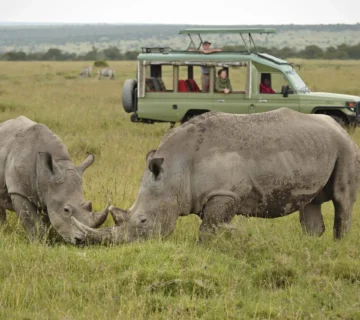
In the Masai Mara National Reserve and surrounding conservancies, tourism is tightly managed. Vehicles follow designated routes, guides are trained in wildlife behaviour, and camps operate with established security procedures.
Wild animals themselves are not a major safety threat when proper guidelines are followed. Most incidents in safari environments occur only when visitors ignore instructions or leave vehicles in unsafe areas.
In structured safaris, your guide is effectively your safety system. Their decisions are based on decades of wildlife behaviour knowledge, terrain awareness, and communication with other guides in the field.
This is why guided safaris are consistently safer than self-directed exploration in wildlife areas.
Urban safety reality: Nairobi and major towns
Outside safari environments, safety becomes more variable.
In Nairobi, as in many large cities globally, petty crime can occur in crowded areas, transport hubs, and busy streets. These are typically opportunistic incidents rather than targeted threats against tourists, but they are still part of the urban reality.
Most visitors who stay in well-known districts, use arranged transfers, and avoid high-risk zones experience no issues. Problems tend to arise when travellers move without local guidance, especially at night or in unfamiliar neighbourhoods.
The key principle is not avoidance of cities, but structured movement within them.
Regional risk variation across the country
Kenya is not uniform in safety conditions. Risk levels vary significantly depending on geography.
Border regions near Somalia and certain northeastern areas have higher security advisories due to historical instability and cross-border risks. These regions are far from major safari circuits and are not part of standard tourist routes.
Most safari destinations, coastal tourism areas, and central highland regions operate under stable tourism infrastructure and are regularly visited by international travellers.
This geographic separation is important because it means safari tourism functions independently from areas of higher risk.
Terrorism and security presence
Kenya has experienced security challenges in the past, particularly in specific border regions. As a result, security presence is visible in airports, major transport hubs, and public spaces.
This includes screening at entry points and patrols in high-traffic areas.
For travellers, this translates into structured entry procedures rather than direct exposure to risk.
In practical terms, safari travellers moving through established routes rarely interact with high-risk zones, as tourism infrastructure is concentrated in stable regions.
Health and environmental safety factors
Beyond security, health considerations are part of safari safety planning.
Malaria risk exists in some regions, particularly in lowland and coastal areas, although it is manageable with preventative medication and mosquito protection measures.
Basic precautions such as insect repellent, long clothing in evenings, and awareness of sleeping conditions in camps are standard practice.
Food hygiene in reputable safari camps is generally high, with professional catering systems in place.
Environmental factors such as dust, heat, and sun exposure are often more relevant to day-to-day comfort than security risks.
Transport and road safety considerations
One of the more practical safety aspects in Kenya is road travel.
Long-distance road journeys can involve variable road conditions, especially outside major highways. This is one reason many safari itineraries use bush flights instead of long overland transfers.
Road safety risks are reduced significantly when using professional drivers and established safari operators who understand terrain conditions and driving patterns.
Why safari tourism is structurally safer than general travel
Safari tourism in Kenya is a controlled ecosystem.
Travellers move between defined points: airports, lodges, airstrips, and game drive routes. Each of these elements is managed by professionals whose primary responsibility is guest safety.
This system reduces uncertainty and removes many of the variables that exist in independent travel environments.
Even wildlife encounters are structured through distance rules, vehicle protocols, and guide oversight.
The role of guides in safety
Safari guides are not just wildlife interpreters—they are the core safety mechanism of the entire experience.
They are trained in animal behaviour, emergency response, terrain navigation, and communication with lodge networks.
In real terms, your safety on safari depends far more on guide expertise than on external conditions.
This is why reputable operators matter significantly more than the destination itself.
Crowds, infrastructure, and tourism stability
Kenya’s tourism industry is long-established, and infrastructure in major safari regions is designed to handle international visitors.
Camps, lodges, and conservancies operate with consistent safety standards and professional staff.
Even during peak periods such as migration season, operations are structured to manage visitor flow and wildlife interaction safely.
This stability is one of the reasons Kenya remains one of Africa’s most visited safari destinations.
Honest risk summary without exaggeration
A realistic safety assessment of Kenya in 2026 looks like this:
Safari regions are highly structured and generally very safe when using reputable operators
Urban areas require normal city awareness and caution in certain districts
Border regions near high-risk zones should be avoided unless specifically necessary
Health precautions are important but manageable with preparation
Transport safety improves significantly when using professional services
There is no single “yes or no” answer. Safety in Kenya is situational rather than absolute.
The real decision framework travellers should use
Instead of asking whether Kenya is safe overall, the more accurate question is:
Are you staying within structured safari systems and guided environments?
If the answer is yes, then safety levels are comparable to many major global wildlife tourism destinations.
If the answer involves independent movement in unfamiliar urban or border regions, then risk awareness becomes more important.
Kenya’s safari industry is built on controlled access to wilderness environments. That structure is what makes it both accessible and relatively safe for international travellers.
The real advantage of Kenya is not the absence of risk, but the presence of systems that manage it effectively inside tourism zones.
When travellers operate within those systems—guided safaris, established camps, and structured transfers—the experience remains consistently safe and professionally managed.
Start Planning Your Next Trip To Africa
If you can picture yourself in one—or several—of these exceptional retreats, the next move is simple. We design fully tailored African safaris that bring these experiences together seamlessly, from private gorilla encounters to luxury lodges in the heart of the wild.
Every detail is carefully planned, so your journey feels effortless from start to finish. Reach out in whichever way suits you best, and let’s begin crafting your safari.
Start Planning