Kenya’s Two Dry Seasons Explained: January–March vs June–October and How They Differ
Kenya does not have a single “dry season” in the simple sense most travellers expect. Instead, it has two distinct dry periods that behave very differently on the ground. Both are excellent for safari, but they create completely different wildlife conditions, landscapes, pricing dynamics, and travel experiences.
Understanding the difference between January–March and June–October is one of the most important decisions when planning a safari, because it directly affects what you will actually see and how you will experience it.
The structure of Kenya’s safari calendar
Kenya’s wildlife calendar is shaped by rainfall patterns, not fixed tourist seasons.
The main climate rhythm looks like this:
January–March: Hot dry season with green undertones in some regions
April–May: Long rains (low tourism season)
June–October: Main dry season and migration peak window
November–December: Short rains and transitional green season
The two dry seasons sit on opposite sides of the rainy cycle and produce very different safari outcomes.
January–March: the “quiet intensity” dry season
January to March is a dry season that feels controlled, warm, and increasingly green as it progresses.
Rainfall is minimal at the beginning of the year, but landscapes do not look harsh or dusty like later in the dry cycle. Instead, you often see a mix of dry plains and early vegetation recovery depending on the region.
In the Masai Mara National Reserve ecosystem, this period is especially important because it overlaps with the southern Serengeti calving season just before herds move north later in the year.
Wildlife behavior during January–March
This is a resident wildlife season rather than a migration-driven one.
You will see:
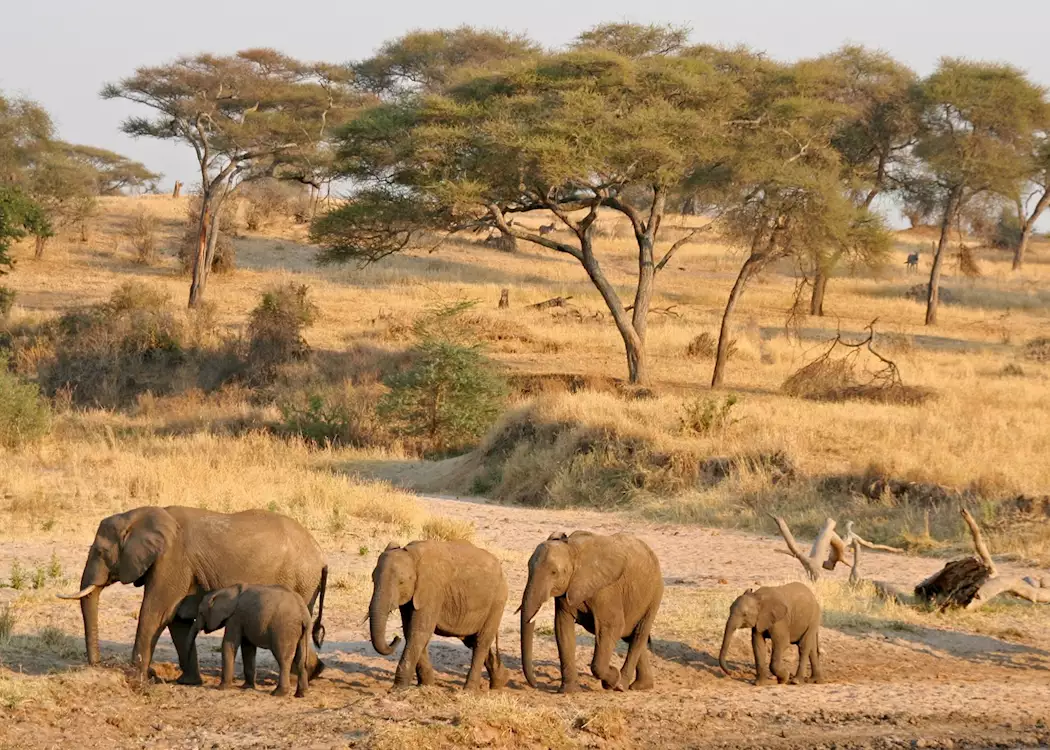
Stable populations of elephants, giraffes, buffalo, and antelope
High predator visibility in certain zones
Intense hunting activity in calving-adjacent areas (especially cheetahs and lions)
The defining feature is not mass movement but behavioral detail. You observe hunting strategy, births, and predator-prey interaction at close range.
Landscape and atmosphere
The landscape begins dry in January but gradually transitions toward greener conditions by March.
It feels less harsh than later dry months. Skies are often softer, and there is more visual variation in vegetation.
Game drives feel open and relaxed because wildlife is spread out rather than compressed.
Crowd levels and travel experience
One of the strongest advantages of this season is lower tourist density.
You are more likely to experience sightings without multiple vehicles surrounding them. This creates a more personal safari rhythm, especially in private conservancies.
June–October: the high-density dry season
June to October is Kenya’s main dry season and the most famous safari window in East Africa.
It overlaps with the peak of the Great Migration inside the Mara ecosystem, especially between July and September.
During this period, wildlife density reaches its annual maximum in key regions due to both migration movement and dry conditions.
Wildlife behavior during June–October
This is a concentration-driven season.
Animals gather around permanent water sources. Grass is short. Visibility is at its highest.
You will see:
Large herds of wildebeest and zebras (especially July–September)
High predator concentration around migration routes
Frequent hunting opportunities driven by herd movement
Strong overall game density across plains
In short, this is the most visually dramatic safari period.
Migration influence
The defining feature of this season is the Great Migration movement through the Masai Mara ecosystem.
By mid-year, herds move from Tanzania into Kenya, creating massive wildlife corridors.
River systems become focal points of survival drama, especially during crossing events.
This is what gives this season its global reputation.
Landscape conditions
Vegetation is short and dry. Dust levels are higher. Water is limited to permanent sources.
This creates excellent visibility but a more arid aesthetic compared to the green season.
It is a high-contrast landscape that emphasizes wildlife visibility over scenery softness.
Crowds and safari pressure
This is the busiest safari season in Kenya.
Vehicles cluster around migration hotspots. Camps book out months in advance. Prices rise significantly due to demand and location scarcity.
The experience can feel energetic and exciting, but also less private in key areas.
Direct comparison: January–March vs June–October
The differences between these two dry seasons are not minor—they are structural.
Wildlife density vs behavior quality
June–October delivers higher wildlife density due to migration concentration. You see more animals per unit of time, especially in peak months.
January–March delivers stronger behavioral observation. You see fewer mass herds but more detailed interactions like hunting sequences, births, and territory behavior.
Landscape experience
January–March feels slightly greener and softer, especially toward March.
June–October feels dry, open, and high-visibility, with more dust and sharper light conditions.
Crowd levels
January–March is significantly quieter. Game drives feel more private and flexible.
June–October is heavily visited, especially in July–September, with higher vehicle density at major sightings.
Pricing dynamics
January–March is more moderate in pricing, often offering better availability in quality camps.
June–October is the most expensive period, driven by migration demand and limited lodge availability.
Predictability vs spectacle
January–March is more predictable in terms of travel conditions and crowd control, but less dramatic in large-scale movement.
June–October is less predictable in wildlife events (like river crossings) but offers the highest potential for dramatic safari moments.
What each season feels like emotionally
The emotional tone of each season is very different.
January–March feels observational. You are watching ecosystems function at a steady rhythm, often with space and quiet around you.
June–October feels cinematic. There is constant anticipation of something happening—movement, crossings, predator action, and herd dynamics.
One is about detail. The other is about scale.
Who should choose January–March
This season is ideal if you want:
Lower crowd density and more private sightings
Better value and flexible booking options
Strong predator behavior without migration congestion
A calmer, less pressured safari rhythm
It suits travellers who prefer observation over spectacle.
Who should choose June–October
This season is ideal if you want:
The Great Migration experience at peak intensity
River crossings and large herd movement
Maximum wildlife density per game drive
A classic, high-energy East African safari
It suits travellers who want dramatic, high-volume wildlife encounters.
The most important insight most travellers miss
These two dry seasons are not competing versions of the same experience.
They are two different safari systems operating under the same geography.
January–March is about ecological behavior and balance.
June–October is about movement and concentration.
Both are excellent. They simply answer different travel expectations.
Simple way to think about it
If you want fewer vehicles, deeper observation, and calmer travel conditions, January–March is the stronger choice.
If you want migration drama, dense wildlife gatherings, and peak safari intensity, June–October is the stronger choice.
Kenya does not offer one dry season—it offers two different safari personalities depending on when you arrive.
Start Planning Your Next Trip To Africa
If you can picture yourself in one—or several—of these exceptional retreats, the next move is simple. We design fully tailored African safaris that bring these experiences together seamlessly, from private gorilla encounters to luxury lodges in the heart of the wild.
Every detail is carefully planned, so your journey feels effortless from start to finish. Reach out in whichever way suits you best, and let’s begin crafting your safari.
Start Planning