Private Conservancy vs National Reserve in Kenya: Why the Price Difference Is Justified
In Kenya’s safari ecosystem, one of the most common points of confusion for travelers is why staying inside the Masai Mara National Reserve feels significantly cheaper than staying in the surrounding private conservancies such as Naboisho, Mara North, or Olare Motorogi. On paper, both areas sit within the same broader ecosystem and offer access to similar wildlife, including the migration that flows through Masai Mara National Reserve.
Yet in practice, conservancy safaris often cost substantially more. The difference is not arbitrary pricing or branding—it is rooted in land economics, visitor control, experience design, and conservation funding structures that fundamentally change how safari operates on the ground.
Understanding this gap requires looking at how each system functions, not just what you see during a game drive.
The Two Systems Operate on Completely Different Models
The National Reserve Model
The Masai Mara National Reserve is a government-managed protected area open to a wide range of operators and visitors. It functions as a public-access wildlife zone where multiple safari companies operate under shared regulations.
Because access is broadly open, accommodation options inside and around the reserve vary widely in price, from budget camps to high-end lodges. Visitor numbers are not tightly capped, especially during peak migration season.
This structure prioritizes accessibility and large-scale tourism participation.
The Conservancy Model
Private conservancies such as Naboisho Conservancy, Ol Kinyei Conservancy, and Mara North Conservancy operate under long-term lease agreements with Maasai landowners.
Tourism operators pay for exclusive access rights to relatively small land parcels, and in return they must adhere to strict limits on the number of camps, beds, and vehicles allowed in each conservancy.
This creates a low-density tourism model where exclusivity is not a marketing feature—it is a legal requirement.
Land Cost Structure Drives the Price Difference
Lease Payments to Local Communities
In conservancies, a significant portion of safari revenue is directed to Maasai landowners through monthly lease payments.
This is not optional or indirect. It is built into the operating model.
The more exclusive the conservancy, the higher the per-guest contribution required to sustain the system. This is one of the core reasons conservancy-based safaris cost more than reserve-based stays.
Limited Bed Numbers Increase Value per Guest
Because conservancies strictly control the number of safari beds, operators cannot scale volume to reduce costs.
Instead, each guest effectively subsidizes conservation, land lease payments, and low-impact infrastructure.
This naturally raises per-night pricing compared to the more open-access national reserve model.
Experience Design: Density Versus Exclusivity
What You Pay for in the National Reserve
Inside the national reserve, you are primarily paying for access to one of the most wildlife-rich ecosystems in Africa.
You get:
High predator density
Migration access during peak season
Large savannah landscapes
Multiple accommodation price tiers
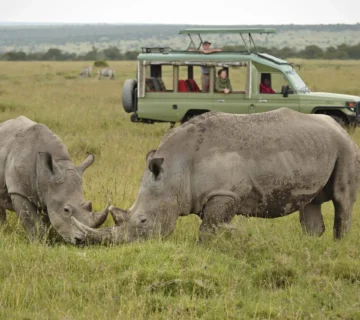
However, you also share this space with a higher number of safari vehicles, especially around river crossing points and high-activity zones.
The experience is high-energy and visually dramatic, but not always private.
What You Pay for in Conservancies
In conservancies, pricing reflects controlled exclusivity.
You are paying for:
Strict vehicle limits per area
Fewer camps and guests per square kilometer
Extended time at wildlife sightings
Greater flexibility in safari activities
This includes experiences not allowed in the national reserve, such as walking safaris, night drives, and off-road tracking in areas like Naboisho Conservancy.
The value here is not just wildlife—it is uninterrupted access to it.
Wildlife Experience: Same Ecosystem, Different Pressure Levels
Shared Wildlife Population
Both systems sit within the same broader ecosystem, meaning animals move freely between conservancies and the national reserve.
You will see similar species in both areas, including lions, elephants, giraffes, cheetahs, and migrating herds during the Great Migration.
Behavioral Differences Due to Human Pressure
The key difference is how wildlife behaves under different levels of human presence.
In the national reserve, higher vehicle density can influence how long animals remain at sightings.
In conservancies, lower pressure allows for more natural behavior, including longer resting periods for predators and less disturbance during hunts.
This subtle difference is one of the reasons conservancies are often preferred by professional wildlife photographers and researchers.
Activity Flexibility: A Major Value Divider
Restrictions in the National Reserve
Inside the reserve, safari activities are relatively standardized:
Day game drives are the primary activity
Off-road driving is restricted
Night drives are not permitted
Walking safaris are not allowed
This creates a more regulated safari structure focused on daytime wildlife viewing.
Expanded Activities in Conservancies
Conservancies operate under more flexible tourism rules, allowing:
Night game drives to observe nocturnal predators
Walking safaris guided by Maasai trackers
Off-road driving to follow wildlife movement
Longer, less restricted viewing time at sightings
This expanded activity range significantly increases operational complexity, which is reflected in pricing.
Crowd Control: The Most Underestimated Cost Factor
National Reserve Congestion During Peak Season
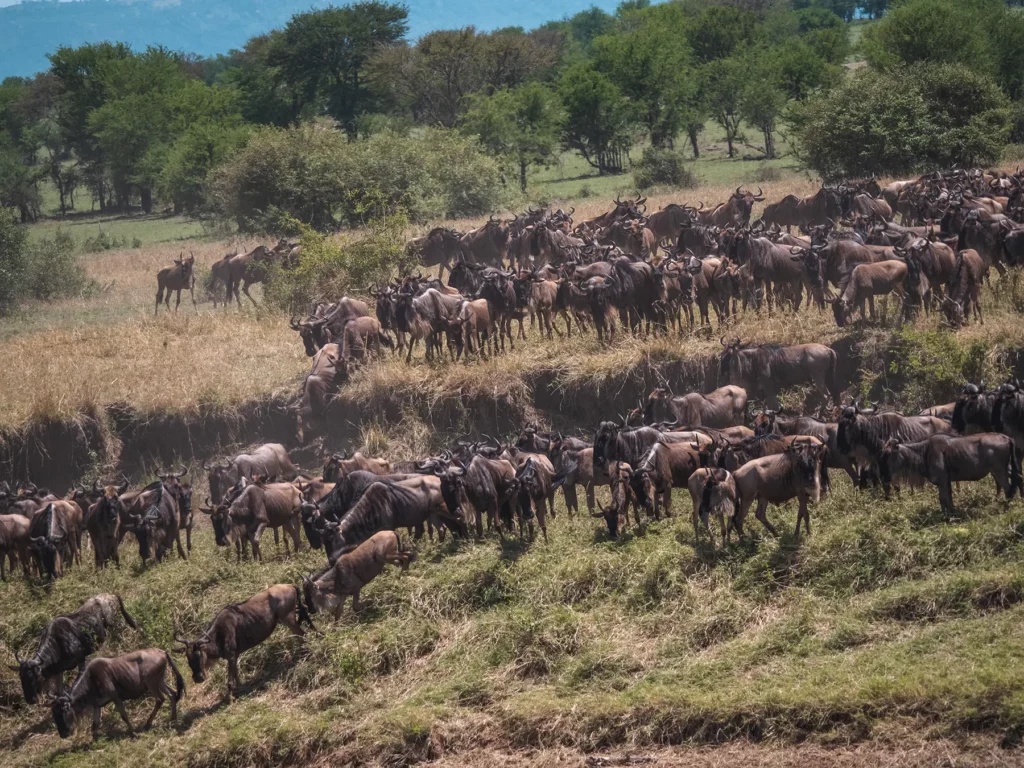
During migration season, especially between July and October, the Masai Mara National Reserve can experience high vehicle density at key locations.
River crossings often attract multiple safari vehicles, sometimes creating tightly packed viewing zones.
This does not reduce wildlife quality, but it does reduce exclusivity.
Conservancy Vehicle Limits
Conservancies enforce strict vehicle caps per sighting area.
This means you are far more likely to experience:
Solitary sightings
Small group viewing (often just your vehicle)
Long uninterrupted observation periods
This level of control is one of the most expensive elements to maintain in safari tourism.
Infrastructure and Operational Costs
Higher Guide-to-Guest Ratios
Conservancy camps often operate with lower guest volumes but higher service ratios.
This means more guides per guest, more personalized tracking, and more flexible scheduling.
Low-Impact Infrastructure Requirements
Because conservancies are designed to minimize environmental impact, camps must operate within stricter ecological guidelines.
This includes:
Limited building density
Sustainable waste management systems
Controlled vehicle movement protocols
All of these increase operational costs compared to larger, less restricted areas.
Conservation Value Built Into Pricing
Direct Community Benefit Model
A significant portion of conservancy pricing directly supports Maasai landowners through lease payments.
This creates a financial system where wildlife conservation is economically competitive with livestock grazing or land conversion.
Incentivizing Wildlife Protection
Because income depends on maintaining healthy wildlife populations, communities have a direct incentive to protect animals and habitats.
This is fundamentally different from general park entry fee models where benefits are more centralized.
Why the Price Difference Is Actually Structural, Not Artificial
The higher cost of conservancy safaris is not based on luxury branding alone. It is the result of a structural model that includes:
Land lease payments to local communities
Strict visitor and vehicle caps
Lower guest density per square kilometer
Expanded safari activity options
Higher guide and service ratios
Conservation-linked revenue distribution
In contrast, the national reserve spreads access across a larger public system with fewer per-guest exclusivity controls.
Choosing Between the Two
In practical safari planning, the decision between conservancy and national reserve is not a simple upgrade path.
The national reserve offers access to one of the most iconic wildlife systems in the world, particularly for migration viewing and large-scale predator interactions.
Conservancies offer a quieter, more controlled, and more flexible version of the same ecosystem, where experience depth and privacy take priority over density and spectacle.
The price difference reflects this shift in design philosophy. One system is built for shared access to a world-famous ecosystem. The other is built for controlled immersion within it.
Start Planning Your Next Trip To Africa
If you can picture yourself in one—or several—of these exceptional retreats, the next move is simple. We design fully tailored African safaris that bring these experiences together seamlessly, from private gorilla encounters to luxury lodges in the heart of the wild.
Every detail is carefully planned, so your journey feels effortless from start to finish. Reach out in whichever way suits you best, and let’s begin crafting your safari.
Start Planning